
Sichuan vs. Singapore Mahjong: Key Rule Differences
Last updated: Nov 23, 2026
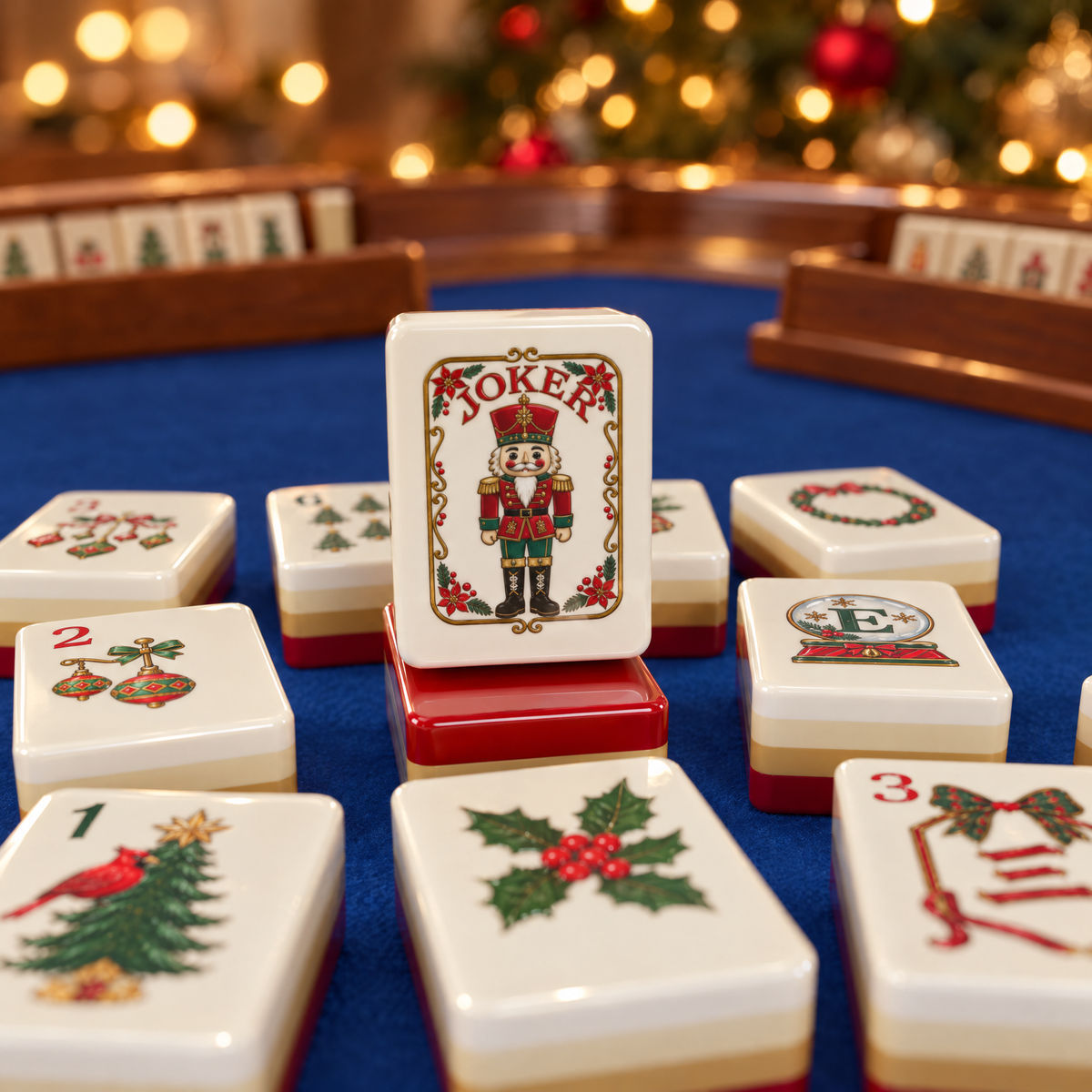
Sichuan mahjong (四川麻将) and Singapore mahjong (新加坡麻将) are both Chinese variants built on the 144-tile set—four copies each of three suits (Bamboo, Character, Dot, numbered 1–9), winds (N/E/W/S), and dragons (Red, Green, White). The core difference: Sichuan uses a "washing" tile-drawing mechanic, emphasizes sequences (chows), and scores in multiplied points with all-pay settlement; Singapore features simplified hand patterns, bonus tiles (flowers and seasons), and typically all-play scoring. Sichuan hands often require three chows (sequences); Singapore allows more pung-based (triplet) combinations. Payment flows differ radically—Sichuan winners collect from all three opponents, while Singapore distributes payouts depending on who declared. Neither variant uses jokers or blank tiles. If you play American mahjong and want to explore best-selling mahjong sets for your group, note that Chinese variants require different tile counts and rule cards entirely.
Sichuan and Singapore mahjong share the same 144-tile set—four copies each of three suits (Bamboo, Character, Dot, numbered 1–9), winds (N/E/W/S), and dragons (Red, Green, White). The core difference: Sichuan uses a "washing" tile-drawing mechanic, emphasizes sequences (chows), and scores in multiplied points with all-pay settlement; Singapore features simplified hand patterns, bonus tiles (flowers and seasons), and typically all-play scoring. Sichuan hands often require three chows (sequences); Singapore allows more pung-based (triplet) combinations. Neither variant uses jokers or blank tiles.
How does tile draw work differently in each variant?
In Sichuan mahjong, after the discard wall is built, the dealer sits face-to-face with a player and draws tiles alternately in a "washing" rotation—tiles are drawn in pairs from either end of the wall, cycling through all four players. This creates a faster, more fluid tile flow than the wall-break method. Singapore mahjong uses a standard wall break: the dealer's hand draws from the live wall, then draws continue counter-clockwise after each discard. Sichuan's washing method emphasizes luck and rhythm; Singapore's wall-break feels more linear. Both methods build an 18-tile original hand (14 in hand, 4 exposed) before play begins.

What types of melds are required to win?
Sichuan mahjong demands strict hand composition: a winning hand must contain three melds (chows or pungs), an eye (pair), and often a bonus tile (honor or terminal). The game heavily rewards sequences—three consecutive Bamboos, three consecutive Characters, three consecutive Dots—and penalizes players who hold mostly pungs. Pungs exist but are worth fewer points. Singapore mahjong is more flexible: you can win with three pungs and an eye, three chows and an eye, or a mix of both. Singapore also features bonus tiles (flowers and seasons, like Plum, Orchid, Bamboo, Chrysanthemum for flowers; Spring, Summer, Autumn, Winter for seasons) that replace discarded tiles and add points instantly. A Sichuan hand is tighter; a Singapore hand offers more combinations.
How does scoring and payment differ?
In Sichuan mahjong, the winning hand is scored by type (Chow combination, Self-drawn, robbing a Kong, etc.) and multiplied by a base unit. The winner collects the entire multiplied amount from all three opponents—no redistribution. If you win with a "Pure chows" hand worth 2× the base and each opponent pays 4 units, you collect 12 units total (4 + 4 + 4). Losing is felt sharply because one player bears the cost from everyone. Singapore mahjong uses a one-vs-three payment model: the winner collects from whoever discarded the winning tile (usually double or triple the base), and the other two opponents pay a single base amount to the winner. This spreads risk across the table. Sichuan is higher-stakes and all-pay; Singapore distributes liability more evenly.
What bonus and penalty rules apply?
Sichuan mahjong includes Kong penalties: if you declare a Kong (exposing four identical tiles), you draw a replacement from the end of the wall—but if the Kong causes you to go over 14 tiles, you must discard. Kongs also trigger payments from opponents if the hand doesn't win. Flowers and seasons do not exist in classic Sichuan; a winning hand is purely suited tiles, honors, and pungs/chows. Singapore mahjong awards instant bonuses for drawn flowers and seasons: when you draw a flower or season tile, you set it aside, everyone pays you 1 unit, and you draw a replacement. This creates micro-payments throughout play. Flowers and seasons in Singapore add 2–4 points each to the final hand value. Sichuan has no tile replacements; Singapore has several.

Which variant is easier for beginners?
Singapore mahjong has a lower learning curve because hand patterns are more flexible, payment is simpler (one-vs-three split), and the scoring involves fewer multipliers. You can win with many hand types and adjust strategy without memorizing dozens of tile patterns. Sichuan mahjong demands more discipline: you must chase sequences, understand multiplication scoring, and calculate exposure risk before declaring your hand. Sichuan also runs faster—the washing draw feels less ceremonial—so turns happen quickly. If you're new to Chinese variants and have played American mahjong, Singapore will feel more approachable; Sichuan rewards players who already grasp percentage payouts and hand categorization.
Aspect | Sichuan | Singapore | Winner for Beginners |
Tile count | 144 tiles (classic) | 144 + flowers/seasons | Tie (same base) |
Winning hand | 3 chows/pungs + eye | Mix of chows/pungs + eye | Singapore (flexible) |
Bonus tiles | None | 8 flowers & seasons | Singapore (quicker points) |
Draw method | Washing (alternating pairs) | Wall-break (linear) | Sichuan (faster rhythm) |
Payment type | All-pay (all opponents) | One-vs-three split | Singapore (lower risk) |
Scoring | Multiplied units | Base + bonuses | Singapore (transparent) |
Kong rule | Replacement from wall-end | Replacement + payment | Sichuan (forced discard) |
🀄 Shop best-selling mahjong sets →
What equipment do you need to play each?
Neither Sichuan nor Singapore mahjong uses jokers or blanks—a 144-tile set is exact. You'll need mahjong mats to organize tiles and protect the table surface, and racks with pushers to manage your hand and draw quickly during fast tile rotations, especially in Sichuan's washing phase. If you're hosting both variants weekly, a larger mat helps accommodate the tile walls without reshuffling. Sichuan players often prefer travel bags and cases to protect the tile set because washing involves more handling. Singapore's slower draw method is gentler on tiles. Neither variant requires the Charleston (the American pre-game tile pass), so setup is quicker. Dice are used in both to determine wall position and player turn order.
Which should you choose for your group?
If your group likes all-pay stakes, fast-paced rounds, and deep strategy, Sichuan rewards that appetite—every hand matters because you collect (or lose) from all opponents. If you prefer lower variance, social continuity, and room for casual players, Singapore's one-vs-three model and flexible hand types welcome newcomers without punishing bad luck. Both can run 1–2 hours per session. Sichuan often finishes faster because the washing draw eliminates long pauses; Singapore allows more deliberation because the wall-break is linear. Your table's culture matters: a competitive house prefers Sichuan's multipliers; a social group thrives with Singapore's spread payouts.
🎁 See our most-loved mahjong sets & accessories →
What to check before you buy
Tile size: Most 144-tile sets come in standard (full-size) or travel (mini) formats. Sichuan's washing draw is smoother with full-size tiles; Singapore's slower pace tolerates mini sets if space is tight.
Tile material: Bamboo and bone sets are durable; acrylic is lighter and cleaner. Both variants work with either.
Rule card vs. memory: Sichuan and Singapore use printed rule cards specific to each variant—do not assume American mahjong rules transfer.
Table space: Sichuan's wall-washing layout requires slightly more clearance than Singapore's linear draw. A mat designed for standard Chinese play (not American) helps.
Scoring sheet: Print or buy a variant-specific scoring guide. Sichuan's multiplication differs from Singapore's base-plus-bonus calculation.
✨ Find your Mahstead set — free US shipping →

FAQ
Can I use the same 144-tile set for both Sichuan and Singapore mahjong?
Yes. Both variants use identical 144-tile sets—four copies each of three suits (Bamboo, Character, Dot, 1–9), winds, and dragons. The difference is in rules and payment, not equipment. Your only adjustment is learning each variant's hand patterns and payment structure.
Does Sichuan mahjong allow the same hand patterns as Singapore?
No. Sichuan emphasizes sequences (chows); winning hands must have at least two or three chows plus an eye. Singapore allows pungs (triplets) as the primary meld type and is more flexible overall. A Sichuan "three chows" hand won't be recognized in Singapore's simpler ruleset.
Why does Sichuan use "washing" instead of a wall break?
Washing (alternating pair draws by all four players) creates faster, more rhythmic tile flow and feels more communal. Wall-break (dealer breaks and draws linearly) is simpler to teach but slower. Sichuan players value the energy and tradition of the washing method.
Is Singapore mahjong easier to score than Sichuan?
Yes. Singapore scoring is base points plus bonuses for flowers and seasons; totals are transparent. Sichuan scoring involves multipliers applied to hand types, then collected from all three opponents—more math and higher variance. Beginners find Singapore's additive scoring clearer.
What happens if I draw a flower or season tile in Sichuan mahjong?
Classic Sichuan does not include flowers or seasons—those are a Singapore feature. If you're playing a regional Sichuan variant that added flowers, consult your local rule sheet. Most traditional Sichuan sets contain only the 144 core tiles.
Can I use American mahjong rule cards for Sichuan or Singapore?
No. American mahjong uses 152 tiles, jokers, the Charleston, and hand patterns from a National Mah Jongg League card updated yearly. Chinese variants use 144 tiles, no jokers, no Charleston, and entirely different hand categories. Keep separate rule sheets for each game.


View More
View More
View More
