
Sichuan Mahjong with 3 Players: Rules, Setup & Strategy
Last updated: Nov 23, 2026
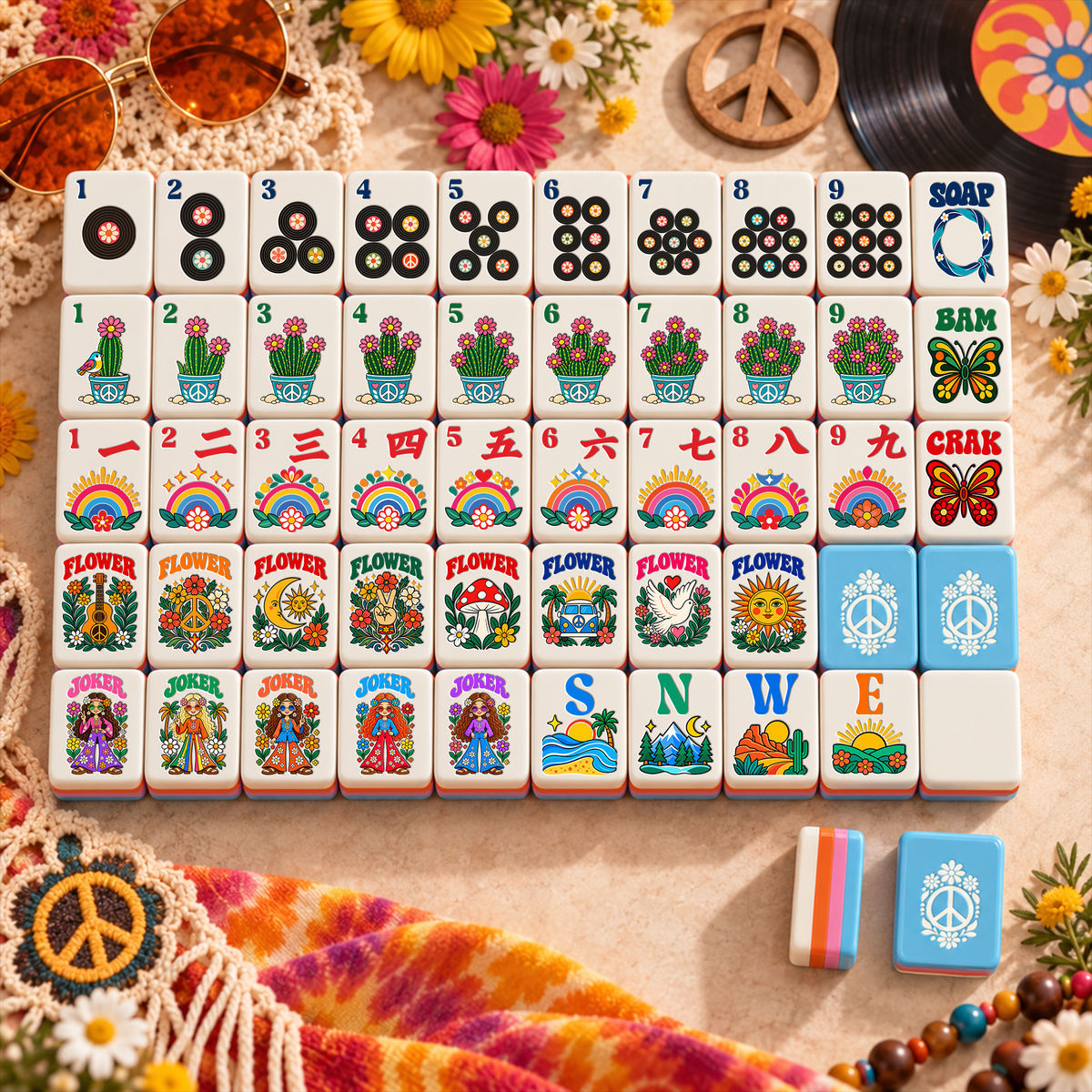
Sichuan mahjong with three players is a trim, fast variant that removes the complexity of a missing seat. The game uses 136 tiles instead of the standard 144, plays in roughly 45 minutes per round, and feels less crowded than four-player variants because fewer discards flood the table. If you've played standard Chinese mahjong or dabbled in American, the three-player version will feel both familiar and refreshingly spare.
We run three-player games on casual Friday nights when a fourth can't make it. The rhythm is tighter—you discard faster, fewer pairs are blocked by missing tiles, and everyone stays engaged throughout. The key is understanding which tiles vanish, how the dealing shifts, and which hands count as winning in Sichuan dialect play. Below we'll walk through the setup, play sequence, and real-world hosting tips.
Which tiles do you remove for three-player Sichuan mahjong?
Remove all four North wind tiles and all four Green dragon tiles, reducing the deck from 144 to 136 tiles. No other tiles are removed; the other three winds (East, South, West), all Red and White dragons, and all numbered tiles (1–9 in Bams, Craks, Dots) remain in full. The absence of North simplifies wind rankings because no player sits in the North seat. Green dragons, often paired with terminal play, also exit, leaving Red and White dragons in the mix.
This subtraction keeps the game lean. Fewer honor tiles mean fewer deadlock situations where pairs can't be formed. We've found that removing North and Green speeds play by roughly 10–15% because the deck cycles faster and discards block fewer winning outcomes.

How do you deal and set up a three-player round?
Seating: Arrange three players around a mahjong mat or table, typically called East, South, and West (omitting North). East is the dealer and plays first. South sits to East's left; West sits to East's right, making the discard flow East → South → West → East.
Dealing:
Shuffle the 136 tiles face-down in a pile or use a wall (if you prefer the traditional layout, create a wall by arranging 34 tiles (136 ÷ 4) per side).
East draws 15 tiles; South and West each draw 14.
All tiles draw from the same wall in order; no seat-specific wall exists as in four-player games.
Players arrange their tiles into a rack (ideally a mahjong rack with pushers so tiles don't topple during play).
Starting hand: Each player displays their tiles in order (Bams left, Craks middle, Dots right, honors on the far right). East discards one tile face-up to start the discard pile.
The dealing takes about 2 minutes if you're organized. Tip: If using a mat, separate it into three zones—one per player—so the discard pile stays visible but doesn't crowd anyone's drawing space.
What are the winning hand patterns in Sichuan mahjong?
A winning hand consists of a pair (two identical tiles) plus four melds. Each meld is either:
Pung: Three identical tiles (e.g., 3 Bam, 3 Bam, 3 Bam).
Kong: Four identical tiles (e.g., Red dragon × 4).
Chow: Three consecutive numbered tiles in the same suit (e.g., 4 Craks, 5 Craks, 6 Craks). Honors (winds and dragons) cannot form chows because they have no sequence.
Jokers don't exist in traditional Sichuan mahjong; some modern variants allow one or two, but classic play uses only the 136 named tiles.
Example winning hand:
Pair: East wind, East wind
Meld 1: 1 Dot, 1 Dot, 1 Dot (pung)
Meld 2: 2 Craks, 3 Craks, 4 Craks (chow)
Meld 3: Red dragon, Red dragon, Red dragon (pung)
Meld 4: 7 Bams, 8 Bams, 9 Bams (chow)
This hand is valid and wins. Unlike American mahjong, which locks you into yearly card patterns, Sichuan recognizes any combination of pair + four melds as a win, provided tiles are legal.
Common mistake: Beginners sometimes think a pair of dragons and a pair of winds count as two melds. They don't. A pair is only your terminal pair. The four melds must be pungs, kongs, or chows.
How does play flow turn-by-turn?
East's turn: East draws one tile from the wall (East already has 15 from the deal). East discards one tile face-up.
South's turn: South draws one tile. If South can claim East's discard to complete a meld, South calls it (interrupting the sequence). Otherwise, South discards face-up.
West's turn: West draws and discards in the same way.
Claiming tiles: If another player's discard completes your pung, kong, or a chow, you call it immediately. The discarding player must pause; you take the tile and expose the meld in front of you. Play then returns to the next player in order (not back to you).
Win condition: When a player has a pair and four melds, and either draws a tile from the wall or claims a discard that completes the hand, that player calls "Win" and reveals the hand. Play stops immediately.
Scoring: Sichuan mahjong has multiple scoring systems (Shanghai, Sichuan standard, and regional variants). Most casual play uses:
Simple win: 1 point (basic).
All pungs (no chows): +1 point.
All chows (no pungs): +1 point.
Self-drawn tile (vs. claimed discard): +1 point.
No honors used: +1 point (sometimes).
Regional house rules vary widely. Before starting, agree on your scoring and write it on a notepad so disputes don't arise mid-game.
What equipment do you need to host a three-player game?
Tiles: You'll need a full 136-tile Sichuan set or a standard 144-tile Chinese mahjong set (then remove four North winds and four Green dragons before play). Many players use a best-selling mahjong set with extra spare tiles, which gives you flexibility if a tile cracks or goes missing.
Mat or table: A mahjong mat divides the playing area cleanly and marks each player's discard zone. For three players, you don't need a full four-zone mat; a smaller mat or even a card table works fine if you designate zones verbally.
Racks: A rack with pushers keeps your 14–15 tiles upright and hidden from opponents. It also prevents accidents when tiles shift during play. Essential if anyone at your table is prone to tipping tiles.
Scoring notepad: Write down a simple scoring table before play begins. Note who is East each round and track points cumulatively or per round.
Bag or case: If you're carrying the set regularly, a travel bag or protective case keeps tiles safe and organized between sessions.
Equipment | Why it matters for 3-player | What to check |
Tile set (136 or 144 total) | Must have exactly 136 tiles in play; extras are spares | Count before your first game |
Mat | Keeps three zones visually distinct; prevents mid-game confusion | Choose size that fits your table |
Racks × 3 | Protects hands; speeds tile arrangement; reduces misdeals | Ensure each rack holds 15 tiles comfortably |
Notepad | Clarifies scoring; avoids disputes mid-round | Write house rules before starting |
Bag (optional) | Protects tiles during transport and storage | Choose padding appropriate to your climate |

What mistakes kill a three-player game?
Forgetting to remove North and Green dragons. If you leave all 144 tiles in the deck, the game becomes unbalanced—too many tiles for too few players. Play drags, and winning hands become rarer than expected.
Miscounting the deal. East needs 15; South and West need 14 each. If East gets 14, the game is off by one tile. Count out loud: "East, 15. South, 14. West, 14. Total 43; remainder 93 in the wall."
Calling a win with an invalid hand. A pair must be two identical tiles, not two different honors. Four melds must be three or four tiles of the same rank or sequence. If someone calls a win and it's invalid, stop play, clarify the tiles, and continue without penalty on the first offense.
Unclear discard piles. With only three players, discards should be fanned in the center or stacked by player so everyone can track which player threw what. Confusion about who discarded a tile can lead to accidental claims or missed opportunities.
No agreed scoring. Sichuan mahjong scoring varies by region. If your table doesn't agree upfront on whether "all pungs" counts as +1 or +2, or whether a self-drawn win is a bonus, you'll fight mid-game. Write it down.
What to check before you buy:
Tile quality. Are tiles thick enough to withstand regular shuffling without cracking? Check that bamboo, bone, or acrylic construction matches your budget and durability needs.
Completeness. Count: Bams 1–9 (×4 each = 36), Craks 1–9 (×4 = 36), Dots 1–9 (×4 = 36), East/South/West winds (×4 each = 12), Red/White/Green dragons (×4 each = 12). Total = 132 numbered and honor tiles. A 136-tile Sichuan set includes 4 bonus tiles (often blanks or jokers). A 144-tile Chinese set has all of the above plus North wind (×4 = 4 tiles).
Case or bag. If you're hosting multiple games, verify the set includes protective storage or budget for a separate travel bag to prevent tile loss and damage.
How does Sichuan mahjong differ from American and Hong Kong variants?
Sichuan vs. American:
American mahjong uses 152 tiles (includes flowers and jokers), requires exactly four players, and hands come from a yearly card issued each spring by the National Mah Jongg League. Sichuan uses 136 or 144 tiles, works for three, and recognizes any pair + four-meld combination as a win.
American mahjong has no chows that can be called or exposed; you expose only pungs, kongs, quints, and sextets. Sichuan allows chows to be called and exposed just like pungs and kongs.
American mahjong involves a tile-passing ritual called the Charleston before play. Sichuan has no Charleston; you shuffle, deal, and start.
American mahjong scoring is complex and tied to the card. Sichuan scoring is simpler, though regional variants exist.
Sichuan vs. Hong Kong:
Hong Kong mahjong typically plays four players and has stricter hand rankings (certain combinations are "bigger" and override others). Sichuan is more flexible and forgiving for casual play.
Hong Kong mahjong often includes a "limit hand" (a supreme win worth many times a normal hand). Most casual Sichuan games don't recognize limits.
If you've learned American mahjong, three-player Sichuan will feel quite different: fewer tiles, simpler patterns, faster rounds, and more emphasis on spotting chows alongside pungs. The pace suits shorter game nights.
🀄 Shop best-selling mahjong sets →
What's the ideal host checklist for a three-player Sichuan game night?
Before guests arrive:
[ ] Verify your tile set has exactly 136 tiles (or 144 with North and Green removed and set aside).
[ ] Lay out the mat or table; assign East, South, West seats.
[ ] Set out three racks with pushers at each seat if using them.
[ ] Prepare a notepad with house rules: scoring bonuses, whether a self-drawn win is +1 or +2, how many rounds you'll play.
[ ] Shuffle tiles thoroughly (mix face-down for 2–3 minutes).
[ ] Designate who is East (usually, you or a rotation).
During play:
[ ] Call out each deal: "East, 15. South, 14. West, 14."
[ ] Keep the discard pile organized and visible.
[ ] Watch for unclaimed discards; if a player misses a winning opportunity because no one called the tile, be ready to pause and clarify house rules.
[ ] Track points on the notepad after each win.
After a round:
[ ] Rotate who is East (South becomes East; East becomes West; West becomes South).
[ ] Return removed tiles (four North winds and four Green dragons) to the pile so the full 144-tile deck is ready for next game.
[ ] Shuffle again for the next round.
Why three-player mahjong is worth hosting
Three-player mahjong fills a gap. If you love mahjong but can't gather four, or if you want a faster, more casual round, Sichuan works beautifully. The game is lean—no bloated hand counts, no season-specific card to memorize—so new players learn within one round. The pace quickens, meaning fewer dead rounds and more decisive wins. It's also the go-to variant in Taiwan and southern China for intimate home games, so if you're exploring regional play or want to try something beyond American or Hong Kong, Sichuan opens a door.
🎁 See our most-loved mahjong sets & accessories →

FAQ
Can I use an American mahjong set for Sichuan three-player?
No. American sets have flowers and jokers and omit the structure needed for Sichuan (no North wind in the deck, different bonus tiles). You need a Chinese or Sichuan-specific set with Bams, Craks, Dots, winds, and dragons only.
What's the minimum number of players for Sichuan mahjong?
Three. The game can technically accommodate two with significant rule modifications, but three is the standard minimum and what the tile count assumes.
How long does a typical three-player game take?
One round (East's full turn until a winner is declared) usually takes 10–15 minutes. A full session of three or four rounds takes 45 minutes to an hour.
Do I need to know the discard pile positions for all three players?
Yes. Keep discards fanned or stacked so you can track who threw the tile you might want to claim. If tiles are mixed up, it's harder to spot winning opportunities and verify rules.
Is scoring the same in every Sichuan game?
No. Scoring varies by region and house rules. Before your first game, agree with your group on bonuses (self-drawn, all pungs, no honors, etc.) and write them down.
What if someone calls a win with an invalid hand?
Stop play immediately. Review the tiles together. If it's the first offense, explain the rule and continue without penalty. If it happens repeatedly, that player sits out one round as a penalty.
Can I play Sichuan mahjong with a standard 144-tile Chinese set?
Yes. Remove all four North winds and all four Green dragons before dealing, leaving 136 tiles in play. Keep the removed eight tiles aside until the game ends.
Are there official Sichuan mahjong rules, or is it all house rules?
There are traditional Sichuan patterns and scoring, but regional variants abound. Casual home games often simplify scoring. Check your local Sichuan mahjong club or ask players from that region for their house rules before playing. ✨ Find your Mahstead set — free US shipping →


View More
View More
View More
