
Sichuan Mahjong vs Malaysian Mahjong: Key Differences
Last updated: Nov 23, 2026
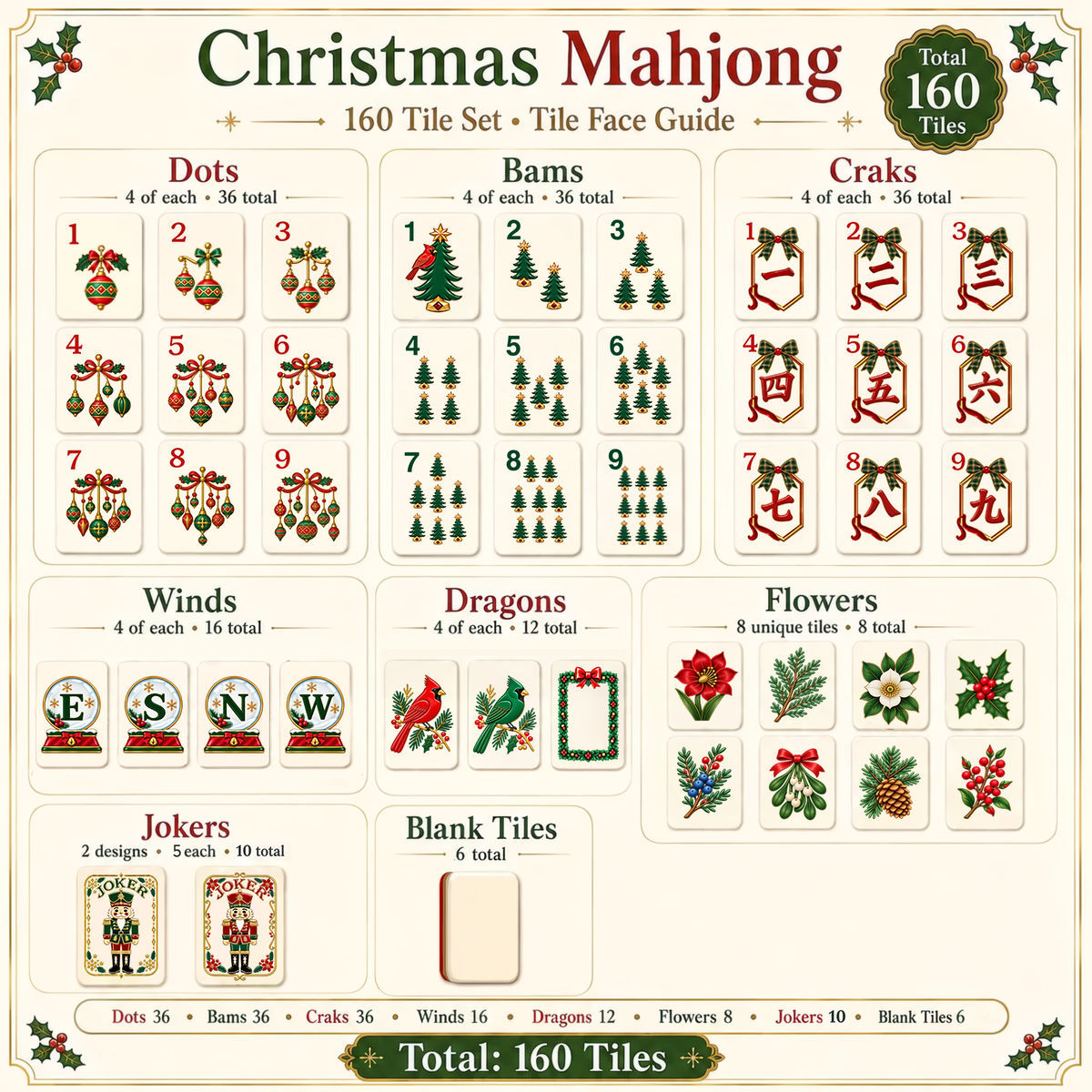
Sichuan mahjong and Malaysian mahjong represent two major branches of traditional Chinese mahjong, each rooted in different regions and played by millions. If you've learned one and encounter the other, or you're setting up a game for friends who grew up with different rules, the differences matter—a lot. We'll walk through the core distinctions so you can pick the right variant for your group and avoid mid-game disputes.
What tiles does each variant use?
Sichuan mahjong plays with 108 tiles: three suits (characters, bamboo, circles) numbered 1–9, four copies of each for a total of 108. No flowers, no seasons, no blanks. Each player draws 13 tiles at the start; the dealer draws 14. Malaysian mahjong uses 144 tiles: the same three suits (36 tiles), plus 16 wind tiles (north, east, west, south—four of each), 12 dragon tiles (red, green, white—four of each), 8 flower tiles (spring, summer, autumn, winter + bonus variants), and 8 season tiles. This extra 36-tile load changes the game's depth and hand possibility dramatically. Sichuan is lean and fast; Malaysian is rich and tactical.

How do winning hands work differently?
In Sichuan mahjong, a winning hand must be built from melds (exposed or concealed): pungs (three identical tiles), kongs (four identical tiles), and chows (three consecutive tiles in the same suit, like 4-5-6 bamboo). The final pair must be two identical tiles. A complete hand uses 14 tiles: four melds of three tiles each, plus a pair. Scoring is straightforward: basic points plus multipliers for certain conditions (concealed pung, winning on a drawn tile versus a discard). Malaysian mahjong follows the same meld structure but introduces named hand patterns—specific combinations that pay bonus points regardless of how "advanced" the meld looks. For example, a "pung hand" (all pungs and one pair) pays differently than a "mixed straight" (melds using tiles from two or more suits in numerical progression). The National Mah Jongg League card in American mahjong plays a similar role, but Malaysian hands are encoded in regional charts, not a single official deck. This means Malaysian games require agreement on which hand chart the group is using before you start.
What's the pace and strategy difference?
Sichuan mahjong rewards speed and ruthless discarding. Because the tile pool is smaller and each hand is simpler, games move fast—often 10–15 minutes per round. The emphasis is on reading opponents' discards, blocking them from winning, and sprinting to finish your own hand. Jokers or wild tiles are uncommon in classical Sichuan play. Malaysian mahjong is slower and more cerebral. The larger tile pool, extra honors, and named hand patterns mean multiple winning paths exist for any player at any moment. Skilled Malaysian players track which tiles have been discarded, infer what melds opponents are building, and use strategic retains to lock down their own hand while blocking others. Games typically last 20–40 minutes per round. If you're hosting a casual weeknight group, Sichuan favors quick turnover; if your players like deep tactical play, Malaysian rewards that engagement.
Which one uses chows and sequences?
Both variants allow chows (sequences of three consecutive tiles in the same suit). This is a major difference from American mahjong, which forbids any called or exposed sequences—American players can only expose pungs, kongs, quints, and sextets. In Sichuan and Malaysian mahjong, a chow (like 3-4-5 dots) can be exposed on the table after you call it from a discard, just like a pung. In both variants, once a meld is exposed, all players can see it and know what you're building toward. This speeds up reads and makes blocking more active. Jokers or wild tiles in Sichuan and Malaysian games (when used) usually cannot substitute in a pair and cannot be "borrowed" from another player's meld—a rule that mirrors American mahjong's joker logic but is less common in traditional Asian play.
Aspect | Sichuan Mahjong | Malaysian Mahjong |
Tile count | 108 | 144 |
Suits | Characters, bamboo, circles only | Characters, bamboo, circles + winds + dragons + flowers + seasons |
Melds allowed | Pungs, kongs, chows | Pungs, kongs, chows |
Sequences (chows) callable? | Yes | Yes |
Named hand patterns | Minimal; score by meld type | Yes; regional chart-based |
Average game length | 10–15 min per round | 20–40 min per round |
Jokers/wild tiles | Rare in classical play | Varies by region |
Pair rule | Identical tiles only | Identical tiles only |

How do scoring and bonuses differ?
Sichuan mahjong scoring is transparent and math-based. A base hand (typically 8–16 points) is multiplied by your "fan" count (bonuses for concealed melds, all pungs, sequences of the same suit, etc.). A win on a tile you drew multiplies differently than a win called from someone's discard. The math is consistent across regions—if you know one table's rules, you can sit at another. Malaysian mahjong scoring is chart-driven and varies by region. A printed hand chart lists specific patterns and their point values; a "pung hand" might be worth 3 points, a "mixed straight" worth 4, and a "all terminals and honors" worth 6 (examples only—actual values depend on the official chart your group uses). This means Malaysian games require a reference chart at the table; Sichuan games rely on memorized formulas. If you're traveling or playing with a new group, ask to see their chart or scoring guide before the first hand.
🀄 Shop best-selling mahjong sets →
What should you check before hosting either variant?
Before you invite players to a Sichuan or Malaysian game, nail down three things: (1) Confirm the variant and rules. Don't assume; ask explicitly whether your group plays Sichuan, Malaysian, or a house blend. Mixing rules mid-game costs goodwill. (2) Decide on a scoring reference. For Sichuan, agree on whether you're playing classical or a house-modified version (some groups add wild tiles or bonus patterns). For Malaysian, print or display the hand chart your group uses—it's the only way to resolve disputes fairly. (3) Check tile condition and count. Traditional Chinese variants are often played with antique tiles, bone-and-bamboo sets, or older plastic sets that may have missing tiles or worn markings. Before the game starts, count the tiles and verify they're legible; a worn "5 bamboo" causes arguments. If you're buying a set specifically for Sichuan (108 tiles) or Malaysian (144 tiles), verify the seller's count—many sets sold online don't specify tile totals clearly.
We at Mahstead focus on American mahjong sets (which use 152 tiles), but if you're exploring traditional Asian variants for the first time, our best-selling collection includes acrylic sets with clear markings that work as a visual learning tool while you study regional rules. Once you settle on Sichuan or Malaysian, consider adding a durable mat to standardize your playing surface—neutral mats work across all variants.
🎁 See our most-loved mahjong sets & accessories →
How do you transition between the two if you play both?
If your family or club plays both Sichuan and Malaysian, keep a one-page cheat sheet at the table. List the tile count (108 vs. 144), the meld types allowed (identical in both: pung, kong, chow), the scoring method (Sichuan = formula-based; Malaysian = chart-based), and one or two house rules your group uses. Before each game, read the cheat sheet aloud so no one assumes the previous evening's rules carry over. Many multi-variant groups assign one person as "scorekeeper" who owns the cheat sheet and hand chart, verifies all melds before points are awarded, and settles disputes with reference to the written rules—not memory. This role prevents 90% of conflicts. If your group plays weekly, rotate the scorekeeper role so everyone learns the rules deeply and no single person becomes the "rules lawyer."
✨ Find your Mahstead set — free US shipping →
What to check before you buy
If you're setting up a Sichuan or Malaysian game and need tiles:
Verify tile count when ordering; the seller should state whether it's a 108-tile set (Sichuan) or 144-tile set (Malaysian).
Check for clear markings: winds, dragons, and flowers (if included) must be legible from arm's length; worn tiles cause constant disputes.
Ask about spare tiles: many sets include spares; for traditional play, you may not need them, but extras protect against loss.
Confirm whether jokers/wild tiles are included and whether your group's rules allow them (not all Malaysian or Sichuan games use them).

FAQ
Can I play Sichuan mahjong with a Malaysian tile set?
No. Sichuan uses 108 tiles (no flowers, seasons, or winds); Malaysian uses 144. If you use a Malaysian set in a Sichuan game, extra tiles will remain unused and confuse players about what's in play.
Is Malaysian mahjong the same as Hong Kong mahjong?
No. Hong Kong mahjong uses 144 tiles and follows similar meld rules to Malaysian, but scoring and named patterns differ. Always confirm which regional variant your group plays before sitting down.
Which variant is easier to learn?
Sichuan mahjong is easier for absolute beginners because fewer tiles and simpler scoring reduce cognitive load. Malaysian rewards players who invest time in memorizing the hand chart and reading opponents' tile discards.
Do Sichuan and Malaysian games use a Charleston or tile-passing ritual?
Neither uses the American Charleston. Most traditional Sichuan and Malaysian games deal tiles directly from the wall without passing. Some modern Malaysian groups have adopted variants of pre-game tile exchange, but it's not standard.
What happens if a player goes out with an illegal hand in either variant?
The hand is declared dead, the player pays a penalty (typically a small point deduction or monetary fine), and the round resets. The player who called an illegal hand must point it out immediately; once scoring is settled, the error cannot be corrected.
Can I play Sichuan or Malaysian mahjong with fewer than four players?
Officially, no. Both are designed for exactly four players. Three-player and two-player adaptations exist but require house rule modifications (adjusted draws, wall changes, and scoring). Ask your group if they have a written three-player variant before you try it.


View More
View More
View More
