
Sichuan Mahjong Fast Win Strategy: Speed Play Guide
Last updated: Nov 23, 2026
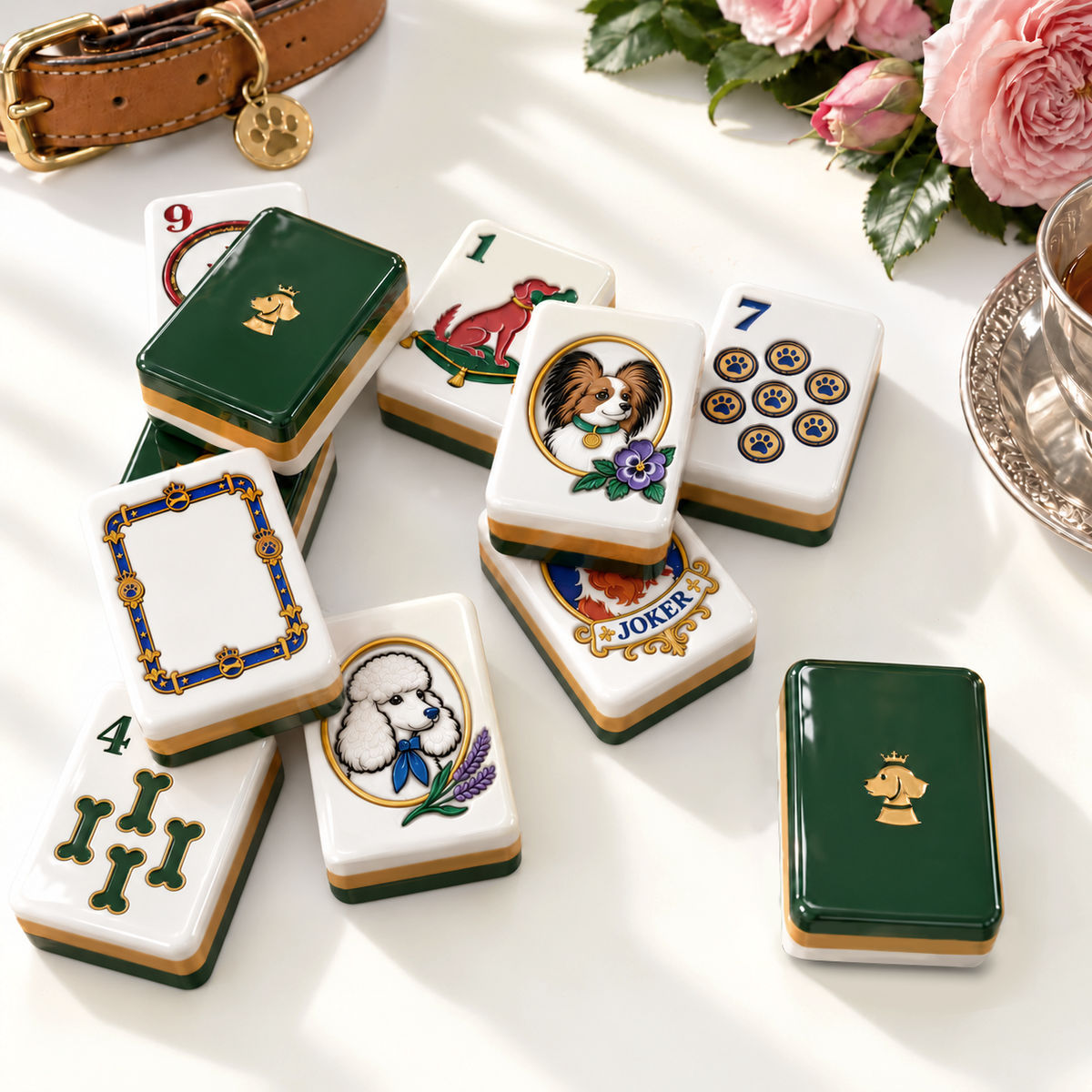
Sichuan mahjong fast-win strategy centers on rapid pattern recognition, aggressive early melds, and hand-completion prediction. Players win by forming three pongs and one pair (or winning hand patterns) in fewer turns than opponents. The speed advantage comes from knowing which tiles are still live, calling melds immediately rather than hesitating, and discarding safely without telegraphing your near-win. Unlike American mahjong, which relies on a fixed card and specific hand structures, Sichuan allows melds throughout play and uses a different tile distribution (typically 108 tiles across three suits). Fast-win play requires training your eye to spot pattern clusters on discard piles within seconds, memorizing which tiles your opponents have already shown, and committing to a meld strategy (melding high-value combinations early) rather than fishing for a perfect hand late. At Mahstead, we serve American-game tables, but the same tile-organization skills—using proper racks with pushers to keep tiles face-down and hidden until drawn—apply to any variant and build the focus speed play demands. 🀄 Shop best-selling mahjong sets →
What's the real difference between Sichuan and American mahjong speed play?
Sichuan mahjong strips away the rulebook layer that slows American games. American play locks hands to the current year's National Mah Jongg League card, enforces the Charleston, and requires exact-match structures—you cannot win unless your tiles match one of that card's valid patterns. Sichuan uses simpler rules: form a standard combination (pung-pung-pung-pair, or a winning sequence), call melds openly when drawn, and discard immediately. This eliminates the shuffling phase and hand-reconstruction delays, letting fast players complete hands in half the turns. The psychological edge comes from visible meld-building: when opponents see you've already melded two pongs in round three, they adjust discards defensively rather than pursuing their own hand. Sichuan speed winners read this pressure and push for early completion before opponents lock their safe discards.

How do you track tiles fast enough to avoid losing bets?
Tile tracking in Sichuan play relies on a four-part mental model: honor what's been shown, count suit distribution, flag high-value pairs, and predict the wall. Every tile that appears in a meld or discard pile is no longer a threat; fast players glance once and file it away. If you've seen all four 5-Bams already, you know no one is fishing for that tile—safe to hold it longer. Count the visible Cracks: if seven of nine have appeared, the remaining two are precious. Pair high-value tiles (Dragons, Winds) in your early hand-reading; they're fewer, so spotting two of three in the open means the last copy is either in someone's hand or still in the wall—call a meld if it fits your strategy. The wall count is your timer: in a four-player 108-tile game, roughly 27 tiles per player draw per round; after 12 drawn tiles, you're entering the end-game. Fast winners know this clock and stop fishing with 15 tiles left. Practice by playing speed rounds—set a timer for 12 minutes per game—and force yourself to glance at each discard only once before deciding keep-or-fold.
When should you call a meld versus hold for a bigger hand?
The call-versus-hold decision separates fast-win players from slow-hand chasers. Call a meld if: (a) you have two of the three tiles already, (b) the third tile just appeared in discard, and (c) no opponent has signaled interest in that suit. Example: you hold 3-Bam, 3-Bam; opponent discards 3-Bam; you call pung immediately, even if you haven't formed a second meld yet. This locks a concrete meld, forces opponents to re-evaluate their own hands, and frees you to focus on the pair or a second pung. Hold if: (a) you have only one copy, (b) three turns remain in the wall, or (c) your pair is already complete and you're one pung away from win. Holding wastes mental energy on uncertainty. In Sichuan play, four-player games finish in 10–15 turns; if you reach turn 10 without two melds, holding for a "perfect" hand is statistically weak. Fast winners commit to meld-based strategies (aim for three pungs and a pair by turn 8) or sequence-based strategies (aim for pung-pung-sequence by turn 6). Once chosen, execute ruthlessly. Hesitation loses.

What tiles should you discard to signal safety without giving away your hand?
Safe discard strategy in speed play is counterintuitive: discard the tile that looks most dangerous to you. If you're holding three Winds (East, South, North) and one Dragon (Red), discard the Dragon, not a random Wind. Opponents think, "He doesn't need that Dragon," and may discard Winds around you. In reality, you're signaling weakness in an area where you're actually strong. Never discard tiles in a numerical cluster from the same suit in the first three turns (e.g., discard 1-Crack, then 2-Crack in consecutive turns)—that screams pung or sequence to every player. Discard outliers: honor tiles (Winds, Dragons) that don't fit a suit, or a middle-suit number surrounded by gaps (discard 5-Dot if you're holding 1-Dot and 9-Dot but no 2–4 or 6–8). Fast-win players who survive three rounds of calling melds build trust by discarding what looks unplayable. In the endgame (last five tiles in wall), start discarding the suit where you see the most open melds; odds are good your opponents have completed it, and you're safer dumping that suit entirely. This is the gamble: you might be throwing a winning tile, but speed play accepts small losses to close games before slow players catch up.
Strategy | Timing | Risk | Win Rate Gain |
Aggressive meld-calling (turns 1–6) | Early game | Opponent adaptation | +15–20% (forces closed hands) |
Paired hold-and-fold (turns 7–10) | Mid game | Wall depletion | +5–10% (safe but reactive) |
Outlier discard (all turns) | Continuous | Accidental gift tile | +8–12% (psychological edge) |
Suit counting + wall clock (turns 9–12) | Endgame | Miscalculation | +10–15% (precision play) |
🎁 See our most-loved mahjong sets & accessories →
How does hand-completion prediction give you a speed edge?
Hand-completion prediction flips the passive wait-and-see into active anticipation. After turn three, your opponents' discard patterns reveal their priorities: if Player A discards one 1-Bam, one 2-Bam, and one 7-Crak in the first three turns, they're not building a Bam sequence; they're fishing for Craks or a Dragon pair. Fast-win players predict this means Player A will call a Crak meld around turn 5–6. Plan for it. When it happens, don't panic; instead, start discarding Bams aggressively because Player A has signaled they won't call you for Bam-based melds. Prediction also works in reverse: if no one has called a meld by turn 7 in a 108-tile game, the wall is already half-depleted, and hands are locked or near-closed. This is your signal to accelerate; discard only what's absolutely safe, call any meld that fits, and push for completion by turn 10. In Sichuan play with optimal tile organization from quality racks, you can arrange your melds visibly so opponents see your hand shape and adjust accordingly—hiding nothing accelerates their fear response and makes them discard less strategically. This creates an opening for your final meld.
What mistakes kill your speed-play advantage?
Mistake 1: Hesitating on the call. If you see a tile that completes a meld and you own the other two, hesitate even two seconds and an observant opponent will call it instead (in multi-call games) or mentally flag that you wanted it—they'll stop discarding that suit. Decide instantly or don't call. Mistake 2: Chasing a pair too long. In the first four turns, if you haven't drawn at least one copy of your target pair, reset. Pairs are abundant; waste no turns on a single pair. Mistake 3: Forgetting the tile distribution. Sichuan uses fewer tiles than American mahjong; in a 108-tile set, each non-honor tile has only three or four copies. Assume you've seen all three Winds or all four of a single Crak; if not, you'll fish forever. Mistake 4: Misreading the end-game clock. At 10 turns in a typical game, you have 4–6 draws left from the wall before the game resets or ends. If you don't have two complete melds by turn 9, abandon the hand and pass. Continuing is ego, not strategy. Mistake 5: Advertising your hand. Never discard tiles in order (3-Crack, then 4-Crack, then 5-Crack). Never keep your tiles hidden; opponents already know you're building something—let them see it's NOT what it looks like.
What to check before you play speed Sichuan:
Confirm tile count with all players (usually 108, sometimes 144).
Agree on meld-call rules: simultaneous calls, or first-call-only.
Use a quality set where tiles are uniform in weight and size (mismatched tiles slow draws).
Test your focus before betting; speed play is exhausting and mistakes multiply if you're tired.
Have pen and paper for tracking suit discards if this is your first speed session.
✨ Find your Mahstead set — free US shipping →
If you're building a consistent Sichuan group, invest in a high-quality mahjong set with replaceable tiles so worn or warped pieces don't slow draws mid-game. Speed play depends on smooth, predictable tile flow; a set with uneven tiles is a hidden handicap that compounds over dozens of hands.

FAQ
How does Sichuan mahjong differ from Hong Kong or Chinese mahjong in speed play?
Sichuan emphasizes rapid meld-calling and hand completion over the melds-per-round limits in Hong Kong mahjong. Sichuan also uses fewer tiles (108 vs. 144 in some regions), so hands close faster. Strategy is simpler: three melds and a pair, not bonus calculations or complex sequence rules. Speed follows from lower rule friction.
Can fast-win Sichuan strategy apply to American mahjong?
Partially. Tile tracking, discard reading, and psychological pressure translate. But American mahjong locks hands to the yearly card and allows no mid-game hand adjustment—you either have a valid hand on the card or you don't. Speed in American play comes from rapid card-reading during the Charleston, not mid-game meld-calling. Fast calling has no advantage there.
What's the minimum number of practice games before speed strategy works?
Ten games at normal pace, then five at accelerated pace (set a 12-minute timer). By game 15, your tile-tracking will feel automatic, and you'll start winning more. Speed play is muscle memory, not theory; practice is non-negotiable.
Should I use special racks or mats to speed up my Sichuan game?
Racks with built-in pushers reduce fumbling and let you organize melds visibly without reshuffling. A padded mat protects tiles from slides that slow draws. Neither is required, but both cut seconds per turn—across 15 turns, that's 30–60 seconds, which can shift game outcomes in tight endgames.
Is aggressive early meld-calling the same as greedy play?
No. Greedy is calling a meld that doesn't serve your win path (e.g., calling a 2-Crak pung when you're building a 5-Crak pair). Aggressive meld-calling means committing to melds that lock in your strategy and force opponents to respond. The difference is intention: greedy loses money; aggressive wins time.


View More
View More
View More
