
Blank Tiles in Chinese Mahjong: Rules, Uses & Why They Matter
Last updated: Nov 23, 2026
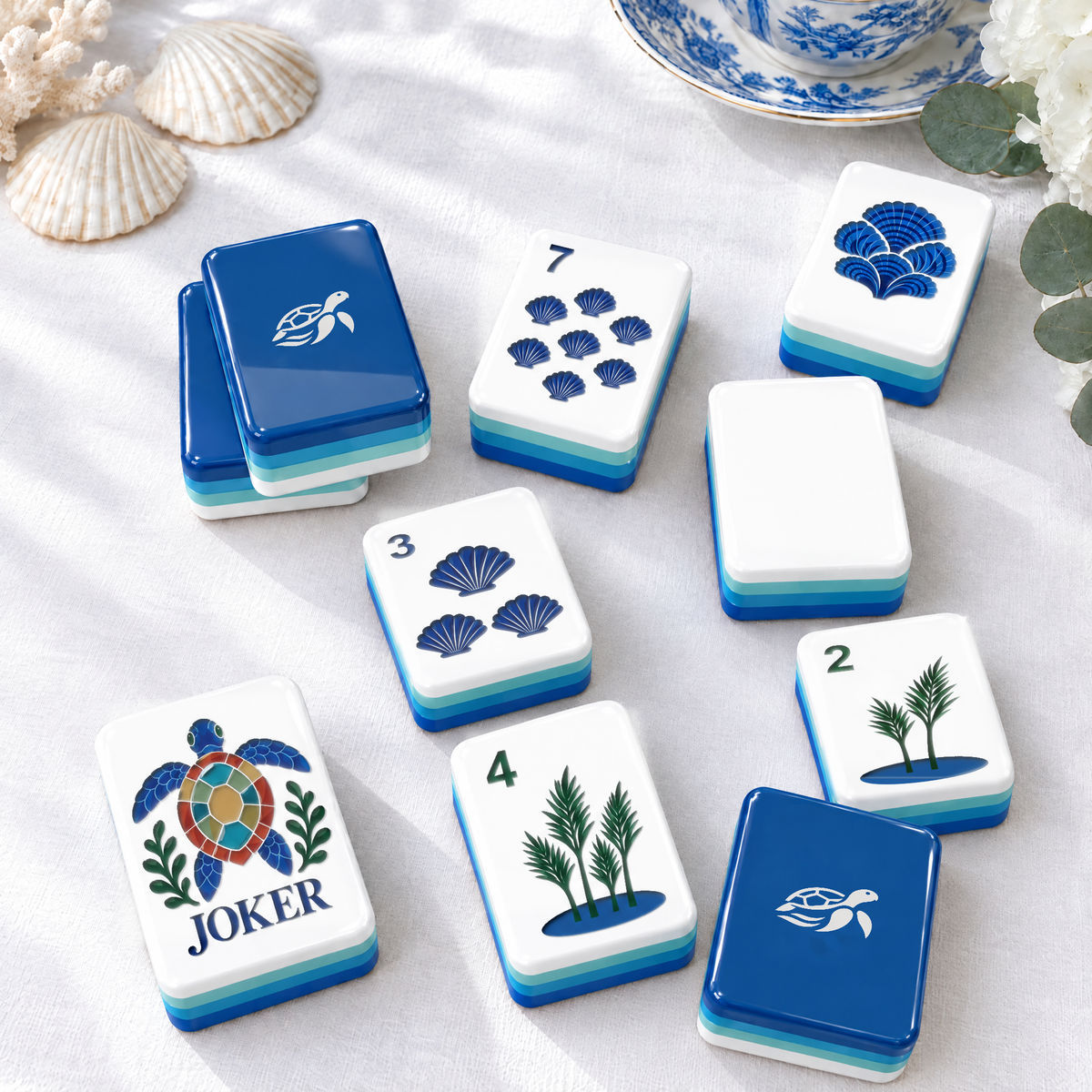
In Chinese mahjong, blank tiles serve specific strategic and structural roles in Chinese mahjong, functioning as wildcards or zeros depending on the variant. They appear in standard Chinese sets (144 tiles) as 8 spares added beyond the core playing tiles—not part of the mandatory game composition. The frequency and legality of blank tiles depends heavily on the regional variant: Hong Kong mahjong uses them liberally in exposed melds, while Riichi (Japanese) mahjong forbids them entirely. In American mahjong, by contrast, blanks are never part of standard play; American sets include only 152 playing tiles plus spare jokers and blanks for table decor or future seasons. If you're hosting mixed-variant games, clarify before dealing whether blanks are legal, how many players may use them per hand, and whether they reset after each win.
What exactly is a blank tile in Chinese mahjong?
A blank tile is an unmarked or nearly unmarked acrylic or bamboo tile that acts as a universal substitute in Chinese mahjong variants. Unlike jokers (which may have images or patterns), blanks are plain—often white or cream-colored—and represent "nothing" or a flexible placeholder. In Hong Kong mahjong, a player holding a blank can declare it as any suit (Bam, Crak, Dot) and any number (1–9) or honor tile (Wind, Dragon) to complete a meld. In other variants, a blank may function as a zero tile in scoring. Blanks are not mandatory game pieces; they're extras that players agree to use before the game starts, making them optional house rules rather than standard equipment.

How many blank tiles does a Chinese mahjong set include?
Standard Chinese mahjong sets contain 144 core tiles (4 copies each of three suits 1–9, plus Winds, Dragons, and Flowers). Most manufacturers add 8 spare tiles beyond the 144—these spares can be blanks, extra jokers, or a mix, depending on the maker and variant. The 8 spares are never shuffled into the wall or dealt; they sit aside as replacements if a tile cracks or if the group agrees to add blanks to play. Unlike American mahjong, which standardizes a 152-tile playing composition plus extra spares in a 160-tile set, Chinese sets allow more regional flexibility, so blank counts vary. Always check the product description or manufacturer specs before buying if blanks are crucial to your game style.
How do blanks differ between Chinese, Hong Kong, and Riichi mahjong?
Variant | Blank Status | Usage | Number Allowed | How It Works |
Hong Kong | Legal (house rule) | Meld substitute | Up to 4 per hand | Declare as any tile; can be exposed in pung, kong, or chow |
Chinese (Standard) | Optional (agreement) | Wildcard or scoring zero | Varies | Depends on local rules; rare in formal play |
Riichi (Japanese) | Illegal | None | 0 | No blanks allowed; sets contain only playable tiles |
American | Spare only | Decoration/storage | N/A | Never enter play; used for future seasons or swaps |
Hong Kong mahjong embraces blanks as active wildcards within exposed melds, letting players call them during play. Standard Chinese mahjong uses blanks sparingly and only by agreement, since the traditional game prioritizes fixed tile composition and strategy without joker-like substitutes. Riichi mahjong is strict: 136 core tiles form the entire set, and no blanks or jokers exist, making hand-building entirely deterministic. American mahjong relies on a fixed 152-tile composition plus jokers (never blanks) for wild placement, governed by the annual National Mah Jongg League card. When you play across variants at the same table, blanks are often the first point of conflict—so discuss your house rule before the Charleston.
When and why would you use a blank tile in your game?
You'd use a blank tile when your player group explicitly agrees it makes the game more casual and fun. Beginners often request blanks to ease the pressure of hand-building, since blanks lower the barrier to completing melds. Social players in Hong Kong or informal Chinese games may allow one or two blanks per player per hand to speed up rounds or reduce frustration. Blanks also fill the role of a replacement if a core tile is damaged during play. In formal or tournament settings—American mahjong leagues, Riichi tournaments, or competitive Chinese play—blanks are forbidden, since they undermine the mathematical balance of the game. If you're teaching a new player or hosting a relaxed weekly game among friends, adding one blank tile to the spare pile and letting players buy it from the kong box (if they choose) can keep spirits high without breaking the core rules. However, once blanks enter play, hand scoring may shift, so agree on how to count them before the first deal.
🀄 Shop best-selling mahjong sets →

How do blanks affect scoring and hand validity?
In most Chinese variants, blank tiles do not appear on the hand-evaluation chart—they're wildcards, so their point value is whatever the tile they represent was worth. A blank acting as a 5 Crak in a pung contributes the same points as a real 5 Crak. In Riichi mahjong (where blanks don't exist), this question never arises. In American mahjong, blanks never enter the live game at all; the 8 jokers provided in a 160-tile set are the only wildcards, and they follow strict rules: jokers cannot be used in a single tile or pair, and they reset at certain plays. If you're mixing variants and allowing blanks, your group must decide in advance whether a blank counts toward hand limits, whether it "locks" once placed in an exposed meld, or whether it can be swapped out like a live joker in some American house rules. Document this decision and repeat it before each session to avoid disputes. Most casual players treat blanks as invisible once placed—they simply represent the tile declared, nothing more.
How to choose between blank tiles and jokers for your game.
If you're hosting weekly mahjong and want flexibility, first determine which variant you'll play most: American, Chinese, Hong Kong, or Riichi. For American mahjong, skip the blank question entirely—our 160-tile sets include jokers (never blanks), which are the only legal wildcards. For Chinese or Hong Kong play, buy a standard 144-tile Chinese set and discuss house rules with your players before opening it. If your group votes to use blanks, ask the seller whether the spare tiles included are blanks or extra jokers; most modern Chinese sets come with a mix. Jokers are preferable if you want a clearer visual distinction (they often have printed images), while blanks work if you want a minimal, elegant aesthetic. For casual or beginner play, blanks reduce pressure and speed up rounds. For competitive or regular play, stick to no wildcards or the officially legal version (American jokers, Riichi restrictions, or Chinese formal rules).
One honest note: blanks can lead to arguments over what was declared and how long a wildcard stays in play, so reserve them for trusted friend groups or evenings where you don't mind restarting a round if someone forgets the rule.
🎁 See our most-loved mahjong sets & accessories →
What to check before you buy a Chinese mahjong set with blanks.
Before purchasing, confirm these details:
Spare tile composition: Ask or read the product description—does the set include blanks, extra jokers, or both? Most lists don't specify, so contact the seller if blanks are non-negotiable.
Tile count: Standard is 144 playable tiles. If the listing says "152-tile set," it's likely a hybrid or set intended for American play, not pure Chinese mahjong.
Material and clarity: Blank tiles should be readable if any printing does exist (like a small dot or maker's mark). Cheap blanks can be murky or stained, making them hard to distinguish from yellowed regular tiles.
Variant compatibility: If you play Hong Kong or Riichi, confirm the set's origin (Hong Kong, mainland China, Japan). Some Chinese sets sold in North America are actually American-compatible hybrids.
House rule documentation: Ask the previous owner or group if the set comes with written rules about blank usage, hand limits, or scoring adjustments.
Size and heft: Blank tiles should match the weight and dimensions of regular tiles; poorly made blanks feel lightweight or plastic-y and may jam in racks.
If you're new to mahjong or switching from American to Chinese play, start with a best-selling acrylic set from a trusted maker, play a few rounds with no blanks to learn the base game, then add blanks later if your group requests it. This approach lets you master the core rules before introducing wildcards.
✨ Find your Mahstead set — free US shipping →

FAQ
Can I use blank tiles in American mahjong?
No. American mahjong uses a fixed 152-tile composition with 8 jokers as the only wildcards. Blanks are never part of standard American play. If you want to host American mahjong, use a certified 160-tile American set with jokers, not blanks.
Are blank tiles the same as jokers in mahjong?
No. Jokers are printed tiles (often with images or markings) that function as wildcards per the specific variant's rules. Blanks are unmarked or minimally marked tiles. In American mahjong, jokers are legal; blanks are extras. In Hong Kong, both may be used interchangeably by house agreement, but jokers are more common.
Why does one Chinese mahjong set have blanks and another doesn't?
Blank inclusion depends on the manufacturer, regional origin, and variant. Standard Chinese (144-tile) sets include 8 spares, which may be blanks, extra jokers, or a mix. Some makers add no blanks at all. Check the product details or contact the seller to confirm.
If I allow blank tiles in my game, do I have to count them in scoring?
No. A blank tile represents whatever tile it's declared as, so it counts the same way that tile would. For example, a blank standing in for a 5 Crak in a pung scores as a 5 Crak. You don't add extra points for the blank itself. However, each group should agree on this before dealing.
What happens if someone doesn't remember which tile a blank is supposed to be?
You have a problem. This is why blanks are uncommon in formal or regular play. In casual games, if this occurs, the declaring player should announce clearly before placing it, and the group should agree to pause and clarify the declared tile. If disputes happen often, retire the blanks and stick to no wildcards until everyone knows the base game well.
Can I mix blank tiles and jokers in the same game?
Only by house agreement and only if your variant allows both. American mahjong uses jokers, not blanks. Hong Kong mahjong may permit both as substitutes, but this compounds confusion. Most casual groups pick one or the other. Clarify before the Charleston.


View More
View More
View More
