
Sichuan Bloody Mahjong Rules: How to Play This Fast-Paced Variant
Last updated: Nov 23, 2026
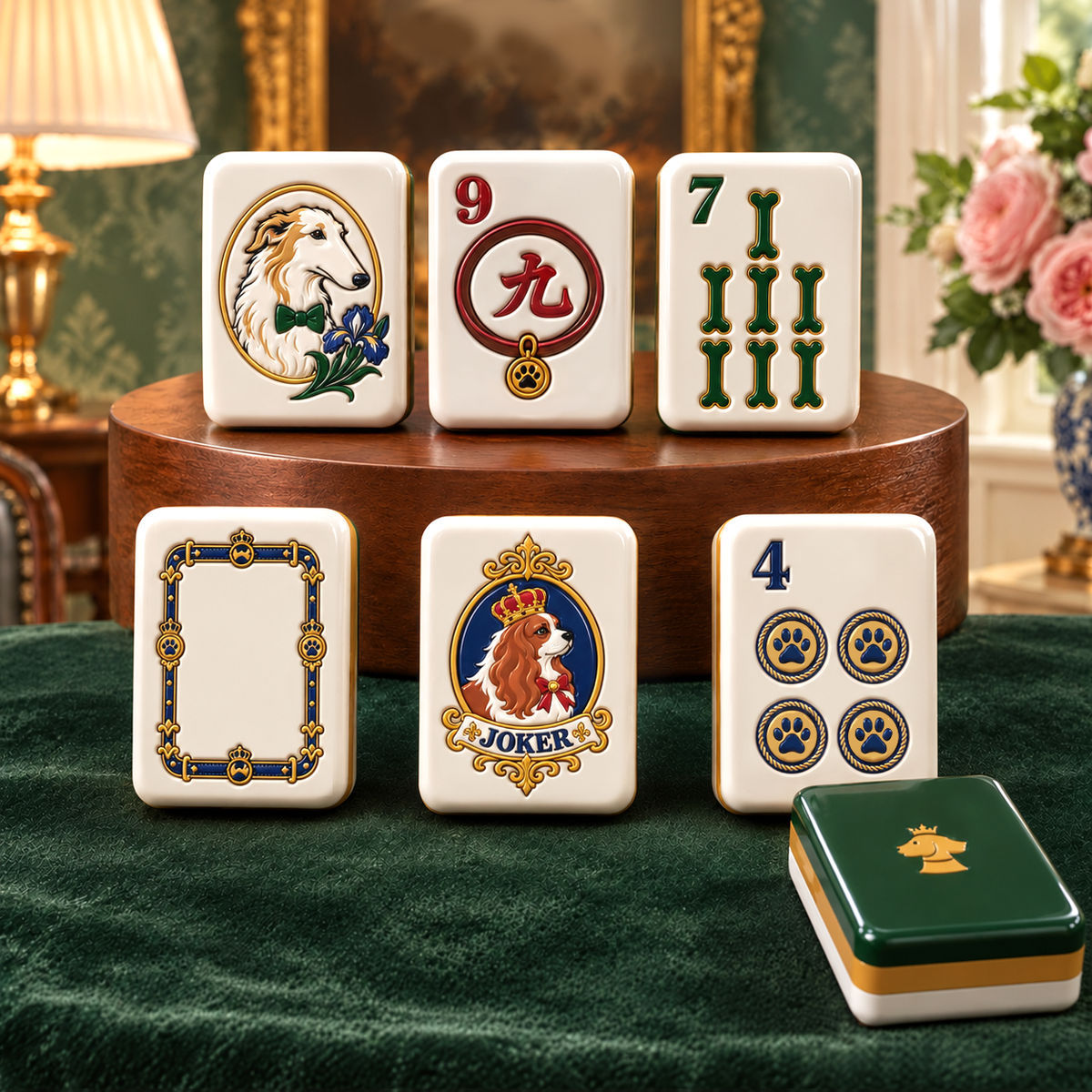
Sichuan bloody mahjong is a Chinese variant played by four independent players—no dealer rotation or team scoring. Players draw from a central wall, discard, and call winning hands immediately when they form one (no waiting for a specific moment). Hands rank by type: pairs, chows (sequences like 1–2–3), and pungs (triplets). The game moves fast because any player can win on any turn. Scoring is point-based, not pattern-based; winning hands pay out from all three losing players. Unlike American mahjong, which uses the annual National Mah Jongg League card and hand patterns, Sichuan bloody mahjong relies on fixed hand hierarchies and encourages aggressive, rapid play. A standard 152-tile set works, though players often use a best-selling acrylic American set with racks to manage the speed and keep tiles organized during quick discards.
What tiles do you need to play Sichuan bloody mahjong?
A standard 152-tile set covers everything. You need three suits (Bams, Craks, Dots: numbers 1–9, four copies of each), 16 winds, 12 dragons, and 8 flowers. Jokers are typically not used in traditional Sichuan play, though regional house rules vary. If you're playing casually in a Western setting, many groups add jokers for flexibility. A complete set with mahjong racks and pushers helps you manage the faster pace and keeps discards visible.

How are tiles dealt and the wall built?
All four players sit around the table. Someone (chosen by dice, age, or agreement) acts as the "starting dealer" and deals out stacks of tiles in a way that differs from American mahjong: typically, 13 tiles per player (drawn in pairs or sets from the wall), with one tile drawn after. The central tile wall remains face-down and grows smaller as tiles are drawn. Players then arrange their 13 tiles into hand and discard one to start play. The wall is usually built in a square or line, and as the game progresses, the wall shrinks rapidly. Unlike American mahjong, there is no Charleston (tile-passing ritual), and play begins immediately after dealing and the first discard.
🀄 Shop best-selling mahjong sets →
What hands win and how do you rank them?
Sichuan bloody mahjong recognizes specific hand types—no patterns from a annual card. A winning hand always has a pair (two identical tiles) plus melds: chows (three consecutive numbers in one suit, like 4–5–6 Dots) and pungs (three identical tiles, like three 7 Craks). Some regional variations also allow kongs (four identical tiles). The hand hierarchy typically ranks from lowest (simple pairs and chows) to highest (all pungs, "seven pairs," or special combos like "thirteen orphans"—one copy each of terminal and honor tiles plus a pair). A player announces a win as soon as they complete a valid hand on their turn or by claiming a discard. Unlike American mahjong's fixed patterns, rankings vary by house rules and region, so check your group's variant before starting.

How does the discard and calling system work?
After dealing, each player discards one tile face-up into the center. The next player draws from the wall, examines their hand, and either keeps a tile or discards. Play flows clockwise. Any player can call (claim) another player's discard if it completes a pung, chow, or winning hand—you don't have to wait for your turn. This is a key difference from American mahjong: claiming is aggressive and happens on the spot. Once you claim a discard to form a meld (pung or chow), you expose it on the table. If a discard completes your hand and you have no other melds required, you declare "win" immediately. If multiple players want the same discard (e.g., two players both want it for their winning hand), priority often goes to the player closest in turn order, though house rules vary. The game moves very fast because no one waits: claiming and winning happen mid-turn.
Aspect | American Mahjong | Sichuan Bloody Mahjong |
Players | 4 players with dealer rotation | 4 independent players, no dealer rotation |
Hand source | Annual NMJL card patterns | Fixed hand hierarchies (pairs + chows/pungs) |
Sequences allowed | No chows; exposed melds only (pungs, kongs, quints, sextets) | Chows (sequences) are standard; pungs and kongs allowed |
Tile passing | Charleston before every game | No tile passing; deal and play immediately |
Winning condition | Must match one specific hand from the card | Any valid hand (pair + melds) wins |
Claiming discard | Limited; not all discard types can be called | Aggressive; any discard can be claimed for a meld or win |
Scoring | Pattern-based (points vary by hand) | Point-based payouts; winner collects from all three losers |
Joker rules | Jokers can substitute; never in pairs or singles | Jokers rarely used in traditional play |
Pace | Moderate; structured by card | Fast; multiple simultaneous calls possible |
🎁 See our most-loved mahjong sets & accessories →
How is Sichuan bloody mahjong scored and who pays whom?
Each winning hand has a point value. Basic hand: maybe 1 point. Two-pung hand: 2 points. Three-pung or all-chow hand: 4 points. Special hands (all terminals, seven pairs, etc.): 8+ points—again, house rules and regional variants determine exact values. When a player wins, all three losing players pay the winner that hand's point value. So a 4-point win means the winner collects 4 points from each of the three losers, totaling 12 points gained. Some groups score with chips or cash; others keep running tallies on paper. At the end of a session (often 8–16 games), players settle up: highest net score wins. Because every player competes individually and any win pays out from three sources, the game rewards aggressive play and creates momentum swings. This differs sharply from American mahjong, where the winner scores once per hand and payment is typically to one player (the dealer or a designated payout).
What regional house rules should you know before playing?
Sichuan bloody mahjong has no single "official" rulebook like American mahjong does. Common variables include:
Joker use: some groups allow 0–2 jokers as wildcards; others forbid them entirely.
Kong rules: whether a kong (four of a kind) can be called mid-play or only declared when forming a winning hand.
Pair restrictions: whether the winning pair must be specific tiles or any pair.
Dead hand: if a player exposes incorrect melds or declares a false win, penalties vary from sitting out one round to paying a fixed fee.
Winning on the wall: whether a player can win by drawing the last tile from the wall (a "self-drawn" win), which often scores higher.
Limit hands: capped or uncapped scoring for very high hands.
Before starting, ask your group: Do you allow jokers? Is self-drawn higher? What's the point cap? If you're teaching newcomers to Sichuan play, start with a simplified rule set—basic hand rankings, no jokers, no kongs—and layer in complexity. A mahjong mat with clear zones for melds and discards helps everyone see the game state and reduces confusion during fast play.
✨ Find your Mahstead set — free US shipping →
What to check before you buy a set for Sichuan play
Tile readability: you'll be calling and claiming fast; make sure the suit symbols and numbers are bold and easy to spot from across the table. Acrylic tiles with high contrast work well.
Rack depth and pusher quality: if you're stacking 13 tiles, a shallow rack won't hold them safely. Ensure racks have a lip or pusher to grip tiles firmly during quick discards.
Bag or case: Sichuan games often happen casually (family, friends, dim sum gatherings); a sturdy bag lets you transport your set without losing a tile.
Tile feel: if you're playing with chips or cash, smoother tiles reduce cheating risk and make claiming/discarding fluid.
New arrivals at Mahstead include sets designed for speed play; check sizes and materials to match your group's pace and environment.

FAQ
Is Sichuan bloody mahjong the same as Chinese mahjong?
No. Chinese mahjong refers to the broader family of tile games played across China; Sichuan bloody mahjong is one regional variant. Others (Shanghai, Cantonese, Fujian) have different hand rankings and calling rules. Sichuan's key feature is independent players and no dealer role.
Can I use an American mahjong set to play Sichuan rules?
Yes, the tile counts overlap. Both use 152 basic tiles (Bams, Craks, Dots, winds, dragons, flowers). American sets do include jokers; Sichuan traditionally doesn't, but you can simply leave jokers aside. Racks and pushers from an American set work fine.
What's the difference between winning by discard and self-drawn?
A discard win happens when you claim another player's discarded tile and complete your hand. Self-drawn means you drew from the wall and completed your hand without claiming. Self-drawn often scores higher (double or triple points in many house rules) because it's riskier and requires more luck.
Do I need a special mat or table for Sichuan play?
No, but a mat helps. A mat with meld zones (one per player) keeps the game organized during fast calling and discarding. It also protects your tiles if you're playing on a shared table. Not mandatory, but recommended for groups new to the speed.
How long does one game of Sichuan bloody mahjong take?
Typically 15–25 minutes per game, depending on how fast players call and whether someone wins early. American mahjong games average 30–45 minutes because players search the card for exact patterns. Sichuan's simpler hand rankings and aggressive claiming speed up play significantly.
Can I play Sichuan bloody mahjong with fewer than four players?
Not well. The game is designed for four independent competitors; payouts and strategy depend on three losers paying one winner. Some groups adapt it for three players by adjusting the wall size or payouts, but it's not standard. Stick with four if possible.


View More
View More
View More
