
Siamese Mahjong vs. Mahjong Solitaire: Key Differences
Last updated: Nov 23, 2026
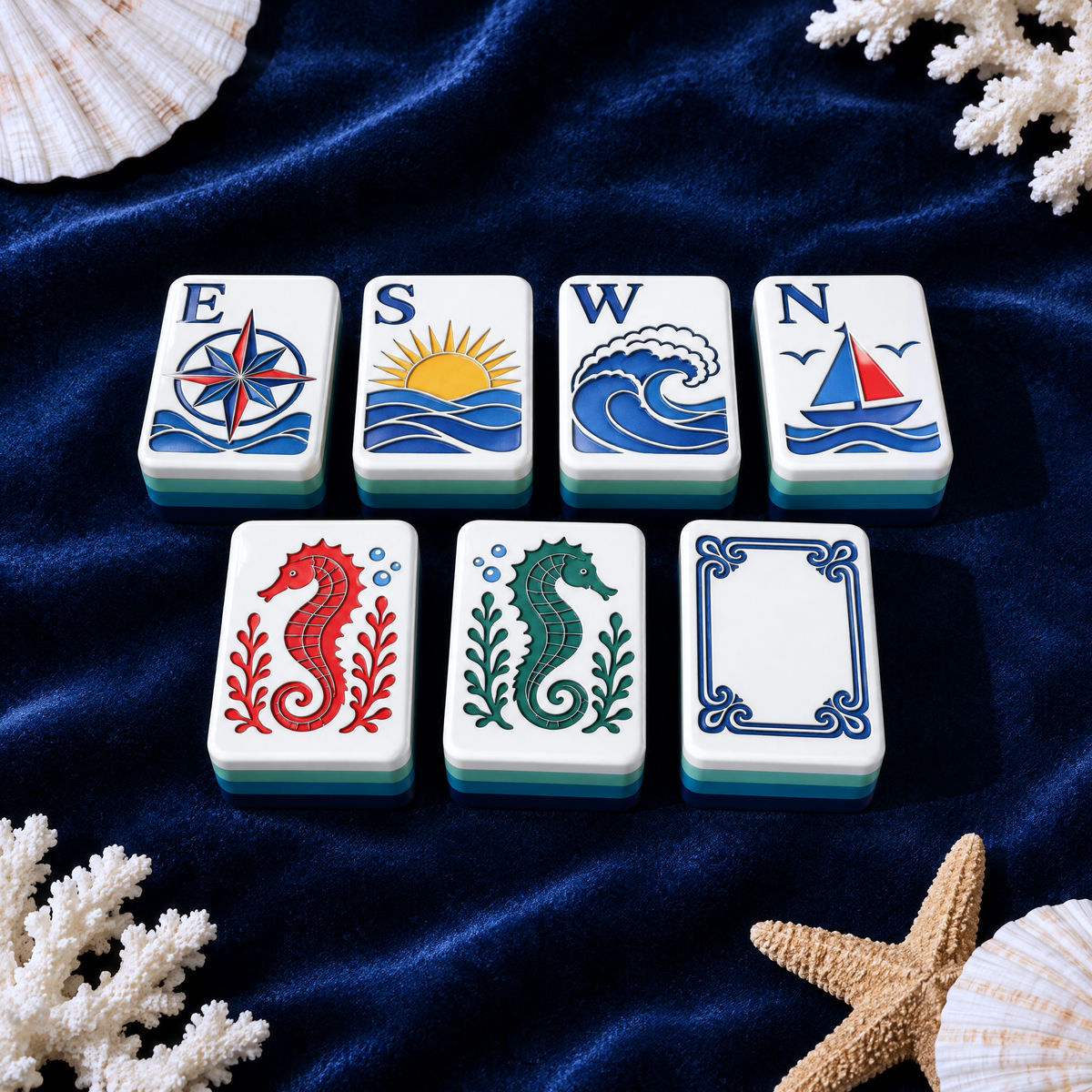
Siamese mahjong (also called Thai mahjong) is a real-time, four-player tile game played with a 144-tile set, where players draw, discard, and meld tiles in sequences and groups—similar to Chinese or Hong Kong mahjong but with local rule variations. Mahjong solitaire, by contrast, is a solo digital or physical puzzle game in which one player arranges tiles on a board and removes matching pairs to clear the entire layout; it requires no drawing, no opponents, and no live decision-making. Siamese mahjong typically lasts 1–3 hours per session and involves strategy, timing, and reading opponents. Mahjong solitaire is casual, meditative, and can be completed in 5–30 minutes. American mahjong sits between these two: it is a four-player competitive game using a 152-tile set and a card-based hand system, with no sequences allowed—only groups and combinations. If you want to host a live social game night, learn Siamese or American mahjong. If you want a relaxing solo pastime, mahjong solitaire is your match.
What is Siamese mahjong, and how is it played?
Siamese mahjong is a four-player game originating in Thailand, played with a 144-tile set comprising three suits (Bams, Craks, Dots 1–9, four copies each), honors (winds and dragons), and flowers. Players draw one tile and discard one tile per turn, building melds: pung (three identical tiles), kong (four identical), or chow (three consecutive tiles in the same suit, like 4-5-6 Dots). The game ends when one player completes a winning hand—typically thirteen tiles plus one drawn tile, arranged in four melds and a pair. Siamese rules allow chows to be called and exposed, unlike American mahjong. Rounds often last 30–90 minutes, and games are intensely social and strategic.

What is mahjong solitaire, and how does it differ from real mahjong?
Mahjong solitaire is not really mahjong in the traditional sense: it's a puzzle-matching game where one player looks at a static board layout—typically shaped like a pyramid, flower, or grid—and removes pairs of identical or related tiles. No drawing, no opponents, no luck or bluffing. The goal is to clear all tiles from the board by matching visible pairs. Most versions appear as digital apps or online browser games; some physical sets exist. A session takes 5–30 minutes and requires no rules memorization or opponent interaction. Many casual players confuse it with real mahjong because of the shared tile graphics, but solitaire has none of the competition, hand-building, or real-time decision-making that define mahjong games. Think of it as digital tile Sudoku rather than card poker.
How does American mahjong fit between Siamese and solitaire?
American mahjong is a four-player game using 152 tiles and a published card that lists all valid winning hands for that year (issued each spring by the National Mah Jongg League). Players form only pung (three identical), kong (four identical), quint (five identical), and sextet (six identical) melds—no chows or sequences. Before play, players perform the Charleston, a ritual three-pass tile exchange to balance luck. A hand typically lasts 30–60 minutes. American mahjong is more rigid and card-dependent than Siamese mahjong but equally social and strategic. It sits squarely in the "live competitive game" camp, unlike solitaire, and has become the dominant variant played in North America, especially among long-term groups who host weekly games and invest in quality sets and mats.
Comparison: Game, Tiles, Setup, and Duration
Variant | Players | Tile Count | Melds Allowed | Typical Duration | Luck Factor | Social? |
Siamese | 4 | 144 | Pungs, kongs, chows | 30–90 min | Medium | High |
American | 4 | 152 | Pungs, kongs, quints, sextets only | 30–60 min | Low | High |
Solitaire | 1 | Varies (40–144) | Pairs only | 5–30 min | None | None |
American mahjong sets typically come as 160-tile acrylic or traditional designs, with free US shipping; Siamese sets are harder to find outside Asia and often lack the standardization American sets offer. Solitaire requires no physical set if played online.

Why do beginners confuse these three games?
Beginners conflate Siamese, American, and solitaire because all three share the word "mahjong" and use decorated tiles depicting Bams, Craks, Dots, winds, and dragons. However, the gameplay loops are completely different. Siamese mahjong and American mahjong both involve four players, live decision-making, and real-time strategy—but American mahjong forbids chows and relies on an annual card, while Siamese mahjong allows chows and uses traditional open-hand conventions. Mahjong solitaire shares only the tile aesthetics; it is mechanically closer to matching games like Memory or Mahjong Connect (the popular mobile app) than to any multiplayer mahjong variant. New players often try solitaire first because it's accessible online, then feel lost when they encounter real mahjong rules—there is no direct bridge between solo puzzle-solving and live four-player competition. Understanding this distinction upfront saves hours of confusion.
Which variant should you learn if you want to host games?
If you are starting a regular game night and want a mature, North American standard, learn American mahjong. It has the simplest modern ruleset, the widest range of published teaching resources, and the most available equipment (sets, mats, racks, bags). Games last a predictable 30–60 minutes, and the hand card published every spring levels the playing field for newcomers and veterans alike. If you are drawn to international mahjong culture or travel frequently to Asia, Siamese or Hong Kong mahjong offer richer strategic depth—but expect a steeper learning curve and longer sessions. Mahjong solitaire is a solo wind-down tool, not a social event; do not confuse it with hosting.
When you are ready to invest in equipment, explore our most-loved sets and accessories designed specifically for American mahjong and weekly game groups. Acrylic sets are easier to clean and handle than bone-and-bamboo sets, and they come with coordinating mats and racks with pushers that speed up gameplay and reduce table talk errors.
🀄 Shop best-selling mahjong sets →
What to check before you buy a mahjong set
Before committing to a set, confirm the rules of the game your group plays or plans to adopt. Ask: Are you learning American mahjong (152-tile, card-based)? Siamese or Hong Kong mahjong (144-tile, chow-based)? Or starting a solitaire hobby (any size, no shared set needed)? If American, ensure your set includes exactly 152 playing tiles plus spare jokers and blanks—our 160-tile sets contain the full working deck. If Siamese or Hong Kong, you will need a 144-tile set with chow capability, which is rarer in North American retail; most widely available sets default to American rules. Never buy a solitaire-only set thinking it will work for live play; the tile distribution and absence of jokers will block you immediately. Read the rule book or watch a video tutorial for your chosen variant before purchasing, and confirm your group's preference. If your group is still deciding, American mahjong is the safest entry point for North American players.
✨ Find your Mahstead set — free US shipping →

FAQ
Can I play American mahjong with a Siamese or solitaire set?
No. American mahjong requires exactly 152 tiles with eight jokers; Siamese sets have 144 tiles without jokers. Solitaire sets often have fewer tiles and no consistent suit structure. Use the correct set for the variant you play.
Is mahjong solitaire considered "real" mahjong?
No. Real mahjong is a multiplayer competitive game requiring live drawing, discarding, and social strategy. Solitaire is a solo puzzle that happens to use decorated tiles; it is mechanically distinct and lacks the core appeal of mahjong—interaction with opponents.
How long does a typical Siamese mahjong game last compared to American?
Siamese games run 30–90 minutes per hand and often include multiple rounds. American games typically last 30–60 minutes per hand. Siamese tends toward longer, more complex hands.
Do I need an annual card to play Siamese mahjong like I do for American?
No. Siamese mahjong uses traditional open-hand rules; any valid four-meld-plus-pair combination wins. American mahjong requires the current year's National Mah Jongg League card, published every spring, which lists all valid hands.
Can I practice American mahjong offline using solitaire apps?
Yes, for learning tile names and suit recognition, but solitaire teaches no strategy, hand-building, or decision-making. Always transition to live games with a real set, mat, and group to truly learn American mahjong.
What's the best first step if I want to start hosting American mahjong nights?
Buy a quality 160-tile acrylic set with a mat and racks, print the current year's National Mah Jongg League card, watch a tutorial video, and invite three friends for a practice round—no money, just learning together.


View More
View More
View More
