
Siamese Mahjong: How to Count Points & Understand Scoring
Last updated: Nov 23, 2026
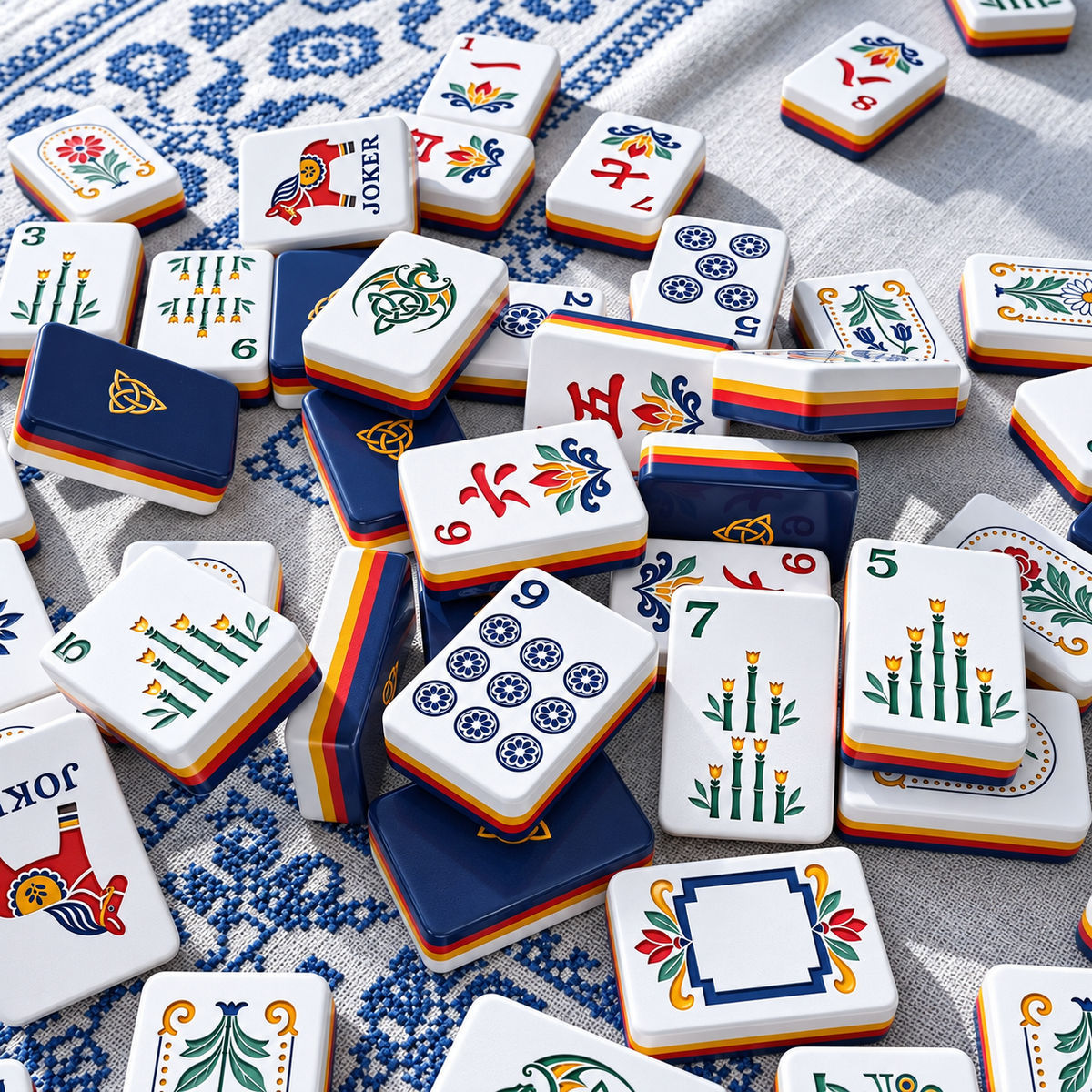
Siamese mahjong (also called Thai mahjong) scores hands using a base-point system multiplied by wait type and hand composition. Unlike American mahjong, which relies on a fixed yearly card, Siamese players calculate points live: a closed hand (no exposed melds) with a single wait typically scores low, while an open hand with specific tile patterns scores higher. Points are multiplied by 2, 4, 8, or 16 depending on whether you've won on a self-drawn tile, a discard, or a specific bonus condition. The winner collects points from all three opponents. Scoring happens after meld verification and before the next deal. Most casual Siamese games use simplified scoring (1–4 point tiers per hand), while competitive play follows strict rulebooks with detailed multipliers.
Siamese mahjong is played across Thailand and neighboring regions, and its scoring system feels radically different if you've only played American mahjong. Where American relies on a printed card and fixed hand lists, Siamese players evaluate every hand in real time based on structural rules. That shift—from reference card to live judgment—changes how you think about tile combinations, when to stop discarding, and what constitutes a strong finish.
We host games that swing between American and Siamese formats, and the scoring confusion is always the first sticking point for newcomers. Here's what you genuinely need to know to count a Siamese hand and play with confidence.
What makes Siamese mahjong scoring different from American?
American mahjong uses a published National Mah Jongg League card; you match your completed hand exactly to a listed pattern and collect a fixed point value (usually 30–40 points). Siamese mahjong has no card. Instead, every hand earns points based on four rules: base points (for melds and tile type), wait type (how you completed the hand), hand openness (closed vs. open), and multipliers (lucky tiles, specific bonuses). The winner's base is typically 8 points, then multiplied. A closed hand with a winning draw doubles the multiplier; a hand with Dragon pairs or terminal tiles often adds extra multipliers. This means two identical-looking hands can score very differently depending on their wait and composition.

How do you calculate the base points in Siamese mahjong?
Start by counting your melds—pungs, kongs, and pairs—then assign points per tile type. In most Siamese rule sets, Honor tiles (Winds, Dragons) are worth more than number tiles. A pung of White Dragons might be worth 2 base points, whereas a pung of 1 Dots is worth 1. Some rule sets award bonus points for specific combinations: three Honors in succession, or a hand with no number tiles (all Honors and Terminals). Once you've summed all base points, you have your hand's face value. Then apply multipliers: ×2 for a self-drawn win, ×4 if the hand is closed AND self-drawn, ×8 for lucky circumstances (winning on your first discard, for example). The final score is base × multiplier, divided equally among the three other players (or split per local house rules).
What is the difference between self-drawn and discard wins in Siamese scoring?
Self-drawn wins (you drew the winning tile from the wall) usually score a ×2 multiplier or higher, because you earned the tile yourself rather than relying on an opponent's discard. Discard wins (someone threw the tile you needed) score ×1 or ×2, depending on the house rule and hand type. In strict Siamese play, a self-drawn win from a closed hand gets ×4; a self-drawn win from an open hand (with exposed melds) is ×2. A discard win is always ×1 unless a special bonus applies (e.g., winning on a Dragon tile, or on your first turn). This distinction heavily rewards patience and hand building, so you'll often see experienced Siamese players hold tiles longer than American players would, waiting for the self-draw advantage. The multiplier jump from ×1 to ×4 for a closed self-drawn hand can mean the difference between a small win and collecting big points from three opponents.
Are there Siamese mahjong rule variants, and which one should you learn first?
Yes—Siamese mahjong has regional and house rule splits. Thai Classic (most common in Thailand) uses strict base-point tables and ×2/×4 multipliers. Central Thai (Bangkok circles) applies more generous bonuses for Honor tiles and specific patterns. Simplified Siamese (casual play) collapses scoring into tiers: hand scores 1, 2, 3, or 4 points, then everyone pays the winner that amount. If you're new, start with Simplified Siamese to learn hand priority (closed beats open, self-drawn beats discard, Honors beat number tiles), then graduate to Thai Classic once you memorize the base-point table. Most rule guides are available online in Thai and English; check forums or local clubs to see which variant your group uses before your first game. House rules can override printed rules, so always ask before you sit down.
What tiles and patterns count as bonus in Siamese mahjong?
Bonus tiles and patterns vary by rule set, but here are the most common:
Dragons (Red, Green, White): often worth +1 or +2 base points per pung or kong.
Winds matching the Round Wind or your Seat Wind: +1 base point.
Terminals (1 and 9 of each suit): +1 base point per pung.
All Honors hand: all melds are Winds or Dragons (rare, highest scorer).
All Terminals hand: 1s and 9s only (very rare, also highest).
Self-drawn bonus: ×2 or ×4 multiplier (depends on hand openness).
Some rule sets award bonus if you win on a Dragon tile thrown by another player, or if your winning tile was the last tile in the wall. The best practice: get a written rule sheet from your group before playing. One player keeping the score sheet prevents disputes, and referencing the sheet mid-game settles arguments instantly.

How do you avoid common scoring mistakes in Siamese mahjong?
Mistake | Why it happens | How to prevent it |
Forgetting to multiply base by wait multiplier | Players calculate base, then forget ×2 or ×4 | Announce "Base 4, ×2 self-drawn, total 8" aloud before collecting. |
Misreading Honor tile values | Different rule sets rank Dragon vs. Wind tiles differently. | Agree on a rule sheet before dealing. Write point values on a card. |
Counting an open hand as closed | Exposed melds dropped during play aren't always obvious. | Mark exposed melds clearly; remind the table before scoring. |
Not verifying the winning set before scoring | A hand that looks complete may have a joker issue or misplaced tile. | Stop, spread all tiles, count to 14, verify melds match the rules. |
Forgetting a bonus tile or condition | A Dragon pung or Round Wind match isn't automatically recalled. | Scan the hand left-to-right: melds, pair, bonuses, then total. |
The single best habit: state the hand aloud as "Base X, wait Y, multiplier Z, final A" before the other players pay. This forces you to think through every step and gives opponents a chance to catch an error.
What equipment helps beginners organize Siamese mahjong scoring?
A printed or laminated rule sheet clipped to your mat takes guesswork out of disputes—you have an authority to point to. Mahjong racks with pushers organize your melds so you don't accidentally expose a tile or miscalculate base points. A quality mahjong mat gives you a flat, marked surface to lay out your hand neatly; scrambled tiles on a bare table lead to misreadings and scoring errors. Many players keep a notebook for the round score and cumulative totals. Our best-selling mahjong sets pair well with a mat and pushers—the larger, clearer tile faces on quality acrylic sets reduce miscounts.
🀄 Shop best-selling mahjong sets →
What to check before you buy a Siamese-ready set
Before investing in a set, confirm:
Tile size: can you read the suits and numbers clearly under table light? Siamese games last longer than American rounds, so eye strain is real.
Suit clarity: Bam, Crak, Dot must be instantly distinguishable. Avoid sets where the suits look too similar.
Joker count: Siamese sets sometimes need more jokers than American ones; check your group's house rules for the exact count.
Case or bag: if you're rotating between venues, a sturdy travel bag or case prevents tiles from shifting and getting lost.
Rule sheet storage: some mats have a pocket; a laminated rule card fits easily into a case.
🎁 See our most-loved mahjong sets & accessories →
The step-by-step scoring checklist
Verify the hand is complete: 4 melds (pung, kong, chow if allowed locally) + 1 pair = 14 tiles.
Identify all melds: separate your open melds from your closed melds.
Count base points: sum per-tile values from your rule sheet.
Determine wait type: self-drawn or discard.
Apply the multiplier: ×1, ×2, ×4, or ×8 based on closed/open and wait.
Note any bonuses: Dragon, Wind, Terminal, or hand-type bonus.
Announce the total: "Base X, ×Y, final Z points" aloud.
Collect or pay: each opponent pays the winner that amount (or split per house rule).
Record the score: keeper writes the round result and cumulative total.
Move to the next deal: rotate Dealer or East position per your rule set.
✨ Find your Mahstead set — free US shipping →
Why Siamese mahjong scoring rewards patience and strategy
Because multipliers jump so dramatically between a self-drawn closed hand (×4) and an open discard win (×1), Siamese mahjong penalizes rushing. An American player chasing a "safe" quick win might call a tile early; a Siamese player holds longer, hoping to draw the winning tile and double or quadruple the payout. That shift makes Siamese games slower, more defensive, and heavily dependent on reading opponents' tile flows. Honor tiles and Terminals matter more because they're worth more base points, so your opening tile pass (the Charleston equivalent) is more tactical—you keep Dragons and Winds, discard low number tiles. Experienced Siamese players study discard patterns across the table to gauge what's safe to throw. This dynamic separates casual play from competitive sessions; a new player sitting down needs to know that holding a "safe" tile for 10 turns isn't weird—it's smart.
Compare your scoring knowledge: if you can walk through the checklist above, verify a hand, and explain why a self-drawn Dragon pung beats a discarded 5 Dot pung, you're ready to play. If not, ask the Dealer or highest-scoring player at the table to walk you through one practice round before money changes hands.
Siamese mahjong scoring takes practice, but the logic is sound: base points × wait multiplier = final payment. Write it down, say it aloud, and you'll count correctly every time.

FAQ
Can you use the same rule sheet for all Siamese mahjong games?
No. Siamese mahjong has regional variants (Thai Classic, Central Thai, Simplified). Always ask your group which rules they use and get a written copy before playing. House rules can override standard rules, so verify with the Dealer or scorekeeper.
Do you need a Charleston (tile pass) before Siamese mahjong, like in American mahjong?
Most Siamese games skip the Charleston and deal directly from the wall. Some casual groups do pass tiles, but it's not standard. Ask before your first hand.
What happens if someone disputes the final score in Siamese mahjong?
Stop payment immediately. Spread the winning hand, verify all melds, recount base points using the agreed rule sheet, and re-announce the total. If the group can't agree, defer to the scorekeeper or the highest-ranked player present.
Is a chow (sequence like 1-2-3 Dots) allowed in Siamese mahjong?
Some Siamese variants allow chows; others only use pungs and kongs. This is a critical house rule—confirm before your first game. American mahjong does not allow chows at all.
How do you know if a hand is "closed" or "open" for scoring?
A closed hand has all 14 tiles hidden in your rack; no melds are exposed on the table. An open hand has at least one pung, kong, or chow laid face-up on the table. Open hands score lower multipliers (×1 or ×2) than closed hands (×4).
Can you win on your own discard in Siamese mahjong?
No. You cannot win by discarding a tile. You either draw from the wall (self-drawn, higher multiplier) or another player discards the tile you need (discard win, lower multiplier). This is a firm rule across all Siamese variants.


View More
View More
View More
