
Siamese Mahjong: How It Differs from American Play
Last updated: Nov 23, 2026
Siamese mahjong uses the same 144 tiles as Classical Chinese mahjong but with Thai-specific hand structures and a faster deal rhythm. Players sit in fixed positions (no rotating East), discard into a central pool, and build winning hands from any combination of melds and pairs—no hand card required. The wall begins at a random tile (drawn daily or by ritual) rather than at a fixed position, and play moves with greater speed than American mahjong. Siamese hands reward singles (unmatched pairs), sequences (1-2-3 progressions), and open play; jokers do not exist. Games typically take 45–90 minutes per round and are popular in Thailand, Laos, Cambodia, and among diaspora communities worldwide. If you're learning American mahjong first, switching to Siamese requires unlearning the hand card and embracing continuous exposure of melds.
Siamese mahjong emerged in mid-20th-century Thailand as a localized response to Chinese classical play, stripping away hand-book rigidity and replacing it with intuitive, moment-to-moment decision-making. It spread through Southeast Asia, establishing itself as the dominant casual variant in Thailand and neighboring regions. Players in North America, Europe, and Australia encounter it most often through Thai community centers, Lao temples, or online international groups—rarely in standard Western mahjong clubs. Understanding its logic reveals how wildly the game can adapt while staying fundamentally the game.
What tiles and equipment does Siamese mahjong use?
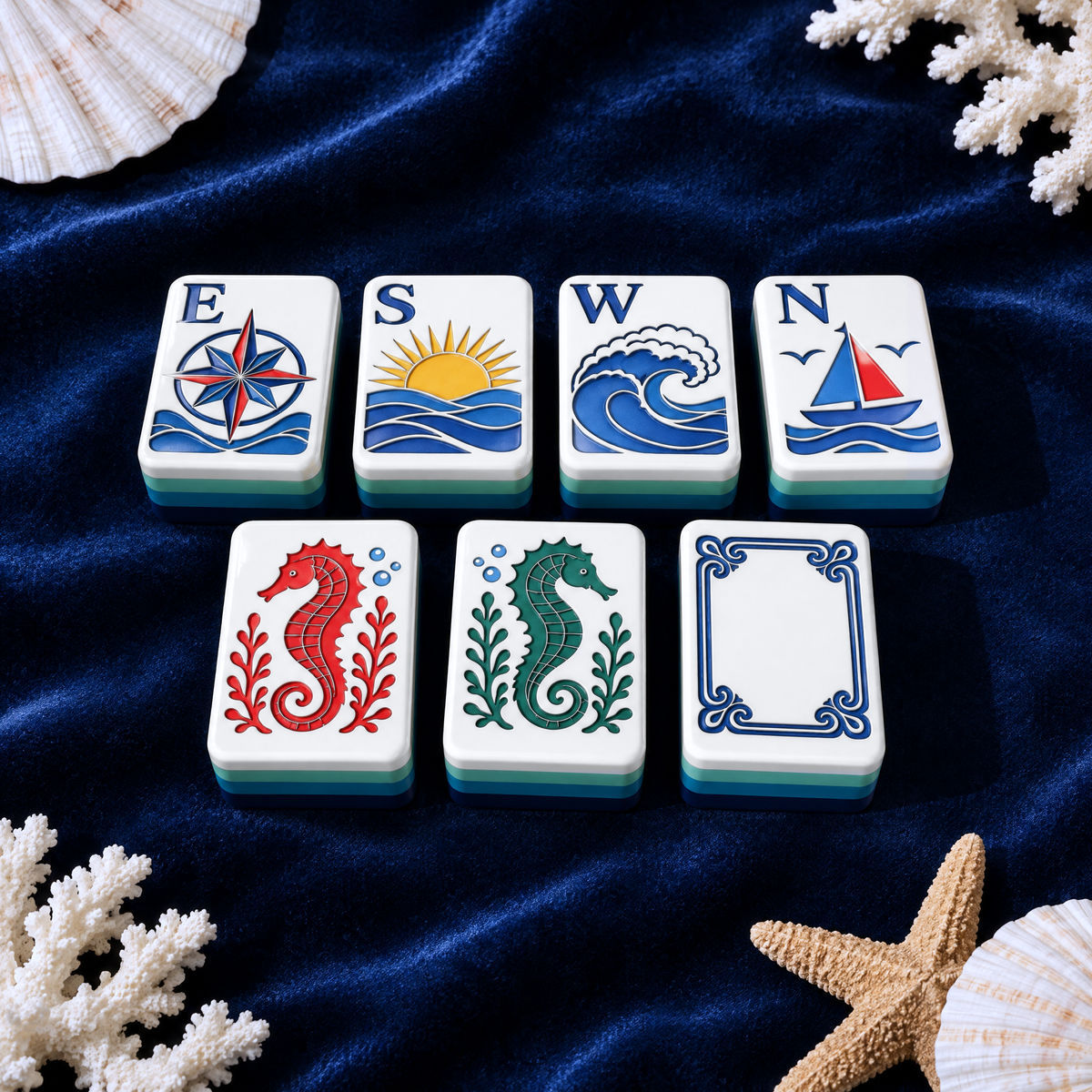
Siamese mahjong uses 144 tiles identical in count to classical Chinese mahjong: three suits (Bams, Craks, Dots) numbered 1–9 with four copies each (108 tiles), 16 winds (4 each of North, East, West, South), and 12 dragons (4 each: Red, Green, White). No flowers, no jokers, no blanks. The physical equipment—bamboo or bone tiles, a wooden rack, a mat—mirrors what's in an American mahjong set, though without the joker slots. A Siamese table typically has no hand card, no score sheet, and often a plastic turntable at the center for the discard pool. Tiles are often slightly smaller and thinner than American acrylic sets, reflecting a preference for traditional bamboo texture and rapid shuffling.

How do you build a winning hand in Siamese mahjong?
In Siamese mahjong, a winning hand consists of four melds (pungs, kongs, or chows) plus one pair, mirroring classical Chinese rules exactly. Pungs are three identical tiles; kongs are four identical; chows are three consecutive numbers in the same suit (1-2-3, 5-6-7, etc.). A pair is two identical tiles. Melds can be formed from your own draw, claimed from another player's discard (pung, kong, chow), or built incrementally on the table. Every tile exposure is legal; there is no "hand" or hidden rack in the American sense. This openness forces aggressive reading of opponents' discards and rapid inference about what they need. Winning typically comes from claiming a discard or drawing from the wall—both announce the victory immediately.
What's the role of the wall in Siamese mahjong?
The wall begins at a random position determined at the start of each game—often by drawing a tile, spinning a turntable, or by house ritual—rather than rotating with the East player as in some variants. A designated "dealer" (often kept for an entire session) draws first from the wall's predetermined starting point. After each play, the wall replenishes from the next tile in sequence. When the wall is exhausted and no one has won, the hand is abandoned; no dead hand payoffs or draws occur. The wall is typically arranged as a line of 144 stacked tiles (one layer, two tiles high per position) rather than the square layout of American or Hong Kong play. This linear arrangement speeds access and reduces fumbling.
How fast does Siamese mahjong actually play?
Siamese play is noticeably brisk: players have 5–10 seconds to claim a discard, and few formal pauses exist between rounds. A single hand may take 8–15 minutes; a full session of eight hands often finishes in 60–90 minutes, compared to 2–3 hours for a formal American game. The speed stems from open melds (no reading hidden hands), no hand card (instant recognition of validity), and a cultural emphasis on decisiveness. Casual Siamese games in Bangkok temples or Lao community centers treat the game as social rhythm rather than puzzle-solving, so chat and eating happen during play. This pace suits people who find American mahjong's contemplative structure too slow, and it rewards quick tile memory and intuition over advanced calculation.
How does Siamese scoring differ from American mahjong?
Siamese scoring is far simpler than American mahjong. A basic win is 1 point; bonuses apply for special patterns (self-draw vs. claiming a discard, concealed vs. exposed melds, dragon or wind combos). The most common bonus is 2 points for a pure suit hand or all terminals/honors; concealed hands (all melds drawn privately, no exposure) often double the value. Scoring is tracked cumulatively over a session, with a settlement (often token or casual) at the end. There is no multiplier system, no "limit hands," and no reference card required. A hand won without drawing from the wall (claiming a discard) may pay double. Payouts are typically small and proportional to the base bet—rarely exceeding a few dollars per hand. This simplicity makes Siamese mahjong accessible to new players who find the National Mah Jongg League card bewildering.

Where can you learn and play Siamese mahjong?
Siamese mahjong is taught informally in Thailand, Laos, and Cambodia, usually through family or community gatherings rather than formal instruction. In North America, look for Thai temples, Lao community centers, and Southeast Asian cultural organizations—search community center bulletin boards, Meetup, or Facebook groups for "mahjong" + your city. Many games run weekly or bi-weekly in private homes or temple halls. International online play is growing through platforms designed for classical variants; searching "Siamese mahjong" or "Thai mahjong" in app stores yields a few mobile options. Diaspora players often prefer in-person games for the social texture, so asking around Thai restaurants, beauty salons, or university Southeast Asian student groups can yield invitations. The learning curve is steep for American players (unlearning the hand card takes 2–3 hours of play), but most groups welcome earnest learners.
How does Siamese mahjong compare to American and Chinese variants?
Aspect | Siamese | American | Classical Chinese |
Tile count | 144 | 152 | 144 |
Jokers | None | 8 (standard) | None |
Hand card | No | Yes (current year's NMJL card) | No |
Chows allowed | Yes, anywhere | No, only in closed melds | Yes, anywhere |
Melds exposed | Always | Only pung, kong, quint, sextet | Always |
Pair in hand | Required (tile 14) | Required | Required |
Wall position | Random start | Fixed East, rotates | Fixed East, rotates |
Speed per hand | 8–15 min | 15–30 min | 10–20 min |
Scoring | Simple (1–4 points base) | Complex (multipliers, limit hands) | Simple (base + bonuses) |
Dealer rotation | Often fixed per session | Rotates after each hand | Rotates after each hand |
The table shows Siamese mahjong as a bridge between casual and formal play: faster and more open than American, yet structured and recognizable compared to the extreme improvisation of some street variants. American players switching to Siamese must discard hand-card dependency and embrace simultaneous melds; Siamese players trying American mahjong find the hand card liberating but the wall mechanics and joker rules initially confusing.
What mistakes do newcomers make in Siamese play?
The commonest error is holding back discards, treating them as private information. In Siamese mahjong, all discards are equally visible and claimable; hoarding a discard until it's "safe" is futile and slows the game. Second, new American players often forget that melds must be exposed instantly—there is no private cache. A third stumble is miscounting the winning hand; always verify four melds + one pair before declaring victory. Fourth, some players misunderstand the wall: once drawn, that tile is gone; you cannot "redo" a draw. Fifth, many underestimate the speed: learning to decide in 5–10 seconds comes from play, not study. Avoid rushing early; ask established players to call out slow hands without penalty for the first few rounds, and you'll accelerate naturally. Finally, do not assume Western classical Chinese rules (if you know them) apply; always ask your host group which specific regional rules they follow, as Siamese games vary by city and family.
🀄 Shop best-selling mahjong sets →
What do you need to start a Siamese mahjong group at home?
You need 144 tiles (a classical set, not an American 152-tile set), a mat to protect the playing surface, and a turntable or agreed wall-start ritual. A mahjong mat with a central scoring area or discard zone is ideal; some groups use a standard card table without a mat. Racks with pushers help organize tiles on your hand, though Siamese play often favors tiles resting flat on the mat for rapid visibility. For note-taking and score tracking, a pen and paper or a printable scoreboard suffice. Optional: a wind-indicator tile or a dice set to determine the random wall start. If you play with stakes, a chip set helps; if casual, a running tally works. No hand card is needed. A travel bag or case is useful if you move the set between homes. Most Siamese groups provide their own sets, so hosting doesn't require you to own tiles—only space and snacks.
🎁 See our most-loved mahjong sets & accessories →
What should you check before buying a classical tile set for Siamese play?
Before purchasing a 144-tile classical set for Siamese mahjong, verify: (1) tile count is exactly 144 with no blanks or spare jokers; (2) tiles are bamboo, bone, or acrylic in a size you can shuffle comfortably (typically 0.75–1 inch per tile); (3) the weight and feel suit your table speed (lighter tiles = faster play, heavier tiles = more control); (4) the set includes a rack, turntable, and bag for portability; (5) suit markings (Bams, Craks, Dots) are clear and legible under typical lighting; (6) dragons (Red, Green, White) and winds (N, E, W, S) are present and in groups of four; (7) the bag or case closes securely and fits your storage space. Many Western vendors stock only American 152-tile sets, so confirm before ordering. If you're in the U.S., Mahstead's best-selling collection focuses on American sets; for a classical 144-tile set, you may need to source from a specialist vendor in Thailand or Southeast Asia, or ask your local Siamese mahjong group for a trusted supplier. Avoid sets with jokers, flowers, or blanks; those are American additions and will clutter your Siamese game.
✨ Find your Mahstead set — free US shipping →

FAQ
Can I play Siamese mahjong with an American mahjong set?
No. American sets have 152 tiles plus 8 jokers and 8 flowers; Siamese uses exactly 144. The extra tiles and joker rules don't apply, and adding them breaks the game's balance and speed. Use a dedicated classical 144-tile set.
Do I need to learn the National Mah Jongg League card for Siamese mahjong?
No. Siamese mahjong has no hand card; any combination of four melds plus one pair wins. The constant exposure of melds makes a fixed hand list unnecessary and would slow play.
How long does a full Siamese mahjong session usually last?
A typical session is eight hands, lasting 60–90 minutes including breaks and socializing. Each hand averages 8–15 minutes, much faster than American mahjong's 15–30 minutes per hand.
What's the biggest rule difference between Siamese and American mahjong?
Siamese mahjong allows chows (sequences like 1-2-3) to be claimed and exposed from any player's discard; American mahjong forbids chows entirely and exposes only pungs, kongs, quints, and sextets. This makes Siamese play more open and fluid.
Can I play Siamese mahjong online, and are there apps for it?
Yes. A few mobile apps and web platforms support Siamese and Thai mahjong, though they're less polished than American or Hong Kong variants. Search "Thai mahjong" or "Siamese mahjong" in app stores, or ask your local Siamese community for their preferred platform.
Is Siamese mahjong easier to learn than American mahjong?
Easier to start, but different. No hand card means faster validity checks; simple scoring means fewer calculations. But the wall rules, tile speed, and chow mechanics require retraining if you know American play. Most players report 3–4 games before comfort.
What's a common opening hand strategy in Siamese mahjong?
Discard middle-range numbers (4, 5, 6) early and watch what opponents claim; this reveals which suits and ranks they're chasing. Build flexibility: hold terminals and honors longer, as they're rarer and less risky to claim from opponents' hands.


View More
View More
View More
