
Chinese Official Mahjong Terms and Glossary
Last updated: Nov 23, 2026
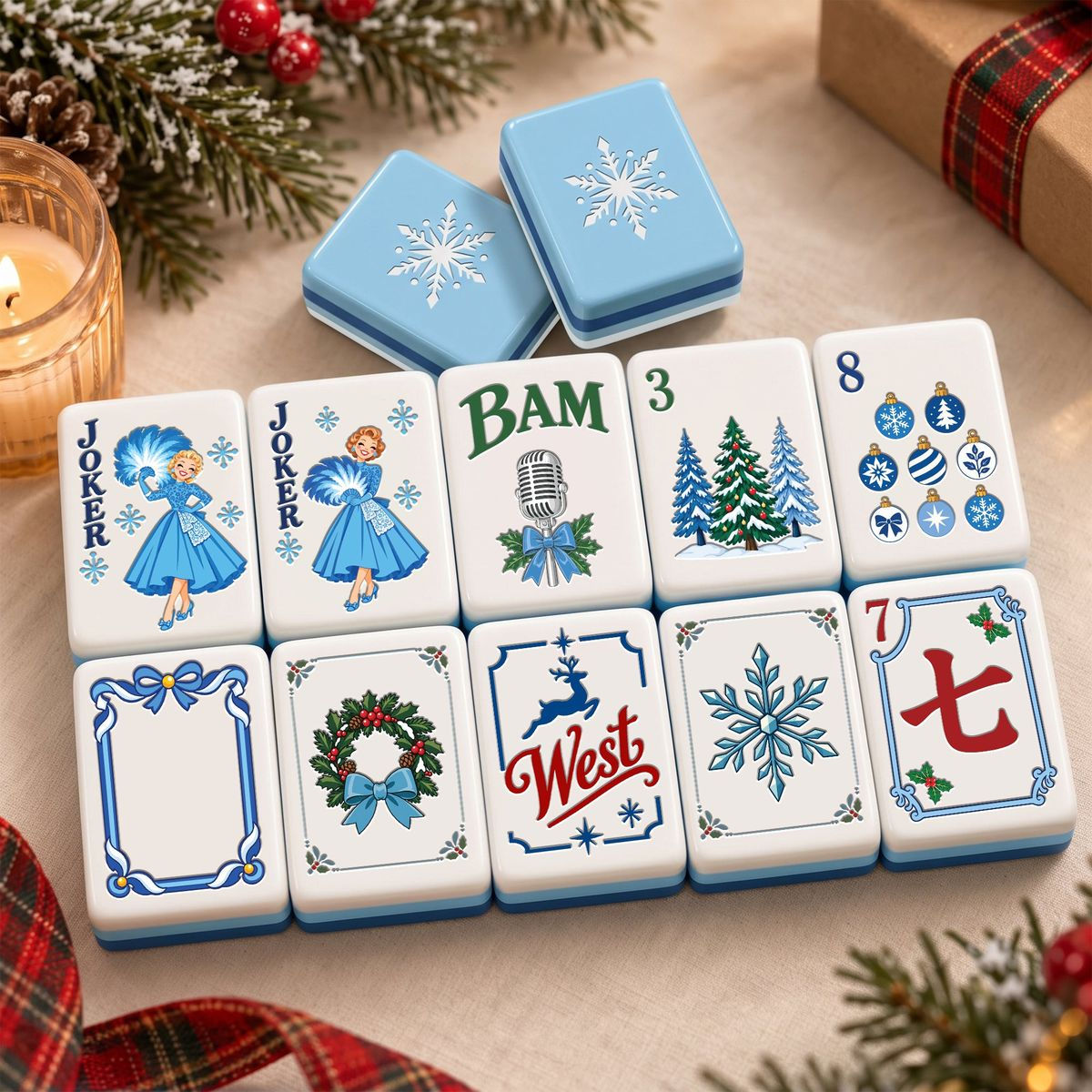
Chinese official mahjong terminology centers on four tile suits (Bamboo, Character, Dot, Honor) and specific hand compositions called "patterns" or "sets." Core terms include pung (three identical tiles), kong (four identical), chow (ordered sequence like 1-2-3), pair (two identical), and melds (exposed combinations). Winning hands follow strict pattern rules documented in official Chinese Mahjong Society standards. Key vocabulary: tsumo (self-draw win), ron (winning on another player's discard), chi (claiming a sequence in some variants), dui (pair in Classical Chinese), and fan (scoring multipliers). Jokers don't exist in Classical Chinese mahjong—only standard tiles and occasional flowers. Learning these terms lets you read international rule books, play online with Chinese communities, and understand why American mahjong rules differ so fundamentally from the original game. --- Chinese mahjong has shaped global play for over a century, yet its vocabulary remains confusing for Western players raised on American rules. This glossary maps authentic Chinese terms to American equivalents and explains where the games diverge—a map you'll reference every time you explore mahjong variants.
What are the four tile suits in Chinese mahjong?
Chinese mahjong uses four suits, each with nine numbered tiles (1–9). Bamboo (竹, Zhu) traditionally shows a bamboo stalk; Character (字, Zi) displays Chinese characters representing tens; Dot (筒, Tong) shows circles. Honor tiles include four Winds (North, East, South, West) and three Dragons (Red, Green, White). Every suit except Honors appears in sets of four identical copies. American mahjong names these Bams, Craks, and Dots—direct phonetic translations that stick once you know the origin.

How do melds differ between Chinese and American rules?
In Chinese mahjong, a pung (碰, Peng) is three identical tiles; a kong (杠, Gang) is four identical. Both can be exposed (claimed from other players' discards). A chow (吃, Chi) is a legal sequence (1-2-3 Bamboo, for example) and can also be called and exposed—a rule that doesn't exist in American mahjong, where sequences are forbidden entirely. A pair (将, Jiang in some systems, or dui) is two identical tiles and must be kept concealed in your hand. American mahjong players never call sequences, never expose chows, and must follow rigid hand patterns from an annual card. The two games are structurally incompatible once you add the hand-pattern requirement in American play.
What does "tsumo" and "ron" mean in winning?
Tsumo (自摸, Zimo in Mandarin; 自摸, Tsumo in Japanese) means you draw the winning tile from the wall yourself. Ron (荣, Rong in Mandarin; ロン Ron in Japanese) means you win on another player's discard. Both are victory conditions in Chinese mahjong. Standard Chinese play awards full points for tsumo, reduced payment for ron (each player pays according to seat position). American mahjong uses a single concept: a winning hand is a winning hand, regardless of how you got the last tile—you simply call "mahjong" and all three players pay you based on the hand's point value. Riichi mahjong (the Japanese variant evolved from Chinese roots) emphasizes tsumo victories and uses complex payment multipliers that neither American nor Classical Chinese play shares.
What are fan and dui in Classical Chinese scoring?
Fan (番, Fan) is a multiplier or "double" in Chinese mahjong scoring—each completed pattern adds fan value, and your final score multiplies by this count. A hand with three fan scores three times the base value. Dui (对, Dui) means "pair" or "set" in some regional systems and can refer to a small completed meld or to a complete hand composition (e.g., seven-pair hand, 对对, Dui Dui). Neither term maps directly to American scoring, which uses fixed points per hand pattern and does not use multiplier systems. American mahjong scoring is simpler: you look up your hand type on the annual card, see its base points, apply bonuses (like a self-draw), and players pay you that total. Understanding fan helps you read Chinese rulebooks and appreciate why their game rewards complexity more heavily than American play does.
What's the difference between exposed and concealed melds?
In Chinese mahjong, exposed melds (明牌, Mingpai) are pungs, kongs, or chows you've claimed from another player's discard and laid face-up on the table. Concealed melds (暗牌, Anpai) are groups you formed entirely from draws (not called). A concealed kong (especially) often scores bonus points. American mahjong only allows exposed pungs, kongs, quints, and sextets—no sequences at all. Jokers can never substitute in a single tile or a pair in American play, but they freely replace any tile in a meld. The strategic difference is huge: Chinese players carefully time their claims to control the game; American players must pre-plan their entire hand from the annual card before laying anything down.
🀄 Shop best-selling mahjong sets →

How do jokers and blank tiles function in each variant?
Classical Chinese mahjong does not use jokers or blank tiles. All 136 standard tiles (four copies each of 34 distinct tiles) make a complete game. Some modern Chinese regional variants (e.g., Sichuan, Guangdong) add jokers for flexibility, but official competitions exclude them. American mahjong, by contrast, requires 8 jokers as core gameplay tiles—you cannot play a legal hand without them. A standard 160-tile American set includes 152 playing tiles (the 136 Classical tiles plus 16 Winds and the extra 12 Dragons and 8 Flowers) plus 8 jokers. Jokers substitute for any tile in a pung, kong, quint, or sextet but never stand alone or form a pair. This is the single largest rule divergence: you cannot transfer an American mahjong set's jokers into a Classical Chinese game, and vice versa.
Aspect | Classical Chinese | American |
Jokers | None (official play) | 8 required |
Base tiles | 136 (34 types × 4) | 152 playing tiles + 8 jokers |
Sequences (Chows) | Allowed, can be called | Forbidden entirely |
Scoring | Fan (multipliers) + base | Fixed points from annual card |
Hand patterns | Flexible themes | Rigid, from licensed card each year |
Pair rule | Two identical, concealed | Two identical (one free, one joker impossible) |
How do you say common play phrases in Chinese?
Key callouts at the table: "Peng!" (碰!) means "I claim this for a pung." "Chi!" (吃!) means "I take this for a chow" (Chinese/Riichi games only; never American). "Kong!" (杠!) means "I'm adding a fourth tile to make a kong." "Hu!" (胡!) or "Mahjong!" means you've won—American players use "Mahjong," while Chinese speakers say "Hu." "Ting" (听) means you're waiting for one specific tile to win (you've declared your hand and are ready). "Discard!" or the tile name alerts the table you're throwing a tile face-up. In American play, you never say these—you simply show your winning hand on the mat and call "Mahjong." If you're joining an international online game or traveling to play with Chinese communities, learning these shouts helps you follow the action and shows respect for the game's heritage.
🎁 See our most-loved mahjong sets & accessories →
How do regional Chinese variants use different terminology?
Cantonese mahjong, played across Hong Kong and Guangdong, uses Cantonese pronunciation (e.g., gung for kong, pung for pung) and includes some tiles and scoring rules unique to the region—such as "flower" combinations worth bonus points. Sichuan mahjong emphasizes different melds and uses jokers or blank tiles in ways Classical play forbids. Shanghai and Zhejiang regions have their own pattern hierarchies. Riichi (the Japanese variant) evolved from Chinese roots but formalizes tsumo/ron distinctions, adds the "ready" (riichi) declaration, and uses strict ranking multipliers. Taiwanese mahjong blends elements of Classical, Cantonese, and Japanese play. The umbrella term "Chinese mahjong" usually means Classical or Cantonese unless specified otherwise. When you encounter a new rulebook, ask immediately which regional variant it describes—terminology shifts significantly, and a hand valid in Cantonese may be forbidden in Classical or Sichuan play. Understanding this prevents confusion and helps you adapt sets and rules to your group's preference.
What to check before you buy a set for international play
If you're buying a set specifically to play Chinese or Riichi variants, verify that the tile faces are clearly marked with both numerals and traditional characters (or the target language script). A good set for international play includes a set guide that maps Chinese names to your language. Our best-selling mahjong sets range from tournament-grade bamboo-backed tiles to acrylic designs; choose based on your venue (travel-friendly acrylic works for play-anywhere groups, while heavier sets suit regular home games). If you're hosting weekly international games, a durable mahjong mat and racks with pushers keep the game visible and organized—especially crucial when mixing players who read different scripts or speak different dialects. Never assume a set sold as "mahjong" includes rules for the variant you want; always request clarification from the seller about which game the set is designed for.
✨ Find your Mahstead set — free US shipping →

FAQ
Is Classical Chinese mahjong the same as Cantonese mahjong?
No. Classical uses 136 tiles and strict melds; Cantonese adds regional patterns, bonus tiles (flowers), and different scoring multipliers. Both are played across China but with distinct rulebooks. Cantonese is more flexible and faster.
Can I play American mahjong using Chinese tile names?
Yes, but it's confusing. American rules require jokers and a rigid hand card; Chinese rules forbid jokers and use flexible patterns. You can rename your tiles but the games remain incompatible structurally. Stick to one rule set per table.
What does "going out concealed" mean in Chinese mahjong?
It means all your melds were drawn (not called) and your winning tile was also self-drawn. This scores bonus points in most Chinese variants because it's harder to achieve. American mahjong has no equivalent bonus.
Do I need a special set for Riichi or Chinese mahjong?
Any standard 136-tile or 152-tile set with clear markings works. Riichi players prefer sets with honors clearly labeled; Chinese players prefer character/numeral clarity. Our collections include options suited to each variant.
How do I learn which fan count a hand is worth?
Consult an official rulebook for your region (Classical, Cantonese, Riichi, etc.). Fan values vary by region. Online communities for each variant publish quick-reference charts. American players use only the annual National Mah Jongg League card.


View More
View More
View More
