
Sanshoku in Riichi Mahjong Explained: Strategy & Hand Rules
Last updated: Nov 23, 2026
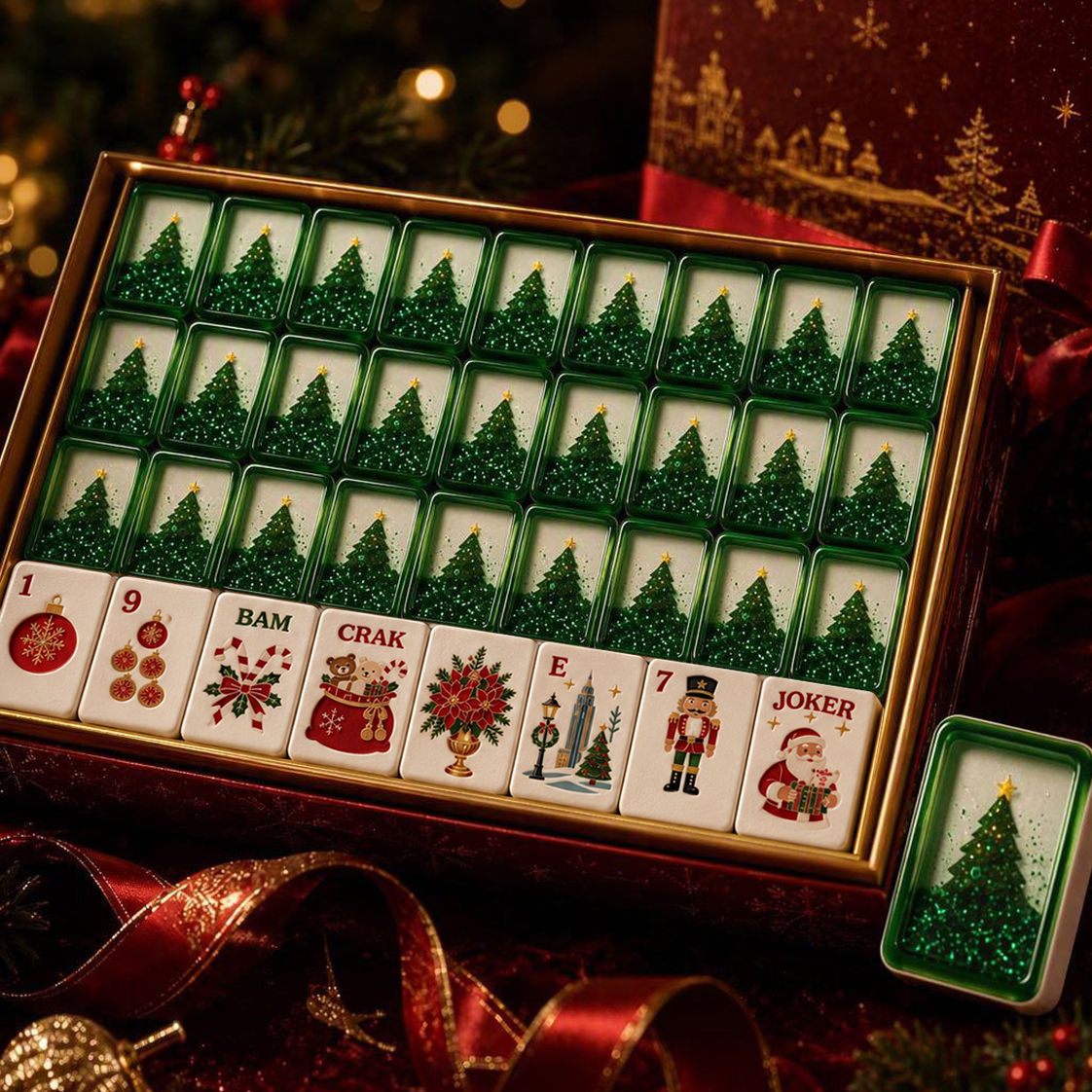
Sanshoku (三色, "three colors") in riichi mahjong is a yaku—a scoring pattern—where you hold one identical-numbered pung, sequence, or combination across all three number suits (1–9 Bams, 1–9 Craks, 1–9 Dots) at the same rank. For example: 5 Pung Bam, 5 Sequence Crak, 5 Pung Dot. The hand is worth 2 fan, earns roughly 1,920 points base (before multipliers), and counts as a closed or open hand depending on whether you call or expose tile groups. It differs from American mahjong, which has no sequences or yaku system; riichi uses a formal fan-and-fu scoring table. Sanshoku is foundational middle-game technique—easier than honor hands but harder than basic pairs—and teaches pattern recognition across all suits simultaneously. You'll encounter it in most riichi games once you move past pure number runs and honor pairs.
How Does Sanshoku Work: Exact Tile Combinations?
Sanshoku requires three groups (melds) that are the same number but one from each suit. You can use any mix of pungs (three identical tiles), sequences (three consecutive: 1-2-3, 5-6-7, etc.), or an open meld. The simplest form: three pungs at the same number across three suits. The trickiest: a pung in one suit, a sequence in another, and a pung in the third—all same number. For instance, three 3-Bam tiles (pung), a 3-Crak sequence (3-4-5 Craks), and three 3-Dot tiles (pung) satisfies sanshoku. Jokers substitute for missing tiles in standard play. The key: all three melds must involve the same number, and you must have exactly one meld per suit. This constraint makes sanshoku more restrictive than building three separate number runs—it trains your eye to recognize cross-suit symmetry.

When Do You Prioritize Sanshoku Over Other Hands?
Early and mid-discard phases, sanshoku is a safe fallback if you're not tracking honor pairs or waiting on a single high-value yaku. Build it when you draw at least four tiles toward one number across two or three suits; if the third suit tile appears within ten discard rounds, commit. Avoid overcommitting mid-hand if a nearby player is discarding the suit you need—they may be denying you deliberately. Sanshoku wins best in a two-player advantage: if honors are sparse and sequences are flowing, three melds in low numbers (1, 2, 3) complete fast. Conversely, if the hand is already worth 3 or 4 fan from honors or a terminal run, abandon sanshoku and protect your existing win. A real table tip: sanshoku shines when combined with an easy pair (a wind or green dragon, not a number-suit pair). The speed of execution matters more than the yaku value—finish in 8–10 turns and collect 2 fan reliably rather than chase a 5-fan hand that never closes.
Scoring: How Many Points Is Sanshoku Worth?
Sanshoku is 2 fan (mangan = 1 fan, sanshoku = 2 fan). Base calculation: 30 fu (minimum hand) × 2 fan × 4 (win multiplier) = 1,920 points for non-dealer, or 2,880 for dealer. If your hand has more fu—say, a pair honor or closed hand bonus—fu rises; 40 fu × 2 fan × 4 = 2,560 (non-dealer). The scoring table in riichi mahjong is rigid: once you declare riichi and complete the hand, points follow the published chart per fan and fu. Sanshoku does not add bonus points beyond its 2-fan value; it's a flat 2 fan regardless of whether the melds are all pungs, all sequences, or mixed. Compare this to American mahjong, which has no fan system—hands are simply matched against the yearly League card and scored as points per hand or per round. In riichi, a 2-fan sanshoku always pays the same unless combined with other yaku (e.g., sanshoku + tanyao = 3 fan, tanyao removes terminal tiles, so your melds use only 1–9 non-terminal numbers).
🀄 Shop best-selling mahjong sets →
Common Mistakes: What Breaks a Sanshoku Hand?
Mistake 1: Mismatched numbers. Holding 3-Bam pung, 4-Crak sequence, and 3-Dot pung is not sanshoku—the Crak is rank 4, not 3. All melds must involve the same number. Re-examine every discard; a single misaligned tile ruins the hand on win.
Mistake 2: Repeating a suit. Sanshoku requires one meld per suit. Two 5-Bam pungs and one 5-Crak pung is invalid—you've used Bams twice. Some players confuse sanshoku with "any three of the same number"; enforce that each suit appears exactly once.
Mistake 3: Forgetting a pair. Your hand still needs a pair (two identical tiles), plus the three sanshoku melds, plus one more tile to complete a valid 14-tile riichi hand. A common mental slip: counting sanshoku melds (9 tiles) + pair (2 tiles) = 11, thinking that's enough. You need 14 tiles total; the three melds and pair account for 11, so you need one more tile to wait on—that's your winning draw tile or the tile you've already drawn.
Mistake 4: Mixing pungs and pairs. A pair and a pung are not interchangeable. The pair is separate; the sanshoku melds are three distinct groups. If you hold three 5-Bam tiles, three 5-Crak tiles, three 5-Dot tiles, and two honor tiles (say, two East winds), you have sanshoku + an honor pair—valid. If you misconstrue one of the "melds" as a pair, the hand collapses.
Mistake 5: Declaring too early. Riichi locks your hand; you cannot change your melds after calling riichi. Verify your sanshoku before announcing. Count: number A in suit 1 (pung/sequence), number A in suit 2, number A in suit 3, pair, one wait tile. Only then declare riichi.

Sanshoku vs. Tanyao vs. Chanta: When to Choose Which Hand?
Yaku | Requirement | Fan Value | When to Build | Risk |
Sanshoku | One group (pung/sequence) per suit, same number | 2 fan | Mid-game, if honors are sparse | Requires three suits in sync; can stall |
Tanyao | Only 1–9 non-terminal; no honors or terminals | 1 fan | Early game; any draw | Low payout; easy to conflict with other players |
Chanta | One terminal (1 or 9) in each group; one terminal/honor in pair | 2 fan | Late game; after you've locked melds | Slower closure; relies on terminals flowing |
All three are worth 2 fan except tanyao (1 fan), but sanshoku is fastest because you chase a single number across suits, not scattered tiles. Tanyao is more frequent but pays half. Chanta requires terminal discipline—once committed, you're waiting on specific 1s or 9s, which deplete quickly. In practice, build sanshoku if the number appears early across two suits; pivot to tanyao or chanta if your hand stalls and you lack a second or third suit tile.
🎁 See our most-loved mahjong sets & accessories →
How Sanshoku Fits into a Full Riichi Hand: A Worked Example
Your hand (13 tiles, waiting on 1 Bam to complete):
Bam: 4-4-4 (pung), 1 (waiting)
Crak: 4-5-6 (sequence)
Dot: 4-4 (pair)
Winds: East, East, East (pung)
When you draw the 1 Bam, you have 14 tiles:
Sanshoku melds: 4-Bam pung, 4-Crak sequence, 4-Dot pair (no—wait, 4-Dot is your pair, not a meld).
Correction:
Melds: 4-Bam pung (three 4-Bam), 4-Crak sequence (3-4-5 Crak), 4-Dot pung (three 4-Dot).
Pair: two East winds.
Wait: one East wind to complete pair or a 4-suit meld.
Actually, you have two East and need a third to complete the pung, or you have three East (pung) and need a pair of another tile. Let's restart:
Corrected hand (riichi):
Melds: 4-Bam pung, 4-Crak sequence, 4-Dot pung (sanshoku ✓).
Pair: two East winds.
Draw: one more East wind completes a 14-tile hand.
On winning, you have sanshoku (2 fan) + an all-simples hand (no honors in melds; tanyao yaku = +1 fan) = 3 fan total. Points: 30 fu × 3 fan × 4 = 3,600 (non-dealer). The example shows how sanshoku integrates; you're not building just sanshoku, but sanshoku plus other yaku.
Riichi Mahjong Rules That Make Sanshoku Unique
Riichi mahjong differs from American mahjong in fundamental ways. American uses 152 tiles (108 number suits + 16 winds + 12 dragons + 8 flowers + 8 jokers), no yaku system, and no sequences—only pungs, kongs, and quints. You match hands to a printed National Mah Jongg League card issued yearly. Riichi uses a standard 136-tile set (108 number suits + 16 winds + 12 dragons), features sequences (chows), a rigid fan-and-fu scoring table, and compulsory "riichi" declaration. Sanshoku is a riichi-only yaku; American mahjong has no equivalent because American hands are static (card-based), not yaku-based. Understanding riichi's flexibility—sequences, open/closed hand bonuses, and yaku combinations—is essential to mastering sanshoku. If you've played American mahjong, riichi feels faster and more rule-dense.
What you'll need: If you're learning riichi mahjong, invest in a riichi-specific mahjong set—acrylic or resin tiles, clearly marked winds and dragons, and a convenient bag for portability. A mat with point-tracking markers helps organize melds and keeps track of fu during scoring.
What to Check Before You Buy (or Play)
Tile clarity. In riichi play, you need to read numbers and suit symbols instantly. Ensure your tiles have high-contrast characters (black on white, or embossed) so you don't misidentify a 4-Crak as a 4-Bam mid-hand.
Suit consistency. Your set should include four copies of each tile (1–9 in three suits, 1–7 honors). Count before a game—missing tiles crash hands mid-play.
Joker count. Standard riichi sets include jokers; verify how many. Some sets include spares for practice.
Mat and rack setup. A mat with meld spaces helps organize sanshoku melds visually. Racks with pushers keep your hand stable and private.
Rule agreement. Before playing, confirm with your table: are you playing "closed" (hand hidden except when you win) or "open" (melds exposed as called)? Japanese riichi is strict-closed; casual play varies.
✨ Find your Mahstead set — free US shipping →

FAQ
Can I use jokers in a sanshoku hand?
Yes, jokers substitute for missing tiles in riichi mahjong. A joker can stand in for a 5-Crak in your sequence (3-4-joker instead of 3-4-5) as long as the melds remain valid (one per suit, same number). However, if you open melds, opponents see the joker and know your hand strategy.
Is sanshoku the same as "chiitoitsu" or "kokushi"?
No. Sanshoku is a pung-and-sequence yaku (three melds). Chiitoitsu is a "seven pairs" hand (no melds, all 14 tiles are pairs). Kokushi is "thirteen unique terminals and honors" (a hand with one of each 1, 9, and honor, plus one duplicate). All three are valid riichi yaku but fundamentally different patterns.
How many turns should I spend building sanshoku?
Aim for 8–10 discard rounds. If after ten turns you have only one meld and one suit is missing, pivot to another yaku. Sanshoku is reliable, but stalling costs points; a fast 2-fan win beats a delayed 3-fan chase.
What if two players both declare sanshoku in one game?
The first player to complete their hand (i.e., win) collects points. In riichi, only one player wins per round; the others' hands dissolve. Sanshoku is common enough that overlaps happen. If both players have sanshoku and draw on the same tile (rare), the one closest to the dealer's turn wins by turn order.
Can I declare "riichi" after I've already opened (exposed) my sanshoku melds?
No. Riichi must be declared on your closed hand. Once you've exposed a pung, sequence, or quint by calling it, you cannot declare riichi. You continue playing "open," meaning no riichi bonus. If you open early, you forfeit riichi's +1 fan and point multiplier.
How does sanshoku combine with "dora" (bonus tiles)?
Dora are bonus tiles designated at the start of the hand (usually the tile after the "dora indicator"). If a 4-Bam is dora and your hand includes three 4-Bams, your sanshoku is worth 2 fan + 1 dora (3 fan total). Dora doesn't change the sanshoku yaku; it stacks points.


View More
View More
View More
