
How to Choose a Mahjong Tote: Bag Types & Features Guide
Last updated: Nov 23, 2026
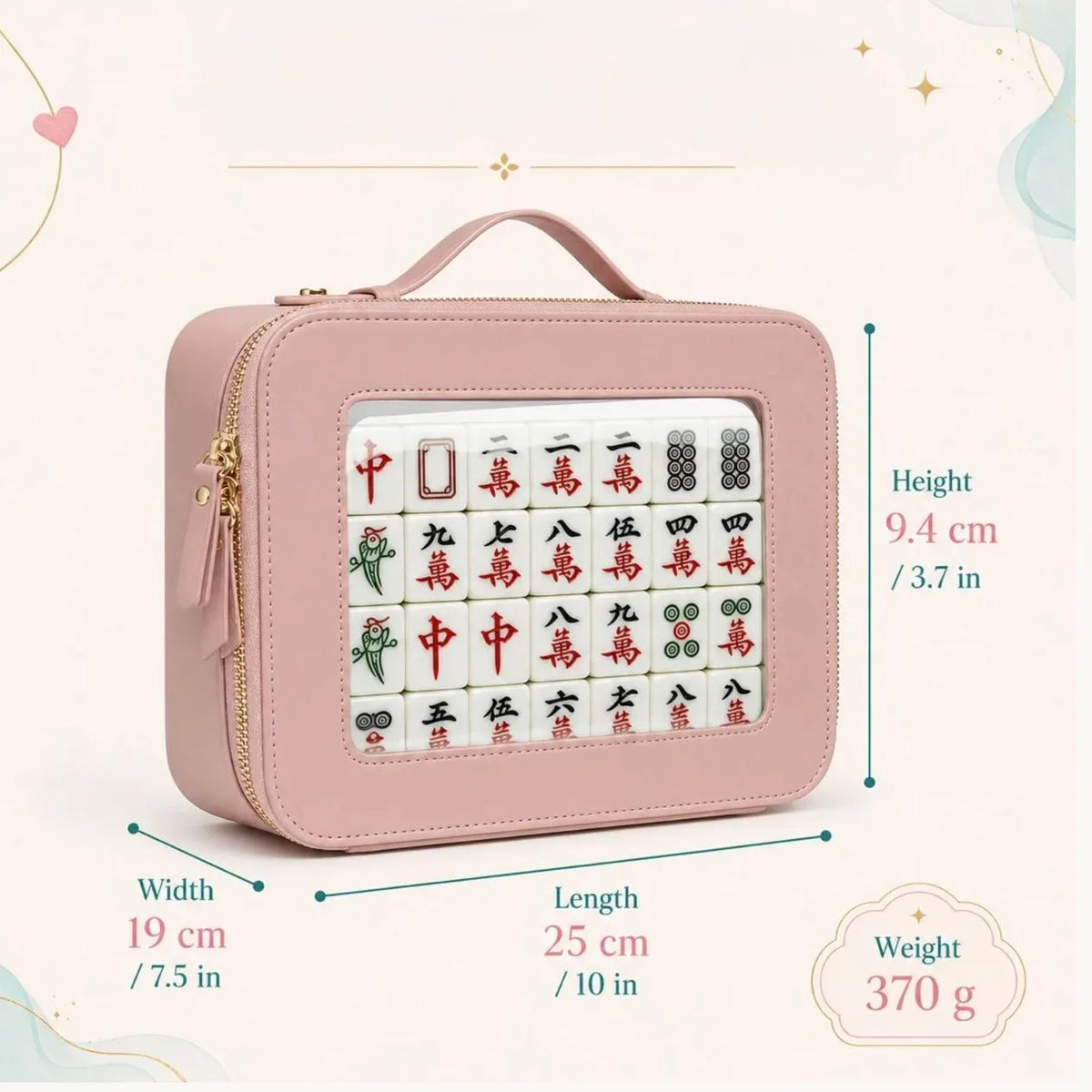
A mahjong tote is a padded or structured bag designed to carry a complete 160-tile American mahjong set, often alongside a mat and racks. Totes range from soft canvas with interior pockets to rigid cases with custom foam inserts. Most hold a single set; larger models fit two sets or a set plus a full-size mat. You'll find them in our travel bag collection, priced across multiple tiers depending on material and capacity. Choose based on transport frequency—weekly players moving sets between homes benefit from hard cases, while casual players hosting monthly games at one location may prefer a soft tote. Avoid bags marketed as "universal" without checking interior dimensions against your acrylic set's footprint (typically 9"–10" x 7"–8" for a 160-tile set).
What's the difference between a tote, a case, and a bag?
A tote is a soft, open-top carrier with handles—quick to pack, lighter weight, best for short trips or one-location games. A case is a hard-shell or rigid-sided container with a lid and clasp, offering maximum protection during travel and stacking. A bag falls between: structured sides, often with a shoulder strap, designed for weekly players who move their set between venues. For American mahjong, totes work best if you're moving your set once weekly; hard cases suit frequent travelers or tournament players moving between cities; bags offer middle-ground durability for regular but moderate transport.
🎁 See our most-loved mahjong sets & accessories →
How do you know if a tote will fit your mahjong set?
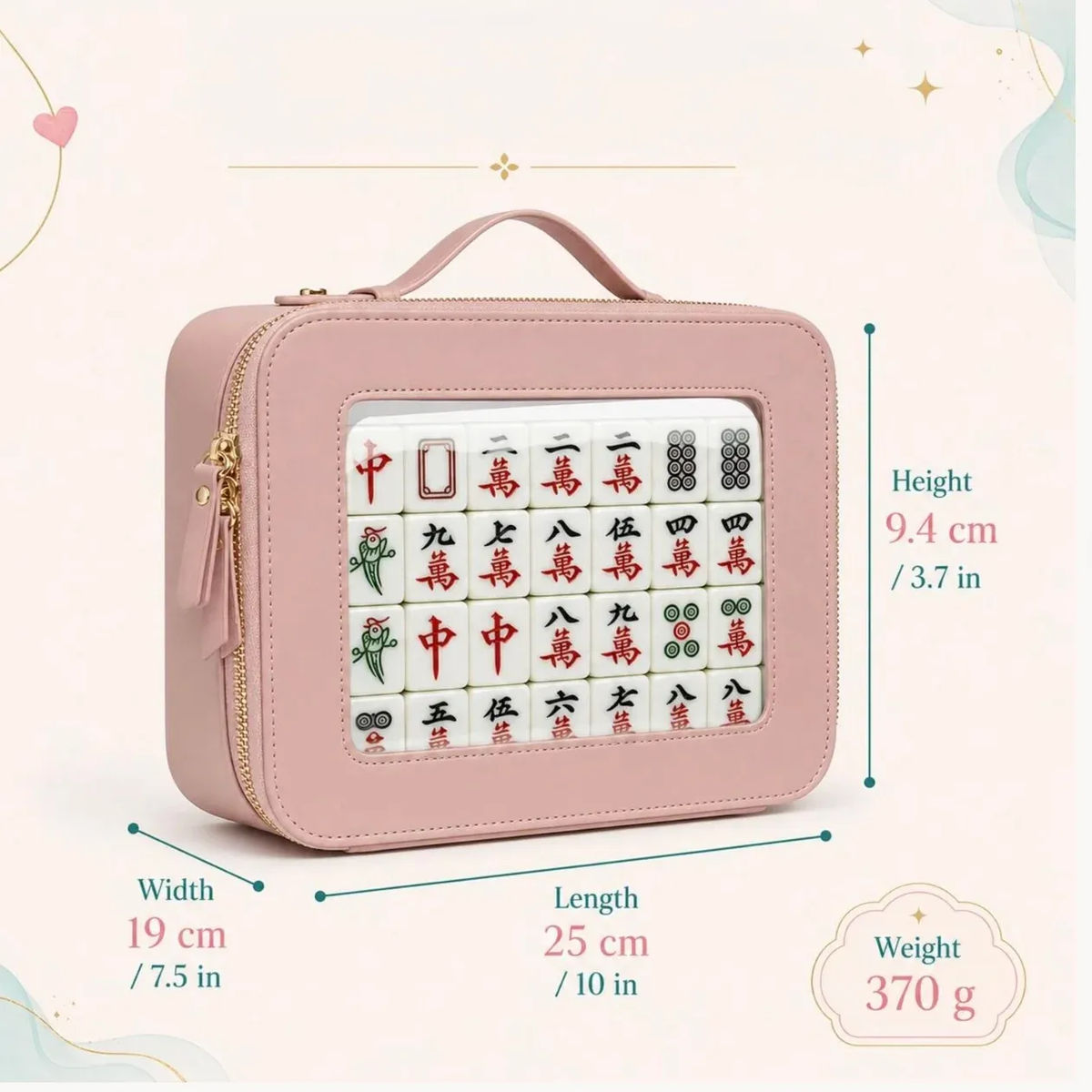
Measure your acrylic set in its box or storage container: width, depth, and height. A standard 160-tile best-selling acrylic set occupies roughly 9.5" × 8" × 3.5" when stacked. Check the tote's interior dimensions—not exterior—listed on the product page. Add 1 inch of clearance to avoid forcing tiles in; compressed sets risk cracking acrylic. If you plan to carry the set plus a cloth mat and racks together, measure all items laid flat and add up the combined depth. Most dedicated mahjong totes account for this; generic canvas bags often don't. Always verify interior height too—some totes are shallow-bottomed and won't accommodate a full set sitting upright.
Which tote design works for weekly games versus tournaments?
Weekly at-home hosting favors a soft canvas or nylon tote with interior pockets for jokers, dice, and the card. These are lightweight, affordable, and sufficient for one trip per week within a city. Tournament or multi-event players need rigid cases or hard-sided bags: they survive airport baggage handling, protect tiles from pressure damage in car trunks, and stack neatly in tournament halls. A tournament player moving a set twice monthly should choose a case; a home player hosting the same game yearly needs only a tote. The deciding factor is stacking and rough handling—if your bag sits gently in a car between home and one friend's house, soft is fine; if it travels by air, goes in trunks, or stacks under other luggage, hard is essential.
What should you look for in the interior layout?
Dedicated mahjong totes often feature a divided interior: a large main compartment sized for the tile case, plus smaller pockets for dice, the current year's card, and spare jokers. Some include a removable divider to adapt to sets of different sizes. Look for reinforced seams at the bottom where weight concentrates; many cheaper totes fail here within months. Interior padding—typically 1/4" to 1/2"—cushions tiles against impact. Hard cases may offer custom foam cutouts molded to specific set shapes; these are excellent if your set matches, but inflexible if you later buy a different brand. A tote with a removable, washable interior liner is practical for players who travel frequently or whose tile sets collect dust. Check that zippers and handles are rated for repeated use; undersized zippers jam when overstuffed.
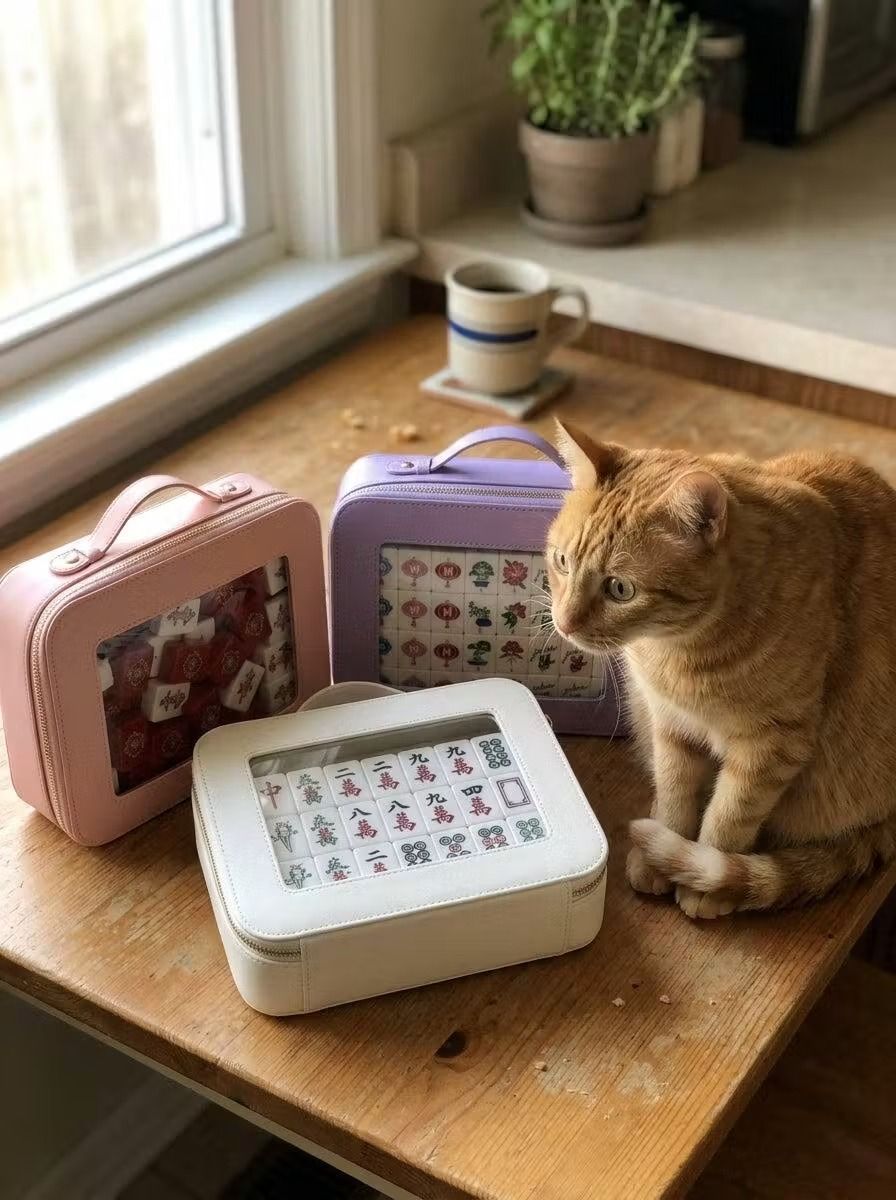
What's the honest cost comparison for different tote styles?
Tote Type | Best For | Durability | When to buy |
Soft canvas/nylon tote | Home hosts, one set, local play | 2–4 years | Budget-conscious, light use |
Structured nylon bag | Weekly players, regular transport | 4–6 years | Regular games, same city |
Hard-sided case | Frequent travel, tournaments | 7+ years | Multi-city play, air travel, resale value |
Custom foam insert case | Serious collectors, multiple sets | 8+ years | Tournament players, long-term investment |
The cost difference reflects durability: soft totes are most affordable; hard cases cost more upfront but last longer and protect higher-value engraved mahjong sets better. A player hosting one game per week for five years will spend less on a soft tote replaced twice than on a hard case bought once; the hard case saves money only if you value the protection and plan to keep your set for 5+ years.
How do you pack a tote to avoid tile damage?
Place your acrylic set in its original case or a padded sleeve first—never loose in a tote. Lay the tile case flat in the tote's bottom to distribute weight evenly. Surround it with your cloth mahjong mat rolled loosely as a cushion on sides. Position your racks and pushers in dedicated pockets or wrapped in soft cloth. Fill remaining space with spare jokers, dice in a pouch, and your card in a protective sleeve. Never stack heavy items on top of the tile case; load totes bottom to top, heaviest first. Close zippers gently—sharp movement can pinch fabric or strain seams. If traveling by car, secure the tote so it won't slide or tip during braking. For air travel, pack the tote inside a larger suitcase padded with clothing, not loose in overhead bins.
✨ Find your Mahstead set — free US shipping →
Common mistakes when choosing a mahjong tote
Underestimating interior depth. Many buyers assume a 10" × 8" tote fits a 160-tile set; they don't account for the 3"–4" depth needed. Always check the product page's interior dimensions, not the exterior footprint.
Ignoring zipper quality. Cheap zippers jam or separate after 10–20 uses. Look for brands rated YKK or similar; test the action before buying if possible.
Assuming one tote fits all sets. Different manufacturers make tiles slightly different thicknesses. Acrylic sets vary more than ceramic; a tote perfect for one brand may be too tight for another.
Forgetting mat space. Many players want to carry a mat inside the tote, not in a separate bag. Verify the tote's depth accommodates both the set and a folded or rolled mat.
Buying for future growth. Don't buy an oversized tote hoping you'll add a second set later. An oversized tote with one set inside moves during transport, risking tile breakage from shifting. Buy for what you carry now.
What to check before you buy
Measure your set and mat together. Don't guess; lay them flat and record width, depth, and height.
Compare to the tote's interior dimensions listed on the product page—exterior dimensions are always larger.
Verify weight rating if you plan to carry multiple sets or a mat plus set.
Read the material composition: Canvas wears faster than nylon; hard plastic cases resist impact better than soft fabric.
Check handle construction: Stitched fabric handles outlast glued ones; padded handles reduce hand fatigue.
Confirm zipper access: Can you open and close it one-handed? Will zippers snag fabric inside?
Ask if the tote is machine-washable (interior liner only, not the case itself)—essential for players who travel frequently.
🀄 Shop best-selling mahjong sets →

FAQ
Can you fit a mahjong mat inside a tote with the set, or does the mat go separately?
Most dedicated mahjong totes accommodate a rolled or folded mat alongside the tile case if interior depth exceeds 4–5 inches. Soft mats compress easily; measure your mat rolled and check the tote's interior depth. Rigid case totes often lack space—pair these with a separate mat bag or store the mat at home.
What's the difference between a mahjong tote and a general luggage bag?
Mahjong totes have custom interior pockets, dividers, and padding sized for tile sets and racks. General luggage lacks these features and exposes tiles to shifting inside; the bag's interior shape won't match tile case proportions, risking breakage during transport.
How often should you replace a soft mahjong tote?
A quality nylon tote used weekly lasts 2–4 years before seams fray or zippers fail. Canvas wears faster (18–30 months); hard cases last 7+ years. Replace when zippers jam repeatedly, seams separate, or handles tear.
Is a mahjong tote worth the cost if you only host games once per month?
Yes. Even monthly players benefit from organized storage and protection. A soft tote costs less than a replacement tile set and keeps your investment safe. If you move your set more than once per month to a different location, a tote is essential.
Can you pack a mahjong set in a regular duffel bag or gym tote?
Technically, yes—but risk is high. General bags lack interior padding and dividers; tiles shift during transport, and corners of the case can crack acrylic. A dedicated mahjong tote's interior architecture minimizes movement and protects expensive tiles.


View More
View More
View More
