
Riichi Mahjong vs. Sichuan Mahjong: Rules & Gameplay
Last updated: Nov 23, 2026
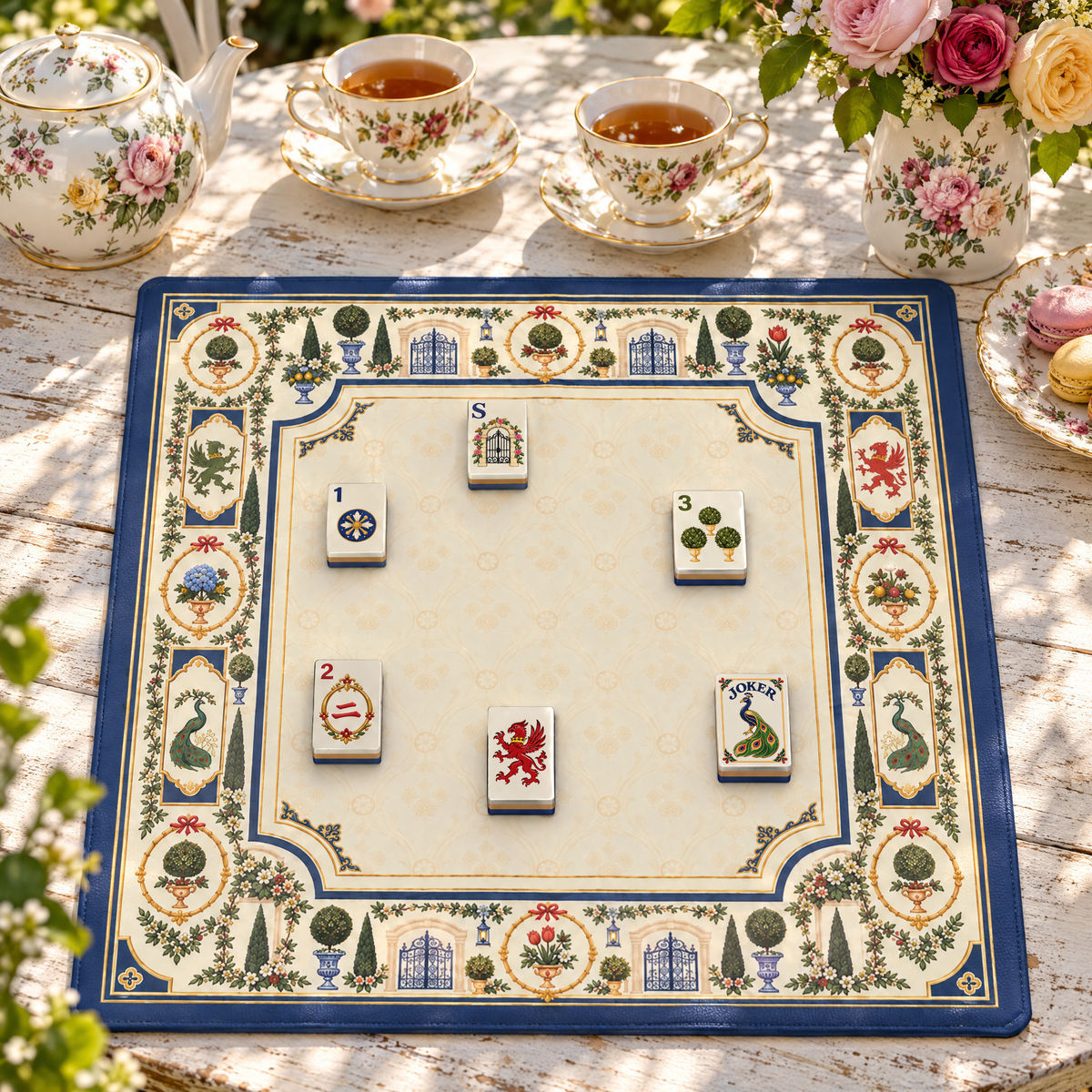
Riichi mahjong (Japanese standard) uses 136 tiles across four suits (Honors, Bamboo, Circle, Character) with hand-building around melds and closed-hand strategy; winning requires declaring "riichi" (a one-tile-away-from-winning state) and scoring follows a complex point system tied to hand rarity. Sichuan mahjong (Chinese regional variant) typically employs 108 or 136 tiles depending on the ruleset, emphasizes rapid tile-discarding and open melding (exposing combinations), and scores based on simpler combinations and speed rather than rarity. The key difference: riichi rewards concealment and declaration; Sichuan rewards visibility and tempo. Both play four-handed. Neither uses jokers or the National Mah Jongg League card. If you've played American mahjong, expect a shorter tile set, different hand patterns, and no "Charleston" passing ritual. Mahstead specializes in American mahjong sets—a completely different game—but understanding these variants clarifies how diverse mahjong truly is.
What is Riichi Mahjong and How Does It Play?
Riichi mahjong is Japan's standardized version, born from Chinese tile games and codified in the 1920s. Players draw and discard tiles one at a time, building melds (pungs, kongs, chows) and a pair, aiming to achieve a complete winning hand. The signature move—riichi—locks your hand: you announce you're one tile away from winning, discard face-down, and cannot change your hand shape. Your opponents then know you're close, raising tension and betting stakes. Most riichi games use 136 tiles: 34 different types (4 copies each). Winning requires the final tile to complete your declared pattern. A riichi hand is typically more "pure" (sequences in one suit, or all Honors) and earns more points precisely because it's rare. Rounds end when someone wins or the wall exhausts. Scoring is intricate: a hand's base value multiplies by "doubles" (fu/meld patterns) and the hand's rarity tier. A player dealing from a winning hand scores differently than a non-dealer. Turn-by-turn, riichi feels methodical—each discard is intel for your opponents.

How Does Sichuan Mahjong Differ in Tile Count and Setup?
Sichuan mahjong (called "chuanyang" or Sichuan-style locally) typically uses 108 tiles, removing some Honors to accelerate gameplay. Some regional rules keep 136 tiles but play faster by encouraging open melding and rapid discards. The tile types remain: Honor suits (East, South, West, North, Red Dragon, Green Dragon, White Dragon) and number suits (Bamboo 1–9, Circle 1–9, Character 1–9), but with fewer copies or simplified honor combinations. Setup is simpler than riichi: no complex betting rounds, no riichi declaration phase. Players draw 13 tiles to start (compared to riichi's 14), and the game clock moves quicker because melding is public and reactive. You can often declare your hand ready sooner. Some Sichuan rulesets allow "eating" the discards of any player (not just the previous one), meaning a single discard might trigger competition for the tile. This openness contrasts sharply with riichi's silence-until-riichi ethos. Winning hands emphasize basic melds rather than rare patterns. A high-scoring Sichuan hand might repeat the same pung or run multiple sequences; in riichi, that's low-value. The board state is always visible in Sichuan—everyone can track what's been played and guess competitors' plans.
🀄 Shop best-selling mahjong sets →
What Are the Key Rule Differences in Hand Building and Melds?
Both games build hands from pungs (three identical), kongs (four identical), and chows (three consecutive numbers in one suit), plus a pair. But riichi has stricter hand-pattern rules: certain combinations score more because they're harder to achieve (e.g., "all chows," "all one suit"). Sichuan often allows any valid four-meld-plus-pair combo to win, rewarding speed over rarity.
In riichi, chows are critical: a hand might rely entirely on chows to earn "chow hands" bonuses. You can conceal chows (meld tiles in your hand without showing). In Sichuan, open melding is encouraged; many players expose chows immediately, signaling their progress and letting opponents react faster.
Riichi has "limit hands"—ultra-rare patterns that cap scoring at a ceiling because they're so high-value. Sichuan typically has no such ceiling; a hand is a hand.
Comparison: Meld Use
Feature | Riichi | Sichuan |
Chow (sequence) | Concealable, bonus-eligible | Often exposed, speed-valued |
Kong (4-meld) | Rare, adds double/score bump | More common, normal win component |
Pung (triplet) | Counted per hand pattern | Simple triplet = 1 component |
Pair rules | Must be 2 identical; specific pairs bonus | Any pair wins |
Concealment reward | Yes (invisible hand = points) | No (faster play = points) |
Riichi players spend mental energy hiding their melds; Sichuan players optimize for calling the winning tile first.
How Does Scoring Work in Each Game?
Riichi scoring is hierarchical and point-dense. Every hand earns a base value (fu, or "doubling units"), which multiplies by the number of "doubles" (yaku, or hand patterns). The dealer (East player) scores 1.5× a non-dealer's score. If the winner did not deal, all three opponents pay; if the winner dealt, they collect from all three. A simple riichi hand (e.g., one pung, one chow, open meld) might earn 1,000 points base; a rare hand (e.g., all chows, all one suit, fully concealed) might earn 12,000+. A limit hand can max out the game's scoring table and end the round with a single winner taking a massive payout.
Sichuan scoring is flatter. A hand typically has a point value (often 2, 4, 8, 16 depending on ruleset) multiplied by the pot or by a fixed exchange rate. Payouts are simpler: winner takes all, or each opponent pays the winner a fixed sum. Some Sichuan games use "fan" (tiers: 1 fan, 2 fans, 3 fans) where more fans = higher payout, but the climb is linear, not exponential.
Concrete Example:Riichi hand: East dealer, concealed (1 double), pung of Honors (1 double), one Honors-only chow (1 double) = 3 doubles, base 30 fu = 3,900 points. Non-dealers each pay 1,300.
Sichuan hand: 2-fan hand, winner receives 8 points per opponent or per agreed unit (often cash or chips). If chips, each of 3 players pays 8 chips to the winner.
The riichi system rewards players who memorize patterns and spot rare combos; Sichuan rewards speed and probability judgment.
🎁 See our most-loved mahjong sets & accessories →

Which Game Is Easier for Beginners, and How Do You Choose?
Riichi mahjong has a gentler learning curve initially—basic hand-building (three melds + pair) is intuitive. But mastery is steep: memorizing 50+ hand patterns, calculating fu and doubles, understanding dealer vs. non-dealer payouts takes months or years.
Sichuan mahjong is faster-paced and the winning condition is simpler, making it feel "easier," but the rapid discard cycle and multi-player competition create mental pressure. Beginners may feel overwhelmed by the tempo.
Choose Riichi if:
You like puzzle-like hand patterns and long-term study.
Your group prefers quiet, strategic play.
You want a single, internationally standardized ruleset (Riichi is the tournament standard worldwide).
You enjoy complex scoring and ranking systems.
Choose Sichuan if:
You want a faster, more social, casual game.
Your group prefers open play and quick rounds.
You prefer simpler payouts (no point calculation).
You're playing in a Chinese-heritage community where local rules are already taught.
For Americans accustomed to the American mahjong rules—which use 152 tiles, no chows, and the National Mah Jongg League card—both riichi and Sichuan feel foreign. American mahjong is the only variant that locks hand patterns to an annual card, making it the most rule-bound. Riichi and Sichuan are more flexible by design.
How Do You Get Started Playing Riichi or Sichuan Mahjong?
For Riichi:
Buy a 136-tile riichi set (available from many game retailers; look for sets labeled "riichi," "Japanese," or "standard mahjong").
Learn the 14 basic hand patterns (yaku) first; memorize 20–30 more once you're comfortable.
Play with a scoresheet or a riichi scoring app (many free versions exist online).
Join a local riichi club (search "riichi mahjong near me" or check meetup boards at universities, cultural centers, or game cafes).
Practice 5–10 games before joining a tournament or higher-stakes group.
For Sichuan:
Acquire a 108-tile or 136-tile Sichuan set from a Chinese game supplier or general mahjong seller.
Learn your group's specific local ruleset—Sichuan rules vary by region and family, so ask whoever teaches you first.
Agree on payoff amounts (chips, points, or no-money play) before starting.
Play rapidly to get the tempo into your muscle memory.
Seek out Sichuan communities: Chinese community centers, meetup forums, or online play platforms.
What to Check Before You Buy:
Tile size & quality: Both riichi and Sichuan sets use smaller, thinner tiles than American mahjong; confirm the set feels comfortable in hand.
Completeness: Verify the tile count (136 for riichi, 108 or 136 for Sichuan).
Language on tiles: Riichi uses kanji and Chinese characters; Sichuan may use simplified Chinese. Confirm you can read the tiles your group uses.
Local teacher/group: Before buying, find someone who plays your variant in your area and ask their recommendation; regional rulesets vary widely.
Digital aids: Riichi has apps; Sichuan scoring can be informal or app-assisted. Test one online first.
Mahstead builds engraved American mahjong sets optimized for the League card and 152-tile American gameplay—different fundamentally from both riichi and Sichuan—but understanding all three variants will deepen your mahjong intuition.
✨ Find your Mahstead set — free US shipping →
What to Check Before You Buy
Tile weight & material: Riichi and Sichuan tiles are often lighter or thinner than American tiles; test in hand if possible.
Character clarity: Ensure all kanji and suit symbols are legible; damaged or faded tiles ruin the game.
Completeness: Count tiles before playing; missing even one tile breaks the set.
Ruleset documentation: If buying a Sichuan set, ask the seller or previous owner which regional rules it's designed for.
Storage condition: Tiles stored in humid environments can stick or warp; inspect for warping or odor.

FAQ
Can I play riichi mahjong with an American mahjong set?
No. American sets have 152 tiles, jokers, flowers, and no chows; riichi needs 136 tiles (4 each of 34 unique types) and relies entirely on chows. The hand patterns are incompatible. Buy a dedicated 136-tile riichi set.
Is Sichuan mahjong played competitively or only casually?
Mostly casually, though some regions host informal tournaments. It lacks the international tournament structure of riichi. Most Sichuan games are social and money-stakes driven, played in homes or community centers rather than licensed halls.
How long does a riichi game take compared to Sichuan?
A riichi round (one hand) typically lasts 15–20 minutes; a full game (many rounds, stopping when one player reaches a target score) can be 2–3 hours. Sichuan rounds are often 8–12 minutes, so a full game might end in 1–2 hours due to faster discard pace.
Do riichi and Sichuan mahjong use the same tiles visually?
Mostly yes. Both use Honors (four winds, three dragons), and three number suits (Bamboo, Circle, Character). Riichi tiles often feature kanji labeling; Sichuan may use simplified Chinese. The layout and iconography differ slightly, but a player familiar with one can read the other after a moment.
Can I learn both riichi and Sichuan mahjong at the same time?
It's possible but confusing initially because hand-building strategy differs. Most players recommend mastering one fully (3–6 months) before learning the other. The mental model for hand rarity in riichi conflicts with the speed-focused model in Sichuan.
What's the cost of buying a riichi or Sichuan mahjong set?
Prices vary widely. A basic set costs less than a premium one; specialty or hand-carved sets cost significantly more. Check online retailers or local game shops for current pricing on sets matching your region and quality preference.


View More
View More
View More
