
What to Look for in a Mahjong Rack Bag
Last updated: Nov 23, 2026
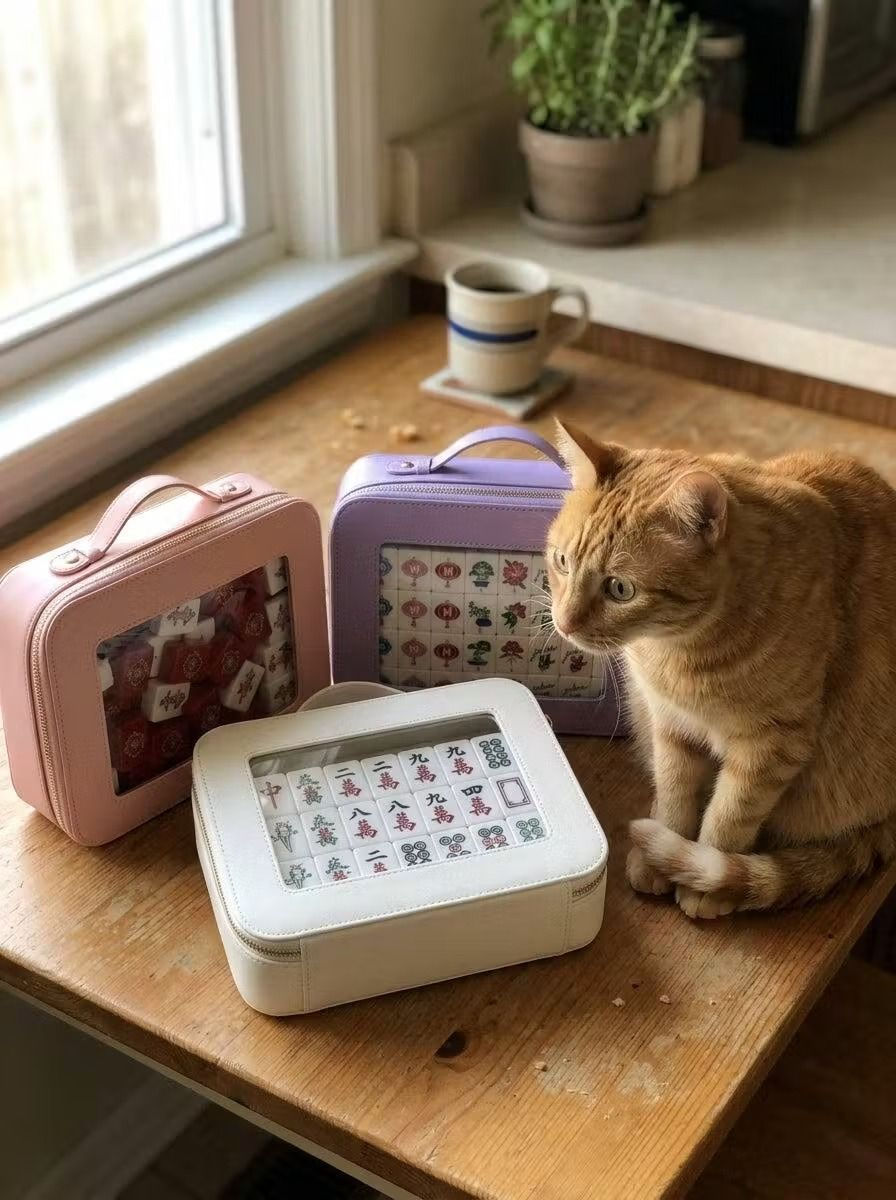
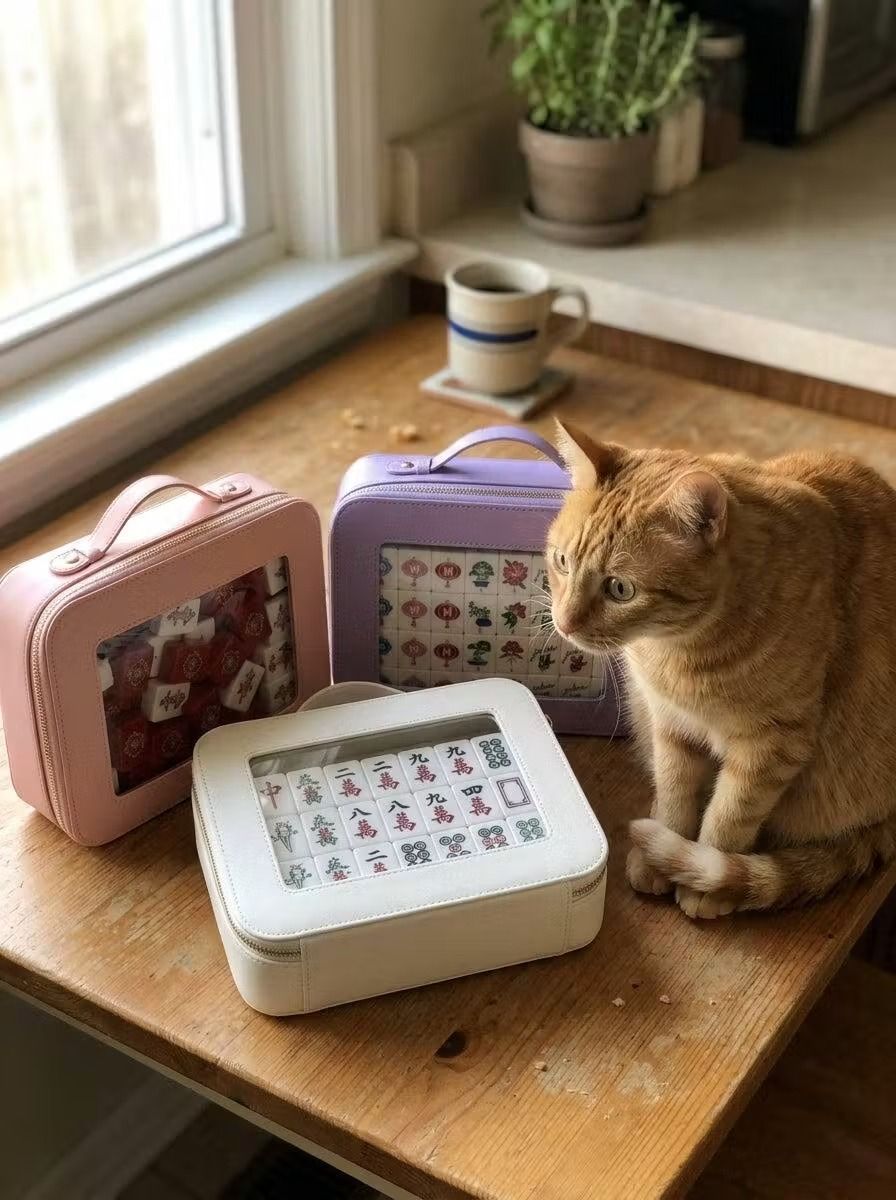
A mahjong rack bag is a protective carry case designed to hold your tiles, racks, pushers, and accessories in one place. We use them to transport 160-tile sets and the gear we need to play anywhere—home, a friend's table, or a tournament venue. Most bags are sized to fit a complete American mahjong set with racks and pushers already assembled; the best ones use reinforced nylon or canvas to withstand weekly transport. Look for interior organization (pockets for dice, cards, jokers), quality zippers, padded handles, and a shoulder strap if you carry it often. Cost varies by design and material, but durability matters most: a bag that fails mid-game teaches an expensive lesson. Mahstead's travel bag collection includes designs sized for full sets with racks, so you know the dimensions and compartments before ordering. ✨ Find your Mahstead set — free US shipping →
What size bag do you actually need?
Mahjong bags come in three functional sizes: compact (holds tiles only, no racks), standard (tiles plus one set of racks and pushers), and oversized (multiple sets, spare jokers, mats, cards). Most players hosting weekly games choose standard—it fits a full 160-tile set with one rack per player plus a few accessories. Measure your assembled rack width (typically 3–4 inches) and multiply by four players plus tile wall space; you'll need roughly 18–22 inches of interior width to avoid jamming. If you own multiple sets or travel with a mat, go oversized. Compact bags suit tournament players who carry only tiles and one rack in a shoulder pack.
Interior pockets: how much organization do you need?
Real gameplay requires quick access to dice, spare jokers, a reference card, and a pencil. Bags with dedicated pockets—one for dice, one for the card, one for small jokers—save 30 seconds every setup and prevent tiles from scattering loose. Open bags (no dividers) force you to hunt for the card mid-hand; we learned that the hard way at a friend's apartment. Multiple small pockets create clutter and slow you down if you're packing fast. The sweet spot: one large zippered main compartment for racks and tiles, one front pocket for dice and card, one side pocket for a mat if you carry one. Avoid overstuffed designs; they wear zippers faster and make extraction noisy (nobody wants the bag struggle when someone is thinking about their hand).
Material durability: canvas vs. nylon vs. specialty blends
Material | Weight | Water resistance | Feel | Best for | Longevity |
Canvas | Medium–heavy | Low | Warm, fabric-like | Casual, home-based play | 3–5 years with care |
Reinforced nylon | Light–medium | High | Smooth, synthetic | Travel, frequent transport | 5–8 years |
Nylon + canvas blend | Medium | Medium–high | Balanced | Weekly hosting + occasional travel | 5–7 years |
Vinyl | Light | Very high | Plastic-like, cold | Wet conditions, easy cleaning | 4–6 years |
Canvas ages beautifully and feels premium but absorbs moisture; nylon dries fast and handles rough transport. We host in basements where humidity matters—nylon or blend wins there. If your bag lives in a climate-controlled home game space, canvas looks nicer and lasts. Check the zipper track: metal or reinforced plastic, never cheap plastic teeth that split in year two. Padded handles and reinforced stress points (corners, zipper anchors) add years of life.
🀄 Shop best-selling mahjong sets →
Racks and pushers: does your bag assume a specific design?
American mahjong racks vary in width, depth, and profile. Some bags are cut for slim pushers and compact racks; others accommodate bamboo-style pushers or tall acrylic racks. Measure your current racks before ordering. A bag that assumes you own standard acrylic racks with flat pushers may not fit longer bamboo racks or specialty designs. Mahstead's racks with pushers come in consistent dimensions, so if you choose a Mahstead set and later add a bag from the same maker, fit is predictable. If you own vintage racks or mix brands, measure twice: width when closed, and depth of each rack when a pusher is resting inside.

Carrying comfort: straps, handles, and weight distribution
A weekday game at someone's house means carrying your bag up stairs, into a car, across a parking lot. A standard 160-tile set plus racks weighs 5–8 pounds. Short handles (4–6 inches) work for under-arm carry if your journey is short; longer handles (8–12 inches) and a shoulder strap matter if you carry it regularly. Padded handles reduce hand fatigue on longer trips. A well-positioned strap—attached near the bag's center of gravity—feels balanced on your shoulder, not lopsided. We notice the difference immediately: a strap attached at one corner yanks your shoulder; one centered and padded becomes invisible over a 20-minute commute. Quality stitching at strap attachment points is non-negotiable; a torn strap leaves you carrying the bag by torn nylon.
Special features: pockets for dice, cards, jokers, and mats
Serious players need homes for the National Mah Jongg League card (they get bent and creased fast), dice, and spare jokers. A front zippered pocket sized for a slim card sleeve (roughly 3.5 × 5 inches) keeps the card flat and readable. A separate dice pocket prevents them rolling loose into the tile chamber. Dedicated joker compartments—small pouches on the side or interior wall—are nice-to-have, not essential, but they speed setup. If you carry a mat, look for a dedicated mat pocket or a tall external slot; many players prefer keeping mats separate (they're bulky), but a bag roomy enough to stash a folded mat is versatile. Mahstead's mahjong mats collection includes designs that fold compactly; check the folded size before assuming your bag has room.
🎁 See our most-loved mahjong sets & accessories →
Design and personalization: does branding matter?
Many of us choose bags with mahjong-themed graphics, classic tile patterns, or engraved initials. A personalized bag is easier to spot in a closet and at tournaments. Plain solid-color bags blend in; engraved or custom-printed designs stand out and discourage mix-ups at a club venue (if you ever play in group settings). Mahstead's engraved sets are available with matching bags and cases; if you like custom lettering on your tiles, a coordinating bag reinforces the look. Avoid overly trendy graphics—they date fast and look dated by next season. Timeless tile imagery or simple text (your name, year, or a phrase like "Mah-Jongg Mondays") stays fresh.
What to check before you buy
Measure your racks and tiles: Width of four closed racks, depth of one assembled rack with pusher inside. Most American standard racks are 3.5–4 inches wide when closed and 1.5–2 inches deep.
Confirm the bag's interior dimensions: Manufacturers should list length, width, and depth. Subtract 0.5 inch on all sides for safety (padding, zipper box); that's your usable space.
Test the zippers if possible: Open and close them five times at purchase or ask for a video before shipping. Metal zippers outlast plastic in long-term use.
Check strap attachment points for reinforcement: Look for bar-tacked stitching (an X or box pattern) at the top corner where the strap anchors. Single-line stitching fails fast under load.
Verify handle padding thickness: Padded handles should feel cushioned, not just fabric wrapped around thin wire. Thin padding compresses flat within weeks of regular use.
Ask about care: Can you machine wash the exterior? Is the lining wipeable? Canvas bags may need occasional conditioning; nylon rarely does.
Confirm return or exchange policy: Order from sellers who allow returns if dimensions don't match your racks, especially if buying unseen.
Decide on compartments you'll actually use: A bag with ten small pockets looks organized in photos but becomes tedious in practice. Fewer, larger pockets beat a maze of tiny ones for speed and durability.
🎁 See our most-loved mahjong sets & accessories →
When you're ready to choose a bag that matches your gameplay rhythm—whether you're a weekly host or a casual player who travels—start by measuring your current racks and knowing how often you'll carry your set. A bag that fits your life, not just your tiles, becomes part of your game routine. We've hosted hundreds of hands with the same bag, and the one that works stays quiet, stays organized, and stays with you for years.
Browse Mahstead's travel bag collection to see sizes, materials, and styles matched to specific gear. Or explore our best-selling sets—many come paired with bag recommendations. Free shipping across the US makes it easy to find your fit.

FAQ
Can a mahjong rack bag fit a mat as well as racks and tiles?
Some bags do, but not all. Standard bags are designed for racks, tiles, and light accessories. If you need mat storage, look for oversized models with external mat pockets or skip the bag for the mat and carry it separately. Check interior dimensions against your folded mat size before ordering.
How often should I replace a mahjong bag?
A quality reinforced nylon or canvas bag with metal zippers lasts 5–8 years of weekly use. Canvas bags age well visually but may need zipper replacement or sealing after 4–5 years in humid climates. Vinyl bags typically fade and crack after 4–6 years. Replace sooner if zippers jam, handles tear, or seams split.
What's the difference between a bag and a case for mahjong sets?
Bags (soft-sided, fabric) prioritize portability and lightweight carry; cases (hard-sided, often rigid) prioritize protection and stacking. A bag is ideal for weekly transport between homes. A case is better for long-term storage or air travel. Most casual players choose a bag; serious collectors or tournament players often own both.
Do I need a separate bag if I own multiple sets?
Not necessarily. An oversized bag can hold two sets of tiles if you remove the racks, or one set with racks plus a second set of tiles in a drawstring pouch. If you own three or more sets, a dedicated storage box and separate travel bags for each set make more sense than cramming everything into one bag.
Can I wash a mahjong rack bag?
Most reinforced nylon bags tolerate a gentle exterior wipe with a damp cloth; never machine wash unless the manufacturer explicitly approves it. Canvas bags can be spot-cleaned but may shrink or stain if fully washed. Vinyl bags wipe clean easily. Always air-dry; never use heat.
What's the best bag for a beginner player?
A standard-sized reinforced nylon or canvas bag with one main compartment and one front pocket for dice and the card keeps setup simple and focus on learning. Avoid oversized or highly compartmentalized bags; they're overkill when you're still learning the game and likely to play in one stable location. Once you've played 20–30 hands, you'll know whether you need extra features.


View More
View More
View More
