
Riichi Mahjong Scoring Chart Explained
Last updated: Nov 23, 2026
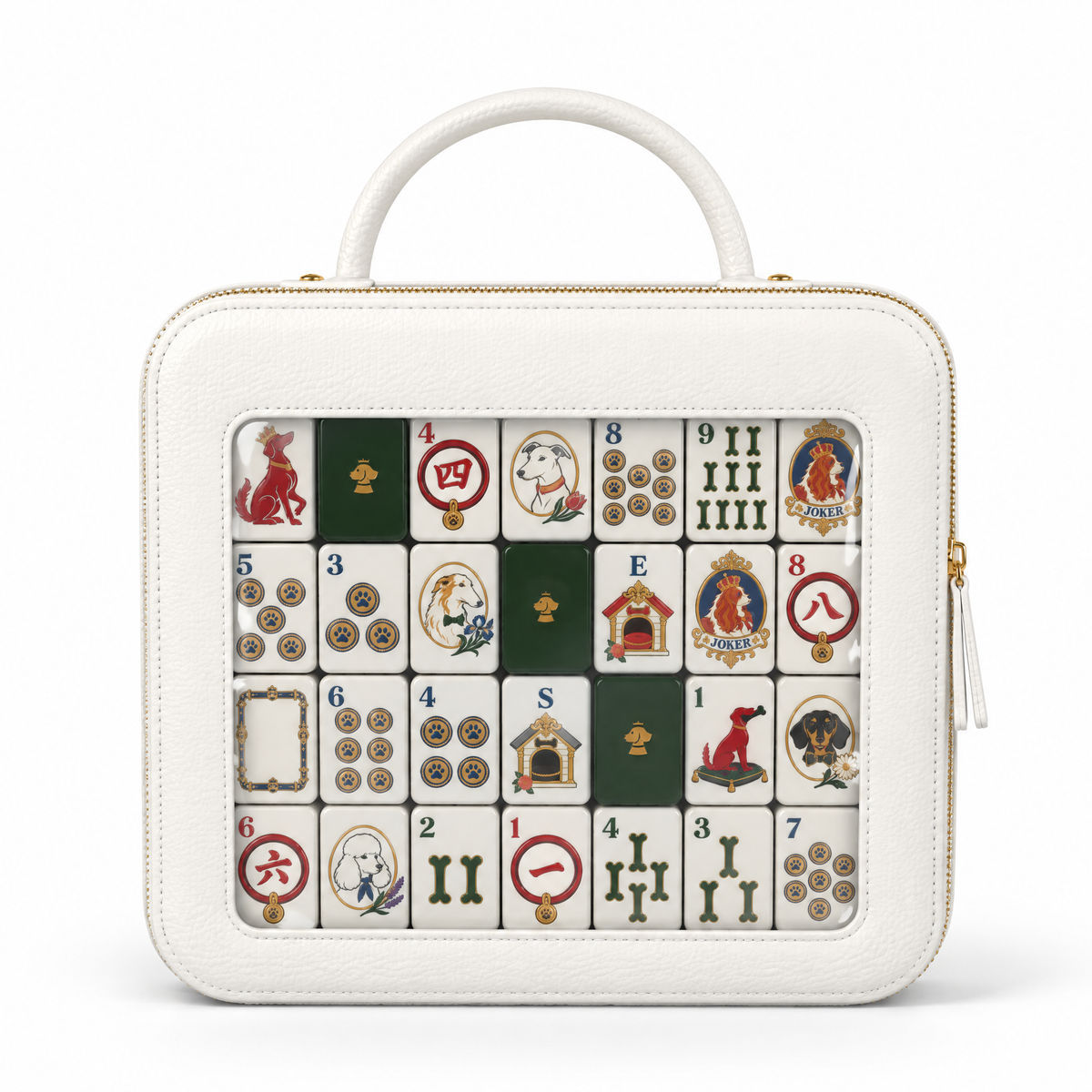
Riichi mahjong scoring combines fan (hand complexity level, 1–13+) and dora (bonus tiles that increase point value). A completed hand's base points depend on fan count and whether melds are exposed or concealed. Winners receive payment from losers based on seating position: discarder pays most, non-discarders pay less. Scoring happens in real time during play, not from a pre-set card like American mahjong. A 2-fan hand with four dora, for example, scores higher than a 1-fan hand with no dora. The system rewards risky plays (self-drawn wins, concealed hands) with multipliers. Riichi players in weekly games typically learn scoring through repetition and reference charts rather than memorization; most keep a scoring guide at the table. Mahstead's best-selling acrylic sets now include riichi variants, making it easier to host mixed-rule games without switching tile stocks. 🀄 Shop best-selling mahjong sets →
What is fan, and how do you count it?
Fan measures hand complexity: a 1-fan hand (like a simple sequence win) is worth the fewest points, while 6+ fan (rare combinations: all terminals, honors, triplets) earn exponentially more. Each tile pattern or rule completion adds one fan. A single quint or a self-drawn win adds fan; a concealed hand adds fan. Most hands at a casual table are 2–4 fan; anything 6+ fan triggers immediate payment celebration. Tsumo (self-drawn) and menzen (concealed) both grant bonus fan, making hidden hands rewarding to pursue strategically.

How do dora multiply your hand value?
Dora are "bonus tiles" designated at the start of each hand—usually the tile following the dead wall's indicator tile. Any copy of the dora in your hand counts as an extra point multiplier, not as a regular tile. If 5 Dots is dora and you hold three 5 Dots, all three count as dora, each adding points independently. Ura-dora (hidden bonus tiles, revealed only if you win) exist in some rule sets and act the same way. Dora create incentive to read discards carefully: holding dora increases hand value without adding complexity, so a 2-fan hand with four dora often beats a 3-fan hand with zero dora. A player holding multiple dora tiles becomes a live threat at the table immediately.
How does the discarder's seat position change what they pay?
In riichi mahjong, the discarder (player who threw the winning tile) always pays the most. If you win by drawing from the wall (tsumo), all three players pay you equally. If you win on someone's discard, that person pays you a fixed amount while the other two pay smaller amounts. The dealer (east) pays and receives at double rates compared to non-dealers. This mechanic means a dealer who discards into a win owes the most; conversely, a dealer who wins collects the most from all three opponents—so dealer position carries real risk and reward. Tracking whose turn it is prevents confusion during rapid rounds.
What's the difference between riichi and American mahjong scoring?
American mahjong uses a printed card with 70+ pre-set legal hands; you match your tiles to the card pattern and score a flat amount. Riichi mahjong has infinite hand possibilities: any valid meld combination earns points if it meets fan and tile requirements. American mahjong rewards speed and card knowledge; riichi rewards concealment and tile reading. American games end when someone wins one hand and scores are tallied; riichi games typically continue for 4 or 8 hands per session, with a running total. Riichi scoring is dynamic and additive (fan + dora + position multipliers); American scoring is binary (your pattern matches the card or it doesn't). Both reward strategy, but riichi demands faster mental math and familiarity with dozens of hand types.
What mistakes do beginners make when calculating riichi scores?
New players often forget to count concealment bonus (menzen adds fan) or mistake dora tile copies as regular tiles (dora count separately, boosting value even in low-fan hands). Many miscalculate discarder vs. non-discarder payouts or forget the dealer multiplier entirely, leading to underpayment. Some players count fan incorrectly by adding multiple bonuses for the same rule (e.g., you don't add fan twice for being both self-drawn and having a pair of dragons). The most common error: finishing a hand and announcing points before checking the scoring chart, then discovering mid-payment that the math was wrong. Avoiding this means confirming fan count aloud, verifying all dora on the table, and checking the chart before declaring the win. New players should ask others to verify the score in early games—no penalty for pausing to get it right.
Scoring Comparison Table: Riichi vs. American Mahjong
Aspect | Riichi Mahjong | American Mahjong |
Hand selection | Infinite patterns; fan + dora-based | Pre-set 70+ patterns on current year card |
Scoring trigger | Fan count + dora count + position | Exact card pattern match |
Point math | Fan × multiplier + dora additions; varies by discard/draw | Flat score per pattern |
Bonus tiles | Dora (active throughout hand play) | Jokers (substitute for any tile in a meld) |
Dealer advantage | Collects/pays double on tsumo/discard | Rotates each hand; equal scoring for all seats |
Learning curve | Memorize 30+ hand types and scoring multiples | Memorize card patterns; faster for new players |
Session length | Usually 4–8 hands total; running score | Single hand or best-of-3; fresh tally |
Concealment reward | Yes: menzen adds fan, increases value | No preset reward; jokers expose melds |

How to Use a Riichi Scoring Chart at the Table
Step 1: Declare your winning hand aloud and identify the winning tile.
Step 2: Count fan by hand type (pattern, bonuses, and position status).
Step 3: Count all dora in your hand (including ura-dora if you won and they are revealed).
Step 4: Multiply base points: fan × standard multiplier. Add dora value separately.
Step 5: Apply position modifier (dealer pays/collects double; non-dealer pays/collects standard).
Step 6: Confirm the total with one other player before collecting payment.
Step 7: Record the score on the running tally. Pass the dealer button if it's not your turn next.
Most tables keep a laminated scoring reference or use a phone app to verify math. This process takes 20–30 seconds at a smooth table; beginners should expect 45 seconds until they internalize hand types.
What Hand Types Count as Fan?
Common 1-fan hands: sequences (chow), a pair of dragons, a concealment bonus.
Common 2-fan: sequences + self-drawn, or all-triplets (koutsu), or a honor pair.
Common 3-fan and up: all-terminals-and-honors (honroutou), all-simples (tanyao), all-one-suit (honitsu or chinitsu), all-winds or all-dragons (yakuhai).
Most casual games center on 2–4 fan hands; 6+ fan is rare and triggers excited reactions because point value jumps significantly. Players new to riichi often spend the first few games referring to a chart showing which patterns qualify as which fan level. The same pattern scores differently depending on whether it's concealed vs. exposed, so context matters as much as the tile combination itself.
Common Riichi Scoring Mistakes—and How to Avoid Them
Mistake 1: Confusing dora with regular tiles. Dora are designated once per hand and remain valuable even if discarded by others. Only your hand copy counts toward your score. Fix: Mark dora clearly when you see it, and check your hand tiles specifically.
Mistake 2: Forgetting the discarder always pays most. Wall draw (tsumo) splits payment equally; discard win makes the thrower pay double or triple. Fix: Confirm the win source aloud ("Tsumo" or "Ron") before calculating.
Mistake 3: Applying bonus fan twice. You don't add 1 fan for "self-drawn" and another 1 fan for "concealed hand"—the concealment bonus already applies if your hand is secret. Fix: Check if your bonus overlaps another player's calculation.
Mistake 4: Misreading the dealer multiplier. Dealer (east seat) collects at 1.5× or 2× from each opponent; non-dealers collect less. If you're unsure, ask: "Am I east this hand?" Fix: Confirm seating position before a win is announced.
Mistake 5: Announcing points before checking the chart. Once you declare a number, other players expect payment immediately—errors are hard to reverse. Fix: Silently verify the chart first, then announce confidently.
What to Check Before You Buy a Riichi Set
Tile count: Standard riichi sets use 34 unique tiles (1–9 in three suits, seven honors, and a white dragon as blank). Verify the set includes all 136 tiles (four copies of each).
Material durability: Bamboo, bone, or acrylic all work; acrylic lasts longest with frequent play and travels well. Check the tile weight—heavier (15–20g each) feels more authentic and shuffles better than lightweight plastic.
Dice and scoring reference: A riichi set should include three dice and a scored marker or a scoring chart. Some include a wind tile turntable to track dealer rotations; others don't. Decide if you need these before buying.
Rack compatibility: Riichi racks differ slightly from American racks because riichi melds are revealed differently. Confirm the set includes appropriate racks or that your existing American racks fit.
Storage: Riichi sets often ship in cloth bags or wooden boxes. If you host weekly games, choose a set with a durable case to keep tiles organized between sessions.
🎁 See our most-loved mahjong sets & accessories →
Why Riichi Scoring Feels Faster Than It Looks
The first four turns, players calculate aloud and pause. By turn five, the table hums with confidence: "Two fan, three dora, dealer pays." Muscle memory builds quickly because the same hand types repeat every session. Once you've seen a tanyao (all-simples) win twice, you stop thinking and start recognizing. The math is addition and multiplication—not algebra—so mental load is low after the first 3–4 games.
Our weekly games went from 90 seconds per score calculation to 20 seconds per score within three weeks of switching to riichi rules. The key: keep the chart visible, ask aloud for verification, and don't rush early rounds. Speed comes naturally once hand types become familiar.
Bringing Riichi Mahjong Home: Equipment Tips
If you're hosting riichi nights with American players, you'll need a set that works for both rule systems. Most riichi tiles are compatible with American play (same tile counts and suits), so switching between games is seamless if your mahjong racks with pushers fit both tile sizes.
A quality mahjong mat designed for game play—with marked discard zones and hand areas—makes riichi scoring easier because it signals where melds go (exposed vs. concealed), reducing confusion. Choose a mat with printed sections for "wall," "melds," and "hand" to keep the game flowing.
For travel between game venues, a reinforced mahjong bag that fits tiles, racks, dice, and a scoring chart keeps everything organized and portable. Most players keep their scoring reference laminated inside the bag's pocket.
✨ Find your Mahstead set — free US shipping →

FAQ
Can a hand be zero fan?
No. Every valid winning hand in riichi mahjong is at least 1 fan. If your tiles don't meet any fan condition, you cannot declare win. This prevents scoring disputes and keeps all wins meaningful.
Do I add fan for having many dora?
No. Dora are not fan; they increase point value independently. A 1-fan hand with eight dora scores much higher than a 4-fan hand with zero dora. Fan and dora are separate multipliers.
What if I discard a tile that turns out to be dora after my win?
The tile you discarded is gone and doesn't count toward your score. Only tiles in your hand count as dora. Once a tile leaves your hand, it has no dora value.
How do I know if a hand is concealed (menzen) at the end?
Your hand is concealed if you called no melds (no exposed pungs, kongs, or chows) during play. If you claimed even one meld, the hand is not concealed and loses the menzen fan bonus.
Is the scoring chart the same for all riichi rule sets?
No. Traditional Japanese riichi, Hong Kong mahjong, and Taiwanese variants use different scoring systems. Check your group's house rules before the first hand. Most casual Western groups follow simplified Japanese riichi rules.
What happens if I miscount fan and the table disagrees after payment?
Ideally, verify with the chart before payment to avoid disputes. If payment already happened and an error is discovered within a few hands, ask the group to reverse it; most tables do. Prevent this by confirming aloud before declaring the win.


View More
View More
View More
