
Riichi Mahjong Quick Start Guide: Rules & First Game
Last updated: Nov 23, 2026
Riichi mahjong is the Japanese variant played with 136 tiles (four copies of 34 tile types: Bams 1–9, Craks 1–9, Dots 1–9, plus winds N/E/W/S and three dragons). Hands are built from sequences (chows: 1-2-3 of the same suit, drawn or called) and triplets (pungs: three identical tiles, also called or drawn); a winning hand has four melds plus a pair. A round lasts 10–15 minutes. Setup requires one set of 136 tiles, a discard wall, wind indicators, and score sticks; Mahstead's best-selling mahjong sets include acrylic tiles that work across variants. You don't need the National Mah Jongg League card (used only in American mahjong). Riichi play emphasizes memory, quick-fire discards, and declaring "riichi" (a one-hand-tile-short state) to signal you're fishing for a single winning tile. The game ends when someone wins, or after all tiles are drawn (a draw). Beginners should avoid simultaneous calls and learn safe discard strategy first.
Riichi mahjong strips the American game down to basics: no jokers, no hands from a card, no prolonged tile-passing. You're building standard melds—sequences and sets—in real time, calling tiles from the discards, and playing fast. Here's what separates it from American mahjong and how to start today.
How do I set up a riichi mahjong game?
Start with one 136-tile set, preferably acrylic for clarity and durability. Shuffle all tiles face-down. Each player builds a wall of 34 tiles (two rows stacked, one tile deep) directly in front of them. Designate one player as East (dealer). East rolls two dice; count counterclockwise from East by the total to find the breaking point in the wall opposite East—that's where the draw begins. East draws two tiles from the break, then each other player draws two, and East draws one more (East ends with 14 tiles; all others have 13). Place a wind indicator and scoring stick frame in the center. No Charleston, no card—you're ready to play.

What tiles go into a winning hand?
A winning hand is four melds (each a set of three or four tiles) plus one pair (two identical tiles). A meld is either a pung (three identical tiles: e.g., three 5 Dots) or a chow (a sequence of three in suit: e.g., 3 Bam, 4 Bam, 5 Bam). Honor tiles (winds and dragons) can only form pungs, never chows. The pair must be two of the same tile—wind, dragon, or number. All nine tiles in any winning hand must obey these rules with no jokers, no blanks. Unlike American mahjong, where hands come from an annual card, riichi lets you win any of thousands of legal combinations, so long as your four melds and pair are valid. Your pair can be any tile type; pungs and chows can mix freely.
🀄 Shop best-selling mahjong sets →
What does "calling" a tile mean and when can I do it?
When a player discards a tile, you may call it to complete a meld if you have two of that tile already (to form a pung) or if it fits a sequence you're building (to form a chow). Announce the call aloud and place the meld face-up in front of you. In riichi, any player can call a discard to form a pung or chow, not just the next player—so speed matters. If multiple players want the same discard, the player nearest to completion (or the player closest to East in turn order) wins it. Calling resets the turn: the player who called the tile now discards, and play continues from them. This is why riichi games move fast—discards are contested and melded openly. If you don't call immediately, you forfeit the chance forever.
What is "riichi" and how do I declare it?
"Riichi" (sometimes spelled "reach") means you have 13 tiles forming three complete melds, and you need exactly one more tile to win. To declare riichi, place a 1,000-point stick sideways in front of you as a visible signal. Once riichi is declared, you cannot change your hand—you can only draw and discard tiles in the same positions each turn. If you draw your winning tile, announce "tsumo" and win immediately. If you draw a tile you don't need, discard it. If another player discards your winning tile while you're in riichi, call it, announce "ron," and you win. Riichi is optional: you can win without declaring it, but if you declare riichi and then call a discard to win, you earn a scoring bonus. Declaring riichi is a calculated risk—you lock yourself in to one winning pattern, but you signal confidence and earn higher points if you succeed.
Decision | Riichi declared | No riichi | Why it matters |
Can change hand? | No—locked | Yes, flexible | Risk vs. reward |
Bonus if you win | Yes, +10 pts | No | Scoring incentive |
Speed to win | Faster (committed) | Slower (open) | Strategic patience |
Opponent caution | High (they know your intent) | Low (they guess) | Defensive play |

What's the scoring system and how do points flow?
Riichi scoring is based on hand value (fu and han). "Fu" (roughly, hand complexity) starts at 20 and scales with tile calls, self-draws, and hand shape; "han" (hand levels) are assigned by hand pattern—a simple pair of winds is 1 han, a sequence-only hand is 1 han, rarer patterns are 2, 3, or higher. A hand's total value (base points) is calculated from fu and han, then converted to payments. The winner collects from losers: if you go out on a self-draw (tsumo), all three pay equal shares; if you win off a discard (ron), the discarder pays the entire amount while others pay nothing. East (dealer) pays and collects 50% more than South/West/North. Play continues for one round (four hands: each player as East once), or multiple rounds until someone reaches 30,000 points. Scoring is precise but fixed by chart—no house rules. Beginners should keep a scoring sheet and reference a chart for the first few games.
🎁 See our most-loved mahjong sets & accessories →
How does riichi differ from American mahjong?
Feature | Riichi | American |
Tile count | 136 (no jokers, no blanks) | 152 + 8 jokers |
Hand source | Any valid legal combination | Current year's NMJL card only |
Sequences (chows) | Yes—drawn or called | No—pungs & kongs only |
Melds exposed | Yes, on call | Yes (pungs, kongs, quints, sextets) |
Speed per round | 10–15 minutes | 20–40 minutes |
Card required | No | Yes (annual) |
Riichi declaration | Core mechanic | N/A |
Scoring system | Fu + han chart | Point-based per hand |
Riichi is leaner and faster. American mahjong locks hands to an annual card and emphasizes planning a full hand before play. Riichi lets you adapt mid-game, call tiles from any player, and chase dozens of winning patterns. If you own acrylic tiles from our collections, you can play riichi, American, or even Hong Kong mahjong on the same set—the tile faces are identical; only the rules change.
What mistakes kill a beginner's first game?
Calling too slowly. In riichi, hesitation costs you. The moment a discard hits the table, decide in two seconds: do I want it or not? Practice spotting your needed tiles before they appear.
Discarding carelessly. New players toss out tiles without reading the board. Memorize what's been discarded; never throw a tile another player has called. Watch which melds are showing; avoid discarding tiles that complete obvious sequences.
Forgetting the turn order after a call. When you call a discard, you discard next—not the next player in seat order. If you misunderstand, the hand breaks.
Changing your mind after declaring riichi. Once riichi is declared and locked, you cannot undo it. Think before you commit.
Ignoring your wall during a draw. Always count: you have 13 tiles until you draw your next. If you lose count, the hand is invalid.
What to check before you buy a riichi set
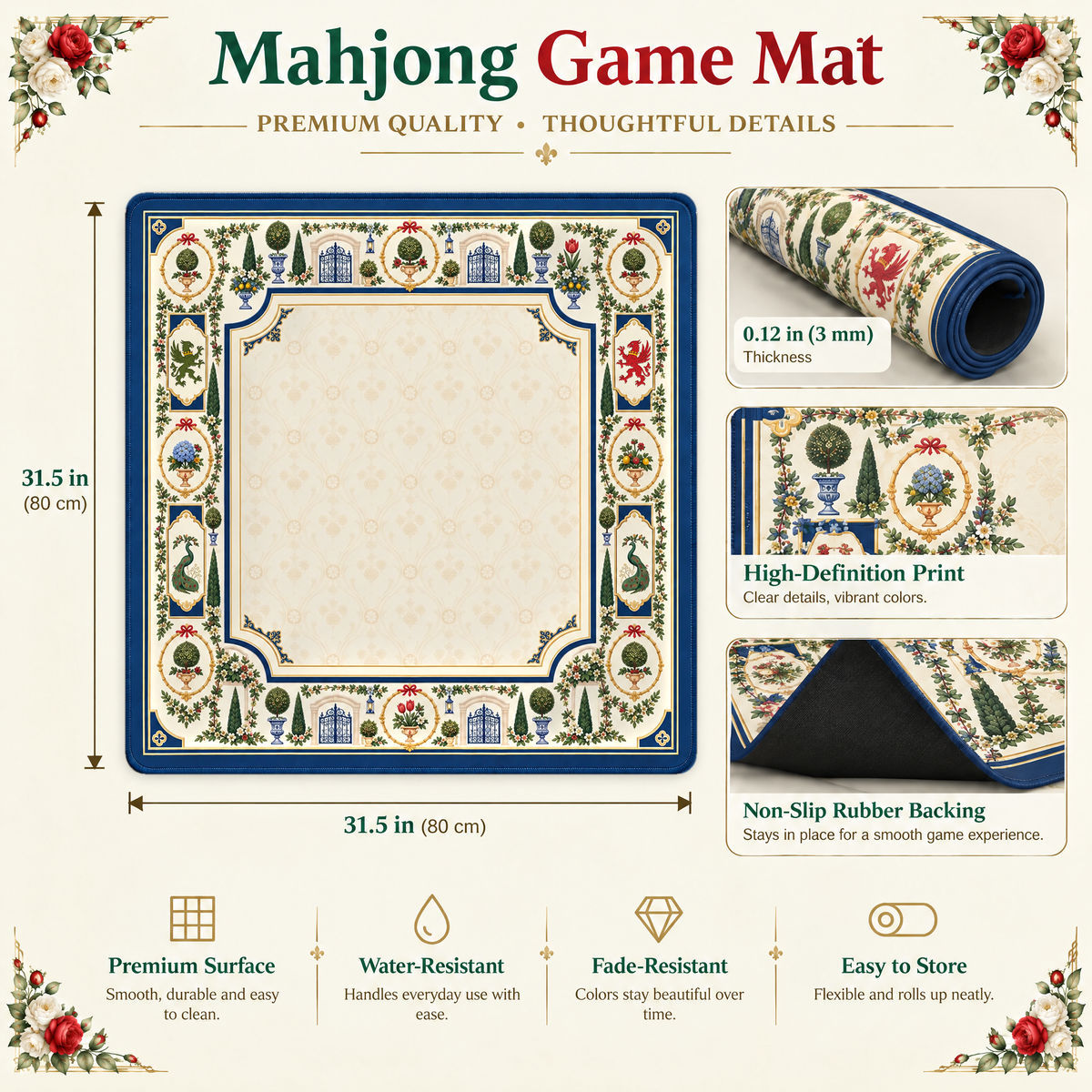
Before purchasing tiles to play riichi, confirm: Does the set include exactly 136 tiles (no jokers or blanks)? Are tile faces large and clear enough to read from three feet away? Does the set come with a scoring stick frame or will you need to improvise? If you're playing weekly, invest in durable acrylic sets over bamboo; acrylic tiles survive years of table play and shuffle without chipping. If you plan to host, pair your set with a padded mat to protect the table and tiles from noise and dings. Bring a notepad for hand notes and scoring; a compact travel bag keeps tiles portable if you're moving between venues.
✨ Find your Mahstead set — free US shipping →

FAQ
Can I play riichi mahjong with only three players?
Yes. Each player draws 14 tiles initially; the missing East chair stays empty or rotates as a non-playing dealer role. Turns and payments adjust—ask experienced players for house rules before starting, as three-player variants have regional differences.
Do I need to memorize all the hand patterns before my first game?
No. Learn fu and han from a chart during play; most beginners focus on simple hands (all sequences, or one pair plus three pungs) and build complexity over weeks. Apps and online guides display valid hands instantly if you're stuck.
What happens if two players call the same discard?
Priority goes to the player closest to East in clockwise order, or to anyone calling tsumo (self-draw). If only one player claims it for a chow and another for a pung, the pung wins. Agree on house rules before play begins.
Is riichi mahjong harder than American mahjong?
Different, not harder. Riichi is faster and demands quick reading of tiles and board state; American mahjong is slower but requires memorizing the annual card and planning two to four hands ahead. Skilled players excel at one or both.
Where can I find people to play riichi mahjong in my city?
Check local meetup boards, Japanese cultural centers, university game clubs, and online communities (Discord, Reddit's r/mahjong). Many cities host riichi tournaments twice yearly. Starting a casual weekly game with friends is easiest—teach the rules in 30 minutes and play.
Can I use the same set for both riichi and American mahjong?
Yes. Riichi uses 136 of the 152 American tiles (no jokers); you'll leave the jokers unused. The tile faces are the same across both games. Our best-selling acrylic sets work perfectly for either variant.


View More
View More
View More
