
Riichi Mahjong Noten Rules: When and How You Lose Points
Last updated: Nov 23, 2026
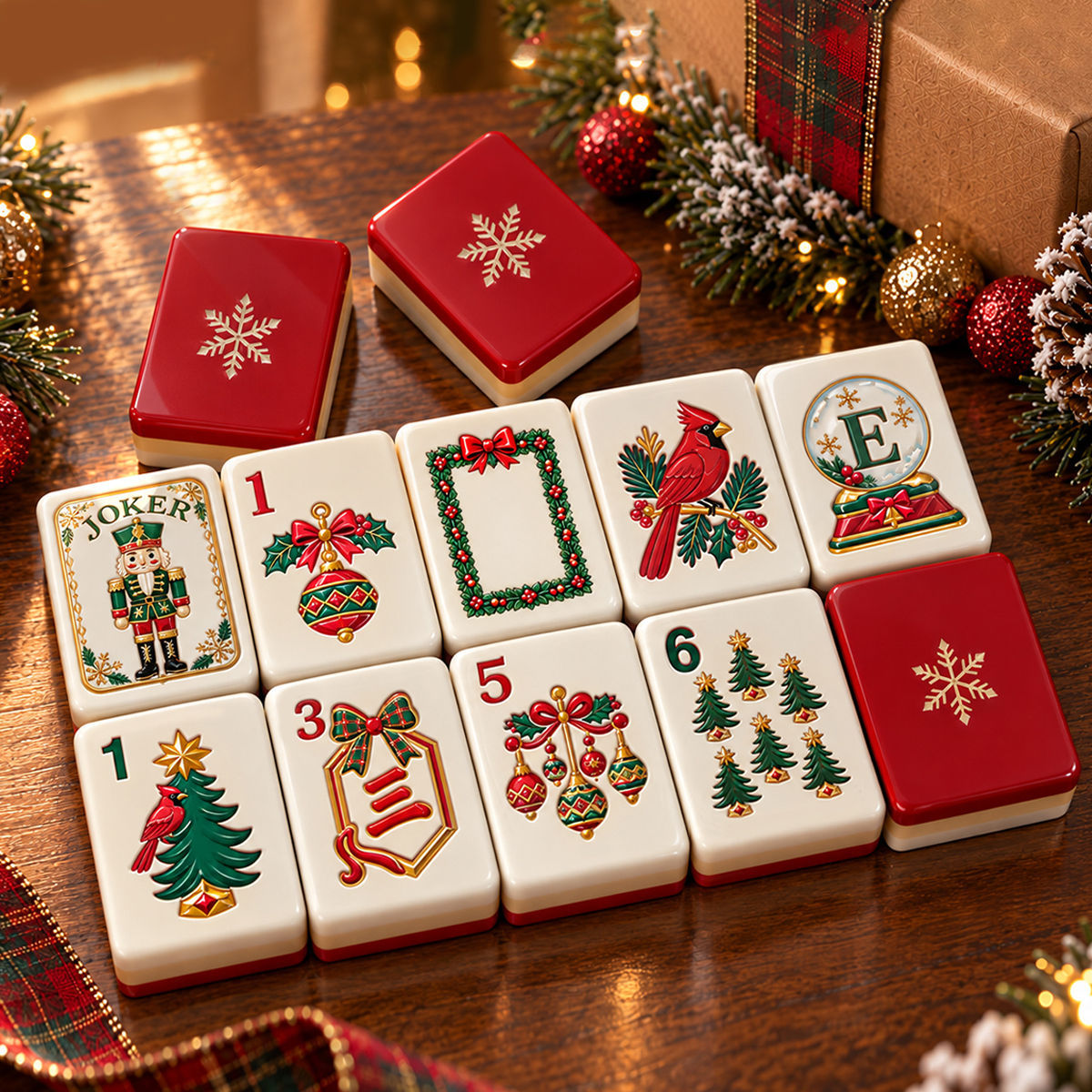
Noten (テンパイ失敗 / "tenpaifusoku") occurs in riichi mahjong when you're in tenpai (one tile away from winning) but fail to complete your hand before the game ends or discard causes you to lose. At that point, you pay each opponent a small amount—typically 1,000 to 3,000 points depending on the ruleset (riichi, han-man, and other variants each define this differently). Unlike American mahjong, where you either win or the hand is void, riichi penalizes the committed player financially for incomplete readiness. The rule teaches discipline: declaring riichi locks your hand and forces you to stand on your declaration even if no winning tile appears. Mahstead players exploring riichi alongside American mahjong discover that riichi's tile-by-tile tension and payment system demand a sharper focus on hand completion—making your tile rack setup and discards even more critical than in our standard game.
In American mahjong, we play until someone wins or the hand exhausts; there's no penalty for having a nearly-complete hand when the tile wall runs dry. Riichi mahjong flips that logic. Once you declare riichi—a bet-like statement that you're one tile away from winning—you're locked in. If the game ends and you haven't won, you owe payment to each opponent. That payment, tied to how close you came, is noten.
What exactly does noten mean in riichi mahjong?
Noten literally means "not in tenpai"—but the penalty applies when you are in tenpai and fail to win. In riichi, tenpai is a legal hand shape that needs exactly one tile to complete into a winning hand (called agari). If you declare riichi, commit to tenpai, and the hand ends without your agari, you pay noten. This is riichi's core mechanic: it's a bet on your ability to complete. The penalty enforces honesty and risk management at the table.

How much do you pay for noten?
The payment structure varies by ruleset. In the most widely played tournament standard (EMA / World Riichi Championship rules), noten typically costs 1,000 points per opponent if you're in tenpai but fail. Some casual or regional rulesets impose 3,000 or 8,000 points depending on how many opponents remain and table stakes. Online platforms (Mahjong Soul, etc.) show the exact amount when you declare riichi, so no surprises. Before you sit down, confirm your table's rules with the organizer or scorekeeper—it's not a surprise to spring on a new player mid-hand.
When does the noten penalty actually trigger?
Noten triggers only if three conditions are met: (1) you declared riichi earlier in the hand, (2) you're still in tenpai when the hand ends, and (3) the hand ends without your win. A hand ends when the tile wall is exhausted (all tiles drawn) or when a player wins. If someone else wins before the wall empties, you don't pay—you simply lose that hand. If you stay in tenpai all the way to the end of the wall and no one has won, you pay every player at the table. Crucially, if your hand changes after riichi (say, you draw a tile that breaks your winning shape), you're no longer in tenpai and owe nothing—but by then you've already lost points from the riichi stick (a 1,000-point deposit that goes to the winner if anyone wins during that hand).
How does noten differ from American mahjong penalties?
American mahjong has no equivalent because we play with a fixed yearly card; every hand on the card is a valid winning hand, and the game either resolves into someone's win or—rarely—a dead wall. There's no mid-game commitment (like riichi) and no penalty for incomplete hands. Riichi, by contrast, rewards aggressive commitment: declaring riichi signals confidence that you'll complete, and the financial stake enforces both honesty and tension. If you're afraid of noten, you stay silent and play defensively. This creates entirely different table dynamics. For those of us who play both games, the lesson is clear: American mahjong is about finding your hand on the card; riichi is about betting you can complete any hand you choose. Mahstead's best-selling mahjong sets are designed for American play, where the card is law—but many of our players keep a riichi scoresheet handy at the same table for side games or learning.
What mistakes do new riichi players make with noten?
Declaring riichi too early. Players often riichi with a "maybe winning" hand instead of a true one-tile-away shape. In riichi, tenpai is absolute: there must be exactly one or more tiles (a "machi") that complete your hand into agari. If four of those tiles are already discarded or in other hands, you're not in true tenpai—you're just hoping. The noten penalty catches careless declarations.
Forgetting the hand can still lose after riichi. New players assume riichi locks in a win. It doesn't. It only locks in a 1,000-point bet. If the wall empties and no one (including you) has won, you pay noten and lose additional points.
Miscounting discards and melds. Before declaring riichi, count the tile wall remaining and the number of tiles your opponents need to win. If you're riichi but your machi (winning tile) has already been discarded or is locked in an opponent's exposed meld, you'll pay noten for certain. Memorize what's been played.
Confusing noten with furiten. Furiten is a separate penalty: if your winning tile was discarded while you were in tenpai (even before riichi), you cannot win and must pay a penalty. Noten is stricter: any failure to win while in riichi costs you.

Quick decision framework: Should you riichi?
Use this checklist before declaring:
Factor | Ask Yourself | Safe to riichi? |
Machi clarity | Do I have 2+ distinct tiles that complete me? | Yes if ≥2 remain in wall and unseen tiles. |
Tile safety | Have all my machi been discarded or locked in melds? | Only riichi if 0–1 already played. |
Wall count | How many tiles remain before the wall exhausts? | Riichi if ≥8–10 tiles remain (more time to draw). |
Opponent melds | Are opponents close to winning? | Riichi is riskier if 2+ are also in tenpai. |
Stakes | What's the noten penalty at this table? | Riichi is safer at 1,000 pt penalty than 8,000 pt. |
If you check three or more "safe" boxes, riichi is reasonable. If fewer than two, stay quiet and keep playing defense.
🀄 Shop best-selling mahjong sets →
A real example: Noten in action
You're East player. Your hand is 2p, 3p, 4p, 5p, 5p, 6p, 7p (Pins), 1m (an honor), 1m, 5s (Sticks), 5s, 5s, 5s (Sticks pung), and one joker. You can form: (2-3-4 Pins), (5-6-7 Pins), a pung of 5 Sticks, and a pung of 1 Man. Your machi is either 1p (to form 1-2-3 Pins) or 8p (to form 5-6-7-8 Pins). You declare riichi, sliding your tile into the discard pool. Three players before you, one of them discards an 8p. Now only 1p completes you. The wall is down to six tiles. Three more turns pass; no 1p appears, and the wall empties. You pay each opponent 1,000 points for noten. If you'd stayed silent, you'd have drawn and played defensively instead of committing to the bet.
How to practice noten judgment
Join an online riichi community (Mahjong Soul, Tenhou) and play low-stakes games where noten payments don't sting. Watch professional streams and note when commentators say "noten risk is too high here" or "he can safely riichi." Attend a local riichi club (search meetup boards or community centers in your area for mahjong groups that offer riichi nights). Many organize teaching tables where experienced players coach newcomers through tenpai recognition and noten strategy without high pressure.
For those of us who host weekly American mahjong games, adding a riichi "learning round" after your regular game is a low-pressure way to build noten literacy. Set a smaller penalty (500 points instead of 1,000) and play for 30 minutes. Over weeks, your instinct for machi sharpens and noten fear fades. The same clarity that helps you read our National Mah Jongg League card transfers to riichi: you're always counting tiles, always thinking ahead, always weighing risk.
🎁 See our most-loved mahjong sets & accessories →
What to check before you buy or join a riichi table
Confirm noten penalty: Ask the table owner or online platform exactly how many points noten costs. It's not universal.
Learn tenpai recognition first: Before playing for money, practice identifying true one-tile-away hands offline. Misidentifying tenpai is the top cause of costly mistakes.
Understand the other penalties: Furiten (discarding your own machi), abortive draws (mis-declared hands), and other forfeitures. Noten is only one of several ways to lose points in riichi.
Play with experienced players initially: Riichi has a learning curve. A few rounds with a coach prevents expensive errors.
If you're new to riichi and play regularly with our best-selling sets in American mahjong, consider riichi as a way to deepen your tile-reading skills—not as a replacement. Many serious players do both: American play on Thursdays, riichi on Saturdays. Each teaches the other.
✨ Find your Mahstead set — free US shipping →

FAQ
Can you win after declaring riichi if you draw your machi tile?
Yes—riichi doesn't prevent winning. You declare riichi (betting you'll complete), then if you draw a tile that completes your hand into agari (a legal winning shape), you win immediately and collect from all opponents. The riichi stick (1,000-point bonus pool) goes to you. Noten only occurs if you fail to win before the hand ends.
Is noten the same as furiten?
No. Furiten means you discarded your own winning tile while in tenpai; you're penalized and cannot win that hand. Noten means you declared riichi, stayed in tenpai, but never drew a winning tile and the hand ended. Both hurt, but furiten is involuntary (a mistake in play), while noten is a deliberate bet that failed.
What if everyone is in tenpai at the end of the hand?
All players in tenpai (including non-riichi players, if the ruleset counts them) pay noten to the table pot or split the penalty equally. Tournament rules vary. Online platforms display the exact penalty before the hand resolves, so check your platform's rules. In casual play, confirm this with your table beforehand.
How is noten different in one-player riichi vs. three-player riichi?
In one-player riichi, only the riichi declarer pays if they fail. In three-player riichi (rare), payment rules may differ slightly depending on ruleset. Always confirm with your table or read the platform's rulebook. The core idea stays the same: noten punishes a failed commitment to win.
Can you take back a riichi declaration?
No. Once you declare riichi (announce verbally and place your riichi stick into the discard pool or announce in an online game), your declaration is locked. You cannot un-riichi. This is why tight tenpai judgment is so important: you're committing for the rest of that hand.
Do you pay noten if someone else wins after you riichi?
No. If another player wins while you're in riichi, the hand ends and they collect from you—but there's no noten penalty because the hand resolved with a win. You only pay noten if the hand ends without anyone winning while you're still in tenpai.


View More
View More
View More
