
Riichi Mahjong Kan Rules: When & How to Declare
Last updated: Nov 23, 2026
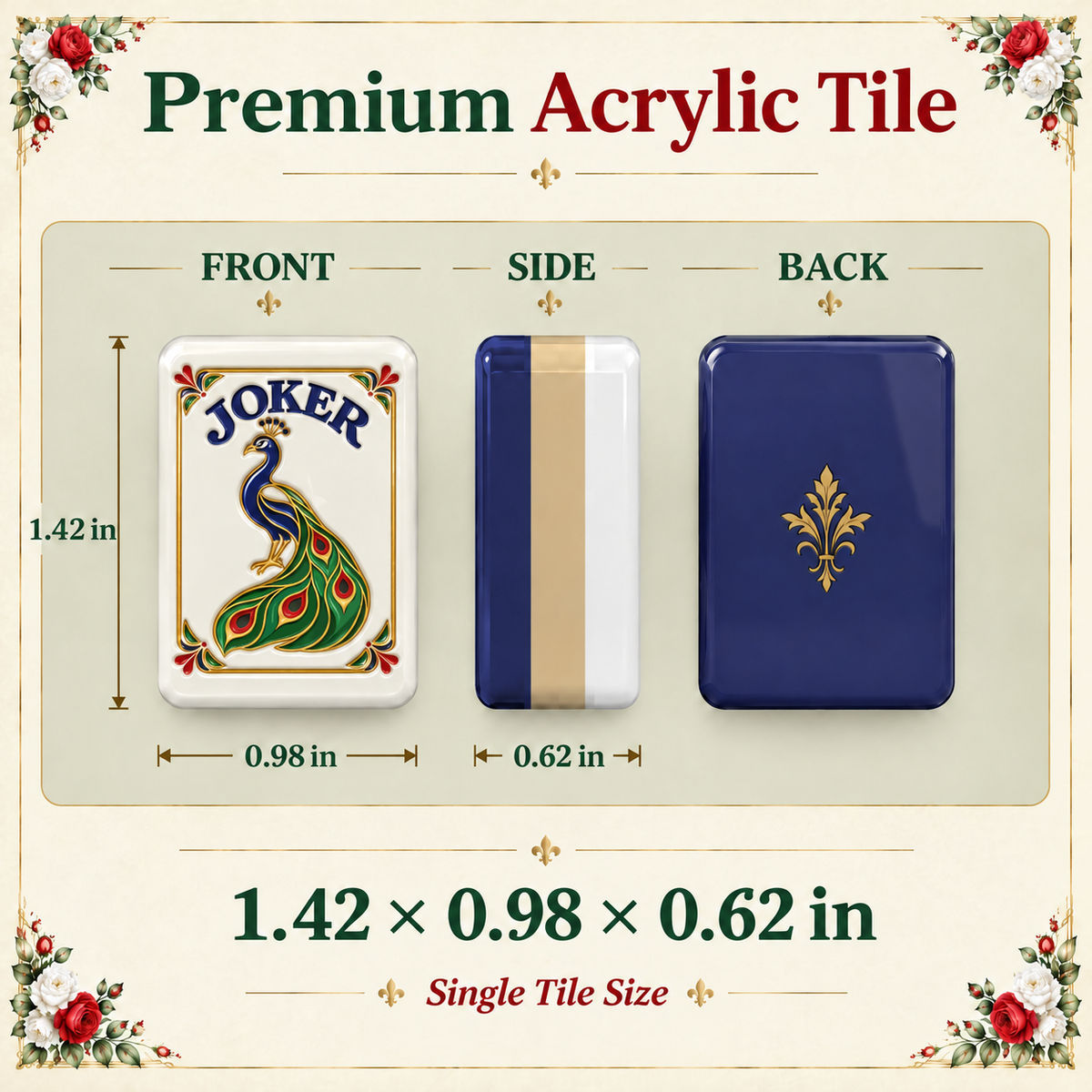
Kan (槓) in riichi mahjong is a four-tile meld you declare after your hand is already declared riichi or during regular play. When you form kan (four identical Honors, Terminals, or number tiles), you immediately declare it, add it face-up to your melds on the table, draw a new tile from the dead wall (the far end of the live wall, reserved for kans and flower draws), and typically pay a small tax to other players based on whether the kan was closed (all four in your hand) or open (you added a fourth to an existing pung). Kan scores bonus points called "kan bonus" when you eventually win the hand. Unlike American mahjong—which has no sequences and uses only pungs, kongs, quints, and sextets from a flat yearly card—riichi mahjong runs on round-based cycles with variable hand compositions, and kan is a live action mechanic that happens mid-game. Riichi sets sold for play come with enough tiles and jokers to support these live melds; best-selling mahjong sets suitable for riichi typically include clear pushers and organized racks for smooth meld management.
What is kan and when can you declare it?
Kan is a four-tile meld—all four identical tiles in one suit-number or Honor rank—that you declare openly on the table after riichi or during any turn before you discard. You may declare kan only if you already have a complete or near-complete hand (or are in riichi); declaring kan before you're ready locks you into waiting for a win and incurs penalties if you don't draw out. You cannot use kan as your sole winning meld (you need at least two other groups or pairs to win). Once kan is declared, you draw immediately from the dead wall, extending your hand and giving you one more tile to work toward tenpai (ready to win). Kan resets the dead wall counter and, in many tournaments, resets discard-safe tiles, making it a tactical double-edged move.

How many types of kan exist in riichi mahjong?
There are four types. Ankan (暗槓, closed kan) is four identical tiles all in your hand; you declare it and set all four on the table without exposing them to others until the round ends, and you draw a dead-wall tile. Minkan (明槓, open kan) happens when you call a tile from another player's discard that completes your existing pung (three of a kind), turning it into kan on your board. Shouminkan (小明槓, added kan) occurs when you already have a pung on the table (from a previous call) and draw the fourth matching tile in your hand; you may add it to that pung and draw from the dead wall—but this triggers a misdraw penalty if your hand was already in riichi. Kakan (加槓, added kan after riichi) is the most restricted: if you declared riichi and then draw the fourth tile, you must add it only if it doesn't change your wait (if it does, you've drawn a tile that is no longer a win and cannot add kan without breaking riichi). Mastering the four types prevents illegal plays and penalties.
What happens when you declare kan—the draw and the tax?
When you declare kan, three things happen in order:
You draw from the dead wall. The dead wall is the 14 tiles set aside before play starts at the far end of the live wall. Each kan consumes two dead-wall tiles: one for your draw and one "dead tile" that is never drawn. If the dead wall runs out (usually after 4 kans), no more draws are possible and play ends in a draw (流局, ryu-kyoku).
You pay a kan tax. If your kan was ankan (closed), each player pays you a small fixed amount (often 100 points in informal play, or scored per rules in tournaments). If your kan was minkan (open, from a discard), the player who discarded the tile pays you the full tax, and others pay half—or the house rule may vary. The tax is compensation because kan delays the discard and gives you a free tile replacement.
Your hand grows; your wait may shift. Drawing a new tile often changes which tiles win your hand (your "wait"). If that new tile is a winning tile, you are still in riichi and have won; if it is not, you continue waiting and may draw again on your next turn.
Common mistake: declaring ankan while in riichi when the drawn tile would change your wait is an illegal move in most tournaments—it breaks riichi and forfeits your hand. Always confirm your wait does not change before adding kan to a riichi hand.
How does kan bonus scoring work at the end of the hand?
If you win (reach machi) after declaring one or more kans, you receive extra points called "kan bonus" or "dora bonus" (depending on house rules). In official riichi scoring, each kan you declared adds to the final score multiplier:
Ankan adds to your fu (hand value points) or is scored as a bonus meld (varies by ruleset).
Minkan called from another player's discard typically adds fewer bonus points than ankan because it was triggered by another player's action.
Some rulesets grant a "kan dora" (bonus tile face-value draw) on top of hand scoring.
Example: you win with a hand worth 30 fu, 2 han (fan), and you declared one ankan. Your base score is 30 fu × 2^(2+1) = 1920 points from the discarder, and you might receive an additional fixed bonus (e.g., 100 points from each player) for the kan if house rules apply.
Why it matters: declaring kan when you're close to tenpai often increases your final payout enough to offset the risk of not winning—but only if you're confident in your hand structure.
How does kan interact with riichi, dora, and other mechanics?
Kan plays a subtle role in riichi mahjong's layered strategy:
During riichi: you can declare ankan (closed kan only) if it doesn't change your wait. Minkan, shouminkan, and kakan after riichi are illegal except in specific rule variants (some tournaments allow "riichi kan" under strict conditions). Breaking riichi via kan is an automatic loss of the hand and a penalty payment.
Dora count: if kan is declared, the dora indicator tile is "turned over" and a new dora is revealed for every kan declared in the round. This means kan can accidentally create new winning or point-scoring tiles for other players—a reason why kan is high-risk.
Concealed hands: ankan keeps your melds hidden until the hand ends or someone calls a tile, so opponents don't know your strategy as early as they would with minkan.
Dead wall depletion: each kan uses two dead-wall tiles; if all kans pile up in one round, the wall may run dry and force a draw before anyone wins.
Riichi mahjong players often weigh the kan bonus against the risk of revealing a high-value dora for an opponent—it's a risk-reward calculation unique to each round.
Scenario | Kan Type | Can Declare in Riichi? | Discard Draw Tax | Typical Use |
All four in hand, riichi | Ankan | Only if wait unchanged | Dead wall only | Lock in points safely |
Four in hand, not riichi | Ankan | Yes | Dead wall + tax | Build hand value early |
Call fourth from discard | Minkan | No | Yes (discarder pays) | Upgrade pung opportunistically |
Add fourth after riichi draw | Shouminkan | Only if wait fixed | Depends | Rare, high risk |
Fourth tile in hand, already riichi | Kakan | Only if wait fixed | Dead wall only | Last resort, usually forbidden |
🀄 Shop best-selling mahjong sets →

What to check before you buy a riichi mahjong set
If you're learning riichi kan and want to practice it at home, ensure your set has:
Clear tile faces with large, easy-to-read numbers and suit symbols so you don't miscount your kans mid-game.
Enough tiles: a standard riichi set has 136 tiles (four each of 1–9 in three suits, seven pairs of Honors, one pair of "flowers" if used per house rule). Our best-selling mahjong sets include spare tiles and jokers, which is a bonus for home play and travel—you'll never run short even if a tile cracks or goes missing.
Organized racks and pushers: when you're managing four melds plus a kan meld, mahjong racks with pushers become invaluable. They hold your tiles upright and clearly separated so you don't lose count of what you have.
A quiet, durable mat: riichi play involves frequent tile movement and reshuffles. A mahjong mat protects your table and makes the game smoother, especially during kans when dead-wall draws happen quickly.
🎁 See our most-loved mahjong sets & accessories →
Common mistakes when declaring kan
Mistake 1: Breaking riichi by adding kan. If you declared riichi and then draw a tile that is not in your original wait, you cannot add kan to stay in riichi. You must discard normally and wait for your original winning tile. Adding kan here forfeits the hand and costs you a penalty. Always double-check your wait before touching the fourth tile.
Mistake 2: Declaring kan when the dead wall is empty. If you're in the late stages of the round and many kans have already been called, the dead wall may be depleted. Declaring ankan when no dead-wall tiles remain is illegal. Count the dead-wall tiles before every kan in high-stakes play.
Mistake 3: Confusing minkan with an illegal call. You can only call minkan (take a discard to complete kan) on your turn before the next player draws. If the next player has already drawn, the discard is locked and minkan is no longer an option. Some players accidentally try to call after the draw and cause confusion.
Mistake 4: Failing to pay the kan tax. Ankan tax is mandatory in most rulesets; forgetting to collect or pay it creates score disputes. Always clarify house rules on kan tax at the start of the session.
Mistake 5: Adding kan to a pair or a single tile. Kan is strictly a four-tile meld. You cannot declare kan on two or three tiles; you need exactly four. A common beginner error is trying to "upgrade" a pair into a kan prematurely.
How riichi kan differs from American mahjong kongs
American mahjong and riichi mahjong use different rule systems, so the comparison is important for players learning both:
Feature | American Mahjong | Riichi Mahjong |
Kong equivalent | Kong (4 identical tiles) | Kan (4 identical tiles) |
When declared | Only when matching a hand on the annual card | Any turn (subject to riichi rules) |
Before winning | All melds must be matched to card rows before declaring win | Kan can happen mid-hand; win is separate |
Tile source | Called from discard or drawn from wall; no special reserve | Drawn from dead wall (14 reserved tiles) |
Riichi equivalent | None; American mahjong has no riichi | Riichi is a binding declaration that limits future action |
Tax/bonus | No tax or bonus for kongs | Kan incurs tax payment and win bonus |
Joker use | Jokers can fill kongs | Jokers cannot be part of kan; only real tiles |
Riichi mahjong kan is a live, mid-hand mechanic, while American kong is a fixed, pre-win element. If you're switching between variants, watch for these rule shifts closely.
✨ Find your Mahstead set — free US shipping →
Practicing kan at home: a three-round drill
To build confidence with kan, try this solo drill with a complete riichi set:
Set up: deal 14 tiles to yourself as if you're player 1 in a four-player game. Discard one to start your turn timer.
Identify kans: scan your hand for any four-tile sets (e.g., four 5 Craks). Do not declare yet; just note them.
Declare ankan: pick one fou-tile set. Remove it and set it aside on a mat or tray (representing your melds area). Draw two tiles from the dead-wall section (set aside 14 tiles before the game as your dead wall).
Recount: look at your remaining tiles plus the two new draws. Find another potential kan or pung. Repeat step 3 one more time.
Score: tally the kans you declared and compute the bonus points per your ruleset (check your local club or tournament rules).
Run three rounds like this. You'll quickly develop the habit of scanning for kans and understanding how the dead wall shrinks and how your hand changes after each kan draw.

FAQ
Can I declare kan if I'm not in riichi?
Yes. You can declare ankan (closed kan from your hand) or minkan (calling a discard) anytime before you're in riichi or after you win. Once riichi is declared, you can only declare ankan if the fourth tile does not change your wait; minkan and other open melds are illegal after riichi in standard play.
What happens if the dead wall runs out mid-round?
If all 14 dead-wall tiles are used (usually after four kans), play ends in a draw (流局). No more kans can be declared. This is rare in casual play but common in high-kan rounds; some tournaments add extra tiles to the dead wall to prevent this.
Does kan count as a "meld" for winning hand requirements?
Yes. Kan (whether ankan or minkan) counts as one of your required melds toward a winning hand. You need at least one complete hand structure (two or more melds plus a pair, or their equivalent in your rule variant) to win, and kan fills that role. However, you cannot win on kan alone.
Can I declare kan after I've already discarded my turn tile?
No. Kan is declared before you discard. Once you discard, your turn ends and you must wait for your next turn to consider kan. If you drew a kan-completing tile on a future turn, you can declare it then (ankan or kakan depending on riichi status).
Is the kan tax the same in all riichi rulesets?
No. Casual groups, tournaments, and online platforms have different taxes. Some pay 100 points per ankan; some pay 0 (no tax); some tie it to the hand value. Always confirm house rules or tournament rules before the first hand. Most official tournaments publish their kan tax in the rulebook.
Can I declare kan with wild tiles or jokers?
No. Kan must use four identical real tiles from the deck. Jokers, flowers, and wildcards cannot substitute for any tile in a kan. This is universal across riichi rulesets.


View More
View More
View More
