
Retirement Mahjong Outfit Ideas: Sets, Mats & Hosting Gear
Last updated: Nov 23, 2026
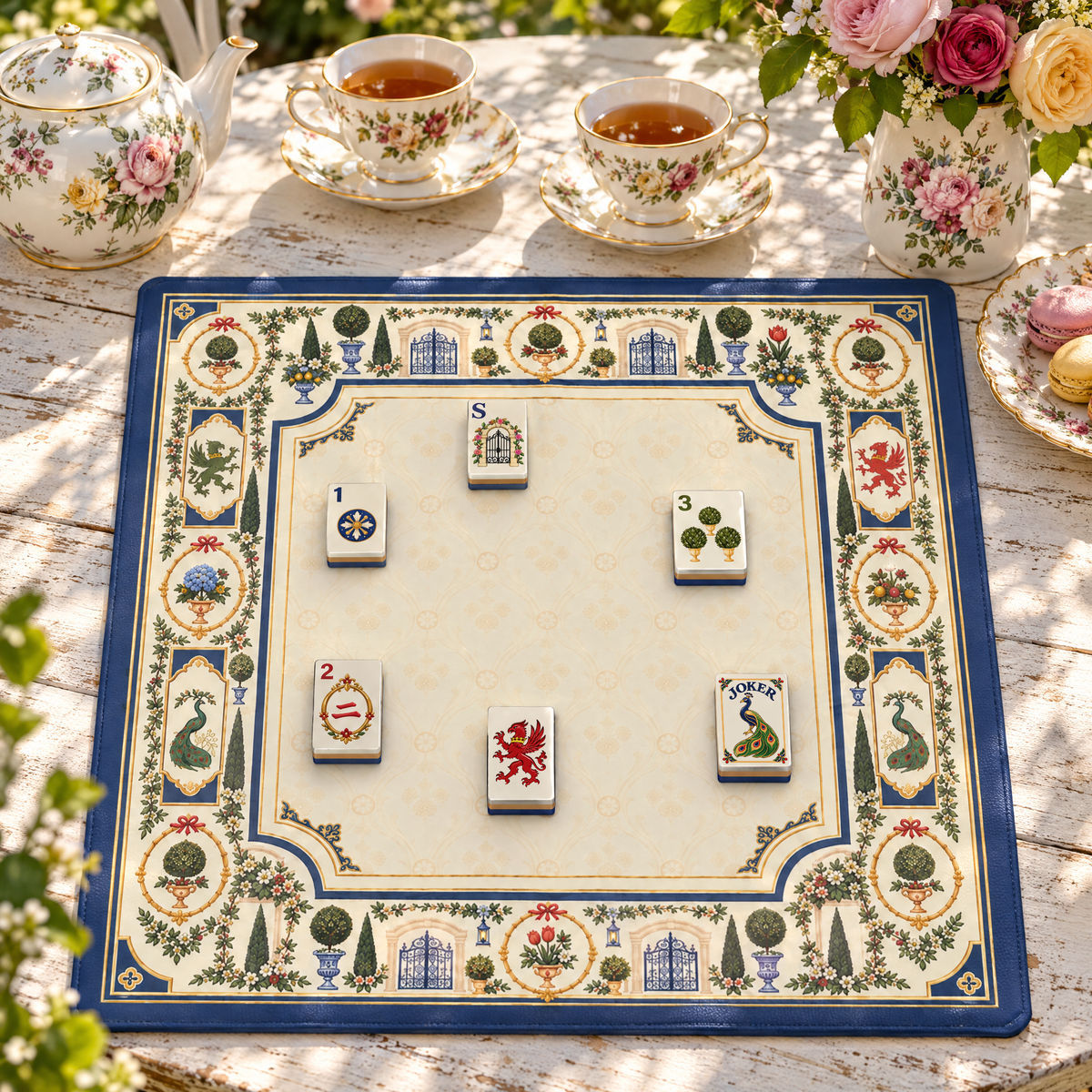
A "retirement mahjong outfit" is a complete setup built around a quality 160-tile American mahjong set paired with supporting equipment: a durable mat, storage-friendly racks with pushers, a protective bag or case, and optional dice and card holders. Most players assemble this over time rather than all at once. The set is the foundation; at Mahstead we offer engraved acrylic sets (many with personal touches or witty themes), and you'll add a mat based on table size and grip preference, racks to hold your hand neatly during play, and a bag for transport to the weekly game. Total investment varies by choices, but a thoughtful setup supports 5–10 years of regular play. Avoid cheap racks that don't hold tiles upright, mats that slip on polished tables, and bags without interior padding—these fail fast when you're playing weekly.
What does a complete mahjong outfit actually include?
A full retirement outfit starts with the 160-tile set (the playing tiles plus spares), a mat to define the play zone, personal racks to organize your hand, a bag or case for transport, and optional accessories like dice holders or card stands. Most of us begin with just the set and mat, then add racks when we realize we're hosting every week. A quality set ships in a sturdy box; a good mat rolls or folds without crease marks; racks live in your bag alongside the set. The card—the National Mah Jongg League's hand reference, issued each spring—stays at the table. Each piece serves a job: the set lets you play, the mat levels the field, racks keep your hand private, the bag protects your investment between games.

How do you choose the right set for retirement play?
You want a set you'll enjoy looking at every week for years. Acrylic tiles are louder and slide better than bamboo; they're easier to read in dim light and survive being jostled in a bag. Many retirement players prefer engraved American mahjong sets with personal names, jokes about retirement, or milestone years printed on the tile faces or edges. The key is clear, oversized numerals (easier on aging eyes than tiny print) and tiles that sit flat on racks without tipping. A 160-tile set comes with eight jokers and spare tiles; you'll use 152 tiles per game. Avoid sets marketed as "deluxe" or "pro" unless you can verify tile weight, finish, and whether the rack slots actually match the tile thickness. Mahstead sets come as acrylic with clear tile markings, and many players order them from our best-selling collection because they know the tiles will feel the same next year.
🀄 Shop best-selling mahjong sets →
Why does the mat matter so much for a weekly game?
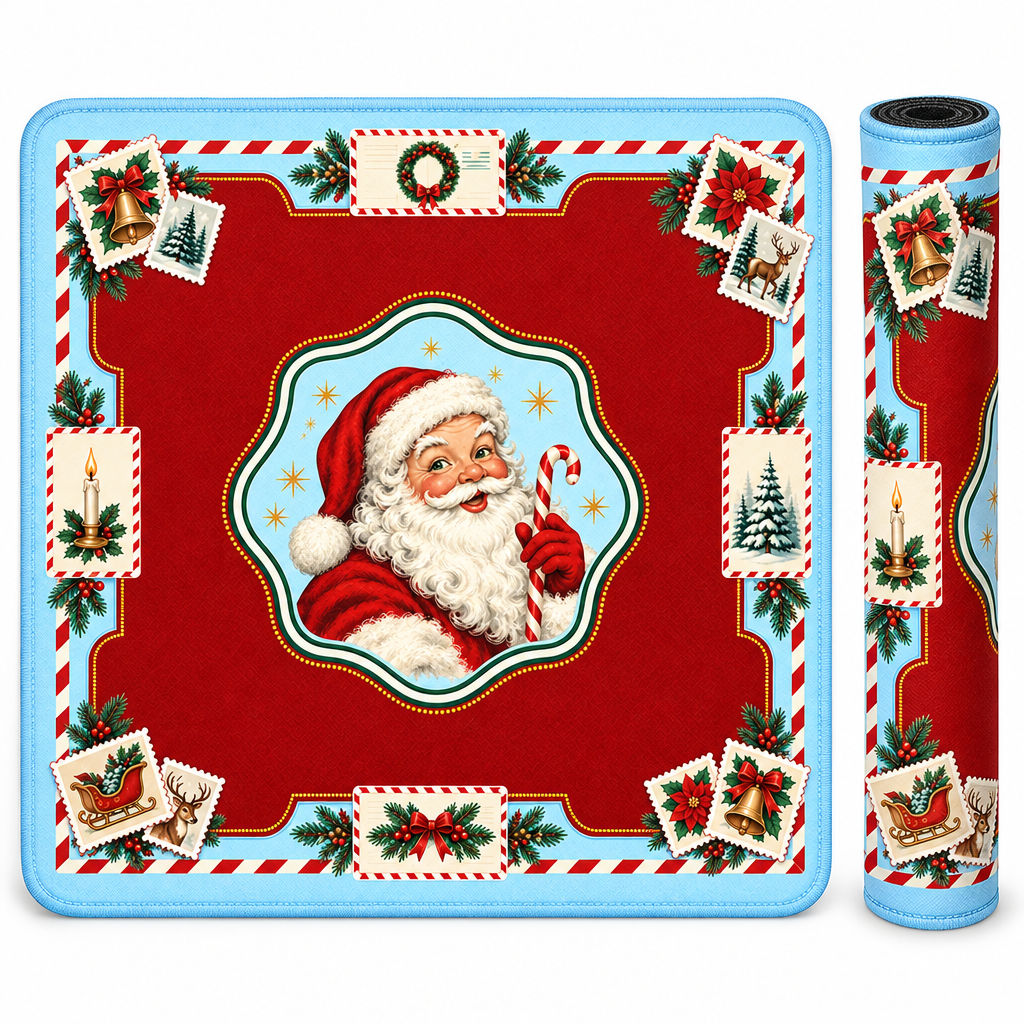
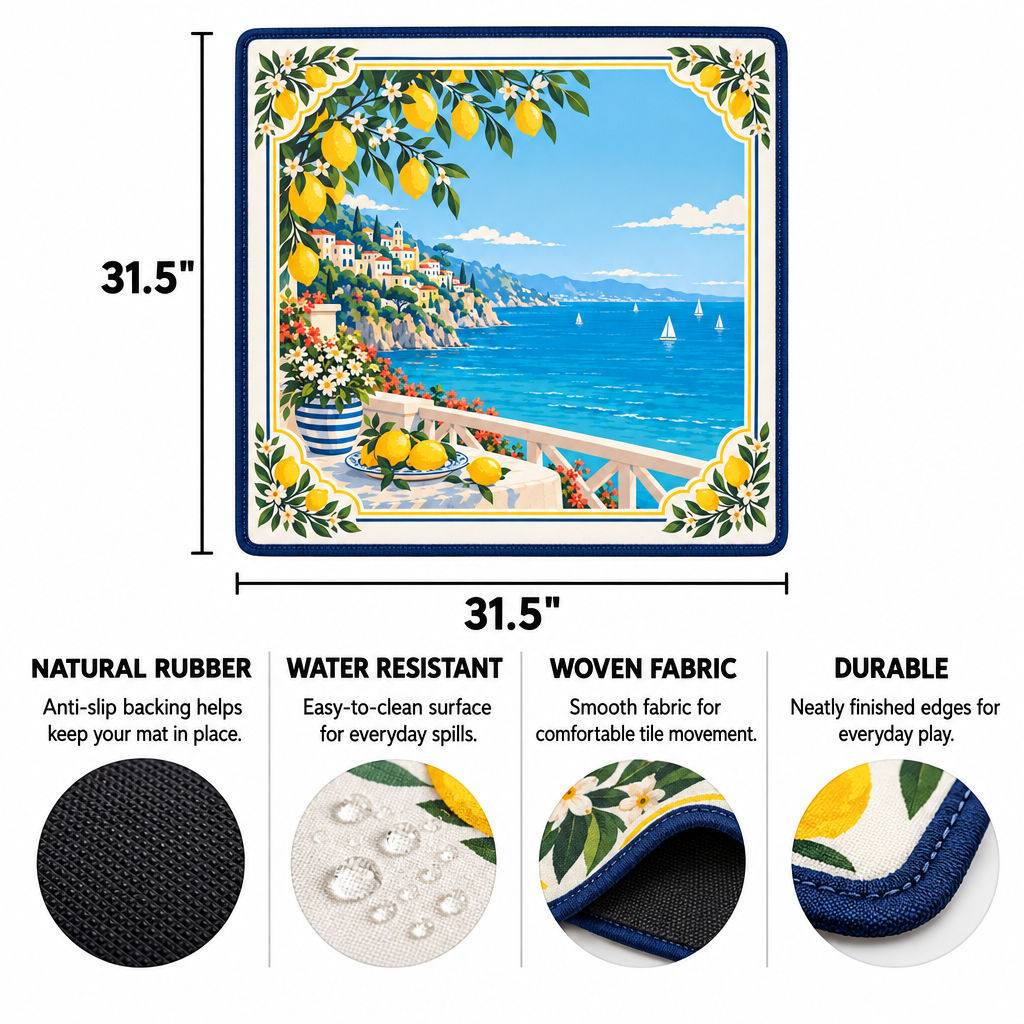
The mat defines play space, reduces tile noise, and prevents tiles sliding off the table during shuffling. A poor mat wrinkles, bunches, or slips under elbows—disasters during a serious hand. We've seen players use tablecloths, felt, and yoga mats; they all fail within months. A dedicated mahjong mat is usually vinyl or microfiber-backed, marked with zones for each player's hand, wall, and discard pile, and sized to fit a standard dining table (roughly 72–80 inches square). Mat thickness affects feel: thin mats (~2mm) suit polished tables, thicker ones (~5mm) add cushion and grip on bare wood. Consider your host table's surface—a sticky-backed mat prevents sliding on laminate; a non-slip underside protects a good dining finish. Many of us buy a mat sized to stay rolled in our travel bag so we can host anywhere. A mat lasts 3–5 years with weekly use.
What's the difference between racks, pushers, and complete hand storage?
Racks hold your 13 (or 14) tiles at an angle so other players can't see your hand; pushers are sticks used to nudge tiles into racks or arrange the wall. A rack with pusher is a single wooden or acrylic piece with both functions: the rack slots hold tiles upright in a row, and the pusher end lets you slide tiles without touching them with your fingers (keeping the game fair and fast). Sets usually come with racks, but they wear out or get lost. Replacement racks matter most if you host regularly; players who attend others' games less often may skip them. The best racks hold tall tiles (like our acrylic sets) without gaps, don't wobble, and have a pusher smooth enough to move tiles silently. Acrylic racks match acrylic tile sets; wooden racks suit bamboo. Most retirement players keep two or three spare racks in the travel bag in case someone forgets theirs or a tile cracks and you need to rotate in a backup.
How do you transport a retirement mahjong setup?
A good mahjong bag or case protects your tiles, mat, racks, and accessories during the trip to your host's house or a club. Soft-sided bags work for weekly local games; hard cases suit long trips or flights. Interior compartments keep tiles separate from the mat so acrylic tiles don't scratch each other. A well-packed bag means no loose tiles rolling around in your car trunk. We recommend checking bag dimensions against your mat (rolled or folded) and counting your spare racks, dice, and card holders to ensure everything fits without crushing. A light bag (under 5 pounds empty) matters if you carry it regularly; heavier protection is worth it if your set is custom engraved or if you travel between states for tournament-style play. Most travel bags have a handle and shoulder strap so you can carry them one-handed into someone's home without fussing. A quality bag can hold a complete outfit for 5–10 years.
How do you display and maintain your set between games?
Many retirement players display their set in a glass cabinet or open shelf when not playing, so they see it daily and friends notice the investment. The set stays in its original box if stored long-term (protects tiles from dust and light fading). For weekly play, keep the set in a shelf-accessible bag or case so you grab it without hunting. Tiles benefit from being handled regularly; acrylic doesn't crack from use, but storage in extreme heat or cold (car trunks in summer, unheated garages in winter) can warp plastic racks over time. Dust settles on tiles; a soft cloth wipe before play keeps them shiny and readable. The mat may wrinkle if stored rolled too tightly; loosely coil it or hang it flat if you have wall space. Most of us clean racks and tiles with a damp microfiber cloth annually. Jokers and spare tiles get lost or mixed with another set; label them or store them in a small zippered pouch inside your bag so you never show up short. A thoughtful retirement setup rewards this modest maintenance with years of reliable play.
Outfit assembly checklist for retirement mahjong
Component | Purpose | Key choice | Typical durability |
160-tile set | Core game, tiles only | Acrylic (loud, durable) or bamboo (quiet, delicate) | 5–10 years with weekly play |
Mahjong mat | Play surface, hand zones marked | Size (72–80" for standard table), grip (sticky vs. slip-resistant) | 3–5 years weekly |
4 racks + pushers | Hand holders, tile movers | Acrylic or wood to match tile set | 2–4 years; replaceable |
Travel bag/case | Protection & transport | Soft (lightweight) or hard (maximum protection) | 5–10 years; depends on use |
Dice | Roll for starting player | Optional; wood or acrylic | Indefinite if not lost |
Card holder | Keep yearly card visible | Optional; plastic or wood stand | Indefinite |
🎁 See our most-loved mahjong sets & accessories →
Real-world retirement outfit example
Sarah retired at 62 and decided to host a weekly Thursday game. She ordered a 160-tile engraved acrylic set with her name and "Class of '82" on the edge tiles. She paired it with a 76-inch mat in microfiber (non-slip on her dining table), four replacement acrylic racks, and a soft-sided travel bag with interior pockets. She already owned dice from an old set. Total investment: moderate. Every Thursday, she pulls the bag from her hall closet, spreads the mat, and the setup takes two minutes. After play, tiles go back in the box, racks nest inside, mat rolls, everything zips away. Two years later, tiles still feel smooth, mat shows minimal wear, and one rack cracked (easily replaced). She's invited to host six weeks per season; the outfit pays for itself in reliability and hosting pride.
What to check before you buy a retirement outfit
Tile readability: Can you read numerals and suit symbols from arm's length? Retirement play often includes mixed age groups; poor printing frustrates everyone.
Mat grip: Does it stay put when you shuffle? A slipping mat ruins the game flow and damage the table.
Rack stability: Do tiles stay upright without wobbling or tumbling during play? Wobbly racks cause repeated delays.
Bag protection: Is the interior padded or compartmented? Raw tiles bumping inside a thin bag develop cracks within months.
Spare tiles included: Does the set come with extra jokers and blanks? The 160-tile count includes them; verify before ordering.
Set consistency: If you've played with others' sets, try your own at least once before hosting. Mismatched tile sizes or weights throw off the game feel.
✨ Find your Mahstead set — free US shipping →
FAQ
Can I use any 160-tile set or does it have to be American mahjong tiles?
American mahjong sets use a specific tile count (152 playing tiles + 8 jokers per game, plus spares in a 160-tile set). Chinese, Hong Kong, or Riichi sets have different counts and cannot be substituted. Always verify the set is labeled American before buying for retirement play.
How many sets should I own if I host weekly?
One quality set is enough if you host at your own home and take it with you to others' games. If multiple players in your group host, consider two sets (one for your home, one spare) to avoid scheduling conflicts or tile wear from over-use.
Do I need a mat if we always play at the same dining table?
A mat is highly recommended even on a familiar table. It defines play zones, reduces tile noise (important for hearing conversations), prevents tiles from sliding during shuffling, and protects your dining surface from acrylic tile marks. Mats also make travel to other homes' games easy.
What's the advantage of an engraved set over a plain one?
Engraved sets (with names, dates, or jokes) add personal meaning and make a retirement gift more memorable. Functionally, tiles play identically; engraving is purely aesthetic and emotional. Many retirement players treasure engraved sets as milestones.
How often should I replace racks or buy backup spares?
Racks last 2–4 years with weekly play before wear or cracks appear. Buy one or two backup racks when you get your set so you have them on hand if needed. Most players never need spares but appreciate having them; it prevents canceling a game due to equipment failure.
Can I ship my mahjong outfit to a tournament in another state?
Yes. Use a hard case or well-padded soft bag and ship to the venue or your hotel 2–3 days early. Ensure the package includes all 160 tiles (152 playing + spares), racks, mat, and card. File a photo inventory before shipping so you can verify nothing was lost in transit.


View More
View More
View More
