
Classical Chinese Mahjong Setup: Tiles, Rules & Equipment
Last updated: Nov 23, 2026
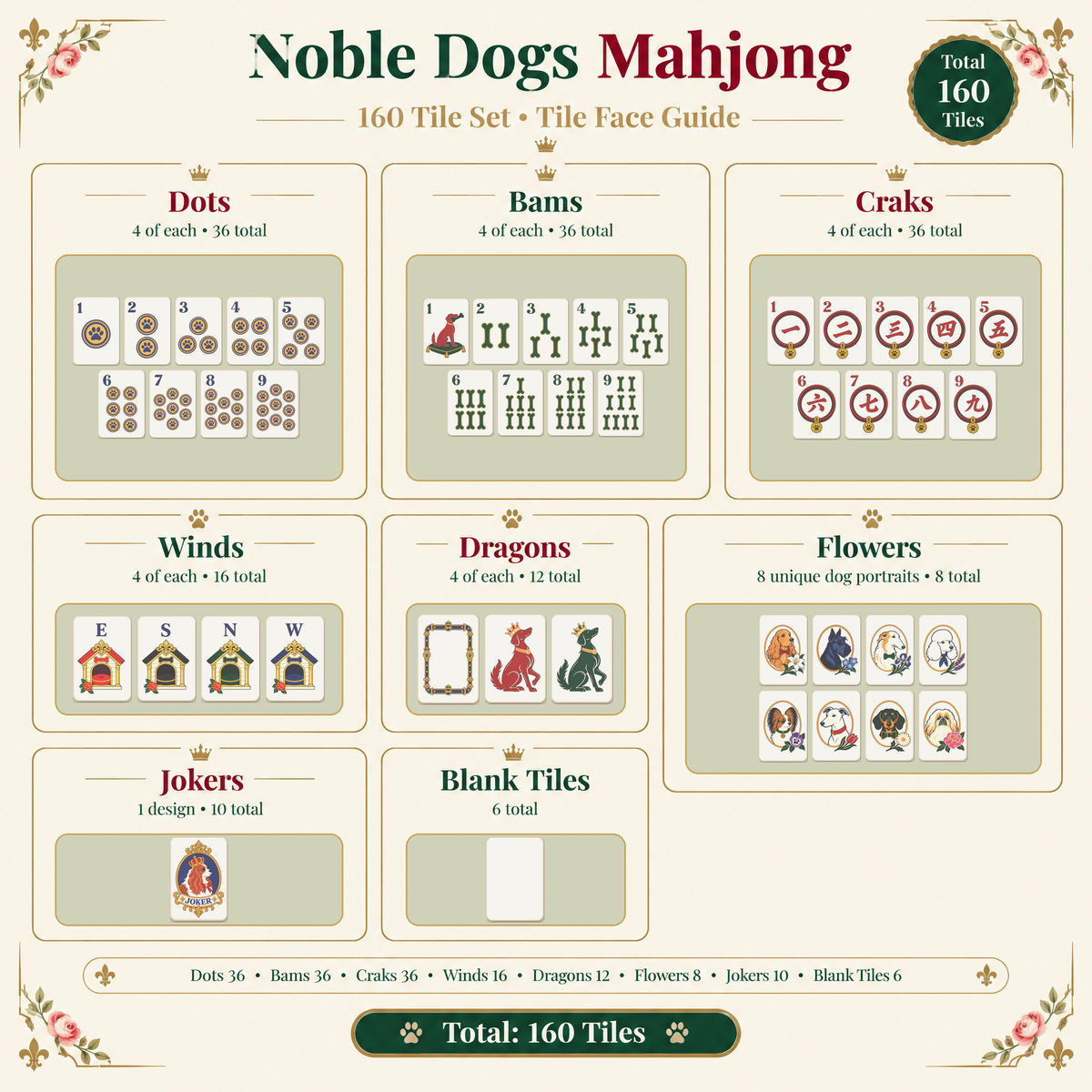
Classical Chinese mahjong uses 144 tiles: 108 numbered tiles in three suits (1–9 in Bams, Craks, and Dots), 16 winds (4 each), 12 dragons (4 each of Red, Green, White), and 8 flowers. Unlike American mahjong, Chinese sets include chows (three consecutive tiles), and jokers are absent. Players draw from a wall of stacked tiles in counterclockwise order. A hand has 13 tiles plus 1 drawn tile (or 1 discarded by another player), forming melds of three or four identical tiles, chows, or eyes (a pair). Winning hands follow traditional patterns published in regional rule books. Setup takes minutes: shuffle tiles face-down, build a wall 2 tiles high and 18 tiles long per player, then deal east player 2 tiles and others 3. From there, players draw, meld, and discard until someone declares a winning hand.
How is the tile wall built in classical play?
The wall is the heart of classical Chinese mahjong. After shuffling tiles face-down, players stack them into a wall 18 tiles long and 2 tiles high on each of the four sides of the table. The South player (dealer) breaks the wall at their section and deals tiles counterclockwise. East receives 2 stacked tiles, then South, West, and North each receive 3 stacked tiles. After the first round, each player draws one tile from the wall, going counterclockwise. The wall shrinks as tiles are drawn; play continues until someone completes a hand or the wall is depleted. The physical wall is central to the game—it forces players to work with limited information and keeps the flow of play predictable and fair.

What tiles and suits make up a classical Chinese set?
A classical 144-tile set contains exactly 144 unique tiles divided into seven categories. The three main suits—Bams, Craks, and Dots—each have nine ranks (1 through 9), with four copies of each tile (36 tiles per suit, 108 total). Winds come in four types (North, East, West, South), four copies each (16 tiles). Dragons comprise three types (Red, Green, White), four copies each (12 tiles). Flowers include eight tiles (Spring, Summer, Autumn, Winter, and four flower variants in some regional sets). Critically, classical Chinese mahjong has no jokers, blanks, or wildcards—every tile has a fixed role. This differs sharply from American mahjong, which uses 152 tiles plus jokers. When choosing a set, verify the tile count and ensure all four copies of every tile are present; missing tiles break the game.
🀄 Shop best-selling mahjong sets →
How do melds, chows, and winning hands work?
In classical Chinese mahjong, a hand wins when 14 tiles form melds and a pair. The four meld types are: pung (three identical tiles), kong (four identical tiles), chow (three consecutive tiles in one suit—e.g., 2–3–4 Dots), and the pair (two identical tiles). For example, a winning hand might include three 5 Craks, four 7 Dots (a kong), a chow of 2–3–4 Bams, another chow of 5–6–7 Craks, and a pair of White dragons. Chows are unique to classical play; American mahjong forbids them entirely. Melds are exposed (played face-up on the table) after being completed; a player cannot add to someone else's meld. Winning patterns vary by region (Hong Kong, Taiwanese, Cantonese rules differ slightly), so confirm which ruleset your group plays before starting. Many players consult printed rule guides or online rule documents to settle disputes quickly.

What is the dealer's role and how does turn order work?
The South player is the dealer (called the East in some variants, so check your group's convention first). The dealer breaks the wall, receives the first hand, and has priority in drawing and declaring melds. Play rotates counterclockwise: South, West, North, East, then back to South. Each turn has two phases: draw (take one tile from the wall or accept a discard from another player) and discard (play one tile face-up). After a player discards, any other player can claim that tile if it completes a meld—this breaks the normal turn order and is called a "claim." If no one claims the discard, the next player in turn draws from the wall. The dealer wins a special bonus (usually extra points) if they complete a winning hand on their own draw or from the wall. Dealer roles rotate after each hand unless the dealer wins and plays again.
🎁 See our most-loved mahjong sets & accessories →
What scoring system do classical players use?
Classical Chinese mahjong scoring varies by region. Most systems award points based on the complexity of the winning hand and who paid whom. A basic framework: all three other players pay the winner a base amount (often called "points per hand"), and bonuses apply for special hands (e.g., all chows, all pungs, drawing the winning tile from the wall). If a player goes "bust" (reaches a negative score), play may stop or settlement occurs at game end. Some regional rules use a limit—a ceiling on points per hand to keep games from running too long. Before your first game, ask your group or consult your regional rulebook to nail down scoring; misaligned scoring expectations cause frustration fast. Many groups settle on one ruleset and stick with it for consistency across weekly games.
What equipment matters most for smooth classical play?
A solid table, a complete 144-tile set, mahjong mats with clear divisions, and racks with pushers transform play from fiddly to polished. Racks hold your tiles upright so you can see your hand without telegraphing it to others; pushers let you shift tiles silently and cleanly without bumping neighbors' walls. A mat marks the four player zones, the discard pool, and the wall space, reducing chaos when tiles scatter. Travel bags or cases keep your set protected and organized for trips to clubs or friends' homes. For groups that rotate hosting duties or play in public spaces (community centers, libraries), a dedicated bag ensures tiles, racks, and mats travel together. The quality of your equipment affects both the pace and the social experience—crisp tiles and smooth racks let players focus on strategy instead of wrestling with gear.
Comparison: Classical Chinese vs. American Mahjong Setup
Aspect | Classical Chinese | American |
Tile count | 144 tiles | 152 tiles + 8 jokers |
Suits and numbers | Bams, Craks, Dots (1–9 each) | Same, plus winds, dragons, flowers |
Chows allowed? | Yes, melds of three consecutive tiles | No; no sequences |
Jokers/wildcards | None | 8 jokers, used flexibly in melds |
Hand size | 13 tiles + 1 draw/claim | 14 tiles (all drawn at once) |
Winning rule | Melds + pair from limited draws | Hands from official League card only |
Play order | Counterclockwise from dealer | Counterclockwise from east |
Scoring | Regional variation (Hong Kong, Taiwanese, etc.) | Uniform League card scoring |
What to Check Before You Buy
When shopping for a classical Chinese mahjong set, verify these points:
Tile count: Confirm the set has exactly 144 playable tiles (no jokers or blanks mixed in).
All four copies: Count four copies of each tile to catch manufacturing errors early.
Tile clarity: Ensure characters (numbers and symbols) are legible and consistent across all tiles.
Weight and feel: Classical tiles are often heavier acrylic or bone; test the heft if possible—lighter tiles can feel cheap.
Regional ruleset match: Confirm which Chinese ruleset your group plays (Hong Kong, Taiwanese, Cantonese) so you can learn the correct hand patterns and scoring.
✨ Find your Mahstead set — free US shipping →

FAQ
Can I play classical Chinese mahjong with an American mahjong set?
No. American sets have 152 tiles plus jokers and lack the tile variety needed for classical hands. American sets also forbid chows entirely, which are core to classical play. Buy a 144-tile classical set designed for traditional rules.
How long does a typical classical mahjong game last?
Most games run 45 minutes to 90 minutes for four players, depending on tile draws and how quickly players learn hand patterns. New players often take longer; weekly players settle into a rhythm and play faster.
What's the difference between Hong Kong and Taiwanese classical mahjong?
Hong Kong mahjong emphasizes melds and simpler hands; Taiwanese mahjong uses more complex hand patterns and bonus tiles. Both use 144 tiles and allow chows, but winning patterns and scoring differ. Ask your group which variant they play before investing in a rulebook.
Do I need a mat and racks to play classical mahjong?
Not technically, but they improve play dramatically. A mat organizes the four player zones and the discard pool; racks conceal your hand from opponents and keep tiles neat. Racks with pushers also prevent accidental tile-flicking, which annoys players fast.
Where can I find classical mahjong groups near me?
Check community centers, public libraries, and cultural centers in your area—many host weekly games or can point you to local clubs. Online meetup boards and Facebook groups often list classical mahjong gatherings. Synagogues and cultural organizations sometimes sponsor games as well.
How do I know if a tile is damaged or a factory mistake?
Examine tiles under good light for chips, cracks, fading characters, or misaligned symbols. Stack a few tiles to spot warping. Buy from reputable sellers who stand behind their sets and accept returns for defects within a reasonable window.


View More
View More
View More
