
Rack in Mahjong Examples: How to Hold & Display Your Tiles
Last updated: Nov 23, 2026

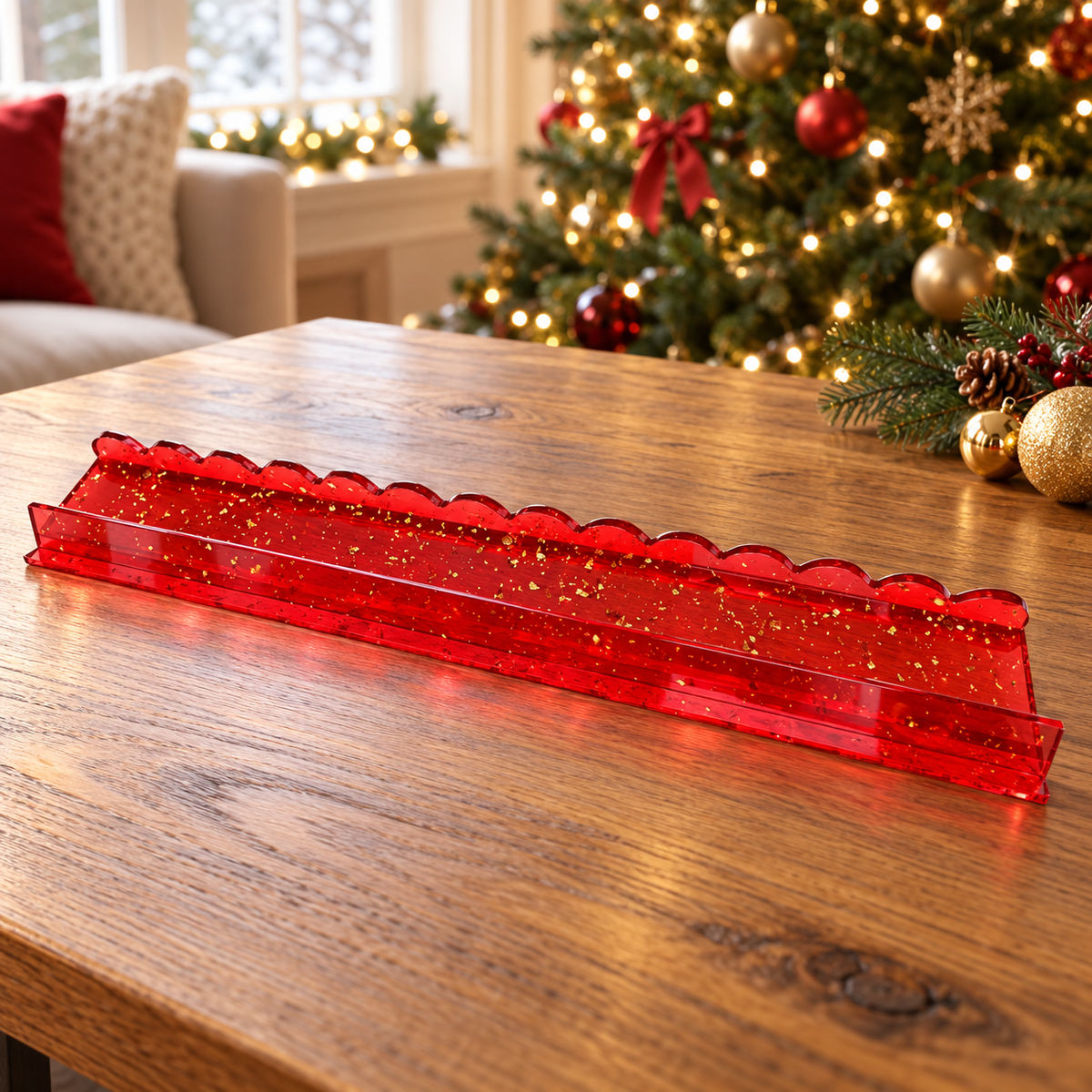
In American mahjong, a rack is a slanted wooden or acrylic frame that holds your 13 tiles upright so opponents cannot see them. Racks sit at the edge of the table nearest each player. You place tiles vertically in the rack's grooves, with numbers and suits facing you only. Most racks measure 18–24 inches wide, hold tiles securely at a 45-degree angle, and include a pusher stick (a small flat tool) to nudge tiles left or right without lifting them—this keeps your hand steady and prevents accidental exposure or fumbling. Many players also use a pusher to extract a single tile cleanly when drawing. A standard American mahjong game uses racks for all four players; without racks, hands are messy, mistakes happen, and play slows. Mahstead offers racks with pushers in wood and acrylic designs that pair well with our 160-tile sets.
A mahjong rack is the wooden or acrylic holder where you stand your tiles upright during play. Racks sit at the edge of the table nearest each player. You place tiles vertically in the rack's grooves, with numbers and suits facing you only. Most racks measure 18–24 inches wide, hold tiles securely at a 45-degree angle, and include a pusher stick (a small flat tool) to nudge tiles left or right without lifting them—this keeps your hand steady and prevents accidental exposure or fumbling. Many players also use a pusher to extract a single tile cleanly when drawing. A standard American mahjong game uses racks for all four players; without racks, hands are messy, mistakes happen, and play slows.
What does a rack do in an American mahjong game?
A rack organizes your tiles, hides them from opponents, and lets you manage your hand without picking tiles up. When you draw a new tile, you use the pusher to nudge existing tiles sideways, creating a gap for the fresh tile on one end (typically the right). This one-handed movement keeps the play smooth and prevents tiles from shifting unpredictably. The pusher also lets you slide a tile out cleanly when you discard, so you don't accidentally bump adjacent tiles or expose your organization strategy. Without a rack, players squint, lean, fumble, and accidentally flash the face of a tile. Racks enforce game discipline and speed.

How do you physically arrange tiles in a rack?
Place your rack flat on the table in front of you, with the slanted channel facing toward your body. Stand each tile upright in the groove, leaning back against the rear edge of the rack. Tiles should rest snugly but not force-fit; if the rack is too tight, tiles crack or jam. Start by inserting your original 13 tiles (dealt before the Charleston) in a loose arrangement—order doesn't matter at this stage, since you'll reorganize once the Charleston is done. Many players group tiles by suit and number for quick reference: Bams on the left, Craks in the middle, Dots on the right, winds and dragons grouped separately. After the Charleston, reorganize your tiles according to the current year's National Mah Jongg League card to identify live hands. When you draw a new tile from the wall, use your pusher to slide existing tiles toward the center or left, creating space at the right end, then insert the new tile. This rhythmic shift is called "shuffling" and keeps your hand compact and readable.
What are common mistakes people make with racks?
Picking tiles up by hand instead of using the pusher. New players often pinch a tile to slide it out for a discard. This breaks rhythm, invites fumbling, and can accidentally expose adjacent tiles. Always use the pusher—it's not optional.
Overcrowding the rack. Squeezing more than 14 tiles (your original 13 plus one drawn tile) into a standard rack creates friction; tiles lean at odd angles and become hard to read. The rack's size is calibrated for exactly 14 tiles plus breathing room.
Buying a too-small rack. Racks under 18 inches force tiles to tilt at extreme angles or touch each other. Look for 20–24 inches if you have large hands or play with bigger tiles (see our best-selling sets for size guides).
Forgetting the pusher. A rack without a pusher is almost useless; you'll resort to hand movement anyway. Buy racks with pushers included, or ensure the pusher ships in the box.
Leaning back and exposing your tiles. If you lean backward or tilt your head too far, opponents sitting at angles may glimpse a tile face. Sit upright, keep your elbows close, and position the rack low enough that only you can see into it. A mat underneath the rack also shields sightlines.
How do different rack styles compare?
Style | Material | Best for | Why it works |
Classic wood | Hardwood, stained | Warmth, tradition | Timeless look; silent when tiles slide |
Acrylic clear | Transparent acrylic | Modern, light-colored tile sets | Clean lines; doesn't compete with tile design |
Acrylic colored | Stained/tinted acrylic | Themed sets, bold tables | Coordinates with custom mahjong sets |
Compact travel | Wood or acrylic, 18" | Players who move games | Lighter weight; fits most travel bags |
Wide regulation | Wood, 24" | Tournament play or large hands | Room for 15+ tiles if needed; pro standard |
Our racks with pushers come in wood and acrylic finishes. Wood racks suit players who value traditional feel and durability. Acrylic racks pair beautifully with engraved tile sets—they don't absorb odor or stain, and they're easy to clean. Both include a matching pusher sized to your tiles.
🀄 Shop best-selling mahjong sets →

How do racks differ in other mahjong variants?
Chinese mahjong uses larger tiles and deeper grooves, so racks are wider (28–30 inches) and hold tiles at shallower angles. Pushers are longer and wider. Players often leave some tiles face-down in the rack—a practice not allowed in American mahjong, where all tiles in your hand must be upright and readable.
Hong Kong mahjong uses similar-sized tiles to American but play is faster, so racks need smoother, lower-friction channels. A tight groove can slow you down.
Riichi / Japanese mahjong uses smaller tiles (closer to dominoes), so racks are narrower (16–18 inches) with shallow grooves. Pushers are thin and delicate. Tiles are often left slightly overlapped to show which ones were just drawn or discarded—very different from American style, where the rack is purely a holding tool.
Taiwanese mahjong combines larger tiles and rapid play, so racks are mid-sized (22 inches) with reinforced grooves to handle rough shuffling.
American mahjong racks are designed specifically for standard American tile dimensions and 14-tile hands. If you play other variants, verify your rack fits the tile size before buying.
What should you check before buying a rack?
Before adding a rack to your game setup, answer these five questions:
1. What tile size are you using? Measure the thickness and width of your tiles. American standard tiles are typically 1.5 inches wide × 1 inch tall × 0.75 inches deep. Larger tiles (Chinese or Hong Kong) won't fit snugly in American racks. Our 160-tile acrylic sets work with standard American racks.
2. Do you have the pusher included? A rack without a pusher forces you to use your hands—you might as well play from a pile. Always buy racks with pushers, or verify one is in the box before checkout.
3. Is the rack 20 inches or wider? Anything narrower than 20 inches creates crowding. If you have large hands or shuffle often, lean toward 24 inches.
4. What material fits your table and tiles? Wood looks warm and traditional but stains if spilled on. Acrylic is stain-proof and pairs well with modern tile designs. Both are equally durable if made from solid material (not hollow or veneer).
5. Will you travel with it? If you host games in different locations, a compact rack under 22 inches fits into travel bags alongside your set. Check that the pusher is small enough to pack in a mahjong bag or case.
🎁 See our most-loved mahjong sets & accessories →
Real setup example: a beginner's first game with a rack
You've just bought your first mahjong set and racks. Here's how to set up for your first four-player game:
Lay out the mat (optional but recommended for readability and tile protection).
Place one rack in front of each player, with the pusher alongside.
Deal 13 tiles to each player (standard American deal). Players place tiles in their racks in any loose order—left to right, grouped by suit, whatever feels natural.
Run the Charleston (the three-pass ritual where players slide tile groups to neighbors). During the Charleston, keep your tiles in hand or on the mat, not in the rack—the rack is for your organized hand only.
After Charleston, pick up your final 13 tiles and place them in the rack, organized by suit or hand pattern.
East player draws a 14th tile and discards immediately (standard opening). Use your pusher to create space for the drawn tile.
Play proceeds around the table. When you draw, push other tiles sideways; when you discard, use the pusher to extract one tile cleanly.
If you win, you'll often expose your winning tiles (three or four combinations from your rack, plus a pair). Keep the exposed tiles in the rack until scoring is complete.
A rack transforms a chaotic hand into an orderly, honest display. After your first game, you'll wonder how anyone ever played without one.
What to check before you buy
Tile fit: Your tiles should slide smoothly into grooves without jamming or falling through gaps.
Pusher quality: It should be smooth, flat, and sized to your tiles—rough or oversized pushers snag.
Rack stability: Set it on a flat table; it shouldn't rock or tip when you nudge a tile.
Material integrity: Wood should have no cracks or splinters; acrylic should be clear (if transparent) or evenly tinted, not cloudy.
Width for your hands: Test-fit 14 tiles before buying; if they're compressed, the rack is too narrow.
✨ Find your Mahstead set — free US shipping →
FAQ
Can I play American mahjong without a rack?
Technically yes, but not well. Racks hide your hand, enforce one-handed play, and prevent accidental tile exposure. Most games require them for fairness and speed.
What's the difference between a rack and a pusher?
A rack is the holder (wooden or acrylic frame). A pusher is the small flat stick used to move tiles. Racks often come with pushers included.
How many racks do I need?
Four—one per player in a standard four-player game. Two-player games can use two racks or store tiles on a mat.
Can I use a Chinese mahjong rack for American tiles?
No. Chinese racks are wider and have deeper grooves. American tiles will move around or fall through, and play becomes frustrating.
Do acrylic racks scratch easily?
Acrylic can scratch if tiles are dragged roughly or pushed with sharp objects. Use gentle pusher strokes and avoid abrasive cleaning; a soft cloth keeps them clear.
What size rack should I buy if I have large hands?
Aim for 24 inches. This gives room to shuffle without crowding and feels more comfortable for taller or larger-handed players.


View More
View More
View More
