
Pung in Mahjong: Examples & How to Play Them
Last updated: Nov 23, 2026
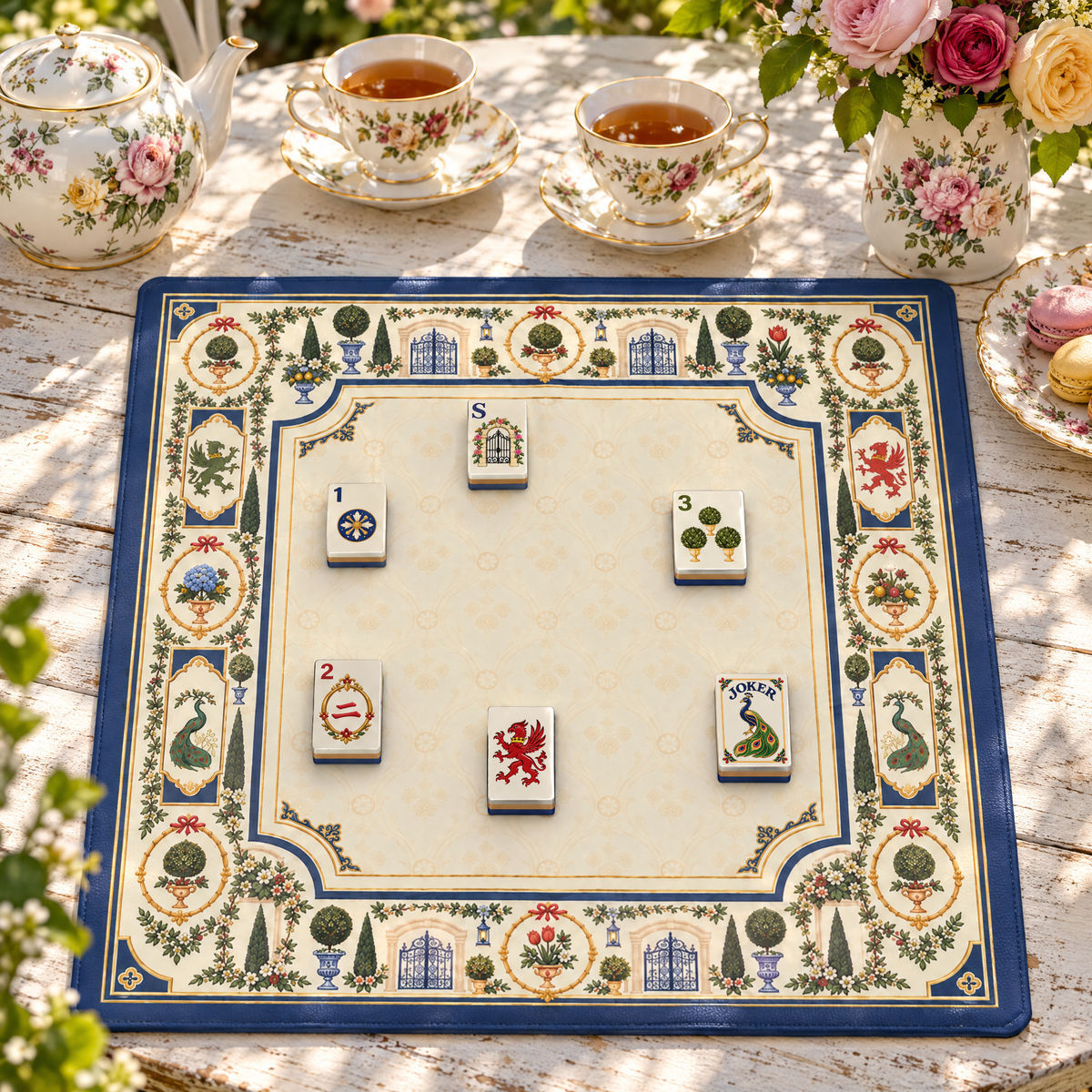
A pung is three identical tiles of the same suit and rank—three 5 Dots, three East Winds, three Red Dragons. In American mahjong, you can expose pungs (face-up on the table) during play, and they're mandatory when you declare a winning hand. A pung stays identical: no sequences like 3-4-5, no mixing suits. You may substitute one tile in a pung with a joker, but never replace all three tiles or use a joker as a single tile or in a pair. Pungs appear on every hand on the current year's National Mah Jongg League card, often in patterns called "2018 Like Numbers" or "Consecutive Numbers." When building a hand from your draw, hold potential pungs in a best-selling mahjong set until you're ready to expose or declare. Misunderstanding which tiles count as identical—especially if your set's suits look similar—is the fastest way to dead-hand yourself, so double-check your set's markings before your first game. --- 🀄 Shop best-selling mahjong sets →
What makes a legal pung?
A pung must be three tiles that are exactly the same: identical suit (Bam, Crak, or Dot), identical rank (1–9), or identical wind (N, E, W, S) or dragon (Red, Green, White). You cannot mix ranks—three 2 Dots plus one 3 Dot is not a pung. You cannot mix suits—two 4 Dots and one 4 Bam is not a pung. Winds must all match (three North Winds, not two North and one East). Dragons must all match (three Red Dragons, not two Red and one Green). The same rule applies to Flower and Honor tiles in their class. Once you grasp this rigid rule, spotting pungs becomes automatic.

Can I use a joker in a pung?
Yes, but only once per pung and only to replace one of the three tiles. If you hold two 7 Craks and one joker, that's a legal pung: the joker stands in for the missing third 7 Crak. You may not use a joker to fill all three positions (no joker-joker-joker pung). You may not use a joker to represent the pair in your winning hand. If you expose a pung with a joker, the joker tile remains visible on the table, and you cannot reclaim or swap it later. Many new players try to use two jokers in one pung—that's a dead hand. Keep jokers flexible for kongs (4 tiles) and winning pairs when possible, and reserve them for pungs only when you have no other option.
How do I spot pung patterns on the mahjong card?
The National Mah Jongg League card organizes hands by section and pattern name. Pung-heavy hands often appear in sections labeled by number (e.g., "Like Numbers"), which call for pungs of the same rank across different suits: one pung of 3 Dots, one pung of 3 Bams, one pung of 3 Craks, plus a pair of a different rank. Another common pattern groups pungs by consecutive rank: pung of 2s, pung of 3s, pung of 4s, plus a pair. Some sections mix pungs with other melds (exposed triplets and longer sets). To identify which hand you're playing, find the year and section on your card, match the pattern name, then verify each meld against the tiles in your hand. If your hand doesn't fit the pattern exactly—tiles in the right melds, pair present—you cannot declare. The card is your authority; if you're unsure, ask the table before exposing anything.

When should I expose a pung versus hold it?
Expose a pung when you're confident it's part of your declared hand on the card and you want to prevent other players from calling your discard. Never expose tiles unless you're committed to that hand; an exposed meld cannot be taken back. Hold a pung in your rack (hidden) if you're still drawing or discarding to complete it, or if the hand isn't yet certain. Many players expose too early and lock themselves into a single path to the win, then find the hand is impossible. A safer strategy: keep as many melds hidden as long as you can, expose only when you discard the tile that completes your hand or when declaring. Use mahjong racks with pushers to organize your hand—pushers let you group pungs visually without exposing them, so you can think ahead before you commit.
🎁 See our most-loved mahjong sets & accessories →
Pung examples step-by-step
Example 1: Simple identical pung You draw from the wall and receive a fourth 5 Dot. You already hold three 5 Dots. That's a legal pung—three identical 5 Dots. On your next turn, you discard an unneeded tile. If your hand includes a pattern that needs this pung, you may expose it face-up on the table. If not, keep it hidden in your rack.
Example 2: Pung with one joker substitute You hold two 3 Craks and no third 3 Crak appears in your draw. You take a joker from your hand and place it as the third tile. You now have a legal pung: two real 3 Craks and one joker. When you expose this pung (or declare your hand with it), the joker remains visible and counts as the 3 Crak. No swapping the joker back later—it stays put.
Example 3: Common mistake—mixed ranks You hold three tiles: 2 Bam, 2 Bam, 3 Bam. This is not a pung because the third tile is rank 3, not rank 2. Even though they're all Bams, the ranks don't match. This is often the start of a chow (sequence), but American mahjong does not allow exposed chows—sequences must stay hidden in your hand. If your card pattern requires a pung of 2 Bams, you must find a third 2 Bam or a joker to complete it.
Example 4: Common mistake—mixed suits You hold three tiles: 6 Dot, 6 Dot, 6 Bam. This is not a pung because the third tile is a Bam, not a Dot. The ranks match (all 6), but the suits don't. You need three 6 Dots—all the same suit and rank—or one of the three must be a joker standing in for a 6 Dot.
Pattern Type | Tiles Needed | Jokers Allowed? | Exposure Rule | Example |
Simple pung | 3 identical (same suit, rank) | 1 (replaces 1 tile) | May expose | Three 4 Dots |
Pung with dragon | 3 matching dragons | 1 (replaces 1 tile) | May expose | Three Red Dragons |
Pung with wind | 3 matching winds | 1 (replaces 1 tile) | May expose | Three South Winds |
Fraudulent mix | 2 Bam + 1 Crak | Not legal | Cannot use | Dead-hand risk |
Fraudulent sequence | 5 Bam + 6 Bam + 7 Bam | Not exposable | Hidden only (if used) | Not a pung—chow |
✨ Find your Mahstead set — free US shipping →
What to check before you buy a mahjong set for pung practice
Tile clarity. Make sure suit symbols (bamboo, character, circle) and ranks are large and distinct on every tile. A poorly engraved or small font will make it hard to spot matching ranks quickly—especially for new players learning pung patterns.
Joker count. A 160-tile set includes spare jokers alongside the 152 playing tiles. That extra margin helps during practice; you won't run short if you accidentally crack or lose one early. Verify your set includes jokers before you start a game.
Rack organization.Mahjong racks with pushers let you group tiles neatly and test pung patterns without exposing them. A good rack will hold 14–18 tiles comfortably and push tiles forward as you play, so you can arrange potential melds visually.
Mat and stable surface. A mahjong mat gives you a designated play space and helps tiles stay put—essential when you're learning to expose pungs without tiles sliding across the table.

FAQ
Can a pung include jokers in different positions?
No. You may use one joker per pung to replace one missing tile. The joker takes the place of one of the three tiles; it cannot substitute for multiple tiles in the same pung or for the same rank across different melds.
What if I expose a pung and then realize it's not in my hand pattern?
You are dead—you cannot retract an exposure. Always verify your hand on the card before exposing any meld. Check the pattern name, the section number, and the exact tiles required. If you're unsure, ask the table or your card reader before you expose.
Can I call a discard to complete a pung if another player discards a tile I need?
Yes. If another player discards a tile that completes a pung you need and you have already declared your hand on that card pattern, you may call it. Calling is higher priority than the next player's turn. State "Pung!" and take the tile to expose the meld on the table.
Are winds and dragons pungs, or are they different?
Winds and dragons follow the same pung rule: three identical winds (three East Winds) or three identical dragons (three Green Dragons) count as a legal pung. They are organized separately on the tiles but function identically in a pung.
How do I know if a hand on the card is all pungs or mixed melds?
Read the pattern name and description on the card for that year and section. Some hands say "Pungs," which means all melds are three-tile sets. Others say "Like Numbers" or "Consecutive Numbers," which means pungs of related ranks. Mixed patterns may include pungs, kongs (four tiles), and other forms. The card is definitive; if the description is unclear, ask an experienced player at your table. --- ## Bridge to your game Pungs are the simplest melds in American mahjong and the fastest way to build confidence. Once you can spot identical tiles and understand the one-joker rule, you'll recognize patterns on the card almost instantly. Practice with a best-selling mahjong set at home, play through a few hands on paper, and you'll move from "what's a pung?" to "pung!" in a single session. The key to avoiding costly mistakes is twofold: verify every pung before you expose it (same suit, same rank, identical tiles), and keep how to read the mahjong card nearby until you're fluent. Your first live game will feel faster, but the fundamentals stay the same. Bring a friend, set up a mahjong mat, deal the tiles, and play. Pungs will become second nature faster than you think.


View More
View More
View More
