
Pool Mahjong Party Prizes: Ideas That Actually Work
Last updated: Nov 23, 2026
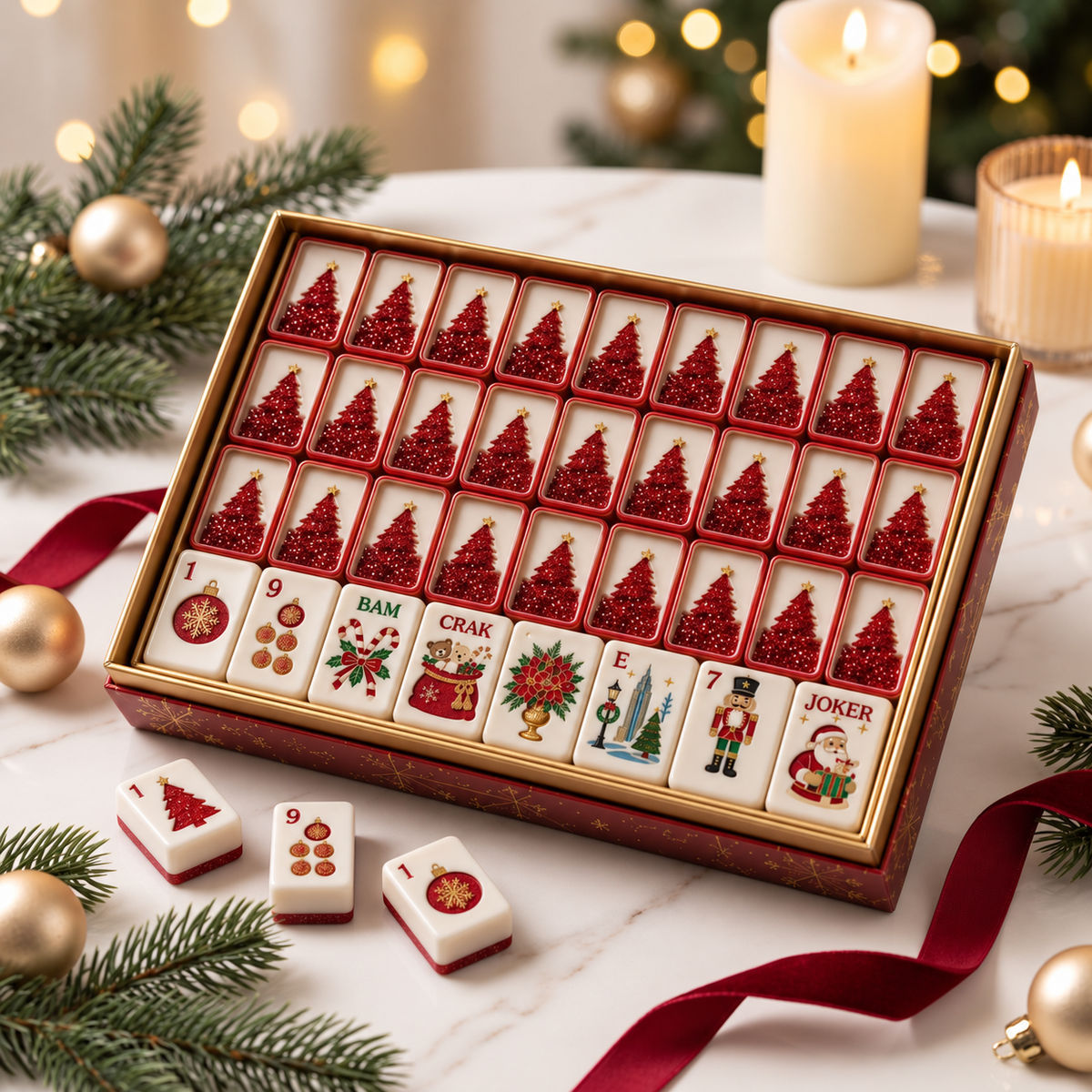
Pool mahjong prizes work best when they reflect your group's stakes and winning criteria. High-score finalists typically receive custom or specialty sets; mid-tier winners get mats, racks, or cases; participation prizes include spare tiles or dice. American mahjong pools run on points (winners declared after single rounds, tournaments, or seasonal totals), so tie your prize tier to that timeline—annual champions might earn an engraved set, monthly winners a travel bag. Budget varies: groups often pool modest amounts or raid their tile collections for extras. Mahstead's best-selling collection pairs well with this: themed sets for top finalists, mats for runners-up, and storage for consolation. Avoid cash-only pools in casual groups; physical prizes keep the tradition alive and double as conversation starters. 🀄 Shop best-selling mahjong sets →
What exactly counts as a "pool" in mahjong?
A mahjong pool is a rotating reward fund for winners in a series of games or a tournament bracket. American mahjong pools usually track points across a session (one night), a month, or a season; the player with the highest cumulative score or most wins claims the prize. Unlike betting pools, prizes aren't always cash—they're often goods (new sets, gear) or bragging rights. Define your pool rules in writing before the first game: Does the monthly winner claim the prize immediately, or do prizes roll into a tournament at year-end? Do all four players get ranked, or only the top two? Clear rules prevent disputes and make the prize feel earned.

How do you tie prize tiers to American mahjong scoring?
In American mahjong, each winning hand is worth a base point value (1, 2, 3, or 4) multiplied by your point total from all four players' scores that round. Your pool can use these official National Mah Jongg League values as the pool threshold: players reaching, say, 500 points monthly go into the winner's tier; 300–499 into mid-tier; below 300 get consolation. A second common system awards prizes by rank per game: first place (highest score that round) gets points toward a pool, second place gets half, third gets a quarter, fourth gets nothing—tally monthly. The beauty of American mahjong scoring is its built-in granularity; you don't need extra math. Our scoring guide dives deeper into the card-based system if your group has questions.
What prizes work best for casual vs. competitive pools?
Prize Type | Best For | Why It Works | Notes |
Engraved set | Season champion, annual winner | High prestige; keepsake lasts years | Customize with player name, year |
Travel bag + case | Monthly top-three finalists | Practical; keeps gear organized | Doubles as a consolation for anyone |
Mahjong mat | Quarterly or mid-season win | Functional upgrade; improves future games | Pairs well with a new rack |
Racks with pushers | Participation prize, new-player draw | Encourages better tile handling | Low cost; high utility |
Dice or spare tiles | Consolation or raffle prize | Fun, no-pressure bonus | Great for fun side bets |
Casual groups often skip expensive prizes and instead award bragging rights plus a smaller item (dice, a nice rack). Competitive leagues tend to invest in custom sets or mats for winners; the ritual of a physical prize boosts morale and tells a story at the next game. Our best-selling collection includes sets designed for group play, many with enough clarity and durability to pass through multiple winners' hands.
🎁 See our most-loved mahjong sets & accessories →
How much should you spend per prize level?
No rule exists, but here's what we see work in practice. For a seasonal pool (four monthly cycles, one annual champion), many groups each contribute a modest amount per month—enough to buy one mid-range item per winner (a mat or travel case) and one top-tier prize (an engraved or specialty set) for the year-end champion. If prize money is shared equally by all four players at the table, the contribution per person stays low and sustainable. Another model: the winner of each game picks from a shared "prize shelf" of items the group has accumulated or purchased collectively. This spreads cost and keeps the excitement of choosing. Some groups skip pooled money entirely and rotate who brings a prize each month—that person's name goes on it, creating a mini tradition. The key is sustainability: if your pool feels like a financial burden after two months, it'll fade.

What makes an engraved mahjong set the perfect prize?
An engraved set transforms a standard gift into a personalized trophy. You can add the player's name, the year, or a joke phrase ("2026 Mahjong Champion" or "Fourth Place Never Looked So Good"). Mahstead's engraved collection offers designs that let you customize text, creating a one-of-a-kind prize that the winner will display. Engraved sets signal that the group values the achievement enough to make it permanent. They also sidestep the awkwardness of cash: a physical, personalized item feels more like an honor. If your pool runs annually, the engraved set becomes the visible legacy—the winner's name and date live on the tiles or the case. Order early (weeks in advance) to allow time for customization and shipping; we ship free across the US, but lead times vary by design. Don't engrave until you're certain of the winner; mistakes on a custom piece are costly to redo.
✨ Find your Mahstead set — free US shipping →
How do you handle ties and disputed wins?
Tie-breaking in American mahjong is straightforward if you've established the rule upfront. Most groups use the official National Mah Jongg League method: if two players end a session with identical point totals, the player with the most individual wins (mahjongs) in that session claims the prize; if still tied, the player who went mah jongg most recently wins. Write this rule on your group's scoreboard or note it in a shared document before prizes enter the picture. For larger pools with multiple months, you might declare co-winners and split the prize (each gets a matching item, or one chooses first and the other picks second). Disputed wins often stem from unclear pool rules, not unclear tile scoring—so clarity beats complex tie-breakers. If your group plays both 4-player American mahjong and 2- or 3-player variants, specify how each version scores toward the pool; they use different point structures and shouldn't be mixed in one ranking.
What to check before you buy a prize set
Tile clarity: Engraved or specialty sets should have large, readable pips (symbols) and numerals, especially if older players join your group.
Weight and balance: Travel prizes should fit in a standard bag with the mat and racks; check dimensions on the product page.
Customization lead time: If engraving, order at least 2–3 weeks ahead to avoid delays before the prize ceremony.
Spare tiles included: Some sets include extra jokers or blanks; confirm the set is 160 tiles (standard for play) and includes spares in case a tile cracks during the season.
Case durability: If the prize will pass through multiple winners' hands, invest in a robust case or travel bag to protect the set.
Comparison: Budget Prize Tiers for a Seasonal Pool
Tier | Prize | Good For | Order Timing |
Champion (annual) | Engraved set + custom case | Top player of the year | 3+ weeks ahead |
Runner-up (quarterly or monthly) | Travel bag + mat | 2nd or 3rd place | 1–2 weeks ahead |
Consolation (every player, raffle) | Dice, rack with pushers, spare tiles | Participation, fun moments | As-needed |

FAQ
Can we use a mahjong set as the prize if our group already plays with one?
Yes, absolutely. A new set from our best-selling collection becomes the "house set"—the winner's possession for their home games, or it rotates through winners monthly. This avoids double-ownership and keeps the tradition alive.
What's the difference between a pool prize and a raffle prize in mahjong?
A pool prize is earned by winning games within a defined period (month, season); a raffle prize is randomly drawn, often as a consolation or fun bonus for all players. Both work; pools feel more skill-based, raffles feel more fun and inclusive for newer players.
Should we include cash in a mahjong pool, or stick to physical prizes?
Physical prizes (sets, mats, bags) are more memorable and sustainable; cash pools can feel transactional and may cause tension if payouts are small. Many groups find a hybrid works best—modest cash from the pool goes toward buying the physical prize, so no one takes cash directly home.
How do we handle a tie in a mahjong pool fairly?
Use the National Mah Jongg League rule: most wins (mahjongs) that session wins; if still tied, the player who called mahjong most recently wins. Write it in your group chat or scorebook before the season starts.
Can I engrave a mahjong set with inside jokes or a funny phrase?
Yes. Mahstead's engraved sets let you customize text; keep phrases short (fit within the design space) and test the look before finalizing. Funny, kind jokes work; mean-spirited ones don't age well. Double-check spelling and the winner's name.
What's a good consolation prize for players who don't win the pool?
Spare dice, racks with pushers, or small accessories from a travel bag or case collection keep everyone smiling. Many groups also run a raffle: all players toss in a dollar, and one random person wins a small item—no skill involved, pure luck. --- 🀄 Shop best-selling mahjong sets → --- We run pool mahjong weekly and have learned that the best prizes are ones your group chooses together. Start small, track scores honestly, and let the tradition grow. Happy playing.


View More
View More
View More
