
Plastic Mahjong Tiles: How to Choose the Right Set for Your Game
Last updated: Nov 23, 2026
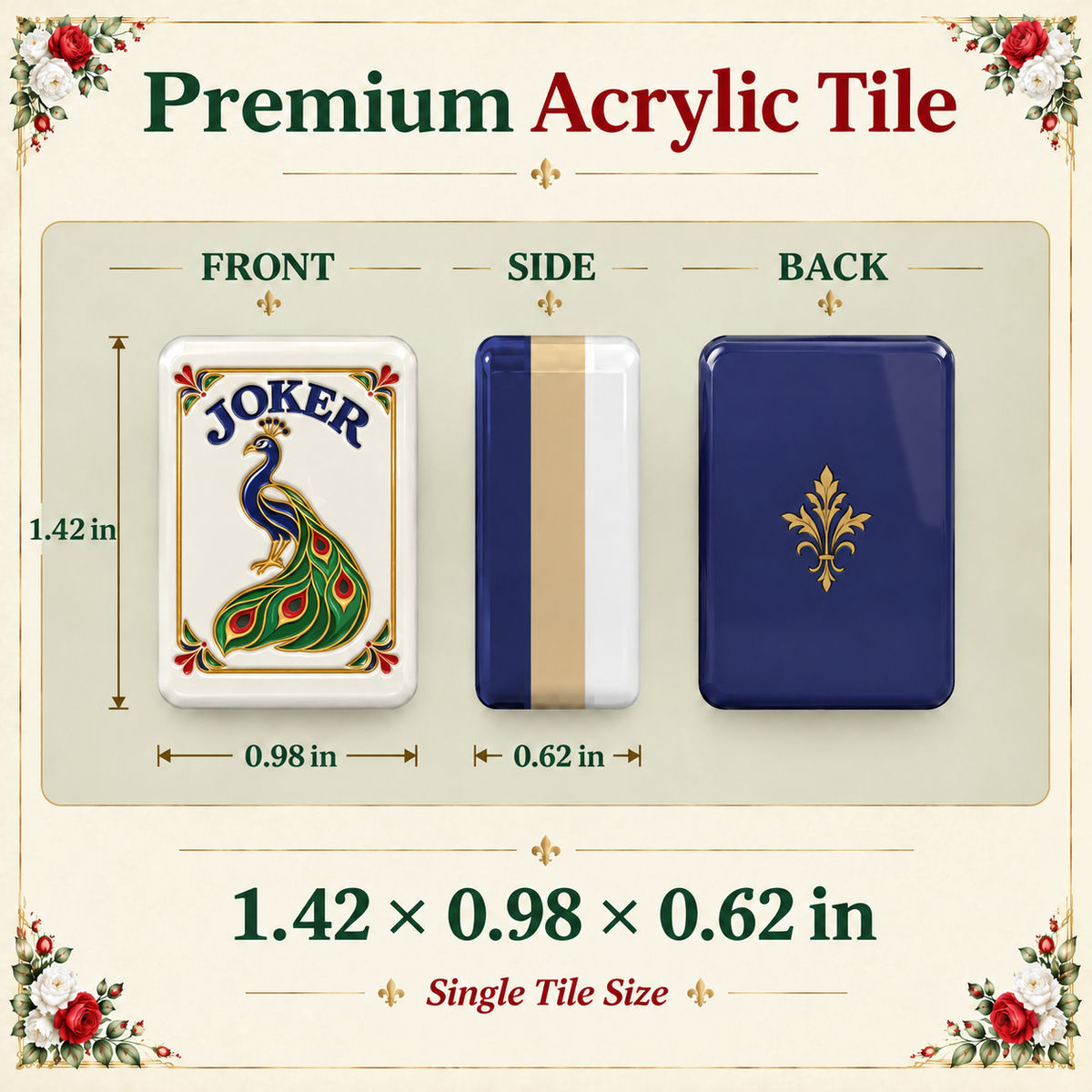
Plastic mahjong tiles—almost always acrylic in modern sets—are the standard for American home play. A 160-tile acrylic set contains 152 playing tiles (three suits in 1–9, winds, dragons, flowers, jokers) plus 8 spare tiles, packaged with racks, pushers, a mat, and often a case. Acrylic tiles are injection-molded, lightweight, nearly unbreakable, and cost far less than bone or bamboo. Most come unadorned or engraved with monograms, club names, or custom artwork. American players choose acrylic because it shuffles cleanly, feels good in hand after decades of play, and lets you personalize your set through design—making it as much a table fixture as a game tool. Mahstead makes 160-tile sets with free US shipping; compare designs, engraving, and case options to match your hosting style.
🀄 Shop best-selling mahjong sets →
Why do plastic tiles feel so different from bone or bamboo?
Acrylic tiles weigh less, slide faster on felt, and make a sharper snap when stacked—most players love that crisp acoustic feedback during the shuffle. Bone and bamboo are warmer and quieter in hand; they develop character over years. Plastic excels for weekly games because it's consistent: every tile feels identical, no wear patterns, no warping in humidity. Tiles won't chip if they fall, and you can throw them in a case without worry. For serious home tables, acrylic beats bone on durability and cost while keeping the game fast and fun.

What size tiles should you choose—and does it matter?
Standard American mahjong tiles measure roughly 1 inch × ¾ inch, set by the National Mah Jongg League to fit a 2-foot mat and standard pushers. Larger jumbo tiles (around 1.3 inches) suit players with vision issues or arthritis; they're harder to shuffle in a standard Charleston and take up more space, so most home games stick to standard. Check your mat size: a mat designed for standard tiles will look sparse with jumbos. If you host a mixed group—some with weak eyesight, some competitive—ask ahead; standard is the safe default for weekly games.
How much personalization can you actually get on acrylic tiles?
Engraving options range from simple club initials on the winds to full-tile custom art—dragons wearing club logos, flowers replaced with names, even hand-painted monograms on the case. Mahstead's engraved American mahjong sets let you add permanent designs during manufacture, so they won't fade or peel like stickers. The catch: custom art takes lead time and won't look like a photo on the tile—it reads more like a monogram or silhouette. Simple two- or three-letter initials on winds are sharp and quick; complex multi-color designs should be tested on a sample first. Most players use engraving to mark their set, not to reinvent the game.

What's the real difference between a budget set and a premium one?
Budget acrylic sets (lower price point) use simpler injection molds, thinner tiles, and basic printing or stickers for designs; tiles may feel flimsy and designs wear. Premium acrylic (higher cost) features thicker, denser plastic, crisp engraving, hand-finished edges, and custom case liners. The game rules don't change, but premium tiles shuffle quieter, last longer without clouding, and feel solid in hand. For a home game you'll play weekly for years, a quality set pays for itself—you won't need to replace tiles or worry about breakage. For a gift or casual group, budget works fine. Check the tile weight and case construction before ordering; thin plastic and cheap zippers signal fast obsolescence.
Choice | Who It's For | Tile Feel | Best For |
Budget acrylic | Casual players, gifts, learners | Lightweight, slightly thin | Weekly home games, lending sets |
Standard acrylic | Serious weekly groups | Solid, moderate weight | Regular play, any venue, good durability |
Premium acrylic | Collectors, hosts, clubs | Thick, dense, refined | Long-term investment, competitive tables, prestige |
Custom engraved | Branded clubs, memorable gifts | Standard or premium base | Personal sets, club identity, keepsakes |
How does the packaging and case affect your choice?
Acrylic tiles ship in a protective case—usually vinyl or hard-sided, with divided trays for organized storage. A good case keeps tiles clean, prevents tile loss, and makes transport to hosting venues easy. Hard cases survive car trunks and stacked storage; vinyl cases fold flat but get worn faster. Check case zippers and hinge quality; a broken case within six months means you're reordering. Mahjong bags and cases vary widely—some include a mat and racks, others just tiles. Read the packing list carefully; a "complete set" from Mahstead includes everything you need to play immediately, while a bare tile set requires you to source racks and a mat separately.
🎁 See our most-loved mahjong sets & accessories →
What to check before you buy acrylic tiles
Tile count: Confirm it's 160 tiles (152 playing + 8 spares), the standard for American mahjong.
Case quality: Open zippers smoothly, hinges don't creak, foam or felt lining holds tiles securely.
Tile feel: Hold a sample or watch a video; tiles should feel smooth, not slick or chalky.
Engraving clarity: If custom, request a digital proof; simple designs (initials, club names) transfer cleanly; photo-realistic art rarely looks sharp.
Weight and density: Heavier tiles (not flimsy) resist clouding and chipping; compare tiles side by side if possible.
Shipping and returns: Confirm free US shipping and whether damaged tiles can be replaced; Mahstead ships all sets with free shipping.
Mat and rack fit: If buying racks separately, verify they fit standard tile size; jumbos need special racks.
Most home players get one set and keep it for decades. Spend time choosing: the right tiles will make your game feel better every week.
✨ Find your Mahstead set — free US shipping →

FAQ
Can you mix tile brands in one set?
Yes, but it's not recommended. Tiles from different manufacturers vary slightly in size, weight, and feel; mixing them creates uneven shuffles and snagging during the Charleston. If you need replacement tiles, try to get them from the original maker or buy a new set.
Do acrylic tiles wear out or cloud over time?
Acrylic tiles are very durable but can cloud slightly after years of heavy play—oils from hands and dust settle into the plastic. Wipe tiles occasionally with a soft, dry cloth; avoid harsh chemicals or water. Clouding is cosmetic; tiles remain playable indefinitely.
Should I buy a fancy engraved set or a basic one?
If it's a personal set you'll play weekly, engraving adds joy and identity—worth the small price difference. If you're buying for a club or gift, ask if the recipient cares about personalization; basic sets are indistinguishable in play and cost less.
What's the difference between American acrylic tiles and Chinese plastic tiles?
American tiles follow National Mah Jongg League sizing and symbols; Chinese tiles are smaller, use different symbols, and have no jokers. Buy according to the game you play. American tiles won't work for Chinese mahjong and vice versa.
How do I know if a set is the right size for my mat?
Standard acrylic tiles (1 inch × ¾ inch) fit standard mats sold everywhere. If your mat is oversized or vintage, measure it and check the tile layout; a 2-foot mat with standard tiles gives you room to organize pungs and melds comfortably. Jumbo tiles need larger mats.
Can you repair cracked or missing acrylic tiles?
Acrylic tiles rarely crack; if one does, replace it through the manufacturer or buy a spare tile pack if available. Don't glue cracked tiles—they'll catch on pushers and racks. A missing tile can sometimes be replaced; contact the maker with your set details.


View More
View More
View More
