
Modern Mahjong Racks with Pushers: How to Choose
Last updated: Nov 23, 2026
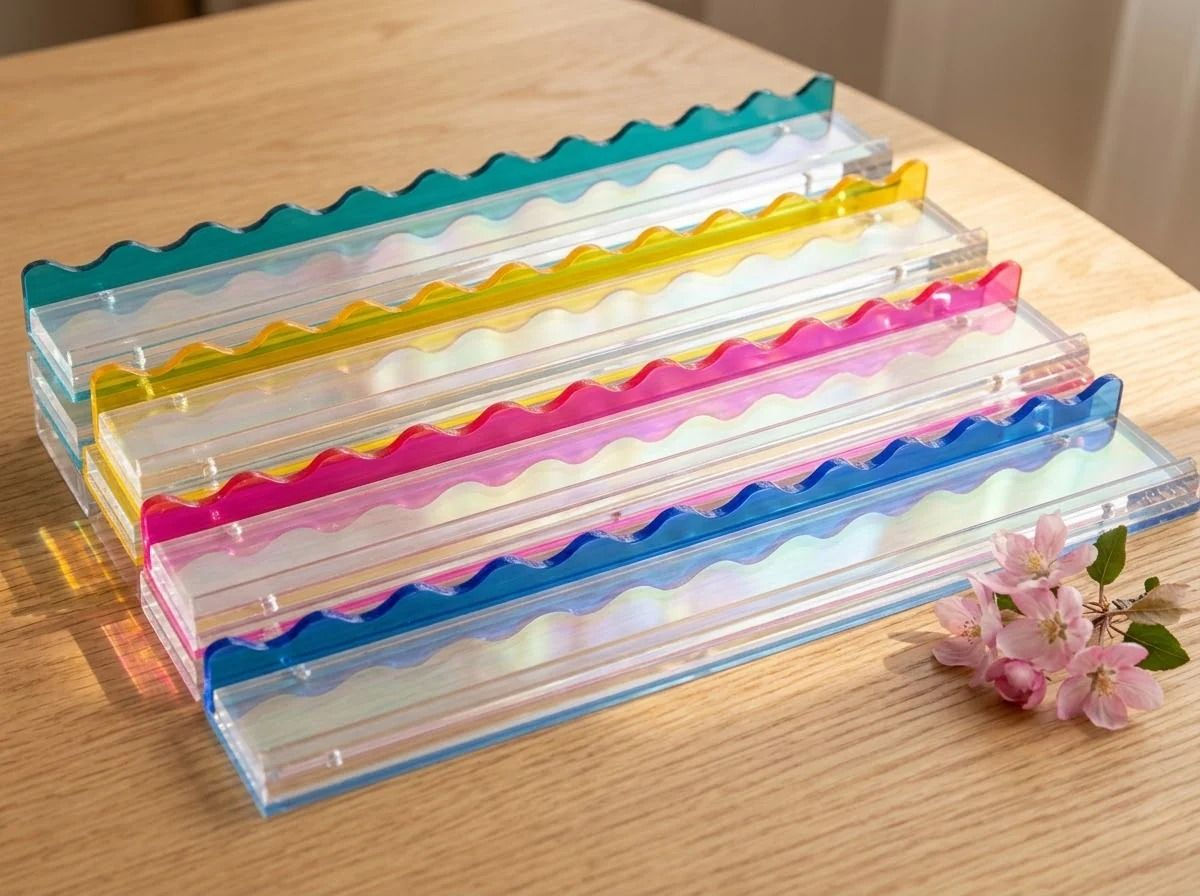
A mahjong rack with pusher is a wooden or acrylic stand that holds your 13 tiles (or more during play) upright and concealed from other players' view; the pusher is a thin rod or stick that lets you slide tiles left and right without lifting them off the rack. Racks vary in height, width, angle, and material—wood is classic and warm, acrylic is modern and compact, and some feature engraved designs or personalization. Most players spend time trying different racks before settling on one; height matters most (taller racks can strain your wrists, shorter ones create table clutter), and pusher length and grip affect how smoothly you play. A quality rack costs vary by design and customization, but all serve the same core job: keeping your hand private and your play fluid. Mahstead offers mahjong racks with pushers in several styles—classic wood, modern acrylic, and engraved options—so you can match your set and table vibe. The wrong rack can slow your game or cause wrist fatigue over a long session, so testing one before a weekly game is worth the effort.
What angle and height work best for American mahjong?
Rack height and tilt angle are the two most common pain points in a home game. A rack that slopes downward at 15–25 degrees keeps tiles visible to you but angled away from opponents; too steep (over 30 degrees) causes tiles to slide unless the pusher holds them tight, and too flat (under 10 degrees) makes it hard to see your hand at a glance. Heights range from 2 to 4 inches tall, measured from table to the top of the tile; shorter racks fit neatly under a narrow playing surface or mat edge, while taller ones reduce the bend in your wrist and neck during a 2–3 hour game. Our best advice: test a friend's rack before you buy. If you're starting fresh and play weekly, a mid-range height (3–3.5 inches) with a 15–20 degree tilt works for most hand sizes and table setups.
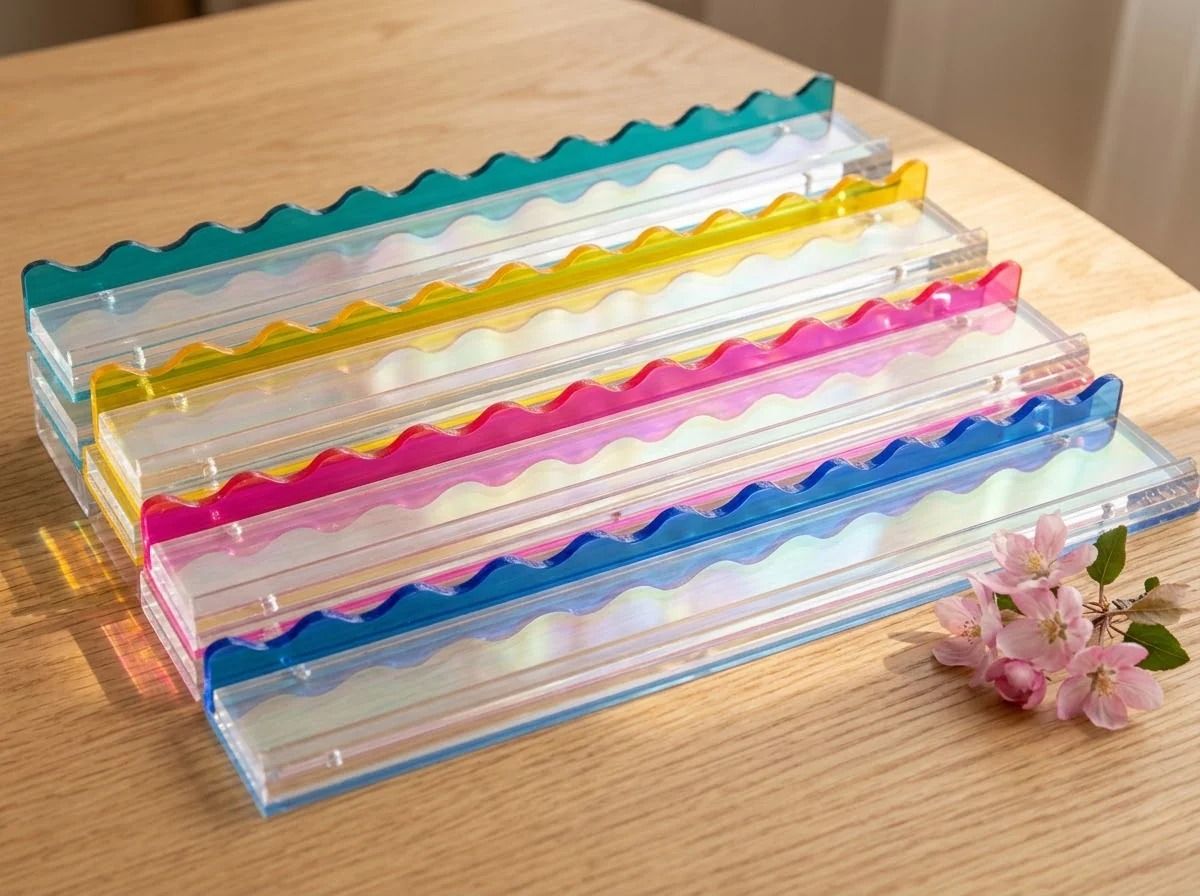
Should you choose wood, acrylic, or engraved racks?
Material choice balances durability, style, and maintenance. Wood racks feel traditional, age beautifully, and pair well with classic tiles; they're heavier (less likely to shift) and warm to the touch, but they can warp if exposed to humidity or heat swings, and they need occasional conditioning to stay smooth. Acrylic racks are lightweight, modern, clear (so you see your tiles sharply), and easy to clean; they resist humidity and temperature shifts, but they can scratch if tile edges drag, and some players find them less "mahjong" in feel. Engraved wood racks let you personalize with a title, name, or joke—great for a host set or a gift—and they combine tradition with a unique touch. If you host weekly games and want a coordinated look, engraved American mahjong sets often pair with matching engraved racks for a polished, unified table. Choose wood if you value tradition and long-term investment; acrylic if you prioritize ease of care and a sleek aesthetic; engraved if you want personality and a standout table presence.
How do pusher length and grip affect play speed?
The pusher—the stick you use to slide tiles—should be long enough to reach all tiles on the rack without your hand drifting over the table (typically 8–12 inches), and the grip should feel natural for your hand size and play style. Too short a pusher forces you to lean forward and use fine finger motions, which tires your hand in a long session and slows down tile draws. Too long a pusher can catch the rack's edge and wobble tiles when you're trying to make a precise move. The grip surface (smooth wood, rubberized, or textured acrylic) matters more than you'd think; a slippery grip requires a tighter hold, which exhausts your fingers over time, while a textured or slightly tacky grip lets you push tiles with minimal force. A well-designed pusher should feel like an extension of your hand—you barely think about it while you play. When you try a friend's rack, ask to use their pusher for five minutes; if your fingers hurt or your movements feel jerky, that pusher won't suit a weekly 3-hour game.
🀄 Shop best-selling mahjong sets →
What size and style of rack fits your table setup?
Rack width and footprint vary by design, and choosing one that fits your table layout prevents mid-game crashes and tile spills. A standard American mahjong mat or table surface has four playing zones (one per player); your rack sits in front of you and should occupy roughly 12–18 inches of width so it doesn't encroach on the center discard area or a neighbor's space. Compact racks (under 12 inches wide) work well if you play on a small table, travel to games, or have multiple people at a crowded setup; they sacrifice a tiny bit of tile visibility but pack easily into a mahjong bag or case. Standard racks (14–18 inches) suit most home games and pair seamlessly with a 36-inch or larger round or square table. Wide racks (over 18 inches) offer more spacing between tiles and a clearer sightline but demand plenty of table real estate. If you play on a mahjong mat with built-in table cover or at a dedicated game table, measure the width of your player zone and choose a rack that leaves at least 2 inches of breathing room on each side.

What should you check before ordering a new rack?
Before you buy, answer these five questions to avoid a mismatch:
Do you have a wrist injury or chronic pain? If yes, prioritize taller racks (3.5+ inches) with a steep angle (20+ degrees) to minimize wrist bend, and test the weight—lighter acrylic racks reduce strain.
How tall are you and what's your typical table height? Racks pair with your chair height and table surface; if you play at a standard 30-inch table in an upright chair, a 3-inch rack works; if you sit in a lower chair or at a coffee table, a 2-2.5 inch rack prevents upper-back tension.
Do you travel to games or host weekly at home? Travelers benefit from compact, lightweight acrylic racks; home hosts can invest in heavier wood or engraved racks that stay in place and match your decor.
How important is a personalized or themed look? If you host, an engraved rack or set builds a cohesive table vibe; if you play casually at friends' homes, a neutral modern acrylic rack works anywhere.
Does the pusher grip feel right in your hand? Borrow or handle a pusher of similar length and material before ordering; a poor grip is hard to swap out and will bother you every game.
Feature | Best For | Why It Matters |
3-inch wood rack, 20° angle | Home hosts, traditional players | Looks polished, feels premium, stable |
2.5-inch acrylic rack, 18° angle | Travel or small-table players | Lightweight, compact, easy to clean |
3.5-inch engraved wood rack | Weekly game host or gift | Personalization + tradition = memorable |
Acrylic rack with textured pusher | Long game sessions | Comfort over hours, modern aesthetic |
Compact wood rack, short pusher | Apartment play or beginner | Fits tight spaces, affordable entry point |
🎁 See our most-loved mahjong sets & accessories →
How does a rack complement your whole mahjong setup?
A rack doesn't exist in a vacuum—it's part of a larger table ecosystem. A quality 160-tile acrylic American mahjong set with smooth, durable tiles pairs beautifully with an acrylic rack in matching style, while a classic hand-carved wooden set suits a wood rack with traditional lines. A mahjong mat with a printed scorecard and center well anchors your whole setup, and a rack that echoes the mat's color or material ties it all together visually. If you host, coordinated racks—all the same style and height—signal to players that they're at a serious, well-organized game. If you play casually at different homes, a neutral rack that adapts to any set is smarter than a bold, opinionated design that clashes with hosts' decor.
✨ Find your Mahstead set — free US shipping →
What to check before you buy
Before ordering a modern mahjong rack with pusher, confirm:
Dimensions: height (in inches), width, angle in degrees or description ("gentle tilt," "steep slope")—compare to your table and chair setup.
Material: wood, acrylic, or engraved; check the finish (matte, glossy, stained) and durability notes.
Pusher specs: length (in inches), grip type, weight, whether it's replaceable or fixed.
Return or exchange policy: Many players need to try a rack in their own game before committing; ask if you can return it if it doesn't fit.
Shipping: Confirm free shipping across the US and typical delivery time (relevant because racks ship as fragile goods and may take longer than sets).
Bundle options: Some hosts order racks alongside a new mahjong set or mat for a coordinated look; check if bundle pricing applies.

FAQ
Can I use a rack if I'm left-handed?
Most standard racks work for both hands; the pusher slides either direction. Test the angle and grip comfort with your left hand before buying. If the pusher's grip is molded for right-hand use only, ask the seller if a neutral or reversible pusher is available.
Do racks work with jokers and during kong draws?
Yes. A rack holds your standard 13 tiles plus any draws during play (kongs, for instance). The pusher lets you slide tiles to make room; just push existing tiles left, add the new tile on the right, and adjust. Never add tiles beyond your legal hand size; the rack is for managing, not storing extras.
How do I prevent tiles from sliding out during a game?
Check that your rack's tilt angle (15–25 degrees is standard) and pusher design grip tiles firmly. If tiles slip, the tilt is too shallow or the pusher is too smooth. Wood racks with textured pushers or acrylic racks with rubberized grips reduce sliding; test one at a friend's game before committing.
Can I travel with a wood rack, or should I buy acrylic for trips?
Wood racks are heavier and can warp if exposed to humidity changes during travel. Acrylic racks are lightweight and humidity-resistant, so they're better for trips. If you love a wood rack for home games, buy a compact acrylic one for travel instead of risking damage.
What's the difference between an engraved rack and a plain one?
Engraved racks have a personalized title, name, or design laser-etched into the wood; they take longer to produce and cost more but create a unique, memorable table presence. Plain racks are mass-produced, ship faster, and suit casual home players. For a weekly game you host, engraved racks signal pride in your setup and make a great conversation starter.
Do I need a new pusher if my rack's pusher wears out?
It depends on the rack design. Some pushers are replaceable; others are built-in. Before buying, ask if the pusher can be swapped easily. If it's built-in and wears smooth, you may need to replace the whole rack, so longevity of the grip surface matters in your choice.


View More
View More
View More
