
How to Play Fujian Mahjong: Rules, Strategy & Setup
Last updated: Nov 23, 2026
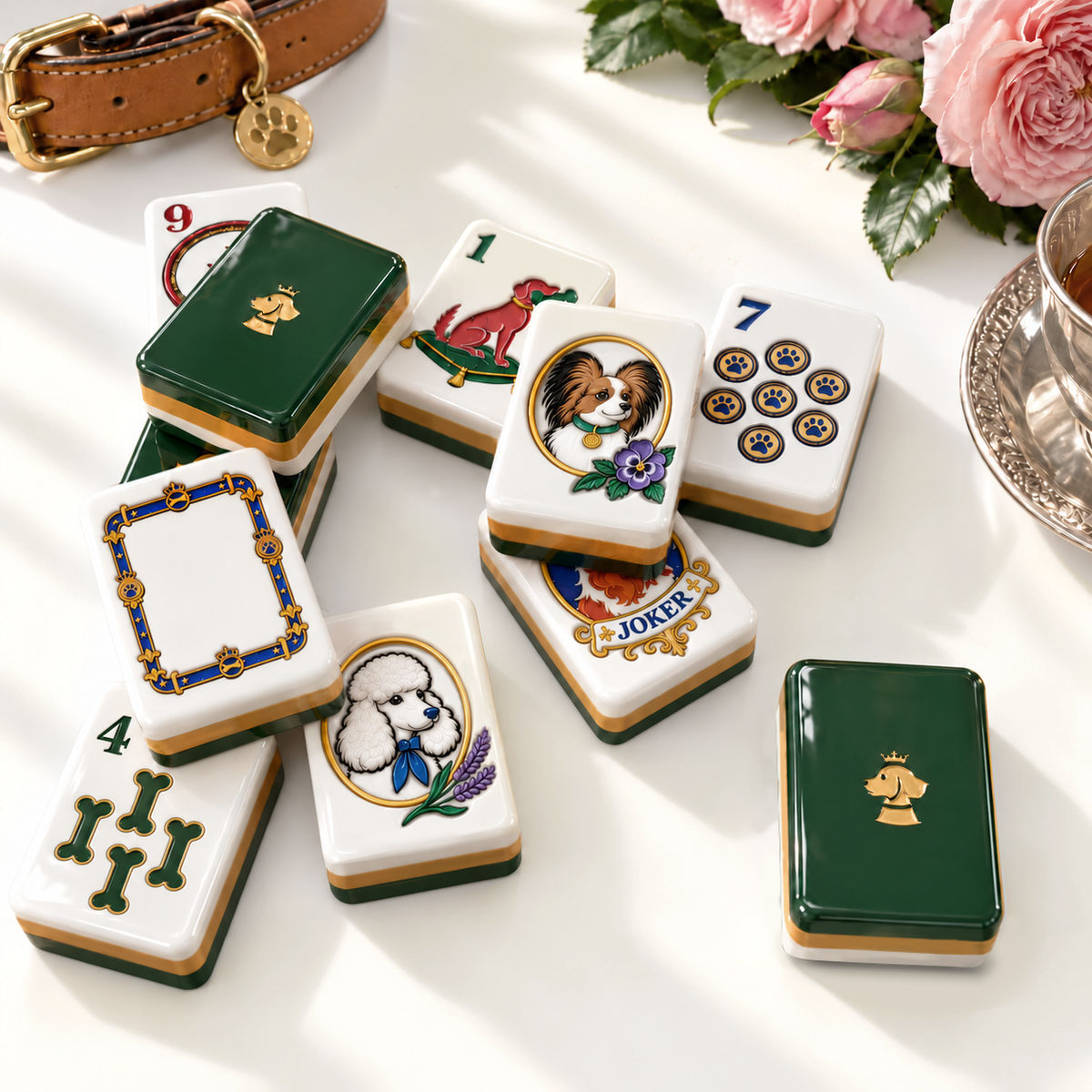
Fujian mahjong is a single-dealer Chinese regional game played with 108 tiles (one suit: Bamboo 1–9 in four copies, plus Winds and Dragons). Rounds typically last 10–30 minutes depending on luck and player speed. Unlike American mahjong, which uses three suits and a reference card, Fujian emphasizes closed hands drawn from a wall, with winners determined by hand patterns and points accumulated across multiple rounds. There is no fixed card; hands follow traditional Chinese combinations like All Simples (1–8 only), Pung combinations, or All Honors. The game is played in most Fujian Province communities and overseas Fujian diaspora groups; tournaments and casual clubs are common in regions with Hokkien-speaking populations. Setup requires one wind die, a scoring device (chips or pen/paper), and precise agreement on payment rates before play begins. Mahstead stocks best-selling mahjong sets designed for American play, but Fujian games typically use sets purchased regionally or online from Chinese suppliers, as the tile composition and symbols differ significantly from Western American sets.
What tiles does a Fujian mahjong set contain?
Fujian mahjong uses 108 tiles: one suit (Bamboo, numbered 1–9) in four copies each = 36 tiles, plus 16 Wind tiles (four each: North, East, South, West) and 12 Dragon tiles (four each: Red, Green, White). There are no Dot or Crak suits, no Flowers, no Jokers. The 1 Bamboo tile shows a bird. Players sit four to a table; at the start, each player receives 13 tiles drawn from a shuffled wall. Fujian sets are sold regionally in China or online through Asian suppliers; they are not equivalent to American mahjong sets, which contain three suits and 152 playing tiles plus jokers.

How does the dealing and draw phase work?
One player (the dealer, or "East") rolls a die to determine where the wall breaks. Players then draw tiles in turn clockwise, one at a time, from the wall in front of them. The dealer draws first. After the initial hand is dealt (13 tiles per player), each player on their turn draws one tile from the wall and must discard one tile face-up to the center. If a player draws a tile that completes a pung (three identical tiles), kong (four identical), or a winning hand, they may claim it immediately. Otherwise, play continues clockwise until someone wins or the wall is exhausted. A hand typically concludes when one player melds all tiles or when the wall is empty.
What hand patterns win, and how are points calculated?
Winning hands follow specific patterns: All Simples (only 1–8 Bamboo tiles, no Honors), All Honors (only Winds and Dragons), Pung hands (three or more identical-tile melds), or mixed patterns combining Bamboo sequences with Honors. Points are calculated based on the pattern rarity, the number of melds exposed, and whether the winning tile was drawn or claimed from a discard. A hand scoring 8–16 points typically wins a round; scoring systems vary by region and local agreement. Unlike American mahjong, there is no national reference card; players must memorize or agree in writing on the hand list before play. Scoring can escalate quickly with successive dealer wins, creating financial pressure that accelerates round endings.
How does payment work, and what are the stakes?
Before the first hand, all four players must agree on a per-point rate (e.g., one player might pay 5 cents per point to the winner; if the hand scores 12 points, the winner receives 60 cents). The dealer wins twice if their hand wins—once as the winner and once as the dealer. Payments flow from losers directly to the winner. If the wall empties with no winner, the hand is discarded with no payment (called a "draw" or "broken hand"). Stakes vary from casual (penny-per-point) to high-stakes games; always confirm rates and payment method (cash, app, chips) before the first tile is drawn. Fujian communities often use traditional chip stacks or written tallies.

How does Fujian mahjong differ from American and Hong Kong mahjong?
Aspect | Fujian | American | Hong Kong |
Tile count | 108 tiles total | 152 tiles + 8 jokers | 144 tiles (one suit removed) |
Suits used | 1 suit (Bamboo) + Honors | 3 suits + Honors + Flowers | 3 suits + Honors |
Hand reference | Memorized/agreed locally | National League card (annual) | Traditional hand list or house rule |
Exposed melds | Common in draws | Allowed (pungs, kongs, quints) | Allowed (pungs, kongs, pairs) |
Jokers | None | 8 jokers in play | None |
Draw speed | Very fast (8–10 min rounds) | Medium (15–30 min) | Medium (15–25 min) |
Scoring | Per-point bets, no fixed system | Point values on the card | Point-based or chip-based |
Winner definition | Hand completes; dealer wins twice | Hand on the card; one payout per round | Hand completes; dealer bonus varies |
Fujian mahjong is the fastest of the three and demands the quickest hand recognition. American mahjong requires referencing a card and enforces strict hand structures; it is slower but more rule-bound. Hong Kong mahjong is a middle ground: faster than American, richer in patterns than Fujian, and very popular outside China. None of the three are interchangeable; learning one does not transfer directly to the others.
🀄 Shop best-selling mahjong sets →
What mistakes do new Fujian players make?
Drawing out of turn. The draw sequence is strict: dealer first, then the player to the dealer's left, then the next, then the last. Drawing early forfeits your turn and may trigger a rule penalty (loss of points or replay of the hand). Always wait for the player to your right to discard before you draw.
Discarding tiles that complete others' hands. Fujian is unforgiving: if you discard a Bamboo 5 and another player holds two 5s, they win immediately from your discard. Watch what tiles have been played and avoid patterns that complete obvious melds.
Misreading hand patterns. A "pung" must be three identical tiles (e.g., three Red Dragons), never three different numbers. A "sequence" (if played) must be consecutive (1-2-3 Bamboo). Mixing these up can result in false declarations and rule violations.
Failing to agree on stakes. The single largest source of conflict in Fujian games is disagreement over the per-point rate or whether a hand was won by draw or discard (which affects payout). Write down the rate before shuffling. Use the same scoring device every game (chips, paper, or app).
Slow tile recognition. Fujian demands instant pattern recognition; hesitation can be read as weakness or signal that you are bluffing. Practice memorizing the 108 tiles and the 20–30 most common hands before joining a live game.
Where do you find Fujian mahjong groups?
Fujian mahjong communities exist in major North American cities with significant Hokkien or broader Southeast Chinese populations: San Francisco Bay Area, Vancouver, Toronto, New York, and Los Angeles have established clubs and meetup networks. Search online for "Fujian mahjong" + your city, or visit local Chinese community centers, temples, or cultural associations. Many operate informal games on weekends; entry may require an introduction from a regular player. Online platforms (WeChat groups, regional gaming apps) also host virtual Fujian tables. Start with beginner-friendly casual play (penny-per-point stakes) to build hand recognition before joining higher-stakes tables.
🎁 See our most-loved mahjong sets & accessories →
What to check before you buy a Fujian mahjong set
If you decide to purchase a Fujian set online, verify these details:
Tile count: Must be exactly 108 (one suit + Honors, no Flowers or Jokers).
Tile size: Standard is 1.25" × 0.75" (about the size of a domino). Smaller travel sets exist but slow gameplay.
Bamboo suit clarity: The 1 Bamboo should have a bird; tiles should be clearly numbered 1–9, not stylized.
Honors legibility: Winds and Dragons must be readable; poor printing makes fast play impossible.
Included accessories: Confirm you receive a wind die, a discard rack (or cloth mat), and a tile wall or carrying case. Fujian sets rarely include score chips; you'll need pen and paper or a calculator app.
Supplier location and language: Most online vendors operate in China or Taiwan; shipping times may exceed two weeks. Clarify import duties and return policies before ordering.
American mahjong sets from Mahstead (available in our best-selling collection) are not suitable for Fujian play due to the extra suits and jokers, so they are not a substitute.
✨ Find your Mahstead set — free US shipping →

FAQ
Can I play Fujian mahjong with an American mahjong set?
No. American sets contain three suits (Bam, Crak, Dot), Flowers, and Jokers—tiles that do not exist in Fujian. The tile counts and hand rules are incompatible. You must use a 108-tile Fujian set.
How long does a typical Fujian round last?
Most Fujian rounds end in 8–15 minutes, depending on how quickly tiles are drawn and hands complete. Fast games can finish in 5 minutes; slow games with hesitant players may take 20–30 minutes. The pace is much faster than American or Hong Kong mahjong.
Do I need to memorize all the winning hands before I play?
Yes, in practice. Fujian relies on pattern memory, not a reference card. Begin with the 10–15 most common hands (All Simples, All Honors, common pung combinations) and learn others through play. Most clubs expect players to know the core hands before joining a money game.
What happens if the wall runs out and no one has won?
The hand is declared a draw (or "broken hand"). No payment is made, and the next player becomes the dealer. In some regions, the dealer wins a small payment; always clarify this rule before play.
Is Fujian mahjong legal in North America?
Casual play among friends is legal in most jurisdictions. Organized games for money may require a gaming license depending on your state or province. Check local gambling laws before hosting or joining a stakes game.
Where can I buy a Fujian mahjong set in the US?
Online retailers specializing in Chinese games (search "Fujian mahjong set" or "108 tile set") are your primary option. Regional Asian marketplaces and import shops in areas with large Chinese communities may stock them. Lead times are typically 2–4 weeks from overseas suppliers.


View More
View More
View More
