
Modern Mahjong Rack Bag: How to Choose the Right Carrier
Last updated: Nov 23, 2026
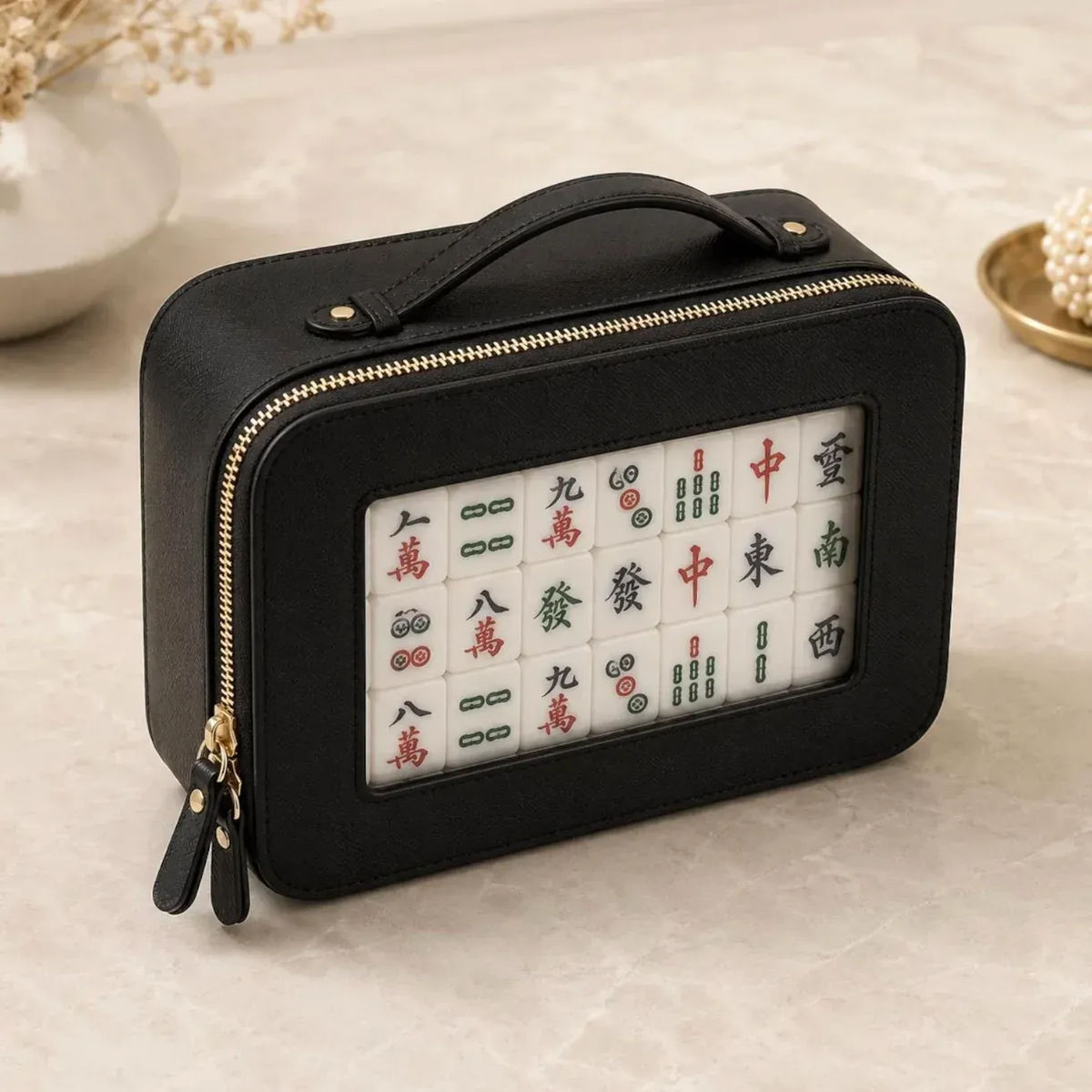
A modern mahjong rack bag is a protective carrier designed to hold a complete American mahjong set—tiles, racks with pushers, mat, and dice—in one organized, portable package. Most hold a 160-tile set with room for racks and accessories; soft-sided bags offer lightweight travel convenience, while hard cases provide maximum crush protection for frequent movers. Bags typically range from compact shoulder carriers to large rolling cases depending on how often you transport your set and whether you prioritize portability or storage at home. Look for reinforced handles, internal organization pockets, water-resistant exteriors, and padding around high-wear seams—these features prevent zipper failure, tile shifting, and weather damage. Mahstead's travel bag collection includes styles sized for racks and full sets, with free US shipping; measure your mat and set before ordering to ensure the bag depth accommodates both without compression.
🀄 Shop best-selling mahjong sets →
What size bag do I actually need for my mahjong racks and set?
Most American mahjong sets with racks and a mat need a bag at least 24–28 inches long, 10–12 inches wide, and 6–8 inches deep—roughly the footprint of a folded mat plus vertical space for a tile case or organized tiles. If you use wood racks with pushers, they add bulk; acrylic racks compress slightly more. Before buying, lay your mat flat, place your racks on top, and measure the stack height with your tile carrier resting nearby. Bags marketed for "full mahjong sets with racks" typically meet these dimensions; always check the bag's interior measurements listed on the product page, not the exterior.
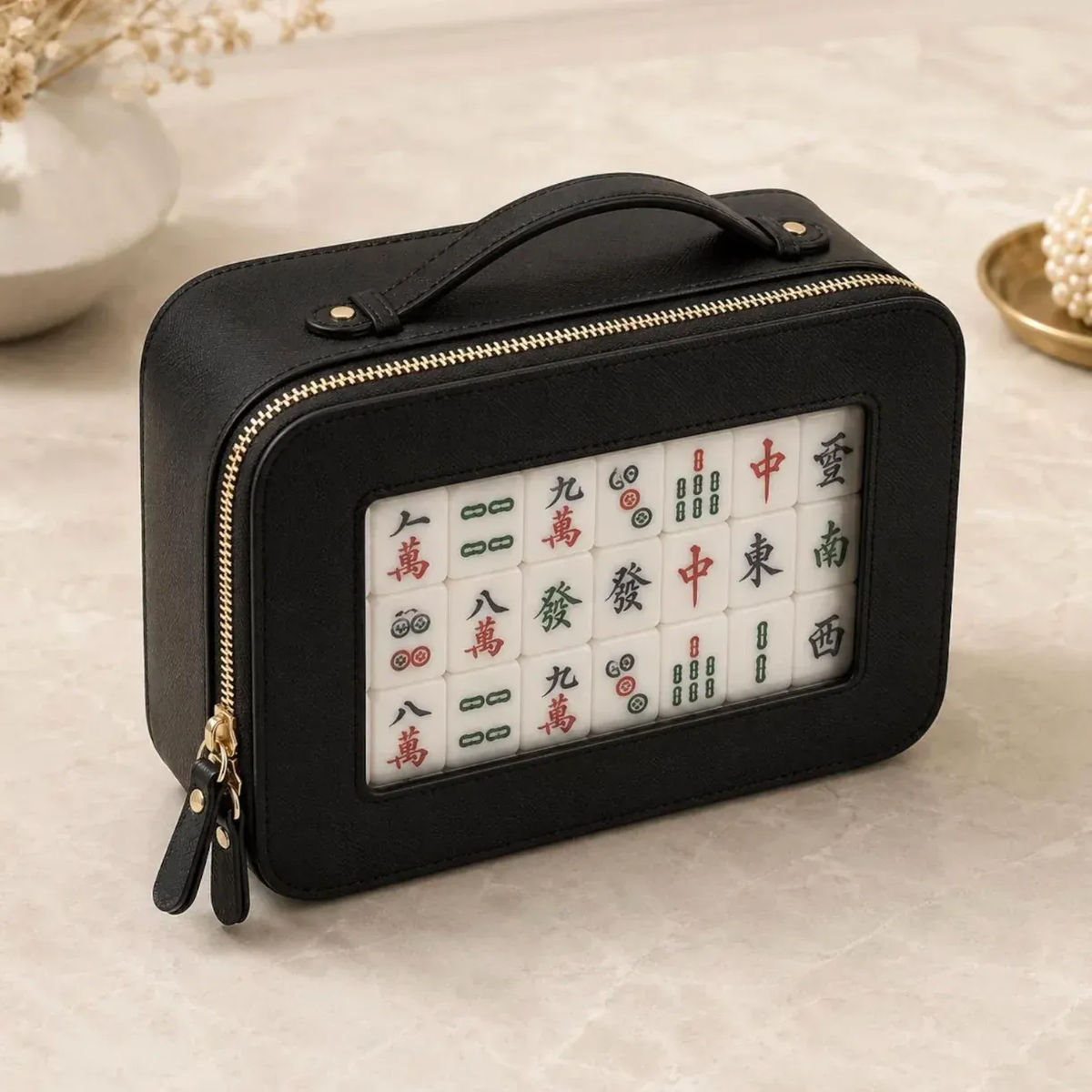
Soft-sided bag or hard case—which protects tiles better during transport?
Soft-sided bags weigh less, fit in car trunks more easily, and cost less; they're ideal for weekly home games or short car rides. Hard cases prevent tile cracking if your car is packed tightly or if the bag is dropped or sat upon—worth the extra weight if you travel to tournaments, ship your set, or store it in a basement where other items might stack on top. Most of us choose soft bags for convenience and reserve hard cases for serious travel or when we gift a set to someone moving across the country. Either style should have internal padding (foam, fleece, or compartments) to prevent tiles from sliding and clicking against each other during transport.
How do I pack a mahjong bag so tiles don't shift or get damaged?
Start by placing your folded mat on the bottom as a cushion. Lay racks flat on top of the mat to stabilize the base. If your bag has interior pockets, sort tiles into compartments by suit or use a tile storage box that fits inside; never dump loose tiles—they'll shift and corners can crack. Place the dice and scoring chips in a small pouch to prevent rattling. Fill empty gaps with soft cloth or bubble wrap if needed. Zip slowly and confirm nothing is pinched. Secure carrying handles by threading them through the bag's loop if available, so they don't catch on doorways or car door frames when you're loading.
Bag Type | Best For | Weight | Durability | Price Basis |
Soft shoulder bag | Weekly home games, car travel | 2–3 lbs | 2–3 years with care | Entry-level |
Soft rolling bag | Monthly events, longer trips | 4–6 lbs | 3–5 years; wheels wear first | Mid-range |
Hard carrying case | Tournament play, shipping | 6–10 lbs | 5+ years; locks prevent damage | Premium |
Compact rack-only tote | Storing racks separately | 1–2 lbs | 2–4 years | Budget |
Durability estimates are based on typical use (weekly play) and care; hard cases last longest when handles are reinforced and wheels are checked annually.
What materials wear out first on a mahjong bag, and how do I avoid that?
Zippers fail first—especially on bags overstuffed with tiles. Handles tear where they attach to the bag body. Wheel axles seize if the bag sits unused in humid basements. Prevent zipper failure by not forcing the slider when tiles are bunched near the seam; pull slowly, feeding fabric evenly. Reinforce handles with stitching or duct tape at stress points before damage spreads. Store the bag in a dry room, not a garage. If your bag has wheels, spin them monthly and wipe the axles clean. Most of us invest in a new bag after 3–5 years of weekly play; we keep the old one as a backup or for practice sets we lend to friends learning the game.

Should I buy a bag designed for mahjong, or will a generic game organizer work?
A mahjong-specific bag or one from the travel bag collection at Mahstead is sized for the 160-tile American set with racks—the standard since the 1980s. Generic game organizers designed for chess, poker, or board games often have shallow pockets that won't safely hold tile racks or a folded mat at full depth. Mahjong bags feature reinforced seams and compartments that accommodate the weight and shape of tiles and pushers. If you already own a large canvas bag, measure its interior before assuming it'll work; a 26-inch by 12-inch by 7-inch interior is a safe minimum. Custom embroidered or engraved bags from our best-selling collection also allow you to personalize your carrier and make it easy to spot in a pile of similar bags at an event.
What's the difference between a travel bag and a storage mat or table cover?
A travel bag is designed for carrying; a storage mat or table cover stays put. Travel bags have handles, sometimes wheels, and compartments for moving your set between locations. Storage mats protect tiles on the playing surface and roll up for storage; they do not have handles or padding thick enough for transport protection. If you host at home every week, a mat is essential and a bag is optional. If you travel to games, a bag is mandatory. Many of us own both—a mat for playing and a bag for the nights we host away from home.
🎁 See our most-loved mahjong sets & accessories →
What to check before you buy
Measure your mat and racks together. Fold your mat the way you carry it. Stack your racks on top. Measure length, width, and height. Add 1–2 inches for padding and comfort.
Confirm interior dimensions on the product page. Exterior measurements can be larger due to padding; always use interior depth, width, and length.
Check handle attachment and seam reinforcement. Look for photos showing stitching at corners and where handles meet the bag body.
Read material and water resistance. Canvas and polyester last longest; nylon often feels lighter but wears faster. Water-resistant coating protects in drizzle but isn't waterproof.
Verify compartments and pockets. If you prefer organized tile storage inside the bag (vs. a separate case), ensure pockets exist and are large enough.
Test the zipper slider in photos. Chunky sliders are less likely to jam; thin sliders often fail under tile weight.
Check return and shipping policy. Most carriers offer free US shipping; confirm before checkout.
✨ Find your Mahstead set — free US shipping →

FAQ
Can I fit a complete mahjong set with racks and mat in a standard duffel bag?
Possibly, but not safely. Most standard duffels are 22–24 inches long and 6 inches deep—too shallow for a mat plus racks plus tiles without crushing. Mahjong-specific bags are designed for 26–28 inch depth and reinforced seams. A standard duffel risks tile cracks and zipper failure within months of weekly play.
Do I need a hard case or will a soft bag survive airline travel?
A soft bag can work if the airline allows it as a carry-on (avoid checked baggage—excess pressure cracks tiles). Pack a hard case if your set is expensive, if you ship it, or if baggage handlers will squeeze it. Mahstead's travel bag collection includes styles suitable for frequent flyers; check weight limits before ordering.
What's the best way to clean and maintain my mahjong bag?
Wipe the exterior with a damp cloth; let it dry completely before storing. Avoid harsh cleaners that fade fabric. Check zippers monthly for debris and lubricate sparingly with silicone spray if they stick. Store in a cool, dry place—not a damp basement. Replace handles if stitching is loose; don't wait for them to tear completely.
Can I store my mahjong set in a bag permanently, or should I remove it between games?
Storing in a bag long-term (months) can cause moisture buildup, especially in humid climates, and pressure on tiles may cause warping. Remove your set and store the bag and tiles separately in a dry room. Keep the bag in a closet, not a basement or attic. Inspect tiles annually for mold or mildew, which are rare but possible in neglected storage.
Are embroidered or personalized mahjong bags worth the extra cost?
Yes, if you play regularly or host. A personalized bag is easy to spot at group games, makes a thoughtful gift, and feels more special than a generic carrier. The engraving or embroidery adds durability (stitching reinforces seams) and lasts as long as the bag itself. Budget-minded players skip this; competitive players or group hosts often choose it.
How do I know if a bag will fit on my car seat or in my trunk?
Check both exterior dimensions and your car's dimensions (most sedan trunks are 17–20 inches deep and 40–50 inches wide). A bag 26 inches long by 12 inches wide by 7 inches deep fits most trunks folded lengthwise. Soft bags compress; hard cases do not. Bring a tape measure to the store or test-fit during a store visit if shopping in person.


View More
View More
View More
