
Modern Mahjong Bag: What to Choose for Your Set
Last updated: Nov 23, 2026
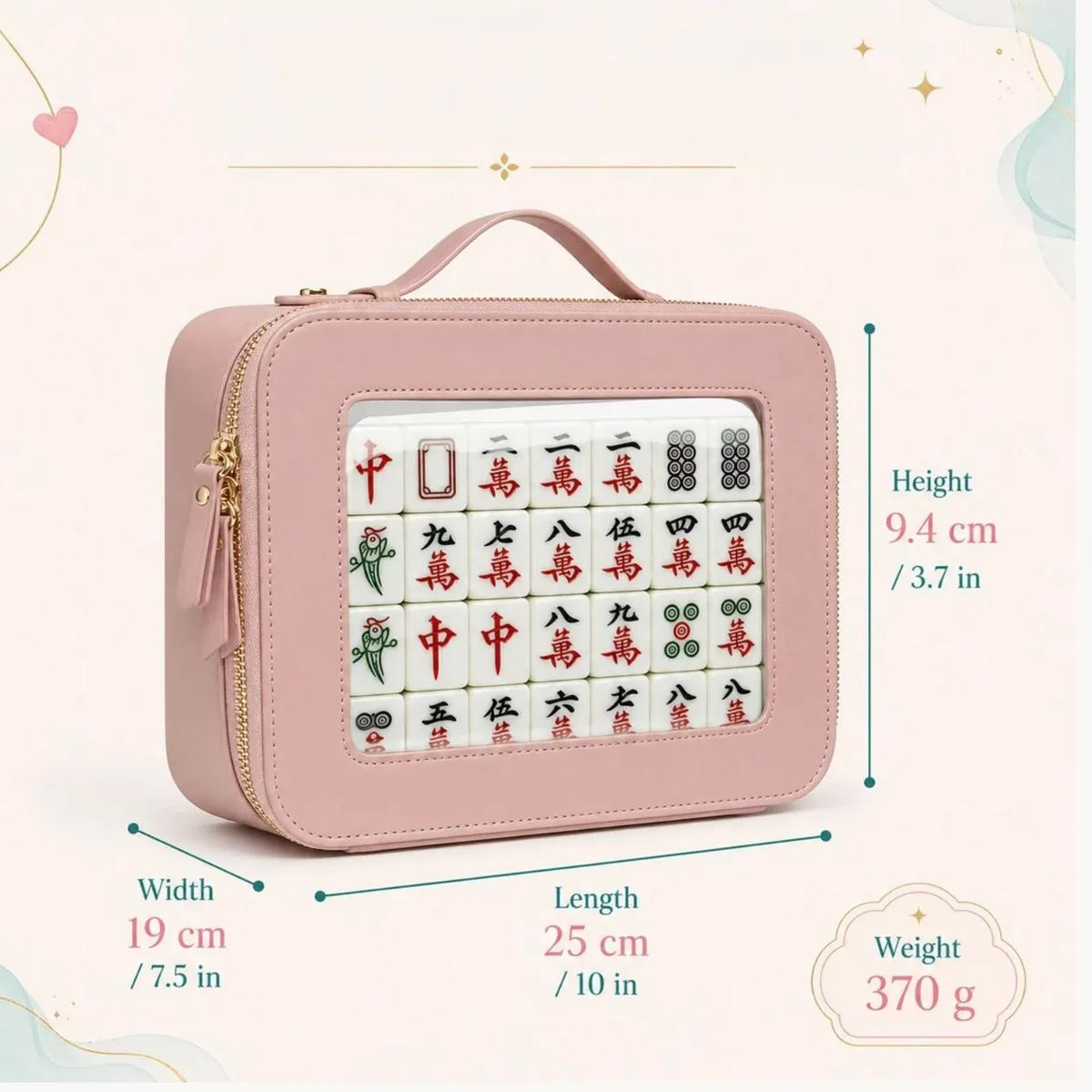
A modern mahjong bag is a protective carry or storage case designed to hold a 160-tile American mahjong set, racks with pushers, a mat, and dice in one place. Most are made from durable nylon, canvas, or vinyl with cushioned compartments and reinforced handles for frequent travel between game nights. Sizes typically accommodate a full set plus accessories without forcing tiles out of their original packaging. Bags range in style from understated tote designs to embroidered or printed versions with mahjong motifs. Costs vary by material and customization—the best-selling mahjong sets come with recommendations for which bag styles pair best with each. Check capacity before ordering, measure your mat and tile rack dimensions, and confirm the bag has a water-resistant exterior or lining if you'll carry it through unpredictable weather or humid climates.
What size mahjong bag do you actually need?
A standard 160-tile American mahjong set with racks and pushers, a folded mat, and dice requires roughly 16–18 inches of length, 12–14 inches of width, and 4–6 inches of depth when stacked. Measure your mat rolled or folded—this is often the bulkiest item. If you store tiles in their plastic racks inside a shallow box, calculate that box's footprint first. Most modern bags offer interior dimensions well above these minimums, so you won't need a oversized carry-on-style case for casual weekly games. Choose a bag you can comfortably grip with one hand; if it's too large, it'll feel awkward at the door or in a car trunk. The verdict: aim for a bag that fits everything snugly without forcing the lid shut or deforming your mat.
✨ Find your Mahstead set — free US shipping →
What material protects your tiles best?
Nylon with a moisture-resistant coating (often called "water-resistant" but not waterproof) is the standard for weekly transport—it's lightweight, wipes clean, and resists minor spills. Canvas offers a more natural, durable look if you carry your set daily; it ages well but requires occasional spot-cleaning and won't shed water like coated nylon. Vinyl or PVC is the most protective in humid environments or rainy climates, though it can feel plasticky and may retain odors if stored closed without ventilation. Many players prefer nylon-canvas blends—they balance durability with comfort. Check whether the interior has soft fabric or foam padding; this matters more than the outer shell because it prevents tiles from shifting and cracking acrylic surfaces during bumpy drives. If you travel by car or store the bag in a garage, moisture-resistant material prevents mold and keeps your set game-ready year-round.

Shoulder bag versus tote versus hard case: which is right for you?
Style | Who it's for | Best feature | What to know |
Shoulder bag | Weekly players, one-hand carry | Hands-free, compact | Padding inside is essential; straps may loosen over time |
Tote with handles | Car transport, home storage | Two-handed stability, classic look | Easier to set down at the table; not ideal for long distances |
Hard case | Tournament players, frequent movers | Maximum protection, stackable | Heavier, takes more closet space; overkill for casual play |
Drawstring or small soft case | Tile-only players, minimalists | Super portable, cheap | No room for mat or racks; tiles can shift inside |
Most of us choose a tote or shoulder bag because they fit a full set and accessories, balance weight distribution, and don't announce "I'm carrying valuables" in a public space. Hard cases are unnecessary unless you travel by plane or move your set weekly. A drawstring bag works only if you're storing tiles at home and carrying just the set to a friend's house—your mat and racks need their own space or a larger outer bag.
🀄 Shop best-selling mahjong sets →
Does an engraved or printed design matter for function?
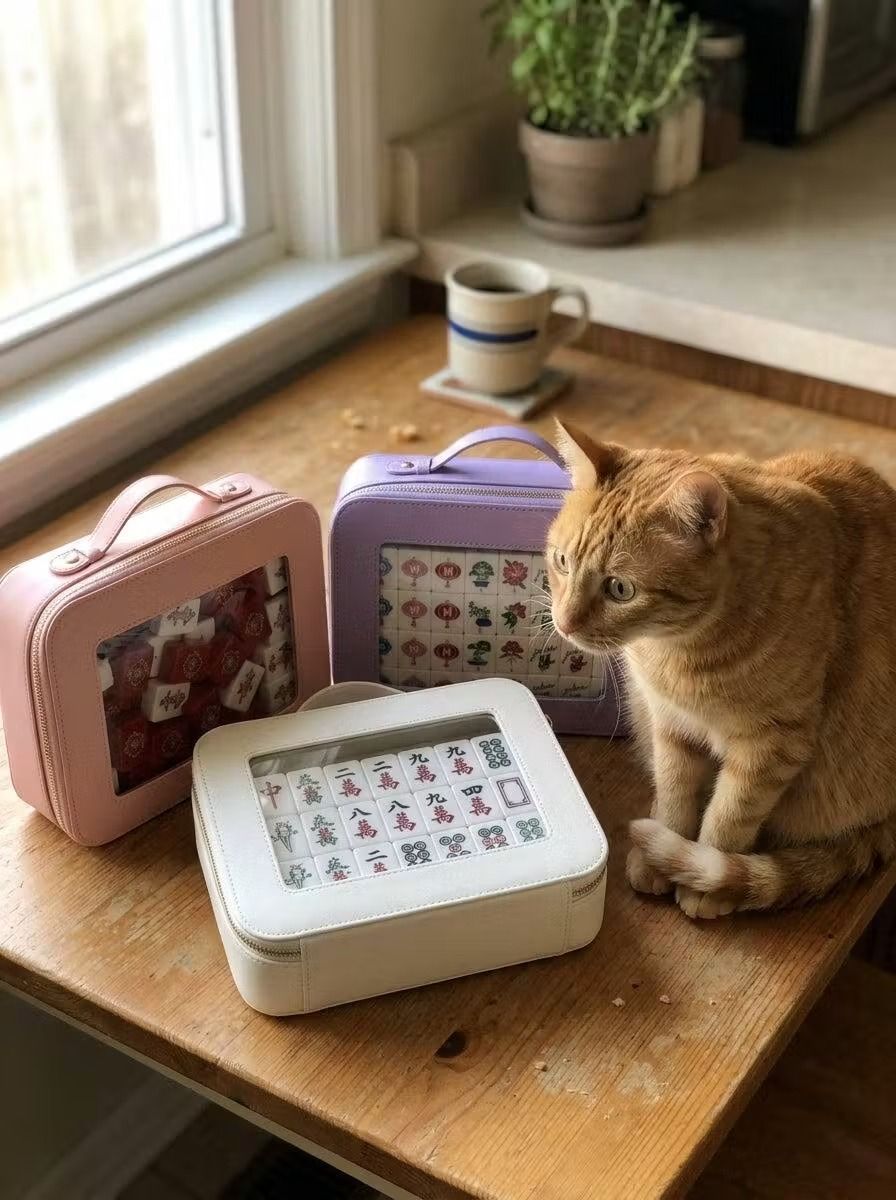
Engraved or printed names, jokes, or mahjong symbols on the bag's exterior don't affect protection—they're purely personal preference. A simple monogram or your initials makes your bag instantly recognizable in a pile of luggage. Printed designs (mahjong birds, dragons, tile patterns) add personality but may fade after two years of weekly use and sunlight. Embroidery lasts longer than printing but adds cost and weight. We recommend engraved or embroidered text with your name or a favorite mahjong phrase over all-over color prints; they age gracefully and become more distinctive over time. If you're buying engraved American mahjong sets, consider pairing it with a matching or complementary bag so your whole travel kit feels intentional and coordinated.
What compartments and features actually help during game night?
An interior zippered pocket or divided sections keep dice, the current year's mahjong card, and scoresheets separate from tiles and racks. Some bags have a small flat exterior pocket for your phone or keys—useful at the car before heading inside. Padding or foam dividers prevent tiles from jostling against acrylic racks; cheap nylon bags without padding cause tile noise and potential corner chips over months of transport. A reinforced bottom and double-stitched seams matter more than cute straps; seams fail first when you're hauling 10+ pounds of tile sets between venues. Ventilation (mesh panels or vents in the zipper) prevents musty odors if the bag sits closed for days. We prioritize a sturdy zippered main compartment, soft internal fabric, and reinforced handles over flashy colors or excessive pockets. The verdict: pick bags with a simple, logical layout—no compartment is useful if you can't remember where you stowed your mat.
🎁 See our most-loved mahjong sets & accessories →
What to check before you order a modern mahjong bag
Verify interior dimensions against your mat when folded and your tile racks stacked. Measure twice; order once.
Inspect material description for water resistance or coating type. Canvas alone won't protect in rain; nylon with a moisture barrier will.
Read reviews for durability, especially about strap reinforcement and zipper longevity. Zippers fail faster than fabric.
Confirm closing mechanism—zippered closures hold up better than velcro or snaps over hundreds of open-and-close cycles.
Check weight. Anything over 2–3 pounds empty is too heavy if you carry it one-handed to weekly games.
Ask whether it ships with interior padding or foam. Bare nylon damages tile edges over time.
Picture your storage. If you hang bags in a closet, choose one with a hang loop. If you stack in a cabinet, a flat-bottomed tote is better than a tall shoulder bag.
Our travel bag collection includes options rated for repeated use, and each listing details interior dimensions, material, and whether padding is included—so you can compare side-by-side before checkout. Free US shipping means you can order with confidence and return if it doesn't fit your set the way you hoped.
A modern mahjong bag isn't just convenience—it's insurance. Your best-selling sets deserve protection, and the right bag makes weekly games easier to host, travel to, and store between seasons. Measure your mat, check the bag's interior, and pick one that feels good in your hand.

FAQ
Can I use a regular duffel bag or laptop case for my mahjong set?
Yes, if it's large enough and has soft padding inside. But mahjong-specific bags have compartments and dimensions designed for tiles, racks, and mats, so tiles won't shift or corner-damage during transport. A padded laptop case risks crushing your mat at the bottom.
What's the difference between a "mahjong bag" and a "game organizer" or "board game bag"?
A mahjong bag is sized and compartmented for tiles, racks, and a folded mat. A generic game organizer is usually shallower and doesn't account for the bulk of a mat or the need to keep tiles stable. If labeled explicitly for mahjong, it's fit for purpose.
Do I need a separate bag for my mat and racks, or should everything fit in one?
One bag is ideal for weekly transport—you grab it and go. If your bag is too small, a second flat tote for the mat works, but you're carrying two items instead of one. Measure and buy one bag that holds both.
How do I clean a mahjong bag to prevent mold or odors?
Wipe the exterior with a damp microfiber cloth and let it air-dry in sunlight. If the interior smells stale, leave it unzipped in a dry room for a day or two. Don't machine-wash unless the label explicitly says it's safe—most bags are spot-clean only.
Should I buy a hard case or soft bag for a new mahjong set as a gift?
Soft bags suit casual players and weekly game hosts because they're portable, cheaper, and take minimal storage. Hard cases are for players who travel frequently or attend tournaments. Start with a soft bag; upgrade to hard if the recipient moves their set more than twice a month.
Can a mahjong bag fit both a 160-tile set and a second set of racks?
If the bag's interior is 14+ inches wide and 5+ inches deep, yes—one set of racks will fit beside the tile box. But check dimensions in the listing; most bags are designed for one full set, not two sets of heavy equipment.


View More
View More
View More
