
Mini Mahjong Sets: Which One Fits Your Game?
Last updated: Nov 23, 2026
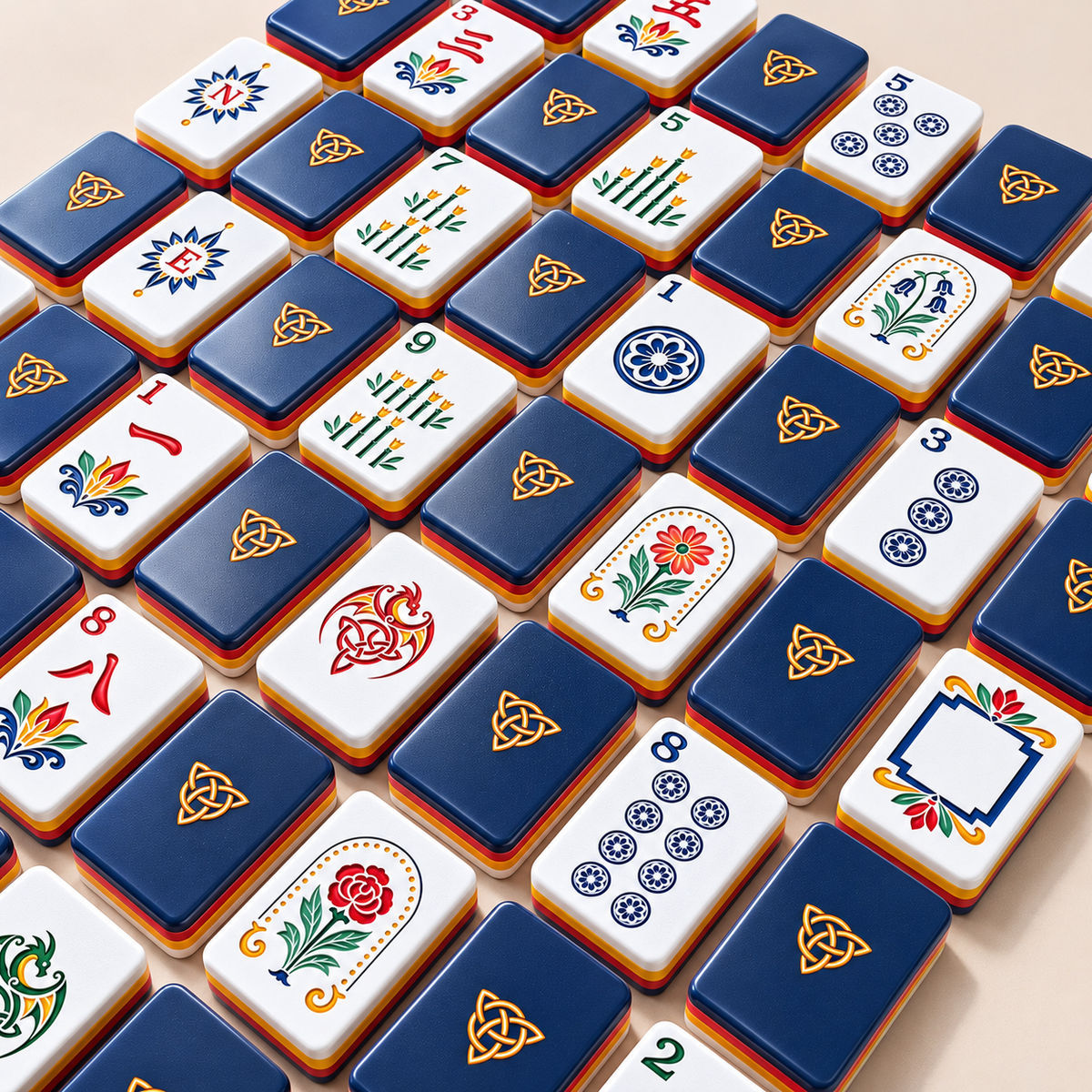
A mini mahjong set compresses the full 152-tile American game (plus spares) into a smaller footprint—typically half the table space and easier to store or travel with. We carry engraved acrylic designs in compact formats perfect for vacation homes, dorm rooms, and travelers who don't want to sacrifice tile quality or readability. Expect to spend less than a full-sized set because you're paying for fewer tiles and smaller case dimensions. The catch: mini sets still demand the current National Mah Jongg League card, real pushers (not toys), and clear acrylic tiles so you can actually see suit symbols fast. We recommend checking case dimensions, tile size, and joker count before ordering—a set that saves three inches of table width but uses tiny, hard-to-read tiles defeats the purpose.
What size difference actually matters for travel?
A standard American mahjong set tiles measure about 1 inch by ¾ inch and need roughly 36 × 24 inches of table space to lay out a full hand and discard wall. Mini sets typically compress tiles to ½ × ⅜ inch, cutting footprint by 40–50%. That means you can play on a hotel desk, small dining table, or lap desk—spaces impossible for full-sized games. The real trade-off: your eyes. When you host weekly games, readability matters more than space savings. Inspect tile thickness and engraving depth on the product page before buying; a flimsy ¼-inch mini tile cracks after ten sessions.

Who should buy a mini set instead of full-size?
Mini sets suit gift-givers, occasional players, and travelers. If someone plays once a month or wants a portable option for their camper, a mini set makes sense. Serious weekly players—especially those with vision changes—stay with standard sizes because shuffling tiny tiles for two hours exhausts your hands and eyes. Test-drive a friend's mini set first; don't assume compact means compromise-free. If the intended recipient plays American mahjong weekly already, they likely prefer their familiar full-size setup; mini sets work better as stepping stones for people learning the game or wanting a novelty option.
How do mini tile materials compare to standard sets?
Both mini and full-size sets from our most-loved collection use cast acrylic tiles—the industry standard for durability and readability. The difference lies in wall thickness: standard tiles are typically ⅜ inch thick, while mini versions drop to ¼ inch to reduce weight. That's still solid enough for weekly play if handled with care. Avoid any mini set with vinyl or plastic tiles; they yellow, crack, and make shuffling sound like marbles in a tin. Acrylic tiles hold their engraving even after years of sliding and stacking. Check the product page for material confirmation—it's the fastest way to spot a toy-quality knockoff.
🀄 Shop best-selling mahjong sets →
What comparison helps you pick the right mini set?
Use this framework to narrow your choice:
Feature | Solo Player/Gift | Casual Travel Pair | Vacation Home |
Tile Size | ½ × ⅜ inch (smaller budget) | ¾ × ⅝ inch (read easily) | ¾ × ⅝ inch (frequent use) |
Engraving | Fun design preferred | Clear suits matter most | Standard or personalized |
Case Type | Box (lightweight) | Bag with strap | Durable case stays in-place |
Weight | Under 2 lbs | 2–4 lbs | Not a priority |
Who It's For | Novelty or beginner | Two players commuting | Group games 2–4x yearly |
Solo players and gift-givers often prioritize fun designs over utility; travel pairs need acrylic clarity and a carry-friendly bag; vacation homes justify a mid-sized set with standard tiles because you're not moving it. Match your use case to avoid buying something that looks great but doesn't play well.
Why does case design change how often you'll actually use it?
A mini set in a rigid box lives in a closet; one in a drawstring bag or small carry case gets pulled out weekly. Case weight and grab-ability set the tone. If you travel monthly, a padded shoulder bag with a strap makes the set feel like an essential game night item, not a chore to unpack. If the set lives in a vacation home, a compact box works fine—it's not moving. Check the product photos for case dimensions and material; a flimsy case splits after four trips, and then you're wrapping the set in a pillowcase instead. We recommend looking at our travel bag and case options designed to work with compact sets—the right case pays for itself in convenience.

What hidden costs or mistakes do mini set buyers make?
The biggest mistake: assuming all mini sets contain the full 152 tiles plus jokers. Some budget options ship with only 100–120 tiles or missing jokers entirely—unplayable without the current year's card and a complete tile count. Verify the tile count on the product page before checkout. Second mistake: buying a mini set for someone who plays American mahjong seriously. Regular players develop hand familiarity with standard tile size; switching to mini mid-session is jarring. Third mistake: pairing a tiny set with a full-sized mat or rack; they don't fit well together. If you're buying a mini set, budget for a small mat or compact racks with pushers made for that tile size, not borrowed full-sized gear. Fourth: skipping the test-shuffle at a friend's game first. Buy a mini set only after playing with one in person.
How do you actually read a mini set during fast play?
Tile readability on mini sets depends on engraving depth and tile color. Clear acrylic with deep-etched suits (Bams, Craks, Dots) and large wind/dragon characters stays legible at arm's length, even when tiles are packed tightly. Avoid translucent or colored mini sets; they look fun but blur suit identity when stacked. During fast play, you're glancing at tiles every 2–3 seconds; a light or shallow engraving forces a second look, slowing the game. We recommend choosing engraved American mahjong sets with bold, simple designs—fewer graphics mean faster recognition. If you're hosting casual weekly games, readability matters as much as size. Test-read a friend's mini set under table lighting before committing.
Should you buy a mini set for a beginner or stick with standard?
Beginners learning American mahjong rules benefit from standard-sized tiles; they allow slower, clearer tile handling while building hand memory. A beginner's second barrier is reading the current year's card—small tiles make card-matching harder, not easier. Mini sets make sense only for beginners who already know rules and are buying a novelty second set for travel or as a gift-giver option. If someone's learning from scratch, encourage them to start with a best-selling full-size set for one season, then graduate to a mini for portability. This approach prevents frustration and builds confidence; jumping straight to a mini set can feel like learning on a toy. We see this pattern play out weekly—beginners who start mini often quit because the game feels harder, not smaller.
🎁 See our most-loved mahjong sets & accessories →
What to check before you buy
Before adding a mini set to your cart:
Tile count: Confirm 152 playing tiles + joker count listed on the product page.
Tile size: Look for ¾ × ⅝ inch minimum (readable) or ½ × ⅜ inch (ultra-compact).
Material: Verify cast acrylic, not vinyl or plastic.
Engraving depth: Check product photos for clarity under table light; avoid designs with too many graphics.
Case type and weight: Match to your travel frequency and storage space.
Compatibility: If buying racks with pushers or a mat, check dimensions match tile size.
Current year's card access: Confirm you have (or can print) the 2026 National Mah Jongg League card.
Try before buying: Play one session with a friend's mini set; your hands and eyes will tell you if it's right for you.
We ship free across the US, so returns are low-friction if you discover the set doesn't fit your game style. Many players keep both mini and full-size sets—mini for travel, standard for weekly home games.
✨ Find your Mahstead set — free US shipping →

FAQ
Can you play real American mahjong on a mini set, or is it just a toy?
A mini set with 152 tiles, acrylic quality, and real pushers plays real American mahjong—same rules, same card, same scoring. Readability slows down fast play, but the game is identical. Avoid mini sets with fewer than 144 tiles or cheap materials; those are toys.
What's the smallest mini set you can actually use for a full four-player game?
Tile size ¾ × ⅝ inch is the practical minimum for four players; ½ × ⅜ inch works for two players or casual learning. Below ½ inch, shuffling becomes fiddly and eye strain sets in after 30 minutes.
Do mini sets come with carrying bags, or do I buy a bag separately?
Most mini sets from Mahstead ship in a compact case; some include a small drawstring bag. Check the product page for what's included. Travel bags and cases are sold separately for upgrading to padded, shoulder-strap options.
Will a mini set fit in a standard mahjong mat, or do I need a smaller mat?
A mini set tile won't align properly with a standard mat's grid—spaces are too large. Shop for a mat sized to your tile dimensions, or use a small cloth or towel under your mini tiles to prevent sliding.
How long do mini tiles last if I play weekly?
Acrylic mini tiles last 3–5 years with weekly play if handled carefully. Avoid dropping, stacking them too high (over 8 tiles high), or using abrasive shuffling; these crack thin tiles faster. Store flat or upright, never bent in a case.
Can I mix tiles from an old full-size set with a new mini set?
No. Tiles from different sets vary slightly in size, color, and feel; mixing them creates friction during shuffling and uneven wear. Keep sets separate—one set per game, one per case.


View More
View More
View More
