
Marvelous Mah Jongg Card: American Mahjong Rule Explained
Last updated: Nov 23, 2026
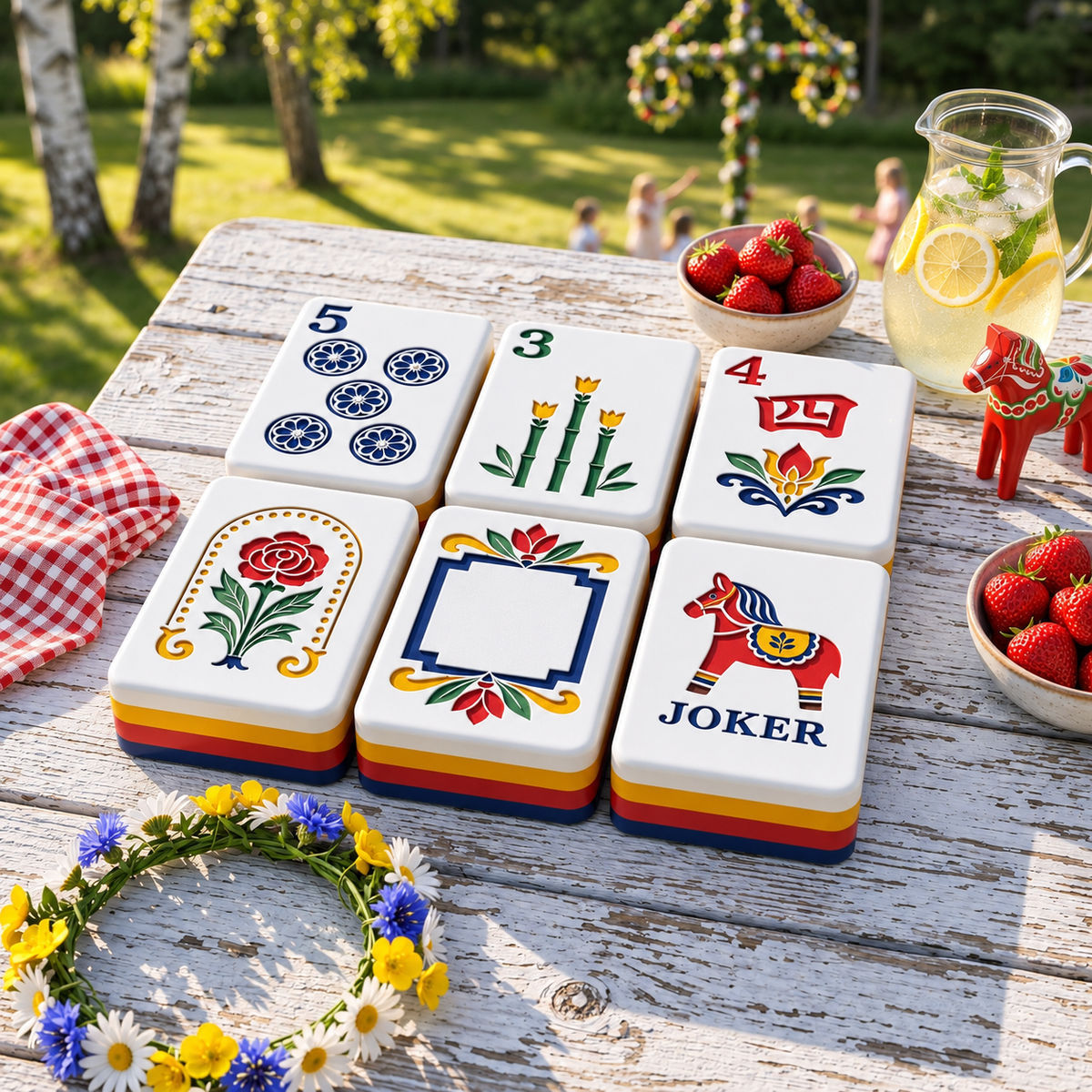
The National Mah Jongg League card is the official hand reference released each spring that defines every legal winning combination for American mahjong. It's a laminated sheet divided into sections by hand type (like pairs, pungs, kongs, and quints), with patterns written in code using Bam, Crak, and Dot numerals plus Winds and Dragons. A new card is issued yearly; you must play only hands from that year's card. The card lists roughly 90–100 distinct hand patterns, each with multiple variations. You cannot invent hands or play sequences (chows) as you might in Chinese mahjong. Players use the card during the game to verify winning combinations before declaring and scoring.
Why does every American mahjong game need the current year's card?
American mahjong is rule-governed by a single organization. The National Mah Jongg League publishes a new card every spring in March. This card is binding: you may only play hands shown on it that year. The card changes annually to keep the game fresh and maintain consistency across all clubs, tournaments, and casual tables. If you're hosting in 2026, you must use the 2026 card. Playing a hand from a 2025 card or an older version is illegal. This is what separates American mahjong from the open-ended variants played in China or Hong Kong. There is no "house rule" exception; the card is law.

How do you read the card's notation and sections?
The card organizes hands into sections: Pairs, Pungs, Kongs, Quints, Sextets, and Consecutive/Mixed patterns. Each section shows a winning hand written in shorthand. For example, a line might read "P 2024 2B 2B 2B 3C 3C 3C 4D 4D 4D 5D 5D 5D J J"—meaning one pair of Jokers, and four identical pungs (three-tile groups) of consecutive numbers. Numerals (1–9) stand for tile numbers; letters (B, C, D) denote Bams, Craks, Dots; letters (E, W, N, S) denote Winds; R, G, W stand for Red Dragon, Green Dragon, White Dragon. Jokers are always written as J. A line with asterisks or brackets may show optional variation—for instance, a Joker may substitute for one position but not another. The card also includes a legend and small-print rules: Jokers can never fill a pair; they can only replace a single tile in a pung, kong, quint, or sextet. Understanding the abbreviations is step one; checking which variations apply to your specific tiles comes second.
What common mistakes do players make when reading the card?
We see three errors repeatedly at our weekly tables. First: assuming a hand is "close enough" when it matches the general idea but not the exact pattern. American mahjong is strict: if the card shows "P 1B 2B 3B 4B 4B 4B 5C 5C 5C 6D 6D 6D J J," you cannot play a similar hand where the numbers are slightly off. Second: forgetting that Jokers cannot fill a pair. Many players holding J J plus other tiles think they've won; they haven't. A pair must be two identical tiles (e.g., two 5 Dots), never a Joker pair. Third: misreading uppercase versus lowercase letters or missing an asterisk that shows a Joker can substitute in one spot but not another. The card's notation is precise. Spend two minutes with the card before announcing a win. If you're uncertain, show the card to another player at the table—that's how we avoid disputes.
What's the difference between a pung, kong, quint, and sextet on the card?
A pung is three identical tiles. The card shows it as "3B 3B 3B" (three 3 Bams). A kong is four identical tiles: "3B 3B 3B 3B." A quint is five identical tiles: "3B 3B 3B 3B 3B"—only possible if you have four copies of a tile plus one Joker substituting as the fifth. A sextet is six identical tiles: "3B 3B 3B 3B 3B 3B"—only possible if you have four copies of a tile plus two Jokers. A pair is two identical tiles and can never include a Joker. The card lists hands built from these building blocks. For example, a single hand might contain one pung (3 tiles), one kong (4 tiles), two quints (10 tiles), and one pair (2 tiles)—adding to 14 tiles, a complete hand. American mahjong never uses sequences like "1-2-3" or "4-5-6" in the way Chinese mahjong does. You cannot call or expose a chow; the card forbids them. You only expose pungs, kongs, quints, and sextets to other players at the table.

How do you use the card to verify a winning hand at the table?
When you believe you have a winning hand, follow this process:
Gather your 14 tiles. Lay them face-up on your rack in groups (pair, pung, kong, quint, or sextet).
Note any Jokers you've used. For each Joker, identify which tile it represents in the hand.
Open the current year's card. Scan the sections in order to find a hand matching your combination.
Match the exact pattern. Read the card's notation carefully. Verify that your pair is a true pair (no Jokers), and that each pung/kong/quint/sextet matches exactly.
Check for Joker restrictions. Some hands show that a Joker can replace the pair; others forbid it. The card specifies this with asterisks or small text.
If you find a match, announce the hand and place it on the card line. Other players verify it.
If no match appears, you do not have a winning hand. Tiles go back into play or are declared a dead hand, depending on your rules.
This is why clarity matters. Clear mahjong mats and racks with pushers help you organize tiles so you can spot groupings quickly and reduce errors.
🀄 Shop best-selling mahjong sets →
How does the card change year to year, and should you keep old cards?
The League updates the card each spring, typically in March. Some hands remain from prior years; others vanish. New hands are added to freshen gameplay. This means a hand you played in 2025 might not be legal in 2026. Do keep old cards for reference or nostalgia—they're part of the game's history—but never use them for actual play. At the table, only the current year's card is valid. Some players and clubs frame old cards or use them as teaching tools for new players, showing how the game has evolved. The card is not difficult to obtain: you can purchase it from the National Mah Jongg League directly, order it from mahjong retailers including us, or ask your table host. It's inexpensive and essential. If you're hosting weekly games and need a reliable setup, engraved mahjong sets paired with a dedicated mahjong mat create a professional playing environment and remind players of the rules visually.
🎁 See our most-loved mahjong sets & accessories →
How do American mahjong hands differ from Chinese or Hong Kong variants?
Aspect | American Mahjong | Chinese / Hong Kong Mahjong |
Hand Definition | Fixed by annual League card (90–100 patterns) | Hundreds of hands; varies by region and house rules |
Sequences Allowed | No chows; only pungs, kongs, quints, sextets | Chows (1-2-3, 4-5-6, etc.) are core melds |
Joker Role | Jokers substitute for single tiles only; no pair | Wild tiles vary; some variants forbid them entirely |
Pair Rules | Pair must be two identical tiles; never a Joker | Pair always two identical tiles; consistent across variants |
Winning Tile | Drawn from wall or called from other players' discards (American calling rules) | Drawn from wall; some variants allow limited calling |
Rulebook | One official card per year; no variation | Multiple rulesets in play globally |
American mahjong is the most rule-rigid of all variants. This makes it ideal for organized play, tournaments, and newcomers who want clarity. If you're learning American mahjong, the card is your entire game law. Refer to it every session until patterns become second nature.
Before you begin, ensure you have the current year's National Mah Jongg League card (issued each spring), a complete 160-tile set with eight jokers, and ideally a mat with clear zone markings to organize your tiles. Check that all four copies of each numbered tile (1–9 in each suit) are present, plus 16 Winds and 12 Dragons. If your set is missing tiles, plays become impossible. Many new players buy cheaply made sets without verifying tile counts; a quality set ensures years of reliable play. If you're hosting or gifting, consider engraved sets that reflect your group's name or style.
✨ Find your Mahstead set — free US shipping →
For deeper guidance on how the game flows turn to our full how-to-play guide, which covers dealing, the Charleston tile exchange, calling rules, and scoring alongside card reading. Understanding the card is the foundation; combining it with full gameplay knowledge makes you a confident player.

FAQ
Can I play a hand that's similar to one on the card but not exactly the same?
No. American mahjong requires an exact match to the card. If the card shows "P 1B 1B 1B 2B 2B 2B," you cannot substitute different numbers or suit. Strict adherence prevents disputes and keeps the game fair across all tables.
What does it mean if a hand has an asterisk or bracket on the card?
Asterisks and brackets indicate variation or optional Joker substitution. For example, a hand might show "2D 2D*" meaning the pair can be 2 Dots, or a Joker standing in for 2 Dots in a specific position. Always read the small print next to the pattern to understand the rule.
If I'm one tile short of a hand on the card, can I declare anyway?
No. You must have all 14 tiles arranged in the exact groupings shown on the card to win. If you're missing even one tile or a Joker substitute, you do not have a winning hand. Keep playing or pass your turn.
Do I need to buy the League's official card or can I print one online?
You should obtain the current year's official card from the National Mah Jongg League or a licensed retailer. Photocopies or unauthorized reprints may contain errors. An official card costs little and is worth the accuracy and legality at the table.
How long does it take to memorize the card?
Most players become fluent with the card after 10–15 sessions of regular play. Early on, you'll reference it every hand; after two months of weekly games, you'll recognize patterns quickly. Some players never fully memorize it and keep it handy—that's perfectly normal and accepted.
Can I use an old year's card if I'm playing casually with friends?
Officially, no. American mahjong rules require the current year's card for any game, casual or tournament. If you're playing purely for fun and all players agree to use an older card, that's your choice, but it's not standard play. For consistency and respect to the game, use the current card.


View More
View More
View More
