
Malaysian Mahjong Winning Hands: Rules & Strategy Guide
Last updated: Nov 23, 2026
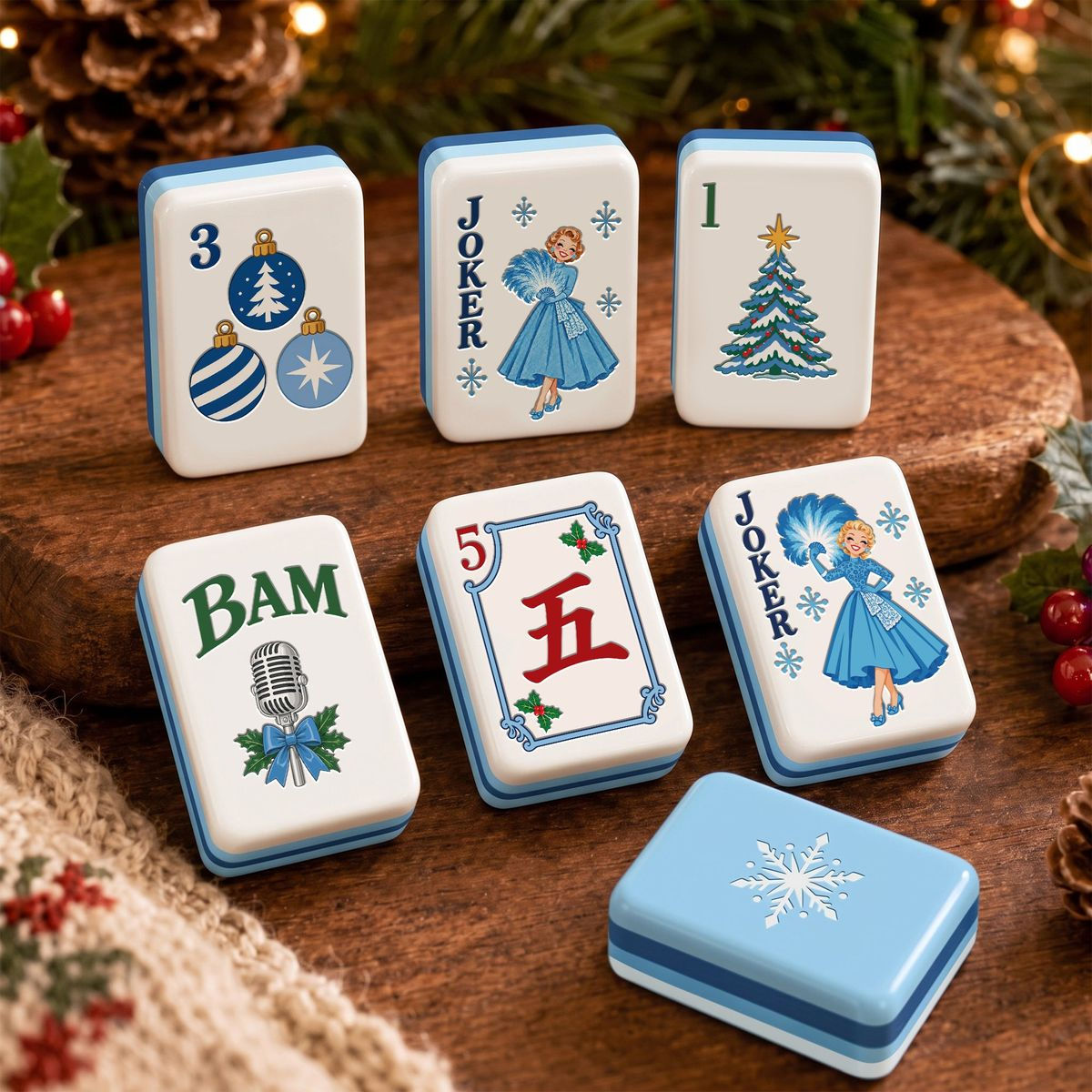
Malaysian mahjong winning hands follow the "limit hand" system, where all 14 tiles must form one of several set patterns—typically eight Pung (triplets) and one Pair, or mixes of Pungs, Kongs (quads), Chows (sequences like 1-2-3), and Eyes (pairs). Unlike American mahjong, which locks hands to a yearly card, Malaysian allows multiple valid patterns and rewards self-drawn wins (Zimo) and melds drawn from opponents (Hu). Hands must include all four suits or specific tile combinations; bonus scoring applies for special conditions like all Pungs, all Terminals, or Winds. A win requires claiming the 14th tile to complete the pattern—either by drawing it yourself or by calling "Hu" on a discard. The game uses a 144-tile set (36 per suit, 16 Winds, 12 Dragons, 8 Flowers—no Jokers or blanks in standard play), plays with four players, and emphasizes quick decision-making because players can form hidden melds without waiting for a declared card.
How is a winning hand structured in Malaysian mahjong?
A winning hand in Malaysian mahjong consists of exactly 14 tiles arranged into melds plus one Pair. The most common winning pattern is Ping Hu: eight Pungs (each a triplet of identical tiles) plus one Pair (two identical tiles). Other patterns include mixed Pungs and Chows, all Terminals (1s and 9s), all Honors (Winds and Dragons), or hands with specific suit combinations. Chows—sequences like 1-2-3 of the same suit—are central to Malaysian mahjong but cannot be called or exposed during play the way they are in Chinese variants; instead, you draw and discard tiles freely, and melds are often revealed only at the moment of claiming the win. Each pattern has a fixed scoring value rather than additive bonuses, so learning the hand catalog is essential before you sit down to play.
🀄 Shop best-selling mahjong sets →

What are the key differences between Malaysian and American mahjong winning hands?
American mahjong requires hands that match a specific position on the official National Mah Jongg League card issued each spring—you cannot win on a hand that doesn't appear on that year's card. Malaysian mahjong has a fixed, universal hand system that never changes and allows dozens of valid patterns based on tile combinations alone. American tiles include 152 playing tiles, 8 Jokers that act as wild cards, and no blanks (our best-selling collection ships 160-tile sets with spares), while Malaysian uses only the core 144 tiles with no wildcards. American hands are always announced before play starts (you choose a position and row), whereas Malaysian melds are hidden during play and revealed on win. American mahjong requires a Charleston (tile-passing ritual) before the hand begins; Malaysian does not. American uses Pongs and Kongs (identical triplets and quads) but no Chows in exposed form, while Malaysian allows both and heavily emphasizes Chow combinations in hand patterns.
Feature | American | Malaysian |
Hand source | Yearly card (position-locked) | Universal fixed patterns |
Tile count | 152 + 8 Jokers | 144 (no Jokers) |
Chows allowed | No exposed Chows | Chows in melds |
Melds | Exposed from start | Hidden until win |
Pre-game ritual | Charleston required | None |
Win announcement | Declared in advance | Called at moment of draw |
Which hand patterns score highest in Malaysian mahjong?
Limit hands (Hu) in Malaysian mahjong carry fixed payouts instead of point accumulation. A "All Pung" hand (eight triplets, no Chows or Pairs until the Eyes) earns a full limit payout, typically the session's maximum bet. "All Terminals" (using only 1s and 9s plus Honors) and "All Honors" (Winds and Dragons only) are equally high-value patterns. Hands with four Kongs ("Wa Hu" or Quad Hu) also trigger top payout. "Mixed One Suit" (Qing Ise or mixed terminal hands) and hands with all three Suits plus Honors (or all four Suits) earn mid-tier limits. Self-drawn wins (Zimo) typically double the payout compared to winning on a discard. Common lower-scoring hands include basic Ping Hu or mixed Pung-and-Chow patterns that have no bonus conditions, paying the session's base stake. Track your local table's specific limit values—they vary by region and player agreement.
Can you name specific winning hand examples?
Here are four testable patterns you'll encounter in Malaysian mahjong.
Pattern 1: Basic Ping Hu — Eight Pungs + one Pair. Example: three 1-Dots, three 5-Dots, three 2-Bams, three 4-Bams, three East Wind, three Green Dragon, three 1-Crak, three 7-Craks, plus a Pair of 3-Dots. This pattern scores the lowest but wins every game.
Pattern 2: All Pung + Terminal — Eight Pungs using 1s and 9s (Terminals) plus Winds/Dragons. Example: three 1-Dots, three 9-Dots, three 1-Bams, three 9-Bams, three 1-Craks, three 9-Craks, three East Wind, three South Wind, Pair of Red Dragon. Scores maximum.
Pattern 3: Mixed One Suit (mixed with Honors) — Majority tiles from one suit (Dots, Bams, or Craks) plus Winds and Dragons completing the 14. Example: three 1-Dots, three 2-Dots, three 3-Dots (a Chow concept, all from Dots), three 4-Dots, three 5-Dots, plus three East Wind, three South Wind, Pair of North Wind.
Pattern 4: All Honors + One Suit — All Winds and Dragons (no number tiles except Pair). Example: three North, three South, three East, three West, three Red Dragon, three Green Dragon, three White Dragon, Pair of any number suit (e.g., 5-Dots). This is rare but high-scoring.
Remember: the specific names and limit values differ by club and region, so always confirm your table's rule set before the first hand.

How do you claim a winning hand at the table?
When you draw or observe a discard that completes your pattern, announce "Hu" clearly and lay down all 14 tiles face-up, arranged by meld so other players can verify the pattern instantly. Do not reveal your hand earlier—hidden melds are part of Malaysian mahjong's strategy. If you self-drew the winning tile from the wall, announce "Zimo" instead of "Hu"; this doubles your payout. The player who discarded the winning tile pays the full agreed limit; if you self-drew, all three opponents share the cost equally (split payout varies by house rules). Other players then check the melds; if the pattern matches a valid hand on your table's catalog, the win is confirmed and settlement occurs. If your hand contains an error—a meld with four tiles instead of three, a Pair that is not identical, or a pattern not recognized—the hand is dead, you cannot claim Hu, and play continues. Always keep your drawn tiles in your rack until the moment you declare, so that other players see a fair draw sequence.
To avoid disputes, arrange your melds cleanly: group Pungs together, Chows in sequence, and Eyes (Pair) separate. Some tables use mahjong racks with pushers to keep tiles organized and reduce fumbles—particularly useful for faster Malaysian play, where tiles move quickly.
🎁 See our most-loved mahjong sets & accessories →
What common mistakes do Malaysian players make when building hands?
Mixing Pung and Chow counts: New players often attempt hands with, say, three Pungs, two Chows, and random tiles, forgetting that Malaysian hand patterns are fixed. A valid Ping Hu requires exactly eight Pungs and one Pair—no Chows. If you want Chows, your hand must follow a mixed pattern (e.g., "Three Pungs, Two Chows, Three Kongs"—or whatever your table defines). Always reference your rule sheet before discarding.
Forgetting the hidden meld rule: Malaysian players can hold concealed melds (unrevealed Pungs or Chows) and keep others guessing your shape. However, once you draw your winning tile, you must declare all tiles at once. Revealing partial melds early signals your hand direction and lets opponents block you—it's allowed but tactically weak.
Misunderstanding Chow sequences: A Chow is three consecutive tiles of the same suit—for instance, 4-5-6 of Dots. Beginners sometimes treat 4-5-6 of mixed suits (4-Dots, 5-Bams, 6-Craks) as valid, but they are not. Always confirm suit before accepting a Chow.
Self-drawn vs. discard confusion: A self-drawn win (Zimo) pays more. Some tables pay double or add a bonus. If you win on an opponent's discard, you receive less. Clarify payout before the session starts so you know whether to pursue high-risk self-draw lines.
Overlooking table-specific patterns: Malaysian mahjong varies significantly by region (Malaysian, Singaporean, Cantonese, and other sub-variants each have slightly different hand catalogs and limit names). Never assume a hand you know from one club works at another. Always ask the host or refer to the house rules card.
What tiles and equipment do you need to play Malaysian mahjong?
You need a standard 144-tile set (three suits of 1–9, each four copies; 16 Winds as four each of North, South, East, West; 12 Dragons as four each of Red, Green, White; and 8 Flowers). Malaysian sets do not use Jokers or blanks. A travel bag or case protects your tiles during transport. A mahjong mat clearly marks the discard zone and draws area, making fast play easier. Racks are helpful but optional in Malaysian play (many players keep tiles in their hand or a small stack). Dice determine the starting position. Consider getting a set with clear engraved tile faces so all four players can read tiles quickly from across the table—this matters especially in faster Malaysian games where tiles move in rapid succession.
What to check before you buy a Malaysian mahjong set
Tile count: Confirm your set has exactly 144 tiles (36 per suit, 16 Winds, 12 Dragons, 8 Flowers). Avoid sets marketed as 152 or 160 tiles if you want strict Malaysian play, though Americans often use larger sets for durability.
Suit clarity: Ensure Bams (sticks), Craks (circles), and Dots (characters or dots) are visually distinct, even under table lighting. Read the product photos carefully.
Face size: Check tile measurements—Malaysian players prefer tiles readable from 2–3 feet away. Acrylic sets hold engravings clearly and resist wear during rapid shuffling.
Completeness: Verify you have all four copies of each number and Honor tile. Count before paying, or ask the vendor for a tile checklist.
Backup Flowers: Some players bring spare Flower tiles in case one cracks (Flowers are fragile in extended play). Not essential, but a hedge.
✨ Find your Mahstead set — free US shipping →

FAQ
Can I use American mahjong tiles to play Malaysian mahjong?
No. American sets include 152 tiles, 8 Jokers, and flower designs that vary; Malaysian requires exactly 144 tiles with no Jokers. American Jokers are wildcards, but Malaysian does not use wildcards at all. You need a dedicated Malaysian set or a standard 144-tile Chinese set to play by Malaysian rules.
Do I have to memorize all winning hand patterns before I start?
Yes. Unlike American mahjong (which references the year's card during play), Malaysian players must know patterns by memory or have the house rules sheet visible. Most serious players study 10–20 key patterns and learn others through repetition. Ask your host for a printed or digital hand list before your first session.
What happens if two players draw the winning tile at the same time?
This rarely happens because only one player draws per turn. If a tile is discarded and two players call "Hu" simultaneously, priority goes to the player closest to the discarder in turn order (usually the next player clockwise). Some tables give priority to the first spoken claim; confirm before play.
Is self-drawn (Zimo) always better than winning on a discard?
Zimo pays more (often double), but building a hand that guarantees self-draw is harder because you have no control over what others discard. Most hands win on a discard; Zimo is a bonus achievement. Pursue Zimo only if your hand pattern is strong and close to completion.
How long does a typical Malaysian mahjong game last?
One hand usually takes 10–20 minutes depending on player speed and tile draws. A full session (8–12 hands) typically runs 2–3 hours. Malaysian play is faster than American because there is no Charleston and melds are hidden, so fewer pauses for game setup and tile verification.
Can I play Malaysian mahjong with three players instead of four?
Some three-player variants exist (fewer tiles per player, modified hand patterns), but standard Malaysian is designed for four. If you need flexible player counts, consult a house rules guide or ask an experienced Malaysian player in your area for three-player adaptations.


View More
View More
View More
