
Malaysian Mahjong: Rules, Tiles & How It Differs from American
Last updated: Nov 23, 2026
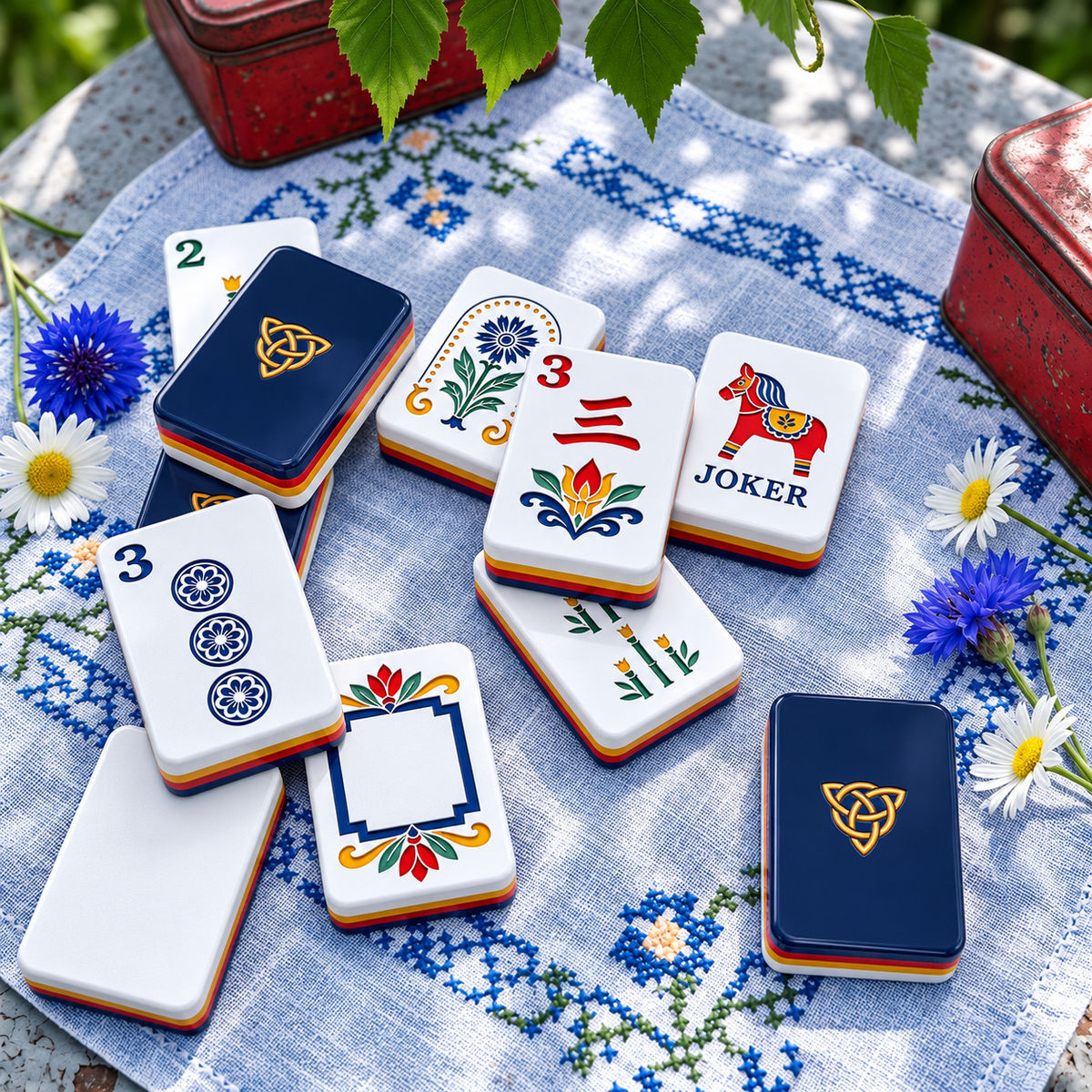
Malaysian mahjong is a fast-paced Southeast Asian variant played with 144 tiles (four copies each of 1–9 in three suits, plus winds, dragons, and honours) using a completely different hand structure than American mahjong. Games feature chows (sequences like 1-2-3), pungs (identical triplets), and quints, with hands built during play rather than declared from a fixed yearly card. Scoring emphasizes double wins, limited hands, and melds drawn live—players aim to win as quickly as possible by melding and declaring mahjong (completion). Most games include the Charleston-style pass, but hand patterns vary by regional rules (Singapore, Penang, Johor versions exist). A complete Malaysian mahjong set costs less than many American sets and is sold by specialized retailers; the game plays faster—typically 15–20 minutes per round—making it popular in casual and social settings across Malaysia, Singapore, and Brunei.
How does Malaysian mahjong differ from American mahjong?
The biggest difference: Malaysian mahjong allows and requires chows (sequences like 1 Bam–2 Bam–3 Bam), which are forbidden in American mahjong entirely. American hands are fixed patterns from the annual National Mah Jongg League card; Malaysian hands are "open" and built live. American uses 152 tiles with 8 jokers; Malaysian uses 144 tiles with no jokers. American scoring is point-based per hand type; Malaysian scoring prioritizes doubling wins and bonus tiles. American limits exposed melds; Malaysian encourages fast melding and calling tiles from discards. Both games teach hand strategy, but Malaysian mahjong rewards speed and adaptability.

What tiles are in a Malaysian mahjong set?
A Malaysian set contains 144 tiles: three suits (Bam, Crak, Dot) with numbers 1–9, four copies each = 108 tiles; four winds (North, East, South, West) = 16 tiles; three dragons (Red, Green, White) = 12 tiles; and eight honours (flowers or seasonal tiles), totaling 144. Sets are smaller and lighter than American 160-tile acrylic sets. Some regional variants add blank tiles for house rules or extended play. The tiles are typically bone or bamboo with Chinese characters, though plastic tourist sets exist. Winds and dragons are drawn from the live wall during play—they're not "dead" tiles as in American mahjong.
🀄 Shop best-selling mahjong sets →
What is a valid hand in Malaysian mahjong?
In Malaysian mahjong, a winning hand consists of four melds (each 3 or 4 tiles) plus one pair, totaling 14 tiles (or sometimes 13 in two-player variants). A meld can be:
Chow: three consecutive numbers in one suit (e.g., 3 Crak–4 Crak–5 Crak)
Pung: three identical tiles (e.g., 6 Dot–6 Dot–6 Dot)
Kong: four identical tiles
Quint or Sextet: five or six identical tiles (some regional rules allow these bonus melds)
Hands cannot include American-style fixed patterns like "pair of dragons + pung of 5 Bams." Instead, you build dynamically by drawing tiles, discarding, and calling tiles from other players' discards to complete melds. The pair must always be identical tiles (e.g., two 7 Bams), never mixed. A player wins by completing a hand, announcing "mahjong," and laying down all four melds plus the pair. Speed matters: the first to mahjong wins.
How do you play a round of Malaysian mahjong?
Setup: Four players sit around a table. The dealer draws 14 tiles; each other player draws 13. The dealer makes a discard first. Play proceeds East → South → West → North (counterclockwise from dealer).
Turn sequence:
Draw one tile from the wall.
Look for melding opportunities (chows, pungs, kongs).
Call a meld only if you use a tile another player just discarded (you must announce which player you're calling from).
Discard one tile face-up.
Winning:
Complete four melds and one pair, announce "mahjong," and lay down your hand.
Only the player who draws or calls a tile can form the winning pair—self-drawn wins often score higher.
If a discard completes another player's hand, that player wins; the discarding player pays all three opponents (or a fixed penalty).
Speed is key. Most Malaysian rounds finish in 12–20 minutes. Newer players often spend the first two rounds just recognizing chows and calling safely.
What are the major regional variants of Malaysian mahjong?
Three main regional styles dominate the Malaysian/Singapore area:
Region | Play Style | Chows Allowed? | Kong Scoring | Pace | Who Plays It |
Penang/Ipoh (Northern Malaysia) | Fast, competitive | Yes, strictly | Kong = extra double | Very fast (12–15 min) | Seniors, serious players |
Selangor/KL (Central Malaysia) | Mixed, social | Yes, flexible | Kong = meld + scoring bonus | Medium (15–20 min) | Casual clubs, families |
Singapore/Johor | Standardized, tournament | Yes, regulated rules | Kong = fixed points | Fast (15–18 min) | Clubs, organized play |
Each variant adjusts chow calling rules, kong scoring, and whether quints/sextets are allowed. Some regional versions permit calling a chow "in between" (e.g., you hold 2–4 Crak and call the 3 Crak from a discard), while others forbid it. The Penang style plays the fastest and most aggressively; the KL style is friendliest for mixed-skill groups. Singapore follows semi-standardized tournament rules. If you're learning, ask your group which variant they follow—rule differences can seem small but affect strategy.

How does Malaysian mahjong scoring differ from American?
Malaysian mahjong scoring is cumulative and bonus-heavy, not a fixed-hand-value system. Points typically accumulate by:
Base hand win: 1 point (or 1 "double" in some variants)
Self-drawn win (drawing from wall vs. calling discard): +1 double
Kong draw: +1 double per kong in your hand
Bonus tiles (winds, dragons matching your seat or season): +1 double each
Concealed hand (no called tiles, all melds hidden until mahjong): +1–2 doubles
Limiter hand (a specific pattern, like seven pairs or all chows): +1 double
After calculating doubles, multiply: base points × 2^(number of doubles) = payment per opponent. A hand with three doubles = base × 8 points. Scoring can escalate fast—a concealed hand with two bonus tiles + kong might pay triple.
American mahjong, by contrast, uses fixed hand values from the annual card (e.g., a specific pattern = 30 points, another = 50 points). Malaysian mahjong rewards adaptation and live strategy, not pattern memorization.
Can Americans learn Malaysian mahjong if they already play American?
Yes, but unlearn a few core habits first. What transfers:
Tile recognition (Bams, Craks, Dots, winds, dragons are identical).
Four-player seating and discarding discipline.
Awareness of other players' discard habits and risk.
What you must change:
Accept chows as legal and essential. In American mahjong, you'd never form a sequence; in Malaysian, chows are half your melds. You'll need to think: "Can I make 4-5-6 Crak?"
Forget fixed hands. No NMJL card means no "correct" pattern—you build pragmatically.
Recognize calling speed. In American mahjong, a hand hidden until win is valuable. In Malaysian mahjong, melding openly and calling tiles is faster and often scores higher.
Adjust scoring math. Doubles and bonus tiles replace fixed hand values.
Most American players report the transition takes 2–3 games to feel natural. The logic is the same; the vocabulary and rhythm differ. If your group plays both, keep separate tile sets and a cheat sheet of chow patterns (1-2-3, 2-3-4, etc.) taped to the table during early rounds.
🎁 See our most-loved mahjong sets & accessories →
Where do you buy Malaysian mahjong sets and how do you set up?
Malaysian mahjong sets are typically bone or bamboo tiles in a compact plastic case, smaller and lighter than American acrylic sets. You'll find them at:
Specialty Asian import retailers (online or local Chinese/Malaysian shops in cities with large Southeast Asian communities).
Tournament suppliers in Malaysia and Singapore (online shipping available).
General game retailers that stock international variants.
What to check before you buy:
Tile count: Confirm it's exactly 144 tiles (not 136, 144+, or 152).
Tile material: Bone/bamboo sets are traditional but fragile; plastic sets are durable for travel and casual play.
Character legibility: Ensure Chinese characters are deep-etched or printed clearly—faded tiles cause calling disputes.
Case condition: Hinges should open smoothly; felt interior prevents tile shifting during transport.
Language guide: Some sets include a reference card with chow patterns and scoring rules in English or your language.
If you're an American mahjong player hosting a Malaysian night, borrow a set first from someone who plays regularly in your city—the hand patterns and pace feel alien without live examples. A new player playing Malaysian mahjong shouldn't buy a set immediately; rent or share until you're confident the group will stick with it.
For American players who want to host mixed-variant games, Mahstead's best-selling collections include acrylic American sets; keep a separate Malaysian set on hand if your group alternates between variants. We don't currently stock Malaysian sets, but our American mahjong products are ideal for transitioning players who want a reliable, durable set for their primary game.
What to check before you buy a Malaysian mahjong set
Tile count is exactly 144, not 132, 136, or 152.
Tiles are clearly marked with characters (not worn or faded).
Case closes securely with no loose hinges.
Chow patterns are intuitive: Ask the seller to show 1-2-3, 5-6-7 examples.
Set includes a scoring reference card or guide.
Swap first with a friend before committing—Malaysian play feels very different from American mahjong.
✨ Find your Mahstead set — free US shipping →
Quick comparison: American vs. Malaysian mahjong for decision-making
Feature | American Mahjong | Malaysian Mahjong | Winner for… |
Learning curve | Steep (NMJL card patterns) | Moderate (chows + live strategy) | Beginners → Malaysian |
Game length | 20–40 min per hand | 12–20 min per hand | Speed lovers → Malaysian |
Tile set cost | Higher (152-tile acrylic sets) | Lower (144-tile bone/bamboo) | Budget-conscious → Malaysian |
Strategy depth | Pattern memory + tile tracking | Adaptability + reading opponents | Strategists → Tied (different skills) |
Social pace | Contemplative, pausable | Fast, continuous | Casual groups → Malaysian; Serious players → American |
Community size (US/Canada) | Largest (thousands of weekly groups) | Small (specialist communities) | Accessibility → American |
Portable? | Heavy, case-dependent | Lightweight, compact | Travel → Malaysian |

FAQ
Is Malaysian mahjong easier to learn than American mahjong?
Not necessarily easier, but faster. Malaysian chows require one new concept; American requires memorizing an annual card of 40+ hand patterns. Most American players transition to Malaysian in 2–3 games once they accept chows. For true beginners, both take 4–6 sessions to play comfortably.
Can four American mahjong players play Malaysian mahjong with an American tile set?
Partially. A standard American 160-tile set has all tiles needed (Bams, Craks, Dots, winds, dragons). Remove 16 excess jokers and blanks—keep exactly 144 tiles. Winds and dragons work identically. You'll lack a chow reference card, so print or write 1-2-3 patterns on paper. Seating and discard rules transfer directly. Play one practice hand to sync on calling rules.
What's the fastest way to get good at Malaysian mahjong?
Play with experienced players who call chows aloud every turn (so you hear the pattern) for five to ten games. Keep a chow cheat sheet visible (1-2-3, 2-3-4, etc., in each suit). Ask immediately when someone calls—don't guess. Most players are fluent after 15 rounds of consistent play.
Do Malaysian and American mahjong players ever mix in the same group?
Yes. Many North American cities with large Malaysian/Singaporean communities host weekly alternating-variant nights. Some groups play American for the first hour, Malaysian for the second. Tile recognition overlaps, but hand logic is so different that mixing requires clear table rules announced before each round.
Why is Malaysian mahjong faster than American mahjong?
Fewer tiles to draw (144 vs. 152), no jokers to track, no fixed hand card to reference, and open melding rewards fast calling. A Malaysian player who hesitates loses the tile to someone quicker. American mahjong rewards careful planning; Malaysian mahjong rewards quick adaptation and pattern recognition.
What if my Malaysian mahjong group plays a different regional variant than I learned?
Ask which region's rules you're using (Penang, Selangor, Singapore) at the table start. Rule differences are usually small: chow-calling timing, kong scoring, and whether bonus hands count. Write them down and clarify for each tied score. Most groups will pause to explain one rule dispute per game if you're new.


View More
View More
View More
