
Japanese Mahjong Tile Set: American Players' Buying Guide
Last updated: Nov 23, 2026
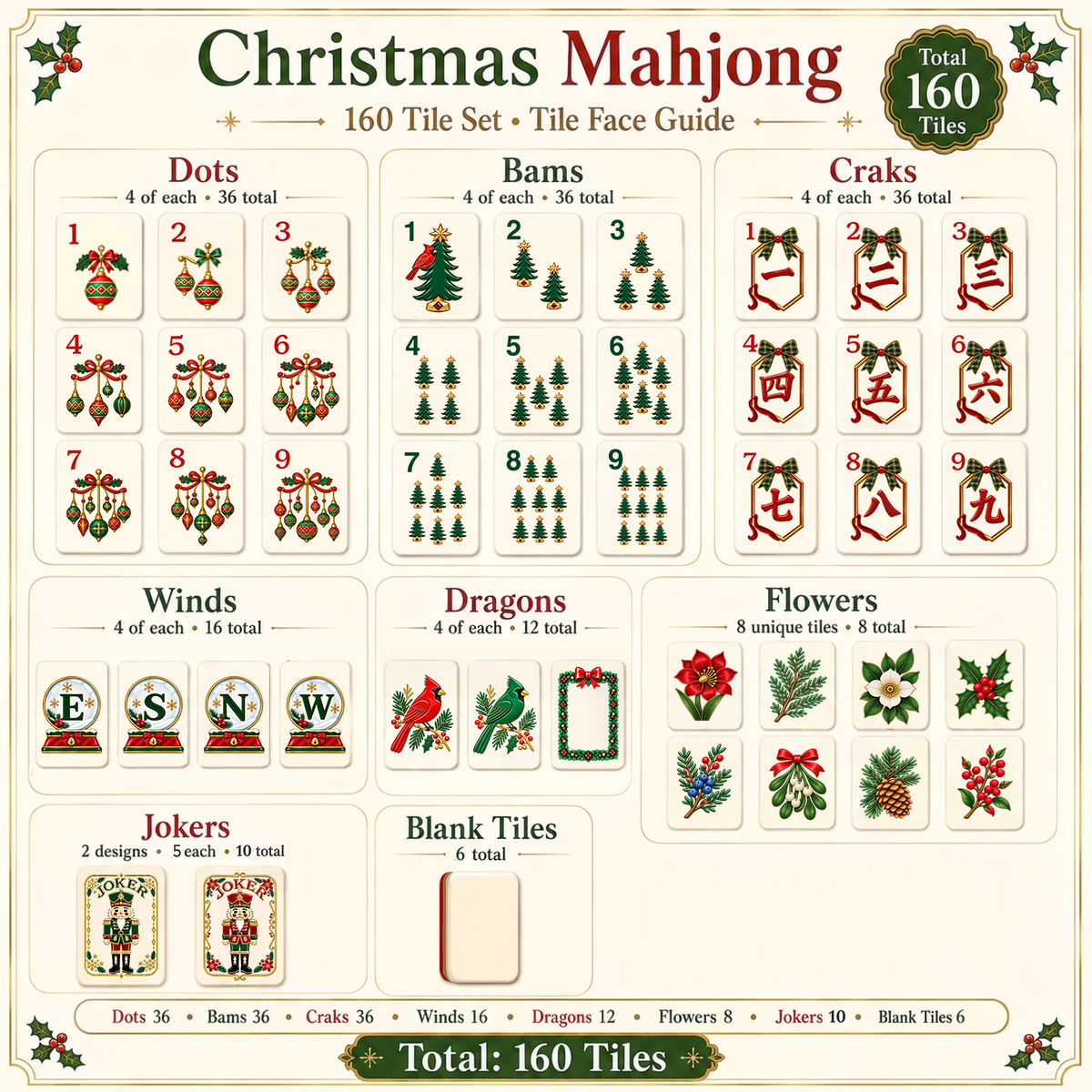
Japanese mahjong tile sets contain 136 tiles—fewer than American sets—and follow Riichi rules rather than the National Mah Jongg League card. Each suit (Bam, Crak, Dot) has one through nine tiles in four copies; four winds (16 tiles) and three dragons (12 tiles) complete the core deck. Japanese sets often display characters in kanji; American sets use Western numerals or dots. If you're an American player trying Japanese mahjong occasionally, you'll need a separate 136-tile set; most of us stick with our best-selling American sets because the rules and hand combinations are so different. Expect to pay for a quality Japanese set what you would for an American one, though the tile count is lower. The main catch: Japanese and American mahjong are nearly incompatible games—learning both takes real time, and most weekly games stick to one standard.
What is Japanese mahjong, and how do the rules differ?
Japanese mahjong (also called Riichi mahjong) follows a completely different rulebook from American mahjong. Players draw and discard one tile per turn, calling for sequences (chows) and groups just like Chinese play. American mahjong allows only exposed pungs, kongs, quints and sextets—never sequences—and you must match a hand from the current year's card every single game. In Japanese mahjong, you declare Riichi (ready hand) before winning, and scoring is based on your hand's complexity and value, not a fixed card. If you play American mahjong weekly, switching to Japanese mid-session will confuse your table; most of us keep one standard for consistency.

Can you use a Japanese tile set to play American mahjong?
No. A Japanese 136-tile set lacks enough tiles for the American 152-tile game. American mahjong requires four copies of tiles 1–9 in each suit, four of each wind, and four of each dragon—plus eight flowers and eight jokers. Japanese sets omit flowers, include only three dragons (no White/Soap), and drop the joker count. If you load a Japanese set onto your rack, you'll run short during play and cannot complete legal hands. Always keep your game format and tile set matched; if you're hosting both Japanese and American players, buy two separate sets or ask Japanese guests to use American rules for that night.
How do Japanese tile designs differ from American ones?
Japanese mahjong tiles traditionally display kanji characters (Chinese numerals and symbols) rather than Western numerals or repetitive dot patterns. Bamboo suits often show actual bamboo stalks and character markings; Crak suits feature Chinese coins with calligraphy; Dot suits use circles in various artistic arrangements. Many Japanese sets use bone or resin with hand-painted detail, giving them a more formal aesthetic than mass-produced American acrylic sets. Wind tiles show directional kanji; dragon tiles are labeled with traditional characters. American sets prioritize speed and clarity—large printed numbers and symbols so players across a wide table can read discard piles instantly. If you're buying a Japanese set for display or occasional play, you may prefer the artisanal look; for weekly gaming with non-specialists, our best-selling American sets remain the practical choice because every player reads the tiles at a glance.
🎁 See our most-loved mahjong sets & accessories →
Who should buy a Japanese mahjong tile set?
Buyer Profile | Reason to Buy | What to Check | Cost Basis |
Japanese mahjong enthusiast | Learning or hosting Riichi games regularly | 136-tile count, kanji legibility, Riichi-legal dragon set (three dragons only) | Standard market range for bone/resin sets |
Collector or gift-giver | Beauty, cultural interest, display | Hand-painted detail, material durability, resin vs. bone | Premium for artisanal sets |
Bilingual/cultural center | Teaching both Japanese and American play | Buy two sets (one 136-tile, one 152-tile) to avoid confusion | Double the cost of one set |
Occasional player | Curiosity about the game | Start with one American set first; revisit if you fall in love with Riichi | Standard American set cost |
Most of us hosting weekly games never need a Japanese set. We learned American mahjong, we bought a quality American set, and we play that standard every week. If Riichi mahjong appeals to you, commit to learning the rulebook thoroughly before buying—the tile count alone will force you to keep your sets separate forever.

What should you check before buying a Japanese mahjong set?
Tile count: Confirm it's 136 tiles, not 144 or 152. A mislabeled set will not work for Riichi play and cannot substitute for an American game.
Dragon configuration: Japanese Riichi mahjong uses only three dragons (Red, Green, White), not the four-dragon American setup. Verify the set contains no "Joker" dragons or extra blanks marketed as jokers.
Legibility: If you're hosting a mixed group, examine sample images of the tiles. Kanji characters and hand-painted detail can be beautiful but hard to read under low light or across a large table. American numerals and clear symbols were designed for speed.
Material: Bone sets are lovely but fragile and expensive. Acrylic or resin sets survive weekly play and travel well; if you're buying to actually play, durability matters more than artistry.
Rule compatibility: Before you buy, confirm every player at your table agrees to learn Riichi rules. Switching mid-year confuses your group and wastes money.
✨ Find your Mahstead set — free US shipping →
Why do most American mahjong players stick with American tile sets?
The simplest answer is rule permanence. Every April, the National Mah Jongg League releases a new card, and American players buy that card and play it for the year. A 152-tile American set, bought once, works for decade after decade—you change the card, not the tiles. Japanese mahjong has no "season"—Riichi play is the same this year and next—but the flip side is that every hand depends on memorizing dozens of scoring combinations and hand types. Most of us chose American mahjong because the card gives us a fixed, manageable set of hands to learn. Adding a Japanese set means doubling your study time and your equipment. Best-selling American mahjong sets come designed for the one standard we all agreed to play; there's real value in that simplicity.
What if you want to host both Japanese and American players?
The cleanest solution: stick to one game for the night. If your group is mostly American, play American mahjong with the current year's card and ask Japanese guests to join the American rules that evening. If you're teaching someone new to Riichi, host a separate Japanese mahjong night with a dedicated Japanese set and a rulebook at the table. Mixing both formats mid-game creates chaos—different tile counts, different hands, different scoring—and no one has fun. If you're serious about both, buy two separate sets, label them clearly, and schedule them on different weeks. Your table will thank you.
Can you modify an American set to play Japanese mahjong?
No. You cannot remove eight jokers and flowers from an American set and call it Japanese; the tile count and legal compositions won't match, and you'll have incomplete groups. Conversely, you cannot add tiles to a Japanese set to play American mahjong—the physical set is what it is. Buying two sets is the only honest path. If budget is tight, start with one American set (the game you're playing this week) and save for a Japanese set if you fall in love with Riichi play later.
🀄 Shop best-selling mahjong sets →

FAQ
Can I play American mahjong with a Japanese tile set?
No. Japanese sets have 136 tiles; American mahjong requires 152. You'll run short of tiles and cannot complete legal hands. Buy the correct set for your game.
What are the main rule differences between Japanese and American mahjong?
Japanese (Riichi) allows sequences and scoring is hand-based and complex. American mahjong has no sequences, only groups, and you must match hands from the current year's League card.
How many tiles are in a Japanese mahjong set?
136 tiles total: three suits (1–9 in four copies each), four winds, three dragons, and two jokers—or slight variations depending on the ruleset.
Should I buy a Japanese set if I only play American mahjong?
Only if you're genuinely interested in learning Riichi play. Otherwise, a Japanese set will sit unused. Commit to the game before buying the equipment.
Why is a Japanese tile set more expensive than I expected?
Hand-painted bone or resin sets carry higher material and labor costs than mass-produced American acrylic. Quality and artistry add to the price; see current pricing on the product page.
Can I mix tiles from a Japanese set with an American set?
No. The tile designs, counts, and legal compositions are incompatible. Keep sets separate and use each only for its intended game.


View More
View More
View More
