
Mahjong Travel Bag Made in USA: Choosing the Right Carry
Last updated: Nov 23, 2026
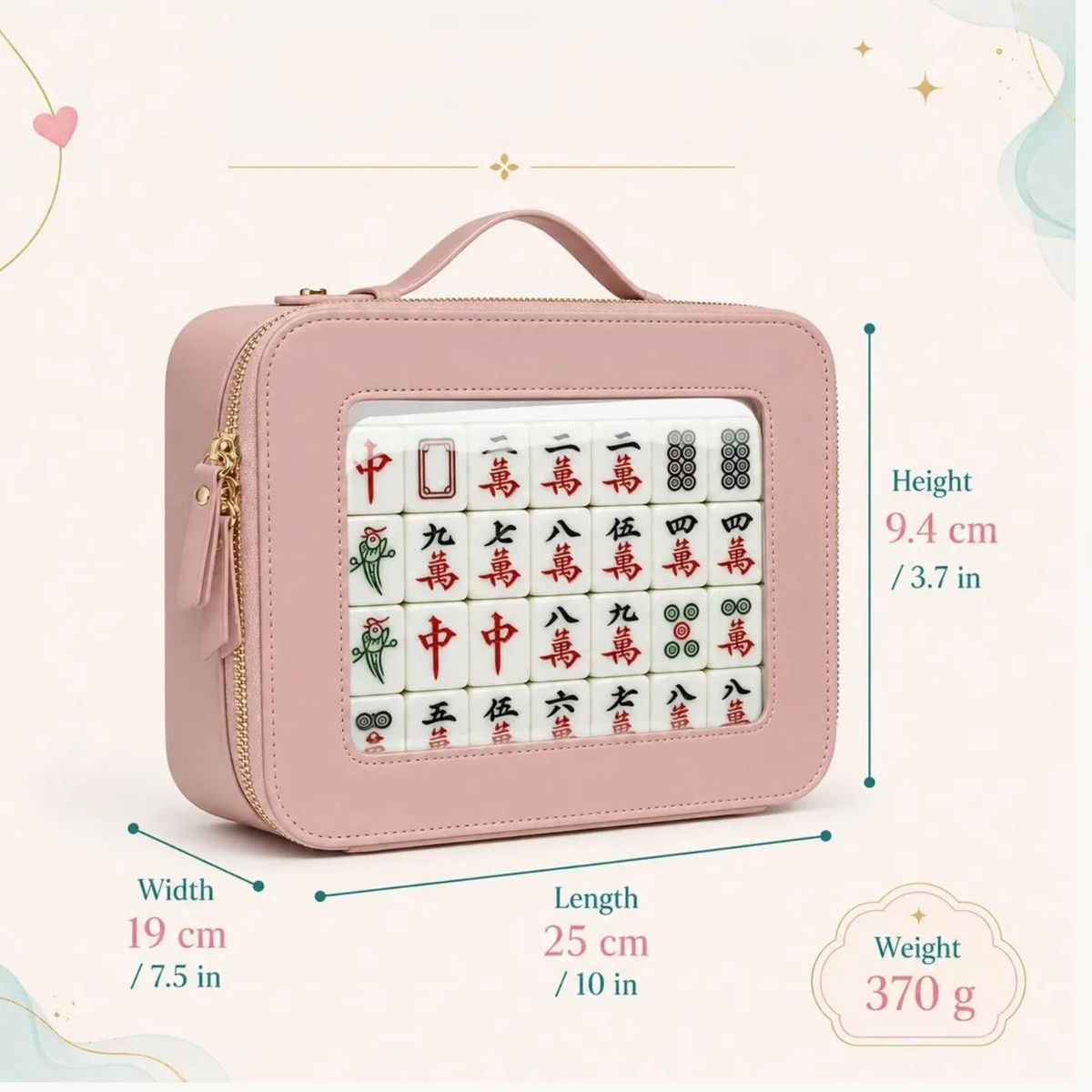
A mahjong travel bag is a carrier designed to hold a 160-tile acrylic set (152 playing tiles plus spares), a mat, racks with pushers, dice and cards—everything needed for a four-player game. Mahstead offers bags and cases in the US with different interiors: some feature padded dividers for tile protection, others offer open compartments suited to players who organize tiles in their own containers. Sizes range from compact totes that fit a set and mat to larger cases that hold a complete game plus extras. Most hold a standard 160-tile set comfortably. Cost varies by material and padding; consider whether you'll travel by car (softer fabric bags work fine) or air/frequent handling (hard cases or padded designs protect better). Choose based on frequency of transport, distance, and how much gear you carry. Free shipping across the US makes ordering online simple—measure your mat and set before ordering to confirm fit.
A mahjong travel bag protects your 160-tile set, mat, racks, dice and card from damage and keeps everything in one place. Whether you host weekly games and move your setup between homes, travel to tournaments, or gift a beginner a complete kit, the right bag saves wear, saves time packing, and keeps tiles from scattering.
🀄 Shop best-selling mahjong sets →
What size bag do I actually need?
A standard American mahjong game uses 152 tiles in a 160-tile acrylic set plus a mat (typically 27–33 inches square), one or two pairs of racks with pushers, dice, and the current year's National Mah Jongg League card. Measure your mat's folded dimensions first—most roll or fold to about 28–34 inches × 10–12 inches when packed. A mid-sized tote or soft case should fit a set box, a rolled or folded mat, and racks. If you carry extras (two sets, backup dice, or snacks for game night), go larger. Oversizing is safer than undersizing; an empty corner beats a cracked tile.
🎁 See our most-loved mahjong sets & accessories →
Soft tote vs. hard case—which protects better?
Style | Best for | Protection | Portability |
Fabric tote | Car trips, weekly home game, one player carries | Moderate; tile box inside must be rigid | Lightweight, easy to store flat |
Padded soft case | Frequent travel, tile sets in loose containers | High; cushioning absorbs impacts | Light enough for one hand, folds partially |
Hard plastic case | Air travel, high-impact environment, multiple sets | Highest; rigid shell protects even dropped bag | Heavier, needs more closet space |
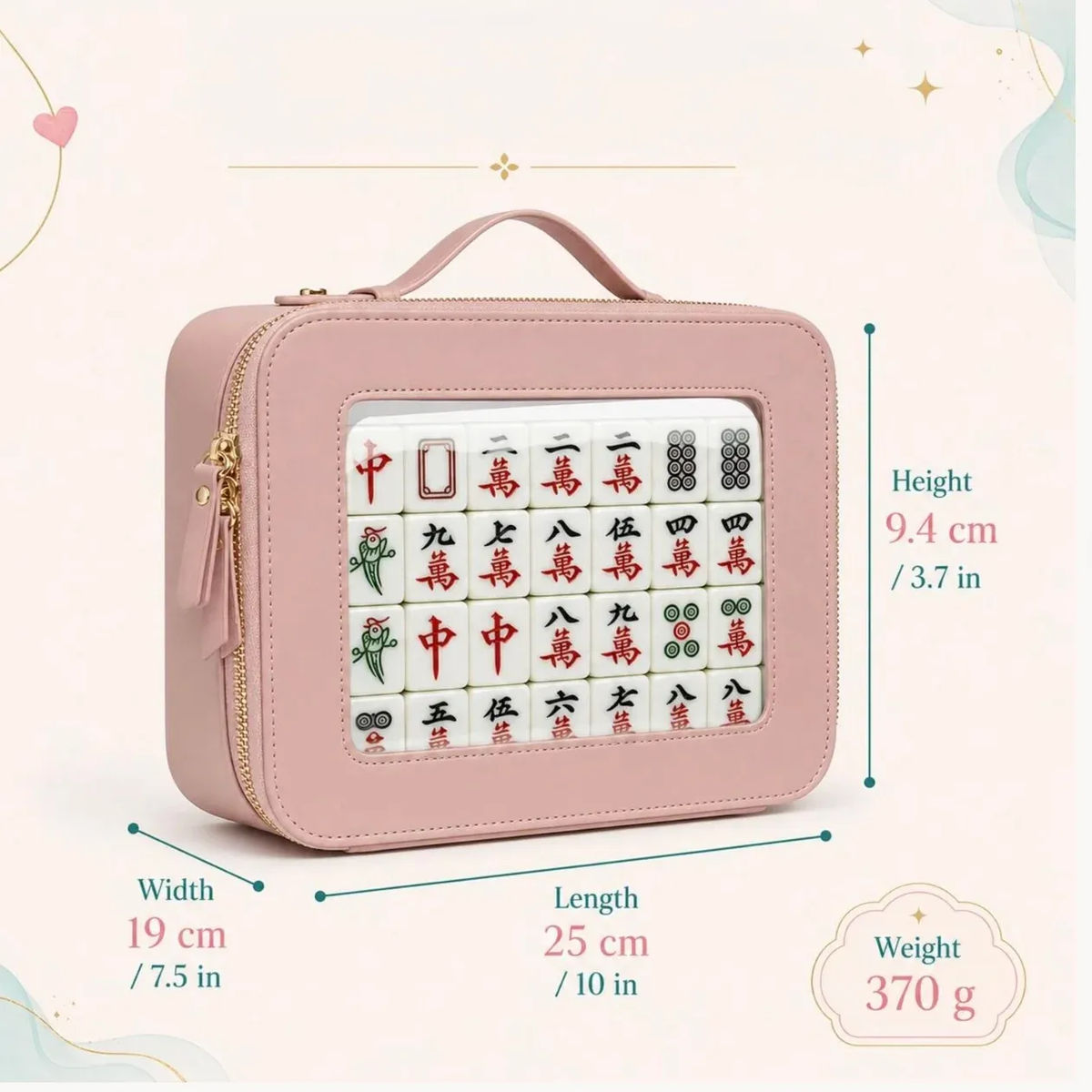
Each material matters. A fabric tote works well for a player who drives weekly to a neighbor's house and keeps her 160-tile set in its original rigid box. Padded cases suit travelers and players who store tiles in individual pouches or small boxes. Hard cases protect acrylic sets during air travel or if a bag is thrown onto a luggage belt. Weigh convenience against risk—a weekly game five minutes away doesn't justify a hard case, but a monthly tournament or annual trip does.
How do Mahstead bags organize tiles and gear?
Mahstead bags and cases are designed around how American players actually pack. Most feature compartments that hold a 160-tile set's box without forcing it, plus room for a folded mat, racks and a small pocket for dice and the reference card. Padded dividers protect tile stacks if you transport loose tiles. Open-compartment designs work best when your set stays in its original rigid box; they save weight and cost. Interior measurements matter: confirm that your mat folds to fit, and that your tile box (typically 11–12 inches long × 3–4 inches tall) sits flat without being jammed. Check the travel-bag collection to compare interior depths and widths against your gear.
What should I check before ordering?
Before adding a travel bag to your cart, write down three measurements: your folded mat's length and width, your tile box's length and height, and your racks' combined length when stacked. Cross-check these against the bag's interior dimensions (not exterior—interior is what matters). Confirm the bag has handles rated for the weight of tiles plus mat (roughly 8–12 pounds for a full game) and can be easily grabbed without straps cutting into your hands. Read whether the bag is machine-washable if you spill snacks or play outdoors. Look at photos showing the interior layout—does it have a pocket for dice and cards, or will you need a separate pouch? Ask yourself: will this bag live in my car, my closet, or a suitcase? That answer shapes whether a tote, soft case or hard case fits your life.
Is a travel bag worth it, or should I just carry loose tiles?
Playing with loose tiles risks three costly problems: tiles scatter or get stepped on mid-game, acrylic cracks under pressure and takes months to replace, and resetting after a spill wastes 15 minutes when everyone wants to deal. A travel bag—even a simple tote—costs far less than replacing a broken set and eliminates setup headaches. If you choose an engraved or title-themed set, which often takes longer to reorder, protection becomes more valuable. A bag also signals respect for the game: it shows your group that you've invested in clean, organized play. Teams that travel to tournaments or play at multiple venues consider a case essential.
✨ Find your Mahstead set — free US shipping →
What fits in a travel bag besides tiles and mat?
Most Mahstead bags include or accommodate a small pocket sized for dice (roughly 1 inch cube each), the annual National Mah Jongg League reference card (typically 5 × 8 inches), and a pen for scoring. Some players also carry a small notebook or scorepad. A padded case with dividers can hold two pairs of racks with pushers stacked flat. Snacks and drinks stay outside the bag—tile dust and juice don't mix. If your group likes to play with different mahjong mats, choose a larger case that fits two rolled mats. Bonus: you can store extra jokers, blank tiles from spares, or house-rule cards in a small zippered pocket.
Made in USA: why that matters for your purchase
Mahstead designs and fulfills mahjong travel bags in Dallas, Texas with free shipping across the US. Ordering domestic means you receive your bag within a predictable timeframe, can reach customer support easily if questions arise, and support a US-based maker of American mahjong equipment. A travel bag is something you'll use for years; a US-made product often reflects quality control and material durability that international dropship operations can't match. When you buy local, your money stays in the American mahjong community.
What to check before you buy
Measure your mat folded. Mats are the widest item; if it doesn't fit, nothing else will.
Confirm interior width and depth, not just advertised capacity.
Verify your tile box fits flat without being crushed by straps or zippers.
Test handles on a prototype or photo—can you grab it one-handed without pain?
Pick material based on transport method: tote for car, padded case for frequent travel, hard case for air/rough handling.
Plan for growth: if you're new to the game and might add a second set or custom-engraved tiles later, buy a bag slightly larger than you need today.

FAQ
Can one travel bag hold two complete mahjong sets?
Most mid-sized bags hold one set plus a mat comfortably. Hard cases are sometimes large enough for two set boxes stacked, but confirm interior depth first. If you regularly carry two sets, choose a large or oversized case rated for the weight.
Do I need a special bag if I travel by plane?
Hard-shell cases or heavily padded soft cases are safer for air travel because luggage handlers throw bags. A 160-tile acrylic set in a rigid case survives baggage claim; a tote with tiles in loose containers can crack. Carry the mahjong bag as checked luggage, not a carry-on, to avoid size restrictions.
What's the difference between a travel bag and a storage case?
Travel bags have reinforced handles and are designed to move frequently. Storage cases prioritize protection over portability and often stay in one closet. For weekly games at different homes, buy a travel bag; for a set that lives in one place, a simple protective case works fine.
Can I fit a mahjong table cover or mat organizer in the bag?
Most travel bags fit a single folded mat. A padded mahjong mat organizer or mat bag inside a larger travel case is possible but tight. Measure both before ordering.
Do Mahstead bags come with tile organizers or dividers included?
Interior layout varies by style. Some bags feature padded compartments; others are open. Check product photos and descriptions to confirm whether dividers or organizers are included or sold separately.
What if my bag arrives and my mat doesn't fit?
Contact Mahstead customer support to discuss dimensions and options. Free US shipping also applies to returns and exchanges, so you can try a different size.


View More
View More
View More
