
Mahjong Travel Bag Buying Guide: Pick the Right Case
Last updated: Nov 23, 2026
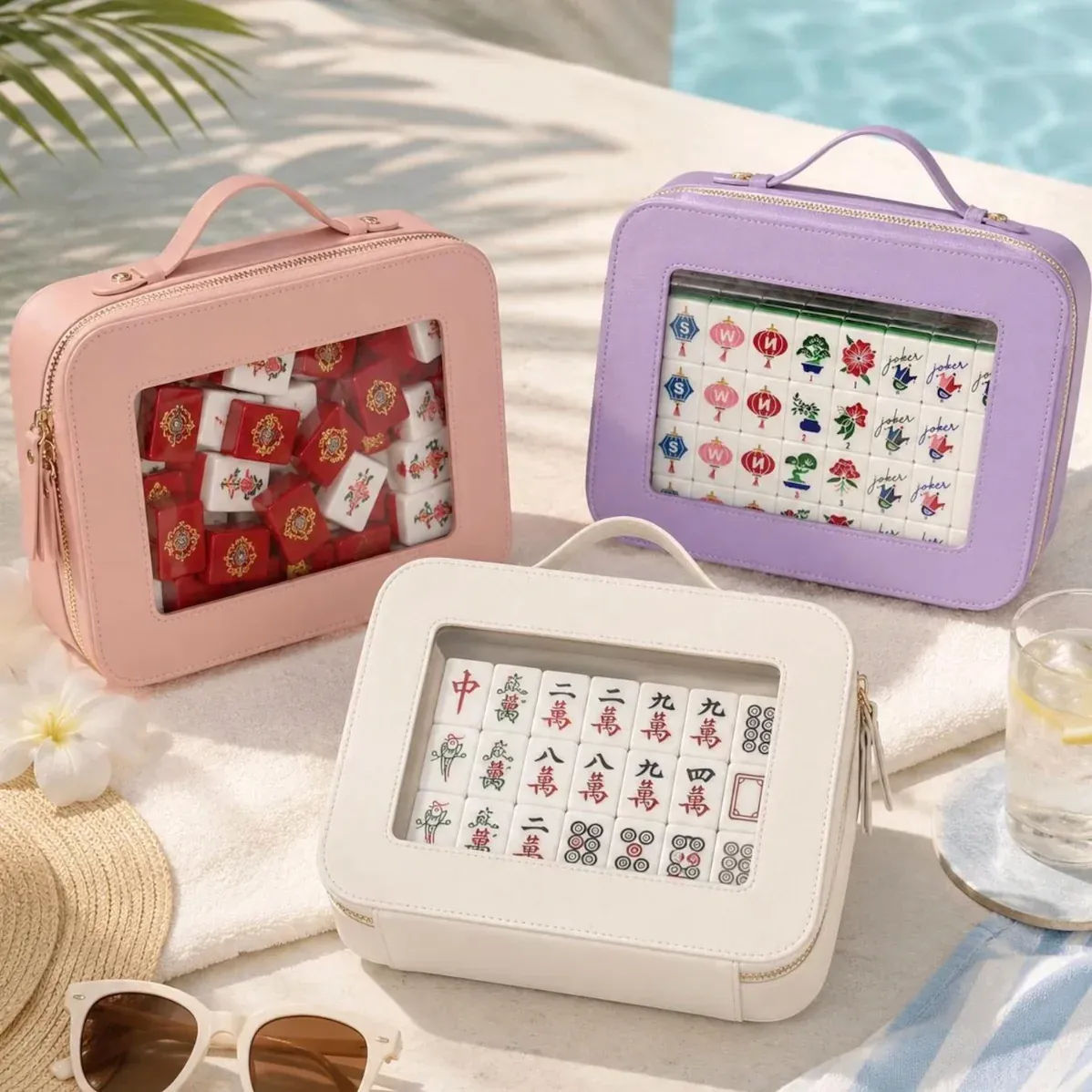
A mahjong travel bag is a protective carrier designed to hold a 160-tile American mahjong set, mat, racks and accessories—keeping tiles, tiles and pushing accessories safe during transport to weekly games or events. Bags range from soft drawstring pouches (ideal for casual players who carry only a set) to rigid cases with compartments (built for hosts who transport mats, racks and multiple accessories). Most players choose a bag based on three factors: what gear they transport regularly, whether they play at home or rotate venues, and how often they travel with their set. Mahstead offers travel bags and cases in various sizes and styles to match different needs—from compact sets to full host kits. Soft bags cost less and pack flat; hard cases cost more but offer maximum protection. Choose soft if you carry only a set; choose hard if you transport a mat or host multiple sets weekly. 🀄 Shop best-selling mahjong sets →
What size bag do I actually need?
Your bag size depends entirely on what you carry to the table. A single 160-tile set (with racks and dice) fits in a compact 8×6×4 inch soft bag. Add a nylon mat and you'll need at least a 12×10×6 inch bag or a small hard case. If you host and move two sets plus mat and pushers weekly, you'll want a large hard case or soft duffel measuring 16×12×8 inches or larger. Before shopping, lay out your exact gear on your kitchen table, measure the footprint, and add 2 inches in each dimension for padding and seams.

Soft bag vs. hard case—which protects your tiles better?
Soft bags (canvas, nylon or padded polyester) flex and absorb minor bumps; they're lighter, pack flat in a closet, and cost less. Hard cases (plastic or composite shell) create a rigid shield against crushing, pressure and impact—critical if you travel by car to rotating venues or if your set contains irreplaceable engraved tiles. Soft bags work fine if you carry your gear 5 minutes to a friend's house every week. Hard cases justify the investment if you play at multiple locations, travel by public transit, or store your set in a crowded closet where other items might press down. Choose soft for convenience; choose hard for genuine peace of mind.
✨ Find your travel bag on our collection →
What features make a bag worth the money?
The best travel bags include internal dividers or zippered pockets (to separate set from mat from racks), reinforced handles rated for at least 15 pounds (so they don't tear mid-game), and a moisture-resistant outer shell (protecting acrylic tiles from humidity and spills). Some bags have a removable shoulder strap for hands-free carry; others offer a key fob holder so you don't lose access to your venue. Check the seams—stitched is stronger than glued. If you're buying a hard case, verify the latch system actually closes securely and the hinges don't rattle. Many players buy a bag that's 1–2 inches larger than their immediate needs, because your hobby grows—you'll eventually own a second set or want space for mahjong books, score pads and the current year's card.
How do engraved sets change your bag choice?
An engraved American mahjong set carries more weight emotionally and financially than a standard set—making protective case selection non-negotiable. Engraved tiles can't be replaced; a crack in a personalized tile means the whole set degrades in value and playability. This fact alone justifies upgrading from a soft bag to a hard case or a premium soft bag with thick padding. If your set bears a joke, a wedding year or a player's initials, treat it like a musical instrument: use a rigid case or a padded soft case with external armor, store it in a climate-controlled space, and never throw it in a car trunk loose. The cost of a proper travel bag is always less than re-ordering an engraved set.

Should you buy a bag with your set, or shop separately?
Buying a set and bag together costs less per item than purchasing them separately—many retailers bundle them. However, bundled bags are often generic and may not match your actual transport needs or play style. If your bundle includes a soft bag but you play at five different venues, you'll buy a hard case later anyway. Our advice: if you love the bundled bag's design, take it. If it feels like an afterthought, buy the best-selling mahjong set you want, then choose a travel bag separately based on your real schedule and gear list. Shopping separately adds 10 minutes but saves regret and future purchases.
Bag Type | Best For | Typical Weight | Primary Advantage | Trade-off |
Soft drawstring | Casual player, one set, short drives | 4–6 oz | Lightweight, packs flat, low cost | Minimal impact protection |
Padded soft bag | Weekly host, one set + mat | 12–16 oz | Good protection, flexible, easier storage | Not rigid against crushing |
Hard plastic case | Multi-venue player, engraved set, transit | 2–3 lbs | Maximum protection, rigid, professional look | Heavier, takes closet space |
Soft duffel (large) | Host moving 2+ sets weekly | 1.5–2 lbs | Fits multiple sets + mat + racks, organized pockets | Requires careful packing |
🎁 See our most-loved mahjong sets & accessories →
What to check before you buy
Before ordering a travel bag, confirm these three things:
Dimensions fit your set + extras. Measure your set in its retail box or current bag. Add your mat dimensions if you carry one. Cross-check the bag's stated interior dimensions—not exterior. Many hard cases list only outside measurements.
Weight capacity and handle design. A 160-tile set plus mat plus racks weighs 8–12 pounds. Your bag's handles should support at least 15 pounds without strain. Test carry-weight if buying in person; if ordering online, read the material spec (reinforced stitching, webbing handles, or metal frame).
Compartment layout matches your gear. If you move a set and mat but also score pads, the current year's card and dice, verify the bag has separate pockets for small items. Loose tiles and paper mix poorly—tiles can scratch, paper absorbs moisture.
Climate control in your storage space. Acrylic tiles are temperature-sensitive. A bag alone won't protect a set stored in an unheated garage in winter or a hot attic in summer. If you live in an extreme climate, add a silica packet inside the bag and store it in a temperature-stable closet.
How do racks and mats integrate with your bag choice?
If you carry mahjong racks with pushers every week, you need a bag with dedicated slots or at least 2 extra inches of depth. Racks are fragile—the pusher rods can crack if bent or crushed. A nylon mahjong mat is bulky but light; rolling it tightly and storing it vertically in a bag's side pocket saves space. Many players keep a second soft bag just for the mat, then transport the set and racks in a hard case—this eliminates compression damage and simplifies venue setup. Think of your bag system as an ecosystem: if you're hosting, each item might benefit from its own protective layer.
✨ Find your Mahstead set — free US shipping →
Why Mahstead bags fit American mahjong sets perfectly
We design our travel bags and cases around the exact dimensions of a 160-tile American mahjong set—160 tiles plus jokers, racks, mat and dice. Our soft bags are padded on the bottom and sides, with reinforced corners where stress concentrates. Hard cases include removable dividers so you can configure the interior for a single set, or compress two sets side-by-side for a host who rotates venues. Every bag includes a moisture-resistant outer shell and is shipped flat to minimize packaging waste. We've been told by players that our bags integrate seamlessly with our mahjong mats—the mat rolls fit neatly in designated slots, and racks nest without rattling. All bags ship free across the US, so the decision is purely which style and size solve your weekly game.
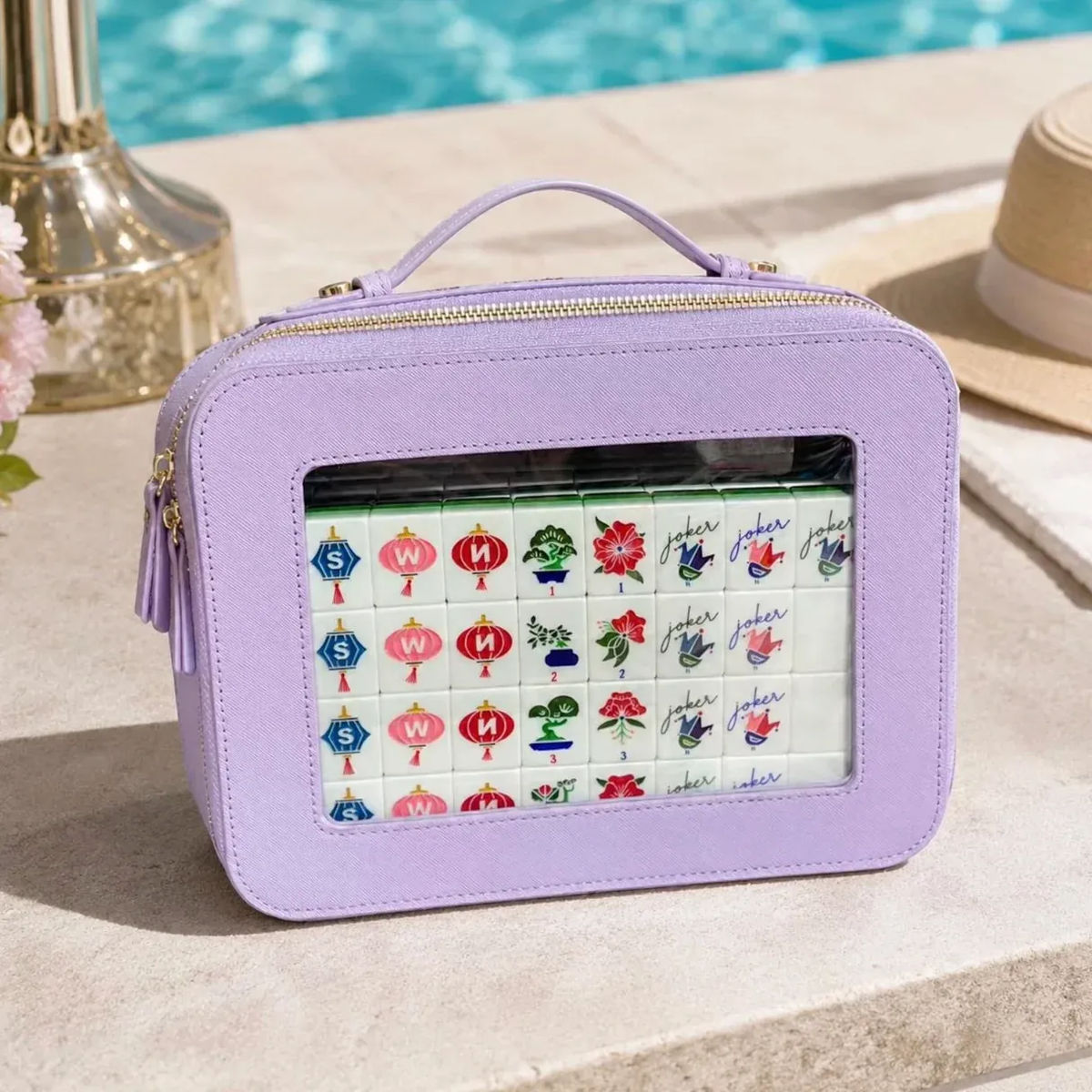
FAQ
Can I fit a mahjong mat rolled tightly inside a soft travel bag along with my set?
Yes, if you roll the mat tightly and place it vertically in a large soft bag (12+ inches tall). The mat's nylon material compresses slightly; store it flat after each use to avoid permanent creasing. Hard cases often have a designated mat slot that's cleaner.
Do I need a separate bag for my pushers and racks, or do they fit in the same case as my set?
Racks and pushers (three to four pieces per player) fit inside a medium or large travel bag alongside a set if packed carefully—lay the set in the bottom, then nest racks on top. For frequent transport, a dedicated soft pouch for racks alone prevents pusher rods from cracking under pressure.
What's the difference between a travel bag and a storage case for a mahjong set I keep at home?
Travel bags prioritize portability (handles, lightweight materials, compact shape) and impact protection during transit. Storage cases prioritize space efficiency and climate control for long-term closet or shelf storage. A travel bag works for both, but a storage-focused case is often cheaper and bulkier.
My set is engraved with a date and player names—does this change what bag I should buy?
Absolutely. Engraved tiles cannot be replaced individually; damage is permanent and devalues the set. Invest in a hard case or premium padded soft bag for an engraved set. Store it in a climate-controlled space and use the bag every time you transport it, even for short drives.
How do I know if a travel bag's interior dimensions are large enough before I order online?
Measure your current set in its retail packaging or original box (roughly 9×7×3 inches for a standard set). Add your mat's rolled dimensions if you carry one. Request the bag's interior dimensions from the seller, not just exterior size—material thickness can eat up 1–2 inches. Compare the interior depth, width and height to your gear's measurements, then add 1 inch for padding and easy packing.
Can I wash or wipe down the inside of a travel bag to remove dust or tile residue?
Yes, soft bags can be gently vacuumed inside or wiped with a dry cloth. Do not use water inside a soft bag unless the interior is labeled waterproof. Hard cases can be wiped with a damp cloth and dried immediately. Remove your set before cleaning to avoid moisture damage to tiles or accessories.
What's the best way to pack a travel bag so tiles don't shift or rattle during a car ride?
Place the set's box or your tile carrier in the bag's center, then surround it with racks, mat (rolled) and smaller items like dice and score pads. Fill any gaps with bubble wrap or soft cloth to prevent sliding. If you're carrying the set loose (not in a box), place it on the bag's padded bottom and build a cushion wall around it with rolled cloth or foam.
Should I buy a bag that's larger than I need now, expecting to add more sets later?
If you play weekly and enjoy the hobby, you'll likely own a second set or want space for accessories within 1–2 years—so yes, buying a bag 1–2 sizes larger is smart. A 16-inch case that seems oversized today becomes perfect when you host two sets. Conversely, if this is your first set and you're unsure about long-term commitment, buy the bag that fits your current gear exactly.


View More
View More
View More
