
Mahjong Tote: How to Choose the Right Bag for Your Set
Last updated: Nov 23, 2026
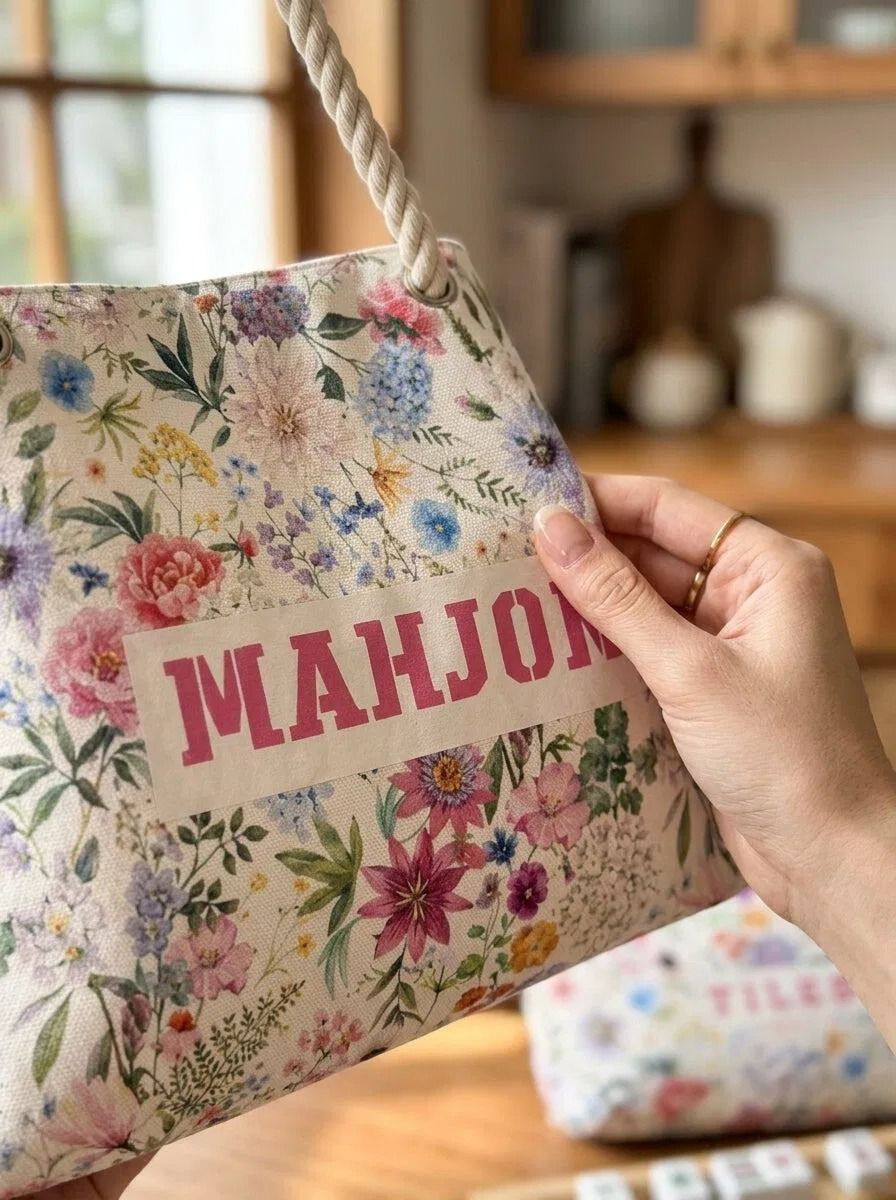
A mahjong tote is a carrying bag designed to hold a complete 160-tile American mahjong set, often including room for a mat, racks with pushers, and dice. Most players choose between padded canvas or nylon totes that cushion tiles, hard cases that protect against crushing, and soft drawstring bags for lightweight portability. Totes range in capacity from compact single-set carriers to expandable designs holding multiple sets. We recommend starting with a padded tote if you play weekly with the same group, or a hard case if you travel frequently or store sets long-term. Before ordering, measure your set's case depth (usually 3–4 inches), check that your mat rolls or folds to fit the designated pocket, and confirm the racks and pushers nest inside without forcing corners. Mahstead's travel bag collection includes options sized for acrylic tile sets with storage for accessories. 🎁 See our most-loved mahjong sets & accessories →
What does a mahjong tote actually hold?
A standard mahjong tote houses one complete 160-tile acrylic set (typically 3–4 inches tall when stacked in its case), a rolled or folded mat (6–8 inches when compressed), one or two racks with pushers, and dice. Most totes have an interior zippered pocket for scorecards, the current National Mah Jongg League card, and small accessories like tile markers or a pen. Premium totes add reinforced corners, handle padding, and removable dividers so you can separate tiles from felt to prevent scratching. If you pack a second set, you'll need a larger travel bag or accept that one set rides loose beside the other. We've found that players who host rotating games or teach mahjong to newcomers often outgrow a single-set tote within six months and upgrade to a multi-set carrier.

Padded canvas versus hard cases—which is right for you?
Feature | Padded Canvas Tote | Hard Shell Case |
Tile protection | Good (1/4–1/2 inch foam) | Excellent (rigid shell + foam) |
Weight when packed | 2–4 pounds | 3–5 pounds |
Portability | Soft-sided, squeezes into closets | Rigid, takes defined shelf space |
Best for | Weekly home games, short car trips | Travel, storage between seasons, frequent moves |
Durability | 3–5 years with typical use | 5–10 years, more if rarely dropped |
Typical cost range | Lower entry | Mid to higher |
We choose a padded canvas tote when we know our set stays in our car or closet year-round and travels the same five-mile radius to players' homes. We pick a hard case when the set crosses state lines, lives in a damp garage, or belongs to a community center or synagogue that moves equipment seasonally. Canvas breathes and weighs less; hard cases shrug off spills and stack without concern. Neither is universally "better"—the difference is your ritual and your storage reality.
🀄 Shop best-selling mahjong sets →
How do you know if your tote will fit your set and mat together?
Before ordering, measure three things: your acrylic tile set's case depth (place it on a table and measure from front edge to back), your mat when rolled (loosen the cord and see if it's 8 inches or 10 inches in diameter), and your racks' combined footprint (two racks typically measure 5 inches wide × 3 inches tall). Then check the tote's interior dimensions on the product page—width, height, and depth when laid flat. A tote that's 20 inches wide and 12 inches tall looks spacious but may not fit a rolled mat if the depth is only 4 inches; the mat will bulge the sides. We recommend choosing a tote that's at least 2 inches deeper than your rolled mat and has a designated mat pocket with a draw cord, which prevents tiles from sliding into the mat during travel. If the product page doesn't list internal depth, contact us—vague measurements waste your time and your money.
What features prevent tiles from getting scratched or chipped?
Quality mahjong totes use a two-layer protection system: dense foam padding (at least 1/4 inch) around the tile case's perimeter, and a soft-lined interior (usually fleece or microsuede) that keeps bare acrylic away from canvas seams. Dividers or elastic straps hold your set case upright so tiles don't shift sideways during bumps. Reinforced stitching at the bottom corners spreads weight and reduces creasing, which can eventually crack into the foam. Some players line their tote with a thin yoga mat or bubble wrap before packing, which adds insurance for a dollar's cost. We avoid totes with thin felt lining only; felt pills, sheds, and lets dust into your set. Look for a tote listing "padded compartments" or "foam-lined" in its description, or a hard case mentioning "closed-cell foam" or "impact protection." Mahstead's mahjong bags and cases collection features products tested by players who move their sets weekly.
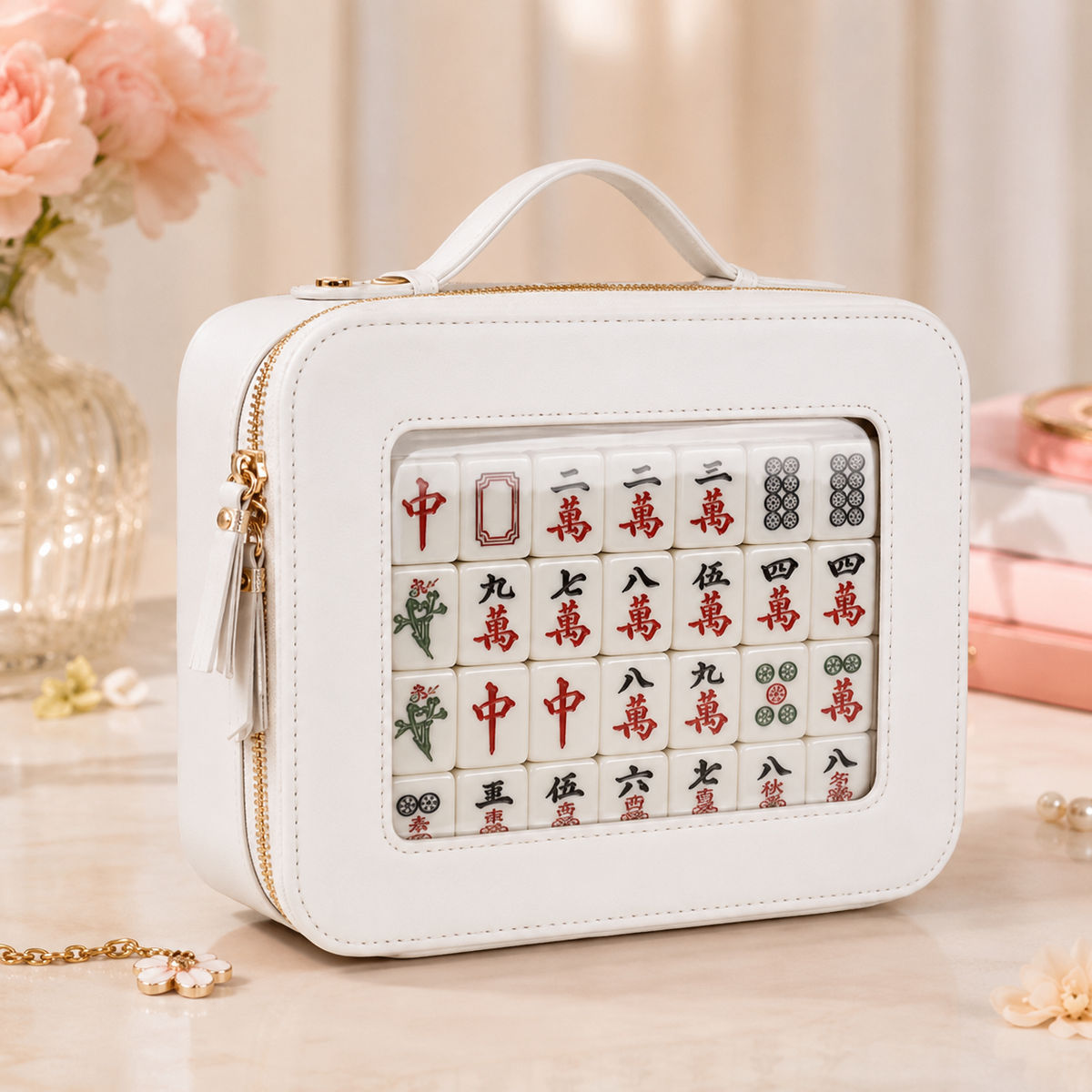
Should you buy a tote sized for one set or a larger multi-set carrier?
Most home players buy a single-set tote; it weighs less, costs less, and never sits half-empty. You'll upgrade to a multi-set carrier only if you teach mahjong to newcomers, host rotating locations, or manage a community group's shared sets. A multi-set tote costs more upfront but saves money per set compared to buying individual totes. The trade-off is weight—a four-set carrier packed fully weighs 15–20 pounds and requires two-handed lifting or wheeled transport. We recommend starting with a single-set tote and buying a second one before a multi-set upgrade, because you may discover over two years that one tote lives in your car, one in your closet, and the multi-set carrier never leaves your garage. Assess your actual playing rhythm: do you play at home 90% of the time? Buy one tote. Do you play at three different locations and teach? Two single-set totes are your friend.
✨ Find your Mahstead set — free US shipping →
How does tote material affect durability in humid or damp storage?
Canvas absorbs moisture and can mildew if left damp in a basement or unheated garage over winter. Nylon and polyester shed water and breathe less, making them better for players in humid climates or those storing sets in non-climate-controlled spaces. We live in Dallas and have watched players with canvas totes stored in garages develop faint mold spots on the exterior after a wet spring. Hard plastic cases protect the interior completely, even if the outside gets wet, because they seal. If you live in a region with seasonal flooding, humidity above 60%, or an unheated storage area, choose a nylon or hard-case tote and store it in a cool, dry cabinet indoors. If you're in a dry climate or a heated home, padded canvas works fine. When packing away for off-season, include a small silica packet inside the tile case to absorb ambient moisture, whether your tote is canvas or hard. This costs almost nothing and adds months to your set's lifespan.
What do you check before ordering a mahjong tote online?
Before you buy, verify:
Interior pocket dimensions listed specifically, not just "roomy" or "generous"
Mat pocket exists and has a draw cord (prevents mat shifting)
Tile case fits when your set is in its original box or storage case
Handles are reinforced at the seam and rated for weight you'll actually carry
Zipper is YKK or equivalent branded (generic zippers fail after 50–100 open/close cycles)
Return or exchange policy in case tote arrives damaged or dimensions don't match description
Padding thickness mentioned (avoid anything claiming protection but listing "thin felt" only)
No reviews mentioning zippers jamming, handles tearing, or padding flattening after weeks
We've also learned to photograph the tote's interior upon arrival, before you pack it. If the foam is cracked, seams are loose, or stitching is uneven, document it immediately. This protects you during any return claim and ensures you get a replacement tote, not a refund that leaves you without a carrier mid-season.
🎁 See our most-loved mahjong sets & accessories →
What's the relationship between tote choice and your mahjong mat?
Your mat type (lightweight felt versus acrylic or fabric) affects tote choice more than many players realize. A felt mat rolls tight and compact; an acrylic or heavy fabric mat (which protects your playing surface from drink spills and dust) is stiffer and requires a larger or flatter pocket to avoid permanent creasing. If you use a heavier mat, choose a tote with a minimum 10-inch-wide, 2-inch-deep mat pocket, not a narrow tube. We've seen players arrive at games with creased mats that pop or split at the seams within a season because the tote compressed them too tightly. If you're also shopping for a mat, our mahjong mats collection includes rolls that fit most standard tote pockets. Some totes ship with a mat; confirm on the product page whether the mat is included or sold separately so you don't buy duplicate accessories.
Our pick: Start by measuring your current set and mat (or the dimensions listed on the Mahstead product page if you're buying a new set together). Then match those measurements to the tote's interior specs. If you're in doubt, a mid-sized padded canvas tote with a reinforced bottom and a dedicated mat pocket works for 90% of home players. From there, your second choice will be easier because you'll know your real needs.
✨ Find your Mahstead set — free US shipping →

FAQ
Can I fit a mahjong set and mats in a regular duffel bag or large purse?
Technically yes, but not well. Acrylic tiles scratch easily on canvas seams and unpadded surfaces. A duffel without interior compartments mixes tiles, racks, and dice together, risking chipped corners and lost pieces. We recommend a tote designed for mahjong because it's $20–40 more and protects a set worth several hundred dollars. Use a regular duffel only as a last resort for one short car ride.
How much does a typical mahjong tote weigh when packed?
A single-set padded canvas tote with tiles, mat, racks, and dice weighs between 2 and 4 pounds, depending on the tote material and foam density. A hard case adds another pound or two. This is manageable for one-handed carry over short distances; anything heavier than 5 pounds should have padded handles and a shoulder strap option.
Do I need to pack my tiles in their original case inside the tote, or can they sit loose?
Always keep tiles in their original case or a sturdy plastic box inside the tote. Loose tiles shift during travel, tiles crack when they collide, and small pieces fall out of open boxes. The case holds tiles upright and organized so you can access them quickly at the game. This is the single most important rule for tile longevity.
What's the difference between a mahjong tote and a jewelry or tool organizer bag?
Jewelry and tool bags lack the specialized padding and mat pockets mahjong players need. They're also usually too small to fit a complete set with a rolled mat. A true mahjong tote has compartments sized for a tile case (typically 3–5 inches deep), elastic straps or dividers to hold it still, and a dedicated pocket for your mat. Don't try to repurpose a generic organizer; you'll spend time cramming and risk damage.
Can I travel by plane with a mahjong set in a tote bag as a carry-on or checked luggage?
Carry-on depends on the tote's size and your airline's carry-on dimension limits—a small padded canvas tote under 22 × 14 × 9 inches usually fits. Checked luggage has no size limits for mahjong sets. No TSA or federal rules prohibit mahjong sets (they're not weapons or hazmat). We recommend a hard case or padded tote with reinforced corners if you're checking luggage, as baggage handlers don't baby soft cases. Always pack the tiles in the middle of your suitcase, surrounded by soft clothing, not at an edge or corner.
Should I buy a tote that includes a mahjong set, or buy the set and tote separately?
Buy separately if you already own a set you love or if the bundled set doesn't match your style or tile preferences. Bundles save money per item but lock you into one set design. Most of our best-selling mahjong sets are sold individually, so you can pair them with the exact tote you want. Bundles work if you're a beginner buying everything at once and want simplicity.


View More
View More
View More
