
Mahjong Tiles with English Numbers: What They Are & Why
Last updated: Nov 23, 2026
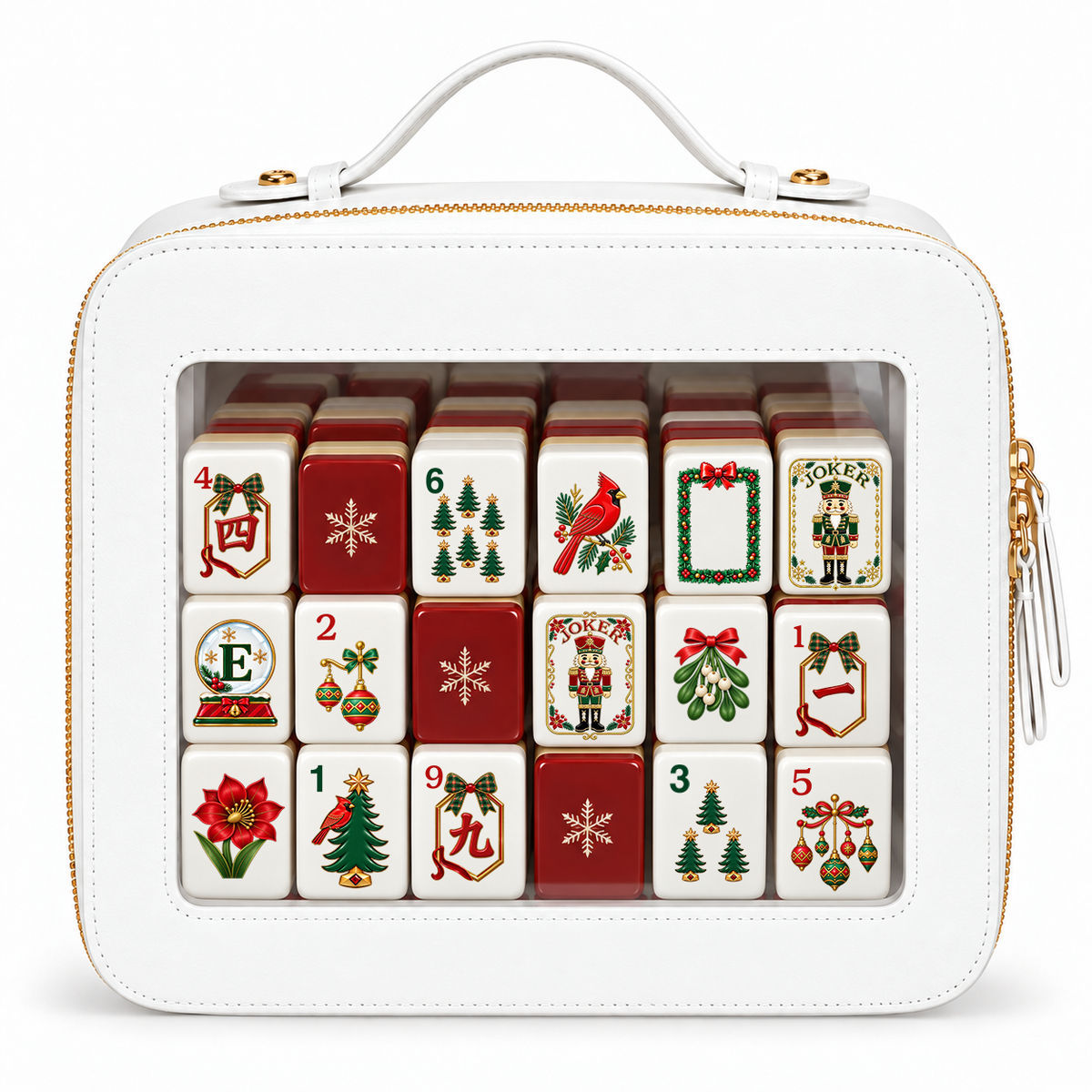
English-numbered mahjong tiles display Arabic numerals (1–9) and printed suit names (Bam, Crak, Dot) instead of Chinese characters and symbols, eliminating the learning curve for Western players. All tiles function identically to traditional tiles in play—the numbering is purely visual. Most modern American mahjong sets, including our best-selling collection, use English numbers on acrylic tiles. A standard 152-tile set costs varies; see current price on product pages. English tiles are optional—many experienced players prefer traditional faces—but they're nearly universal for teaching, casual groups, and traveling players. The tiles themselves are made from durable acrylic, engraved or printed with numbers, and often customizable with names, dates, or logos for gifting.
Why do beginners need English numbers on mahjong tiles?
English numbers eliminate the barrier of memorizing Chinese symbols. A new player opens the hand and instantly sees "1 Dot," "5 Crak," "9 Bam" rather than puzzling over glyphs. This cuts study time from weeks to hours. Experienced players still recognize traditional tiles by shape and color alone, but English numerals let new hands read cards, practice patterns, and follow strategy without squinting at a reference sheet every turn. Once you're confident, you can switch to traditional faces—but most casual groups stick with English because it keeps the game flowing and welcoming.

What makes English tiles different from traditional Chinese mahjong tiles?
Traditional tiles use Chinese characters (万 for Bam, 筒 for Crak, 索 for Dot) and decorative artwork; winds and dragons rely on kanji (北, 東, etc.). English versions replace these with printed or engraved numbers and suit names on the tile face. The tile structure and function remain unchanged—a pung of 5 Dots is still a pung, jokers work the same way, and all American mahjong rules apply identically. Some players prefer traditional aesthetics; others find them harder to read under dim lighting or at distance. The choice is purely personal preference after you've learned the game.
How do English numbers work in American mahjong play?
In American mahjong, you match tiles to a hand pattern from the current year's National Mah Jongg League card. The card shows hand names (e.g., "Like Numbers") alongside tile symbols; English-numbered sets translate those symbols into readable numbers. For example, a hand calling for three identical 7 Craks works the same whether your tiles say "7 Crak" in English or show the traditional Crak symbol. You still draw, pass, discard, and call hands using the same rules. The card itself remains traditional—you learn to read it—but your tiles in hand are legible. This hybrid approach works because American mahjong is rules-based and card-driven, not symbol-dependent like Chinese or Hong Kong variants.
Can you mix English-numbered tiles with traditional ones?
Technically yes, but not recommended during organized play. If you're hosting a casual kitchen game and half your players own English tiles and half own traditional ones, mixing sets causes confusion—people misread tiles, slow the game, and second-guess calls. For serious play at clubs or tournaments, all four players use matching sets. For teaching a group where some players own different sets, it's simpler to stay consistent. If you're building a new set for your weekly game, our engraved American mahjong sets come with English numbers and custom options, so everyone can see their hand clearly without strain.
🀄 Shop best-selling mahjong sets →
Which variant of mahjong is English numbering best for?
English-numbered tiles are primarily a Western invention for American mahjong, where the annual card-based hand system and rule standardization make symbol-reading less critical. Hong Kong and Chinese mahjong traditionally use symbol recognition and memory; adding English numbers defeats the skill-building purpose. Riichi (Japanese mahjong) and Taiwanese mahjong also rely on symbol fluency as part of mastery. If you're learning American mahjong in a club, community center, or home game in North America, English tiles are standard. If you're later drawn to Chinese or Hong Kong variants, you'll eventually want to learn traditional faces—but for American play, English is the norm and the most practical choice.

A practical decision table: Choose your set wisely
You are… | Best choice | Why it works | Setup tip |
Brand new to mahjong | English-numbered acrylic set | Read tiles instantly, learn rules faster, fewer frustration pauses | Keep the National Mah Jongg League card handy; reference it during your first five games |
Teaching a group of 4–8 friends | One matching English set per player (or buy one for the group) | Everyone reads the same language; no translation delays; easier to spot mistakes | Buy sets of the same brand/style so color and size are consistent across the table |
Returning player (learned years ago) | Traditional faces or English—your call | Confidence means you recognize tiles by shape; English works if you're rusty | If rusty, use English for the first few weeks, then switch to traditional once you regain speed |
Traveling or gifting | Engraved English-numbered set in a travel bag | Portable, personalized, no room for mix-ups, ready to host anywhere | Pack a mat and racks with pushers; include a card reference sheet |
Serious tournament player | Whatever your club mandates (usually traditional or standardized sets) | Consistency and club rules override personal preference | Verify set requirements with your host or league before buying |
What to check before you buy English-numbered tiles
Tile material and finish. Our acrylic tiles are durable, lightweight, and easy to read under lamp light. Bamboo or bone tiles are heavier and quieter but harder to engrave clearly. Check whether the tiles are laser-engraved (crisp, long-lasting) or printed (prone to fading with heavy use).
Number style and font. Some sets use large, bold numerals; others use small script. If anyone in your group has vision challenges, pick a set with high contrast and large print.
Set completeness. A standard American mahjong set is 152 playing tiles plus 8 jokers. Never mix two incomplete sets hoping they'll make a full game—you'll lose plays mid-hand. Our best-selling sets come as complete, tested units with all tiles counted.
Customization. If you're gifting or hosting regularly, engraved sets with names, dates, or club logos add personality and prevent tiles from getting mixed up across households. Verify lead time if you're ordering engraved tiles before a specific date.
Matching accessories. English-numbered tiles deserve a proper mat, racks, and case so the set stays organized and portable. Mismatched racks or a cracked mat won't do justice to a new set.
🎁 See our most-loved mahjong sets & accessories →
Real-world scenario: Your first game with English tiles
You're hosting four players, none of whom have played in years. You buy a new English-numbered acrylic set. On game night, everyone opens their hand and immediately says aloud what they see: "I have two 3 Dots, a 7 Crak, and three winds." No squinting, no lookups. After the first hand (five minutes of rule reminders), everyone laughs and says, "I remember now." By hand three, the rhythm returns—draw, discard, call—and nobody mentions the tiles again because they're readable and the game flows. You're not winning the World Series next week, but you're hosting regularly, your friends enjoy it, and new players aren't intimidated. That's what English numbers deliver: clarity and confidence. Once your group is comfortable, you can experiment with traditional sets if you want—but English tiles are what got you there.
✨ Find your Mahstead set — free US shipping →
Common mistakes to avoid
Buying a incomplete or mixed-brand set. Never assume "152 tiles" means a full valid game. Count them and verify all four suits are balanced. Mixing tiles from two old sets creates uneven play and discards.
Choosing tiny or faint numbers. If you can't read the tiles from across the table during actual play, English numbering defeats its own purpose.
Forgetting the card. English tiles help you see what you have, but you still need the current year's National Mah Jongg League card to know what hands are valid. Card + tiles + rules = a playable game.
Assuming English tiles work for all mahjong variants. They don't. Hong Kong, Chinese, Riichi, and Taiwanese players expect traditional symbols. English is American-specific.
Neglecting storage and transport. Tiles roll, get dusty, and mix with other sets if left loose. A travel bag or case keeps your set intact and ready to host anywhere.

FAQ
Do English-numbered tiles count as "real" mahjong?
Absolutely. English numerals are a visual aid only; the tiles function identically to traditional faces in American mahjong play. The rules, hand patterns, and scoring are unchanged. Many casual and club players use English tiles regularly.
Can I use English tiles in a tournament?
Only if the tournament or host club permits them. Most official American mahjong events accept any complete, unmarked tile set—including English-numbered ones—as long as all players use matching sets. Always verify rules with the organizer before the event.
How long do engraved English numbers last?
Laser-engraved acrylic tiles typically last hundreds of games without fading. Printed numbers may fade with heavy use and frequent shuffling over years. Our engraved sets are designed for long-term play.
Should I buy separate sets for casual play and traditional play?
If you plan to play both American mahjong (casual) and Chinese/Hong Kong mahjong (serious study), yes—two sets make sense. But if you're just learning American, one English-numbered set is enough; you can add traditional tiles later if your group grows into other variants.
What size tiles are easiest to read?
Standard American mahjong tiles measure roughly 1.25 inches wide. Larger tiles are easier to read but take up more table space and are heavier to handle. Start with standard size; if anyone has vision concerns, pair English numbers with good lighting and enlarged reference cards.
Can I engrave English-numbered tiles with my name or club logo?
Yes. We offer engraved American mahjong sets with custom names, dates, and designs. Engraving adds personality and prevents sets from getting mixed up in shared spaces. Lead time varies; check before ordering for a specific event.


View More
View More
View More
