
Mahjong Tile Art Meaning: Symbols, History & Styles
Last updated: Nov 23, 2026
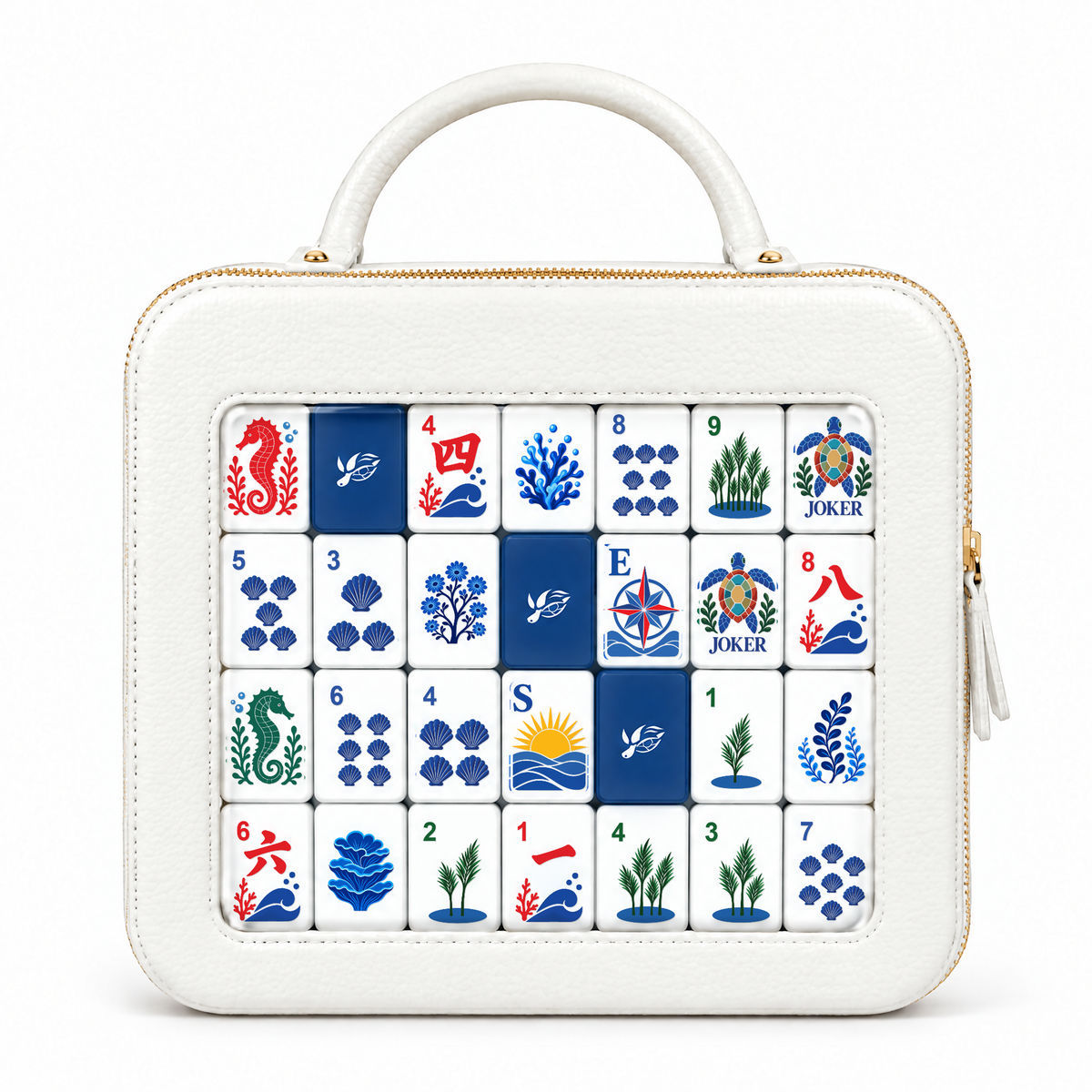
Mahjong tile art encodes meaning across three main languages: the four winds (North, East, South, West) represent cardinal directions and luck; three dragon types—Red, Green, and White—carry traditional symbolism tied to the three primary suits (Craks, Bams, Dots); and flower tiles reference the Chinese zodiac and seasons. The 1 Bam displays a bird (plum blossom or pheasant, depending on design); jokers were added in American mahjong to increase winning combinations. Each design reflects both aesthetic choice and functional gameplay—numbers and suit symbols let players read tiles from a distance, while artistic rendering (from classical hand-painted bone to modern acrylic engraving) preserves cultural heritage. When buying a best-selling American mahjong set, the tile art you choose shapes both how the game feels and what story you carry to the table.
What Do the Four Winds Represent?
The four winds—North, East, South, and West—are cardinal directions tied to Chinese cosmology and fortune-telling. In mahjong, each wind has a seating position and a lucky or unlucky association depending on the player's role (Dealer, Discards, House, or Chair). East is traditionally the strongest (Dealer seat); North is often considered the weakest. Collectors and serious players often favor sets where wind tiles are carved, engraved, or colored distinctly—clearer at a glance during fast play. The symbolic weight of winds appears even in American-only variants, where calling a wind kong (four identical wind tiles) carries specific scoring rules on the card. Your set's wind tile design shouldn't be purely decorative; it must remain legible from 2–3 feet away during play.

Why Do Dragons Have Different Colors and Meanings?
Three dragons appear in every mahjong set: Red, Green, and White. Red (associated with the Crak suit and good fortune) symbolizes strength and happiness; Green (tied to the Bam suit) represents growth and harmony; White (linked to the Dot suit and also serving as zero in many hands) stands for purity and completion. Historically, these colors correspond to the three primary suit types, making dragons a visual shorthand for suit families. In hand-painted sets, dragons are ornate and highly stylized; in modern acrylic or bone sets, they may be minimalist symbols or full-body creatures. The 1 Bam's bird imagery sometimes pairs with dragon symbolism—the pheasant or plum blossom represents spring renewal. When you're reading the current year's National Mah Jongg League card, dragon tiles anchor many hand patterns; choosing a set with bold, distinguishable dragon art prevents costly misreads during play.
🀄 Shop best-selling mahjong sets →
How Do Suit Symbols (Bams, Craks, Dots) Carry Cultural Meaning?
The three suits represent everyday life in ancient China: Bams (bamboo stalks, numbered 1–9) symbolize growth and flexibility; Craks (myriads or ten-thousand-symbol characters, often shown as coins or knots) represent wealth and commerce; Dots (strings or wheels, circles numbered 1–9) stand for unity and wholeness. Early Chinese tiles, hand-carved from bamboo or bone, showed detailed pictorial scenes; modern acrylic or composite sets simplify these to bold numerals plus suit markers. American mahjong requires fast visual parsing—you must identify a tile's suit and number in under a second while the game moves. Sets with high contrast between suit colors (warm Craks vs. cool Bams vs. neutral Dots) and large, clear numerals reduce errors. Engraved or painted suit symbols on acrylic tiles age better than printed decals, which can fade or chip with heavy use. The meaning embedded in each suit informs how experienced players value certain tile combinations—a Crak pung, for instance, is considered more "lucky" in pay calculations by some players, though American scoring follows the card strictly.
What Do the Eight Flower Tiles Symbolize?
Flower tiles (eight in a full set, not part of the playing hand in American mahjong but drawn and discarded like other tiles) represent the four seasons twice: Plum (winter, renewal), Orchid (spring, refinement), Chrysanthemum (autumn, longevity), and Bamboo (summer, flexibility). Each flower links to a Chinese zodiac animal and a virtue; drawing a flower tile is considered auspicious in some variants. In American mahjong, flowers are simply tile types with no special scoring value—they're drawn in turn and either discarded or built into standard pung/kong melds if the card allows. However, many players enjoy collecting sets where flowers are beautifully rendered in full color or with botanical detail, as they add visual richness without affecting gameplay. Beginners sometimes confuse flowers with other tiles because they carry no numerals; a clear design (illustrated flower on a solid background) prevents this mistake.
🎁 See our most-loved mahjong sets & accessories →
How Does Tile Art Style Vary Across Regions and Eras?
Mahjong tile art reflects geography, era, and material: traditional hand-carved bone and bamboo sets (often from Hong Kong or Taiwan) feature intricate calligraphy and painted dragons; mid-20th-century Bakelite or celluloid sets display Art Deco or bright chromatic aesthetics; modern acrylic sets prioritize clarity and durability, with engraved or painted designs. Chinese Classical tiles emphasize brushwork and symbolism; Hong Kong sets tend toward bright reds and greens with ornate borders; American mahjong sets often use bolder numerals and simpler iconography to speed reading. Riichi (Japanese) mahjong tiles include bonus "honor" tiles (terminals and winds) and differ in layout; Taiwanese mahjong uses different tile counts and hand patterns. When choosing an American mahjong set, your aesthetic preference matters—but legibility under table lighting and durability during play matter more. Engraved acrylic tiles resist fading and moisture; painted designs on cheaper materials chip or blur over seasons of weekly games.
Comparison: Tile Art Styles and Practical Trade-Offs
Style | Visual Strength | Best For | Durability | Read Speed | Cost Basis |
Hand-painted bone | Rich detail, traditional symbolism | collectors, slow play, display | 10+ years if stored dry | Slower (ornate) | High |
Engraved acrylic | Clear, modern, durable symbols | weekly players, bright rooms, travel | 5–8 years active use | Fast (bold) | Mid–high |
Printed acrylic | Colorful, affordable | casual players, beginners | 2–3 years, decals fade | Medium | Low–mid |
Bakelite/vintage | Art Deco aesthetic, nostalgia | collectors, special occasions | 5+ years, yellows with age | Variable | Mid–high |

What Should You Check Before Buying a Set Based on Tile Art?
Legibility checklist:
Can you read numerals and suit symbols from 3 feet away under average table light?
Are the four winds clearly distinct from one another (carved or painted differently)?
Do Red, Green, and White dragons stand out in color or engraving depth?
Are joker tiles (if included) visually separated from number tiles?
Durability check:
If tiles are painted, inspect edges and corners for wear on display pieces (online photos).
Engraved or carved tiles resist fading better than printed decals over 2+ years of weekly play.
Ask about finish: lacquered or sealed acrylic holds detail longer than unsealed plastic.
Cultural authenticity:
Sets labeled "Classical" or "Hong Kong" typically preserve traditional symbolism; American-designed sets prioritize functionality over aesthetics.
Handmade sets carry minor variations—accept this as proof of craft, not defect.
When ordering online, check the product description for tile size (standard: 0.8" × 1.3"), material (acrylic, bone composite, resin), and whether art is engraved, painted, or printed. Photos should show tiles under natural light and close-up to reveal detail clarity.
How Does Mahjong Tile Symbolism Differ Across Regional Variants?
American mahjong uses the universal 152-tile Chinese base (winds, dragons, suits, flowers, jokers) but adds eight jokers specifically to increase hand complexity and payoff. Chinese Classical mahjong includes the same core tiles but traditionally excludes flowers from some variants; Hong Kong mahjong often features brighter, more ornate artwork. Riichi (Japanese) mahjong uses all 136 tiles and includes red fives (bonus tiles); Taiwan mahjong uses 120 tiles and strips out some honor tiles entirely. Symbolism remains consistent—winds still represent cardinal luck, dragons embody fortune—but regional art styles diverge. A Hong Kong set's Red Dragon, for example, may show a full creature with scales and flame, whereas an American set might simplify it to a bold red character. Understanding these variants helps you choose a set that matches both your game and your aesthetic preferences. If you play only American mahjong weekly, a 160-tile acrylic set with clear engraved symbols will serve you better than a decorative hand-painted Classical set designed for display.
✨ Find your Mahstead set — free US shipping →
Why Does the 1 Bam Show a Bird Instead of a Numeral?
The 1 Bam's bird (traditionally a pheasant or plum blossom bird) originates in classical Chinese art, where the number one paired with bamboo symbolized spring renewal and good fortune. Rather than a numeral, early mahjong makers hand-painted or carved a small bird to distinguish this tile visually; the design persisted as sets evolved. In gameplay, the 1 Bam functions like any other numbered tile—no special rules or superstitions in American mahjong—but its unique art makes it instantly recognizable and reinforces cultural heritage. Many collectors prize sets where the 1 Bam is exquisitely rendered; casual players rarely notice. For travel and active play, a clear, simple 1 Bam bird (engraved or printed boldly) prevents mix-ups with other tiles during fast discard sequences.
What's the Role of Color in Tile Design and Gameplay?
Color serves two functions: tradition and functionality. Traditional sets use reds (Red Dragons, Craks, East wind), greens (Green Dragons, Bams), and blacks or blues (winds, number characters) to mirror natural symbolism and Chinese cosmology. Functionally, distinct colors speed tile identification—your eye catches a Red Dragon pung (three identical Red tiles) at a glance rather than requiring a close read. American mahjong's fast pace demands high color contrast; sets with muted or pastel schemes increase misreads and slow play. Modern acrylic sets often feature bold, saturated colors; hand-painted sets may use softer, more naturalistic hues that sacrifice speed for beauty. When shopping, prioritize sets where each suit and honor tile category (winds, dragons, flowers) is visually separated by color or shade. Engraved acrylic tiles with two-tone or multi-color inlay (e.g., white numerals on colored background) offer both clarity and elegance.
Honest Takeaway: What Only Matters for Your Game
Tile art meaning enriches mahjong culture but doesn't change winning conditions. What matters in play: legibility, durability, and consistency. A set with exquisite dragon carvings won't help you win if you misread tiles under dim light or if the paint chips after six months. If you host a weekly game, invest in engraved acrylic sets where symbols remain sharp and color-fast for years. If you play once a month and value aesthetics, hand-painted bone is worth the cost and storage care. If you're a beginner or travel frequently, modern acrylic with clear numerals and suit symbols is the practical choice—plus its lighter weight reduces hand fatigue.
The symbolism—winds as compass points, dragons as luck, suits as life categories—is real and beautiful. Learning it deepens your respect for the game. But the first rule of choosing a mahjong set is this: a beautiful tile you misread is worse than a plain tile you read instantly.

FAQ
Does American mahjong use different tile symbols than Chinese or Hong Kong mahjong?
American mahjong uses the same 152-tile base (winds, dragons, suits, flowers) as Chinese Classical, but adds eight jokers to increase hand variety. Symbolism is identical; regional art styles differ. Hong Kong sets tend toward brighter, more ornate designs; American sets prioritize clarity over ornamentation.
What do the Red, Green, and White dragons actually mean?
Red Dragon represents strength and fortune (linked to the Crak suit); Green represents growth and harmony (Bam suit); White represents purity and completion (Dot suit, also serves as zero). Each color historically tied to a suit family, making dragons a visual shorthand during play.
Why does the 1 Bam have a bird instead of the number one?
Tradition: in classical Chinese art, a bird symbolized spring renewal and good fortune alongside bamboo. The design persisted through centuries of tile-making and serves no functional purpose in American mahjong—it's purely cultural heritage and visual distinction.
Should I buy a set based on how beautiful the tile art is?
Beauty matters if you display or collect the set; playability matters if you use it weekly. A gorgeous set with faint numerals or fading paint will frustrate you mid-game. Prioritize legibility and durability, then choose an aesthetic you enjoy within those constraints.
How do I know if a set's tile art will stay clear after a year of play?
Engraved or carved tiles resist fading better than printed decals. Check the product description for material (acrylic, bone, resin) and finish type (engraved, painted, printed). Photos should show close-up detail under natural light; if you can't read tiles in the photo, you won't read them across your table.
Are there other tile symbols beyond winds, dragons, suits, and flowers?
In American mahjong, no—just the 152 core tiles plus jokers. Riichi (Japanese) mahjong includes red fives as bonus tiles; some regional variants use fewer or different honor tiles. The National Mah Jongg League card defines American play; check the current year's card for any updates to hand patterns.
Can I mix tiles from different sets if the symbolism is the same?
Yes, but it's not practical—tile sizes, colors, and wear will look mismatched during play, and you'll struggle reading a mixed set under pressure. Buy a complete, matched set from one manufacturer to ensure consistency.


View More
View More
View More
