
Mahjong Starter Kit for Small Tables: What to Buy
Last updated: Nov 23, 2026
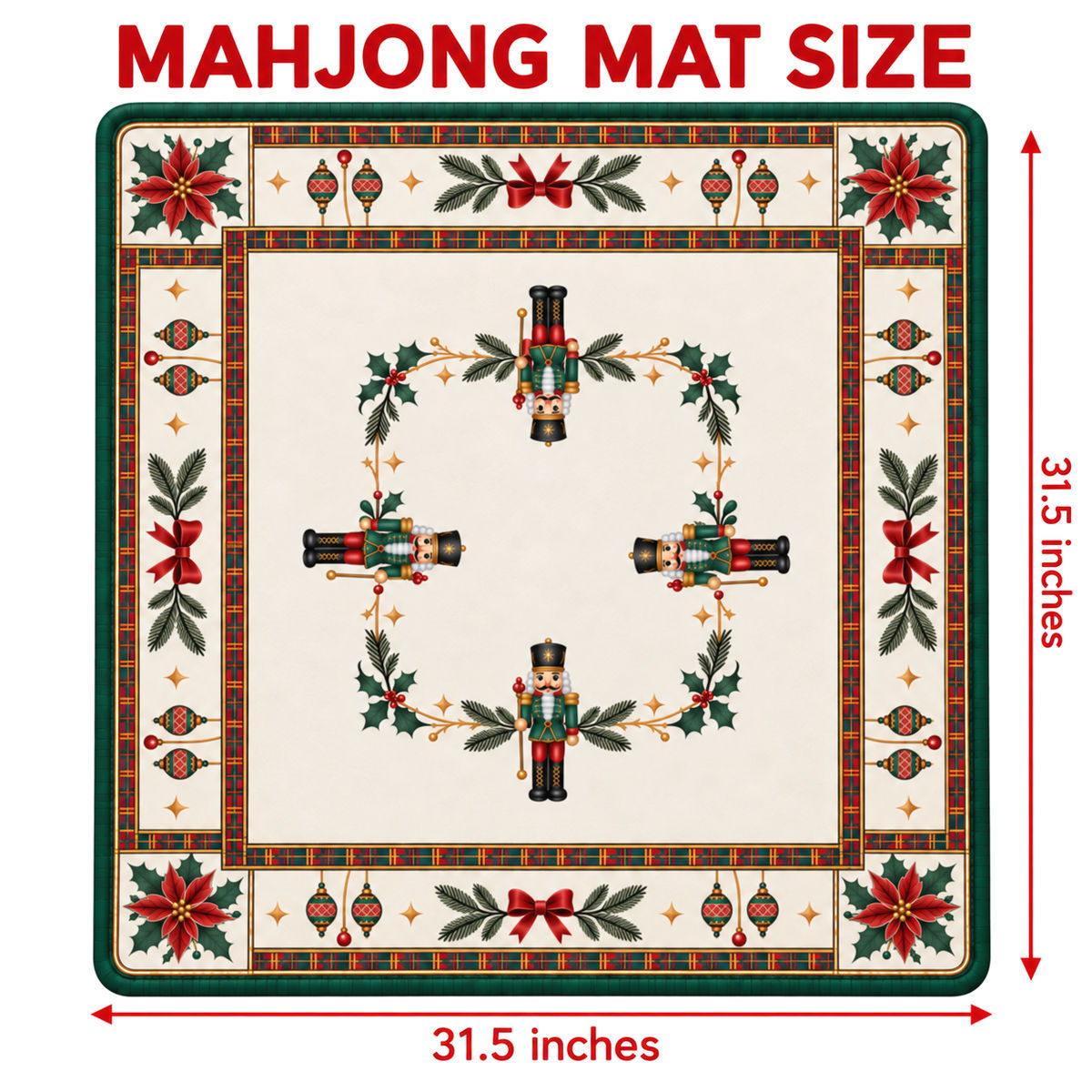
A mahjong starter kit for a small table is not a single branded "kit" but a curated selection: one 160-tile American mahjong set (152 playing tiles plus spares), a mat sized for your table (typically 36–48 inches for 2–4 players), and optionally racks with pushers to organize hands. American mahjong always uses the current year's National Mah Jongg League card to validate hands—no exceptions. Most small-table players buy from the best-selling collection, mix in a coordinating mat (linen or rubber), and skip racks if space is tight. Total cost varies by tile finish (acrylic, bone, bamboo) and mat material; Mahstead offers acrylic sets with free US shipping, so you can add a mat and start within days. The biggest mistake: buying too large a mat or racks without first measuring your table's play area.
What exactly goes into a 160-tile American mahjong set?
An American mahjong set contains 152 playing tiles plus 8 spare tiles (usually extra jokers and blanks). The 152-tile breakdown: 108 suited tiles (36 Bams, 36 Craks, 36 Dots—each numbered 1–9, four copies), 16 winds (four of each: North, East, West, South), 12 dragons (Red, Green, White, four of each), 8 flowers, and 8 jokers. The what's in a set guide covers tile symbols and counts in depth. Each suit tile shows its number and a picture (1 Bam has a bird; Craks show sticks; Dots are circles). You play with exactly 152 tiles in a 4-player game; the 8 spares stay in the box. For small tables, acrylic tiles are durable, easy to read, and lightweight enough to move without a permanent case.
🀄 Shop best-selling mahjong sets →
Do you really need a mat, or is a towel enough?
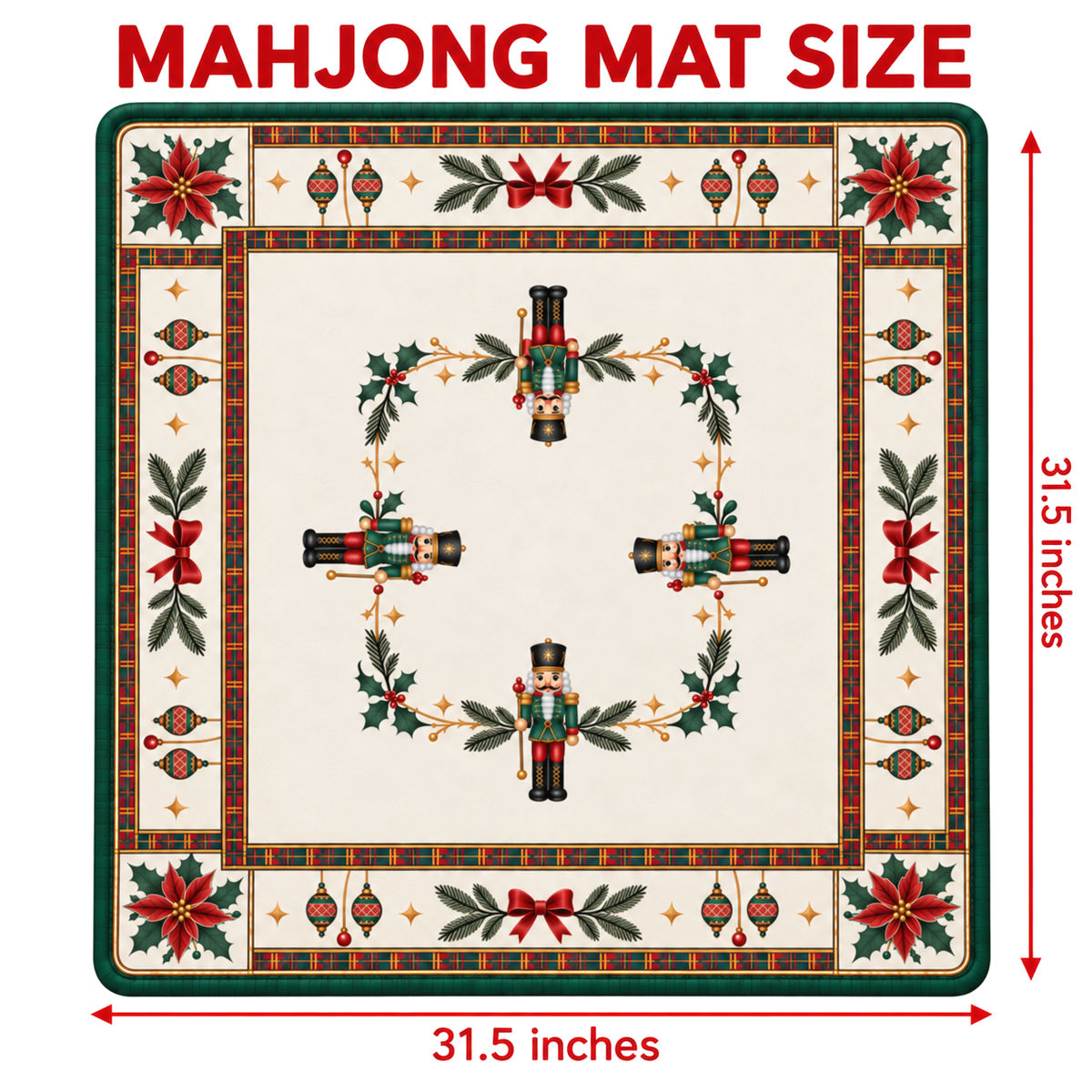
A dedicated mahjong mat beats a towel because it defines the play zone, protects your table, and gives tiles grip so they don't slide when you shuffle. Mats come in two widths: compact (36–42 inches) for small tables or tight spaces, and standard (48+ inches) for larger dining tables. Most small-table groups use 36–42 inch mats because they fit kitchen counters, card tables, and apartment dining setups. Rubber-backed mats stay put during the Charleston (the tile-passing ritual); linen mats feel more traditional but need a towel underneath to prevent shifting. Choose a mat by measuring your table's usable play area width and depth—if you have 40 inches of width, a 36-inch mat fits comfortably with tile racks on the sides. For apartments or travel, a compact mahjong mat folds or rolls without creasing permanently.
Should your starter kit include racks with pushers?
Racks are optional for small tables and a question of hand comfort, not necessity. If all four players can reach the center easily and you don't mind holding 13–14 tiles in your hand, skip racks and save space and cost. Racks shine when players prefer not to hold tiles, or when hand-eye fatigue is an issue—they organize your tiles in a line and pushers help you hide new draws. For a 36–42-inch mat, one or two racks with pushers fit at opposite ends without crowding. Many small-table veterans buy racks later, after a few seasons, once they know whether their group prefers them. A practical rule: test a game without racks first. If players ask for them, add one or two on your next order.
What's the difference between a starter kit and a "complete set"?
A starter kit is what you assemble yourself: tiles + mat + optional racks. A "complete set" usually means just the tiles and nothing else. You build a true starter kit by browsing the best-selling collection, selecting a tile set that matches your aesthetic, then adding a mat (and later, racks if you want). This approach lets you choose the tile design (engraved, colorful, classic) and mat color separately, rather than accepting a pre-bundled combo that might not fit your table or taste. Many small-table groups buy one tile set to share, but each player may own her own mat or racks—so "kit" really means your household's personal starter bundle.
How do you know which starter kit will actually fit your table?
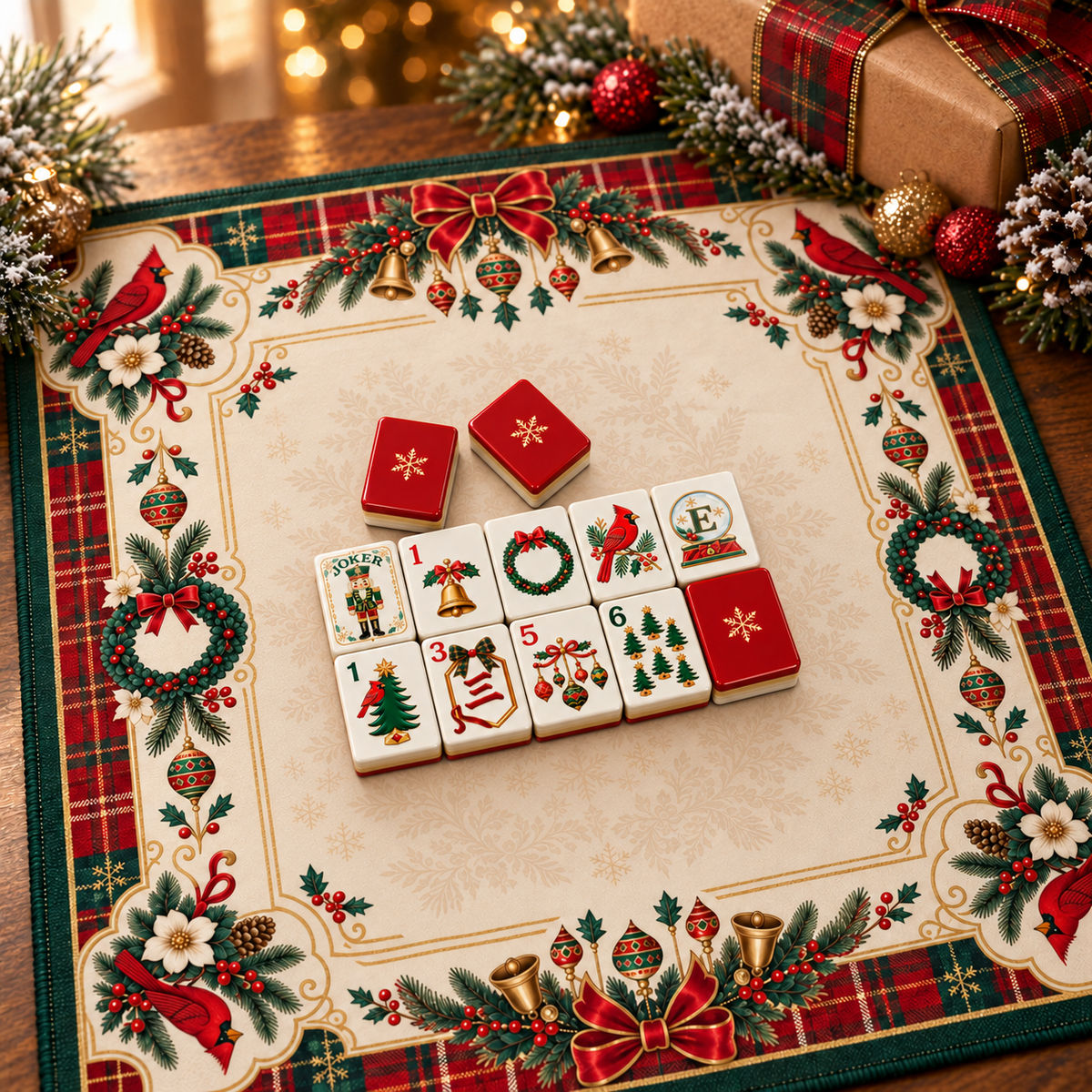
Before ordering, measure your table's usable play area width (wall to wall, with nothing on it) and depth (front edge to back edge). Subtract 12 inches for wall clearance on each end if your table is against walls. A 36-inch mat needs at least 42 inches of width to sit comfortably with racks on the sides; a 48-inch mat needs 54+ inches. For depth, most tables need 36–42 inches to accommodate one row of racks plus arm space. If your table is a 30-inch-wide kitchen counter, a 36-inch mat will overhang—plan to pull the mat forward or use the counter as a wall. Write down your exact dimensions and check them against the mat product page before ordering; Mahstead offers free US shipping, so returns for size mismatches are quick if you measure wrong the first time.
Comparison: Starter Kit Options for Different Spaces
Space | Tile Set | Mat Size | Racks | Why It Works |
Apartment (32" table) | Acrylic set | 36" compact | None | Minimal footprint; tiles fit in a small box |
Dining table (48"–60") | Acrylic or engraved | 42"–48" standard | 1–2 optional | Comfortable hand space; room to add racks later |
Kitchen counter (40") | Durable acrylic | 36" compact | None | Towel rack nearby; tiles return to box quickly |
Coffee table (36" square) | Acrylic (lightweight) | 36" compact | None | Casual play; mat stored under sofa |
Card table (folding 36") | Acrylic set + spare tiles | Compact mat | None | Portable; fits in a car for game nights out |
🎁 See our most-loved mahjong sets & accessories →
What should you check before ordering a starter kit?
Before you buy:
Confirm your table's width and depth in inches; compare to the mat product page dimensions.
Verify the current year's National Mah Jongg League card is available (issued every spring; needed to validate hands).
Decide if you want engraved tiles or a standard set; engraved sets take longer to produce but last decades.
Count your players (2, 3, or 4); American mahjong rules differ for 2–3 players, so check that guide if you have fewer than four.
Test how many tiles one player can comfortably hold in their hand (typically 13–14 acrylic tiles fit in adult hands without racks).
Measure racks or ask to borrow one before buying; they take up 8–12 inches of table edge.
Check if anyone has allergies or sensitivities to materials (acrylic is hypoallergenic; wood or bamboo may harbor dust).
What does a starter kit cost, and where do price differences come from?
Price varies by tile material (acrylic, bone, bamboo), mat quality (rubber-backed vs. linen), and whether you add racks. From the Mahstead best-selling collection, entry-level acrylic sets start at one price point and rise with hand-engraved details or premium finishes. Mats range based on size (compact mats cost less) and backing (rubber is pricier than fabric). Racks with pushers are sold individually and cost less than tiles. A bare minimum starter kit (acrylic set + compact mat, no racks) costs less than a luxury bundle (engraved tiles + standard mat + two racks); see the current product pages for exact pricing. Shipping is free across the US, so a small-table kit ordered in January is in your hands within days.
✨ Find your Mahstead set — free US shipping →
How long does a starter kit last, and when should you replace pieces?
An acrylic American mahjong set lasts 10–20+ years with casual weekly play if tiles don't crack or stain. Racks with pushers may wear at the hinge after 5–10 years of heavy use; mats wear thin at shuffle points after 8–15 years. Small-table groups often buy one set and keep it as the group's shared kit, refreshing the mat or a few tiles as needed. If you want a backup set for traveling or hosting simultaneous games, buy a second tile set from the best-selling collection—having two sets lets one group play while another waits, or lets you leave a set at a friend's house. Many players keep spare jokers and tiles from the 160-tile set (the 8 extra pieces) for replacements; you'll rarely need them.

FAQ
Can I play American mahjong without a mat?
Yes, but a mat makes shuffling safer and defines the play zone. A clean towel or tablecloth works in a pinch, but a dedicated mat with grip prevents tiles from sliding during the Charleston.
Do small tables need all four sets of wind and dragon tiles?
Yes. American mahjong requires exactly 152 tiles (four of each type) every game. Small table size doesn't change the tile count—it only affects how you arrange or store them.
Is a 160-tile set different from a 152-tile set?
No. All Mahstead sets are 160 tiles: 152 for play plus 8 spare tiles (usually extra jokers and blanks) stored in the box. You use exactly 152 tiles per game; spares are replacements only.
What's the minimum table size to play American mahjong?
Any table 32+ inches wide works. Tight fit requires no racks. Standard play needs 36–42 inches width for racks on sides, or 48+ inches for comfortable hand placement.
Can two or three players use a full 152-tile set?
Yes. American mahjong adjusts the Charleston and payout for 2–3 players, but still uses the full 152-tile deck. Read the 2–3 player rules before your first game.
Do I need to buy matching racks and a mat from the same seller?
No. Racks and mats are interchangeable across brands. A Mahstead mat works perfectly with any vendor's racks, as long as the mat size and rack depth align with your table.


View More
View More
View More
