
Mahjong Solitaire Quick Start Guide: Rules & Setup
Last updated: Nov 23, 2026
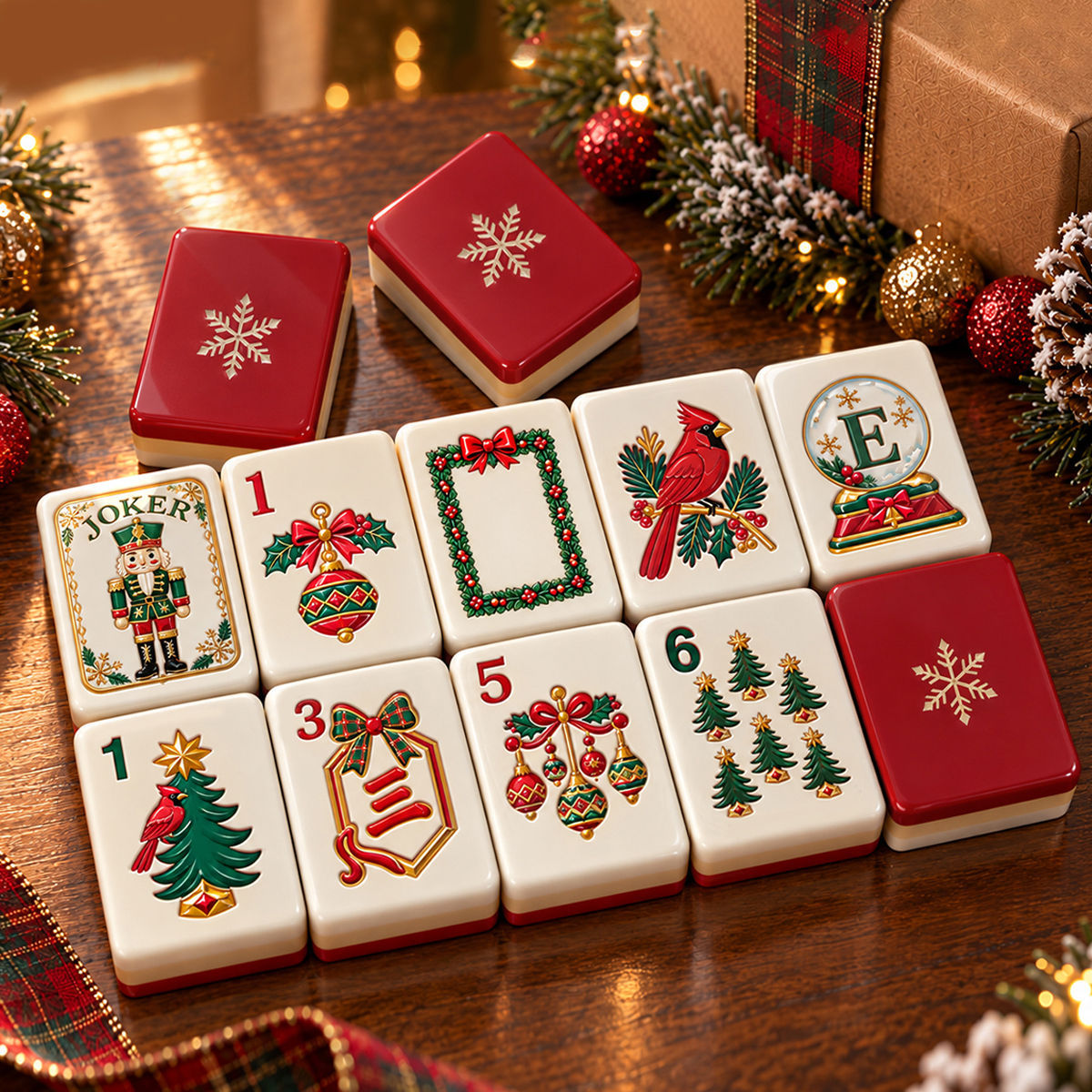
Mahjong solitaire is a single-player puzzle where you match and remove identical tiles from a stacked pyramid layout until the board clears or no moves remain. You need a standard mahjong set (152 tiles plus 8 jokers), though solitaire uses only the standard 144 tiles—leave jokers aside. The game typically takes 10–20 minutes per round and plays best on a flat surface or computer screen; physical board play requires a mat for stability. Win by clearing all tiles; lose if you reach a dead end where no matching pairs remain. The core rule: only tiles with an unblocked long edge can be matched and removed. Unlike American mahjong's strict hand requirements, solitaire is pure pattern-matching. Many online versions exist, but tabletop solitaire with a real set builds spatial reasoning faster. We recommend starting with a quality acrylic set to learn on a physical board.
What's the difference between mahjong solitaire and American mahjong?
American mahjong is a four-player competitive tile game where you draw and discard to complete hands from that year's National Mah Jongg League card. Mahjong solitaire is a solo puzzle: no opponents, no card, no trading tiles. The goal isn't to win money or points against others—it's to clear the board before you lock yourself out. American mahjong uses four copies of most tiles; solitaire uses one standard set. American mahjong takes 30–90 minutes; solitaire finishes in under 20 minutes. If you've never played either, solitaire is the faster entry point.

How do you set up a mahjong solitaire board?
The standard pyramid layout stacks 144 tiles in seven rows, with each higher tile resting on the edges of two tiles below. Start with a base of 18 tiles (2 rows of 9). Build upward in a staircase so that the top peak has a single tile. Tiles on the edges of their positions are "open"—they can be matched. A tile blocked by another tile sitting on top of it is closed and cannot be removed. Once you remove a tile, the tiles beneath it may become open. Arrange your set on a quality mahjong mat or large flat table to prevent tiles from sliding. Use mahjong racks with pushers if you play seated and want to prevent accidental bumps.
What tiles can you match and remove?
In mahjong solitaire, you match pairs of identical tiles. For example: two 5 Dots, two East Winds, two Red Dragons. Jokers can substitute for one missing tile in a pair if the board layout allows it—use them strategically. Flowers and Seasons do not match each other; each is unique. One Bams (often marked with a bird) matches only another 1 Bam. Never match different numbers or different suits—only exact duplicates (or a joker acting as one). Tiles must be fully exposed on their long edge (the 34-millimeter side on a standard acrylic tile) with no other tile sitting on top. Remove matched pairs together; once gone, they cannot return.
What moves should you avoid to prevent getting stuck?
The most common trap is clearing the board's outer edges first. Outer tiles seem easy, but removing them can block access to the middle stack and leave you with no legal moves. Instead, look ahead: identify which tiles will become open after you remove a pair, and prioritize moves that expose high-value targets below. Never match a pair unless you can trace a path forward to at least two more moves. Count how many copies of each tile remain visible; if only one copy of a tile is left and no pair partner exists anywhere on the board, you've already failed (or a joker is your only rescue). Avoid using jokers too early. Reserve them for critical dead ends. Work top-down and from the inside out, not the edges.

How do online and physical versions compare?
Aspect | Physical Set | Online/App Version |
Setup time | 3–5 minutes | Instant |
Tile visibility | 100% control; manual | Algorithm-driven; preset |
Tactile feedback | Full; satisfying | None |
Undo option | None (reset and replay) | Usually built-in |
Portability | Heavy; needs table/mat | Phone or tablet |
Learning curve | Slower; builds intuition | Faster; guided hints |
Cost | One purchase (set + mat) | Free or subscription |
Physical play teaches you pattern recognition and spatial memory because you must visualize future moves without instant undo. Online versions are faster for speed-running and fit travel. We use both: online to drill quick rounds during lunch, physical boards when we host solitaire tournaments with friends. For tabletop play, our best-selling acrylic sets ship ready to play and rest securely on any mat.
🀄 Shop best-selling mahjong sets →
What strategies improve your win rate?
Start by mapping the entire board before making your first move. Identify which tiles sit on top of others and which tiles block access to the center. Tiles in the middle and upper layers often unlock multiple moves, so deprioritize single-tile pairs that don't expose anything new. Look for "chains": sequences of removals that trigger a cascade of new open tiles. Match pairs that clear the most visual clutter first. If you reach a near-deadlock—only 4–6 tiles left and no legal moves—reload and replay, paying attention to which earlier choices led you there. Many solitaire layouts have a unique winning path; finding it teaches memory and foresight. After ten plays of the same board, you'll internalize the pattern. Joker placement varies; some online versions hide jokers in the layout itself rather than holding them in hand.
What do you need to play solitaire on a physical board?
A standard American mahjong set contains 152 tiles plus 8 jokers—all you need. Place the set on a sturdy mahjong mat to avoid tiles shifting mid-game. A travel bag or case protects tiles if you move the board or store it between sessions. If you host regular solitaire nights, engraved sets add personality to the table. Dice are optional—you only need them for tie-breaking in competitive play, not solitaire. A deck of index cards lets you track high scores across multiple plays.
🎁 See our most-loved mahjong sets & accessories →
What to check before you buy a mahjong set for solitaire
Tile count: You need exactly 144 tiles to play (a full American set includes this). Verify the set includes all four copies of each tile, not a incomplete subset.
Tile size and weight: Acrylic tiles at 34 millimeters wide balance easily in hand and stack cleanly. Heavier tiles reduce accidental shifts.
Case or bag: Check if the set includes storage; if not, a protective case prevents tile damage and keeps sets organized.
Joker count: A set with 8 jokers (standard) gives you the most substitution flexibility. Some sets come with extra spares.
Mat or surface: A dedicated mat prevents tiles from sliding and reduces noise during play.
✨ Find your Mahstead set — free US shipping →

FAQ
Can you play mahjong solitaire with fewer than 144 tiles?
No. Mahjong solitaire requires exactly one full American set (144 tiles). Removing tiles breaks the layout and makes patterns incomplete. If a tile is lost, the game is unplayable.
Do jokers have special rules in solitaire?
Jokers act as wildcards and can substitute for any single tile to complete a pair. Use them strategically when you're stuck; don't waste them on easy matches early on.
How long does a typical solitaire game take?
Most games finish in 10–20 minutes. Faster players clear boards in under 10 minutes; slower or more analytical players may take 25–30 minutes.
What percentage of mahjong solitaire games are winnable?
It depends on the layout algorithm. Computer-generated random shuffles have a win rate of roughly 80–85%, based on most online game statistics. Skilled players clear higher percentages; beginners lower. Some hand-crafted physical layouts are designed to be harder or easier.
Can you play solitaire with friends watching or taking turns?
Yes. Solitaire is individual, but you can host tournament-style rounds where multiple people play the same shuffled set in sequence, comparing clear times and scores. That's a fun group activity without direct competition.


View More
View More
View More
