
Mahjong Racks Size Guide: Choose the Right Fit
Last updated: Nov 23, 2026
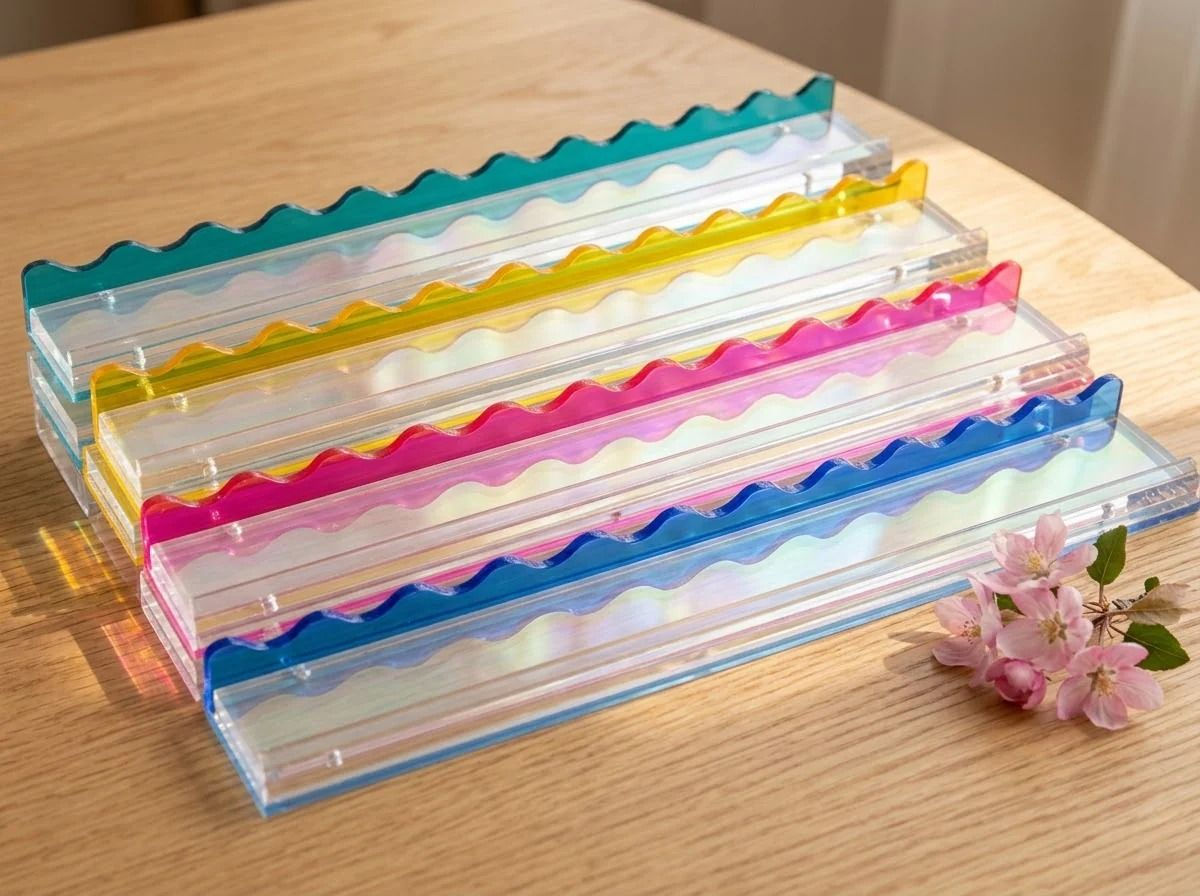
Mahjong racks come in two main sizes: standard (roughly 11–13 inches) and large (15–17 inches), each designed for different hand sizes and playing styles. Standard racks fit most adult hands and suit casual weekly games where tiles sit upright in a single row. Large racks give you more horizontal spread, making tile management easier if you have bigger hands or prefer to see all tiles at once without tilting your head. Racks sold at Mahstead are constructed from acrylic or bamboo, include pushers to nudge tiles into place, and pair with American mahjong sets. Before ordering, measure your hand span across the knuckles—if it exceeds eight inches, a large rack will feel more natural. Both sizes ship assembled and ready to use with no hidden charges beyond the product price.
Mahjong racks hold your thirteen tiles upright during play, keeping them hidden from other players and organized in your hand. A properly sized rack prevents hand fatigue, speeds up discarding, and lets you play comfortably for hours. Choosing the wrong size can lead to crowded tiles, fumbling during the discard phase, and a slower game—especially if you host weekly games where everyone plays back-to-back hands. This guide walks you through the two standard sizes, materials, pushers, and the one decision most players get wrong.
What is a standard-size mahjong rack?
Standard racks measure roughly 11–13 inches end-to-end and hold thirteen tiles in a neat single row at a slight upward angle. They suit most adult players, fit easily inside a mahjong bag when packed, and work best for hands with a span (thumb to pinky) under eight inches. If you've played mahjong at casual game nights or community centers, you've likely held a standard rack—they're the industry default for good reason. Most weekly home games use standard racks because they leave plenty of table space and feel balanced for four players sitting around a single mat.
What is a large-size mahjong rack?
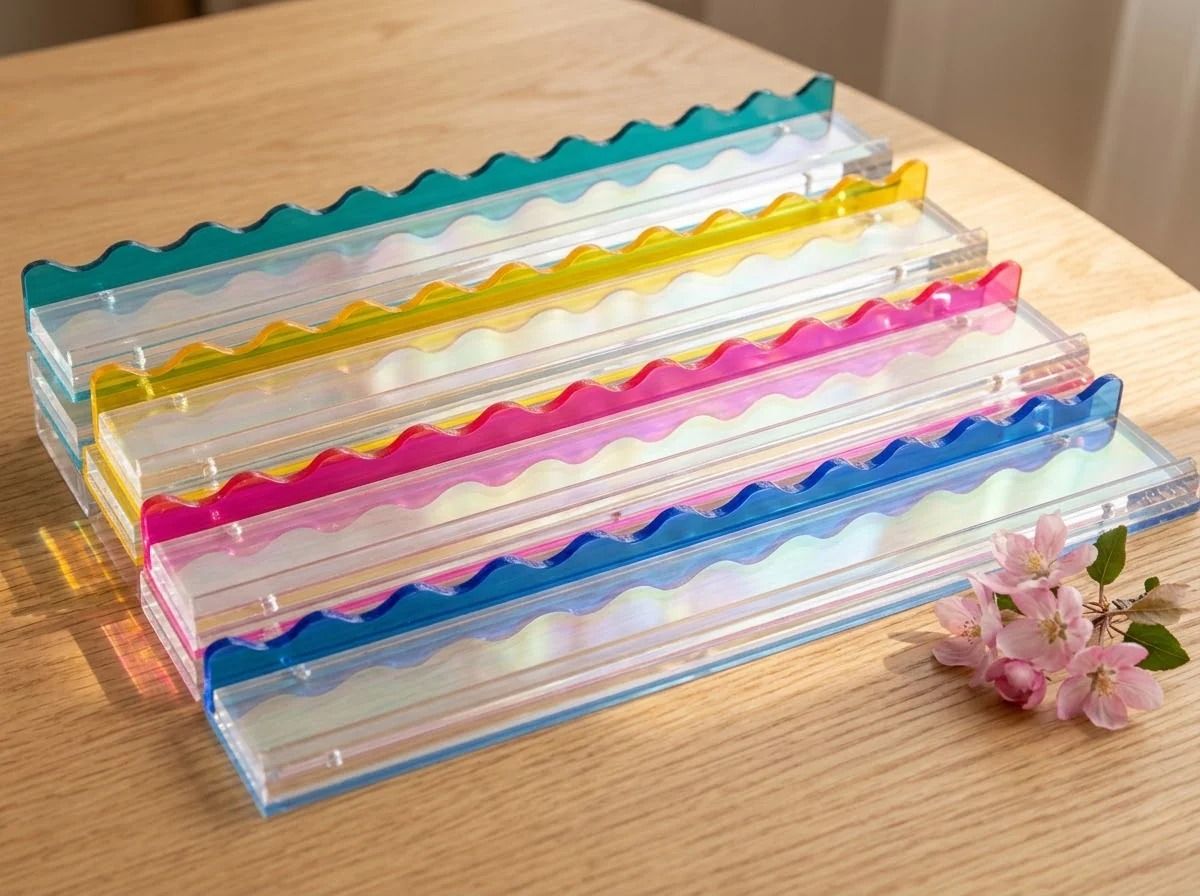
Large racks span 15–17 inches and provide more horizontal spread between tiles, making them ideal for players with bigger hands or those who like seeing their full hand layout without head movement. Large racks sit on the table at a gentler angle and occupy more real estate, so they work best if your playing surface is spacious—a mahjong mat with built-in wall pockets, for example, rather than a standard dining table. Players with arthritis, those who dislike bending or tilting, and anyone who finds tiles feel crowded in a standard rack often prefer large. If your hand span (measured thumb-to-pinky at full stretch) is eight inches or more, a large rack will feel noticeably more comfortable after just one hand.
🀄 Shop best-selling mahjong sets →
How do pushers change the experience?
Every rack sold at Mahstead includes a pusher—a flat stick, usually two to three inches long, designed to nudge tiles up into a neat wall as you draw new tiles. Pushers save your fingers from constant small adjustments and speed up the discard phase. A good pusher has a smooth edge that doesn't catch tile edges and is proportioned to match your rack's width. Standard racks use standard pushers (typically 2–2.5 inches wide), and large racks use wider pushers (3–3.5 inches). The pusher attaches to the rack via a slot or sits loose beside it—either way, you'll learn to use it within a single game. Without a pusher, you spend mental energy shuffling tiles manually, which adds friction to fast-paced play and tires your hand over multiple rounds.
Standard vs. Large: A comparison table
Aspect | Standard Rack | Large Rack |
Length | 11–13 inches | 15–17 inches |
Best for hand span | Under 8 inches | 8 inches or more |
Table space needed | Minimal (fits any setup) | Generous (spacious mat or table) |
Packing into a bag | Compact, no hassle | Takes up more room |
Angle on table | Moderate tilt | Gentle slope |
Who loves it | Casual players, tight tables | Long-hand players, comfort-focused groups |
Pusher size | 2–2.5 inches | 3–3.5 inches |
Material matters: Acrylic vs. bamboo
Acrylic racks offer a modern look, resist warping, and are lightweight for travel or frequent moving. They come in clear or in engraved designs with custom titles or artwork—perfect if you host a regular game and want your racks to match a personalized American mahjong set. Bamboo racks deliver a warm, traditional aesthetic and feel slightly heavier, which some players prefer for stability during fast tile movements. Both materials hold up to weekly use over years; the choice is mostly personal style. If you order an engraved set with custom titles or art, matching acrylic racks create a cohesive, intentional look for your game table.
🎁 See our most-loved mahjong sets & accessories →

What to check before you buy
Measure your hand span. Stretch your thumb and pinky as wide as they go, then measure the distance across your knuckles. If it's under eight inches, standard is your move. Over eight inches? Go large. This one step eliminates buyer's remorse.
Count your table space. A four-player setup with a mat, one rack per player, and a discard area in the middle needs room. Standard racks hug the edge; large racks demand more breathing room. If you play on a card table, standard is safer.
Match your set if it's engraved. If you own or plan to buy a custom-engraved set, your racks should coordinate in material (acrylic with acrylic) and optionally in style. Mismatched racks look less intentional and don't photograph well.
Test the pusher fit. When you receive your rack, the pusher should slide smoothly into its slot or sit snug beside the tiles without forcing. Rough edges or loose fit suggest you may have received a misaligned piece—contact us before your first game.
Plan for travel. Standard racks pack into a mahjong bag alongside tiles and a mat with minimal fuss. Large racks need a larger travel bag or a separate case. If you host games at different venues, standard racks simplify logistics.
The common mistake: Choosing by table, not by hand
Most new players pick a rack size based on available table space—they see a big table and buy large racks, or a small apartment and grab standard ones. The real factor is hand comfort. A player with large hands playing on a cramped standard rack will have a miserable four hours, while someone with small hands on a large rack might feel like tiles are too spread out and hard to control. Let your hand size drive the decision, and let your table accommodate that choice.
Racks as part of a complete setup
A good mahjong mat often has built-in wall pockets—spaces on each edge where racks rest upright so tiles face inward. This setup is ideal for large racks because the mat's geometry supports the wider footprint. Casual weekly games on dining tables work fine with standard racks placed directly on the table edge. If you're investing in new racks, consider whether your play surface will support them; a mat and large racks paired together create a more polished, durable hosting experience than random racks on a bare table. Browse the mahjong racks collection to see how each style pairs with mats and sets.
✨ Find your Mahstead set — free US shipping →
Where to measure and order
Order your racks directly from our mahjong racks collection. Each listing shows images, materials, pushers included, and dimension details. Measure your hand, pick your size, and add to cart—all racks ship assembled with no setup required. Free shipping across the US means there's no penalty for trying a size; if it doesn't fit your hand or table after one game, you know what to swap next time. Most weekly game groups eventually own both sizes so players can choose what feels right on the day.

FAQ
Can I use a large rack if I have small hands?
Yes, but tiles will feel spread out and harder to grip quickly. You'll work harder during the discard phase. Standard is more comfortable for you.
Do pushers work with any tile size?
Pushers are sized to match the rack width. A pusher designed for a large rack won't fit smoothly into a standard rack and vice versa. Check your rack's specifications when ordering.
What if my acrylic rack cracks?
Acrylic is durable for regular play but can chip if dropped hard on concrete or tile. Avoid dropping your racks, and store them upright in a padded bag or case between games.
Can I mix standard and large racks at the same table?
Yes. Four players can use different sizes if their hands prefer it. This is common in established game groups where players have accumulated racks over time.
Should I buy racks before I buy tiles?
No. Order racks after you have a set so you can test comfort. If you're new, start with standard; you can always upgrade after your first few games reveal your preference.
Does a wider table mean I should buy a large rack?
No. Rack size depends on your hand, not your table. A large table suits large racks, but a small hand belongs in a standard rack even on a spacious mat.


View More
View More
View More
