
Mahjong Quiz for Beginners: Test Your Game Knowledge
Last updated: Nov 23, 2026
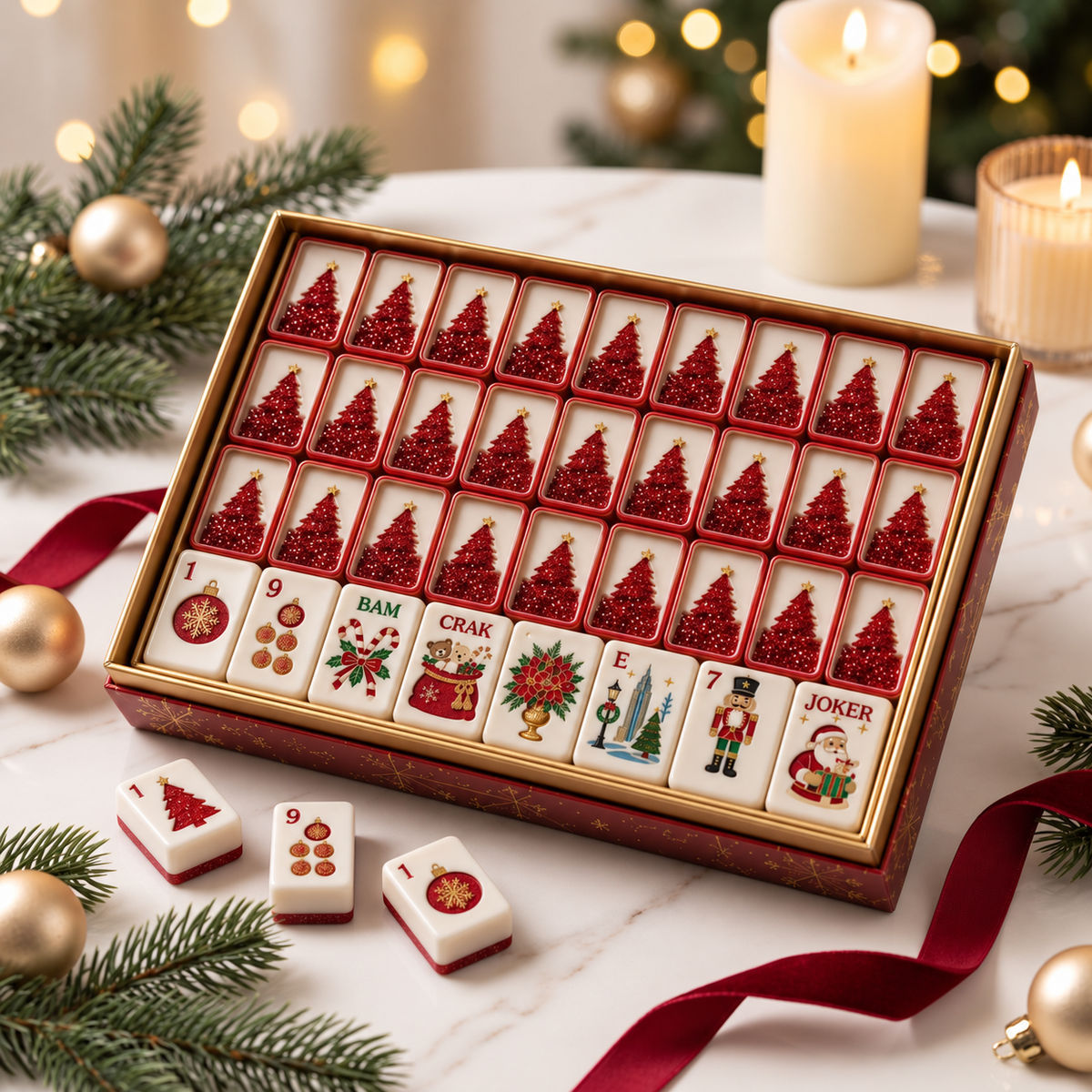
A mahjong quiz for beginners covers the 152-tile deck (Bams, Craks, Dots, Winds, Dragons, flowers, jokers), hand recognition from the annual National Mah Jongg League card, the Charleston tile-passing ritual, and scoring basics. Most beginner quizzes ask: "Can you call a sequence (chow)?" (No—American mahjong has no sequences.) "What's a quint?" (Five identical tiles, exposed.) "Do jokers work in pairs?" (Never.) "When do you win?" (When you complete a hand listed on the current year's card using only pungs, kongs, quints, sextets, or pairs.) A good quiz also covers common errors: thinking Dots and Craks are the same, misplacing the Soap (White Dragon, which equals zero), misunderstanding when to pass tiles during the Charleston. Mahstead players often quiz friends before hosting; the best ones are self-scored and focus on rules you actually break at the table—not trivia. 🀄 Shop best-selling mahjong sets →
Why Do Most Beginners Fail a Mahjong Quiz?
The single largest gap: beginners conflate mahjong rule systems. Western players often assume American mahjong works like Chinese or Riichi (Japanese) mahjong—which it doesn't. Chinese mahjong allows sequences (chows) you can call and expose mid-game; American mahjong forbids them entirely. Riichi mahjong scores draws and concealed hands differently. A beginner quiz should clarify: American mahjong uses one year's card, no sequences, jokers as wildcards, and a fixed hand list. Players who skip this distinction waste time at the table arguing about what's legal.
A second common failure: mixing up tile names. The Crak suit (red symbols, shaped like coins) is not the Dot suit (circles, white or bright). The 1 Bam shows a bird. Soap (White Dragon) functions as both a wind and a zero—beginners constantly ask, "Is this Dragon a wind or a number?" Answer: it's a Dragon, but in scoring contexts it reads as zero. A solid quiz forces you to name each tile aloud before moving on, because pattern recognition alone isn't enough.
Third: joker rules stump new players. Jokers are wildcards that can replace any single tile in a pung, kong, quint, or sextet—but never in a pair, never as a solo tile, never in the hand you declare (once you win, jokers stay hidden). Many beginners try to use jokers as "free tiles" in a winning sequence, which disqualifies the hand.
🎁 See our most-loved mahjong sets & accessories →

What Should a Beginner Quiz Actually Test?
A real beginner quiz doesn't ask for trivia—it asks: Can you spot a legal hand? Present a sample hand on screen and ask, "Is this a win?" The answer requires you to (1) recognize the tiles, (2) check the current year's card, (3) verify you haven't used jokers illegally, (4) confirm all exposed groups are valid. Most beginner quizzes fail because they ask "Name the four winds" (memorization) instead of "This player laid three Red Dragons, two Bams, four Craks, and a pair of Dots—what did they forget?" (application).
A strong quiz also tests the Charleston. Can you explain why we pass tiles before play starts? What direction do they move? Can you refuse a tile? (Yes, once per pass direction.) Do you have to take the last tile offered? (No, but you announce the pass.) These are living rules you'll use every game—not historical trivia.
Finally, a beginner quiz should cover the National Mah Jongg League card structure. The card changes every spring and lists all legal hands. Beginners often ask: "Can I make up my own hand if it looks like a pattern?" No. "What if my hand isn't on the card?" It doesn't count; you can't win. "Why are there so many hands listed?" Because the card ensures everyone plays the same game, and the NMJL updates it annually to keep the game fresh. Understanding the why behind the card helps new players accept the what.
How to Build Your Own Beginner Quiz: A Checklist
Step 1: Define your audience. Are you quizzing someone who's never held a tile, or someone who knows the basics but wants to play live? Adjust depth accordingly.
Step 2: Choose your format. Multiple choice (easier, faster); open-ended (deeper); scenario-based (most realistic). A hybrid works best: five multiple-choice questions (warm-up), then three "Is this a legal hand?" scenarios, then two Charleston rule challenges.
Step 3: Anchor every question to actual play. "During the Charleston, can you pass fewer than 14 tiles if you run out?" is a real question; "How many tiles exist in total?" is boring. Real questions surface mistakes your group makes.
Step 4: Include one about joker misuse. Ask, "Can jokers form a pair in a winning hand?" (No—jokers can never appear in a pair.) This is the most-broken rule at beginner tables.
Step 5: Add one about the card. "You built what looks like a valid hand, but it's not on this year's card. Can you win?" (No.)
Step 6: Score it honestly. If someone gets fewer than 60% correct, they're not ready for live play yet—they should watch how to play American mahjong or read what's in an American mahjong set first. If they score 80%+, invite them to a game.

Beginner Quiz Sample Questions (With Answers)
Question 1: Tile RecognitionWhich suit does the Soap (White Dragon) belong to? A) Bams B) Craks C) Dots D) Dragons (Soap is not part of a numbered suit)
Answer: D. Soap is a Dragon honor tile. It also serves as zero in scoring contexts, but it's always a Dragon. Beginner mistake: thinking Soap belongs to Dots because Dots are "blank" or "white"—they're not the same tile.
Question 2: Hand LegalityYour hand contains: three 5 Craks, three 7 Dots, three 2 Bams, three Green Dragons, and two Red Dragons. Is this a legal winning hand? A) Yes, if it's on the card B) No—pairs must be the same tile C) Yes, always D) No—the pair has different Dragons
Answer: B or D (depending on card). The pair (two Red Dragons) is valid, but if the other three groups aren't on this year's card in exactly this configuration, you can't win. The answer drives home: every winning hand must appear on the League card.
Question 3: Joker RulesCan a joker replace a tile in a pair? A) Yes, always B) Yes, if you discard it first C) No, never D) Yes, once per game
Answer: C. Jokers can never form or complete a pair. This is the rule most beginners break; make sure the quiz emphasizes it.
Question 4: The CharlestonDuring the Charleston, the tiles move RIGHT. You receive three tiles from your right neighbor and pass three to your left neighbor. Is this correct? A) Yes B) No—tiles move left C) No—you pass to your right, receive from your left D) Yes, but you can refuse any tile
Answer: A. Tiles move RIGHT (counterclockwise from the player's perspective). You receive from the right, pass to the left. You can refuse once per direction, but usually you don't.
Question 5: Card DependencyYou built a pung of Bams, a kong of Craks, a sextet of Dots, and a pair of Winds—all tiles are on the table showing, and you have no jokers in the hand. Can you win? A) Yes, always B) Yes, if the card says this pattern is valid C) No—sextets are illegal D) No—you can't mix that many suits
Answer: B. The grouping alone isn't enough; it must match a hand on the current year's card. Sextets (six identical tiles) are legal, but the entire hand pattern must be listed.
Quiz + Table Setup: What You'll Need
Scenario | Best Quiz Format | Best Equipment | Why It Works |
Solo practice before first game | Online or printable PDF, 10 questions | None required | Builds confidence pre-table |
Teaching a new friend | Hands-on with real tiles, scenario-based | Full 152-tile set, card | They see live tile distinctions |
Pre-game refresher at your table | Verbal speed round, 5 questions | One set to point at | Keeps energy high, no prep time |
Family game night onboard | Compact quiz on a phone or tablet | Travel-sized set with bag | Low friction, portable, fun |
Our best-selling mahjong sets include a laminated card and an instruction guide—perfect for quizzing a new player in real time. If you're teaching over Zoom, print a quiz and ask them to follow along with their own set (or images). If you're setting up for live play, run a quick five-question warm-up before the Charleston; it takes three minutes and catches misunderstandings that would derail the game.
✨ Find your Mahstead set — free US shipping →
What to Check Before You Buy a Quiz (Or Build One)
Does it specify American mahjong? If the quiz doesn't mention "American" or "National Mah Jongg League card," it might be teaching Chinese or Riichi rules. Don't use it.
Does it test scenarios, not just facts? "Name the four winds" is not as useful as "If you exposed three East Winds, can you call a fourth from the discard?" (No, you can't call a single tile; you'd need a pung already exposed and a fourth to complete a kong.)
Does it cover joker rules explicitly? Joker mistakes wreck beginner tables. Any quiz worth using must clarify that jokers cannot form pairs and cannot appear in your winning hand (they stay in the rack once you've won).
Does it reference the annual card? A quiz that doesn't mention the National Mah Jongg League card is incomplete. Every hand must come from the current year's list—this is non-negotiable in American mahjong.
Is the answer key thorough? A good quiz explains why an answer is wrong, not just which choice is right. "You can't use Craks and Bams in the same pung because they're different suits" is more useful than "A is correct."

FAQ
Can I use a mahjong quiz for multiple skill levels?
No—beginner, intermediate, and advanced quizzes test different things. A beginner quiz focuses on tile recognition, hand legality, and basic rules. An intermediate quiz assumes you know those and tests card navigation, scoring, and strategy. Build or find the one that matches where your player is now.
How long should a beginner quiz take?
Five to ten questions take 5–10 minutes. That's long enough to catch major gaps but short enough not to bore someone excited to play. If someone's scoring below 70%, they need to read the rules again before playing live.
Should I use the same quiz every time I teach?
Use the same quiz the first time, then swap in new questions for repeaters. Newcomers need consistency; regular players need variety and challenge. A rotating quiz keeps teaching fresh and prevents memorization.
What if someone fails the quiz? Do I stop them from playing?
Not necessarily. Failing a quiz means they're not ready to play without help—so sit them next to someone experienced, pause mid-game to explain when they slip up, and offer the quiz again after a few rounds. Mahjong is learned by doing.
Where do I find a mahjong quiz online?
Community centers, libraries, and local mahjong clubs often host beginner classes that include quizzes. Check your city's community board or search "mahjong beginner class near me." Many clubs also post PDF guides and practice tests on their websites.
Can I make a quiz using tiles from my set?
Absolutely. Lay out tile combinations and ask, "Is this legal?" Use the current year's card to check. Physical quizzes are actually more useful than written ones because beginners learn by seeing the tiles, not reading about them. Engraved sets or our best-selling designs work equally well for this.


View More
View More
View More
