
Mahjong Party Ideas in Louisville: Host Your First Game
Last updated: Nov 23, 2026
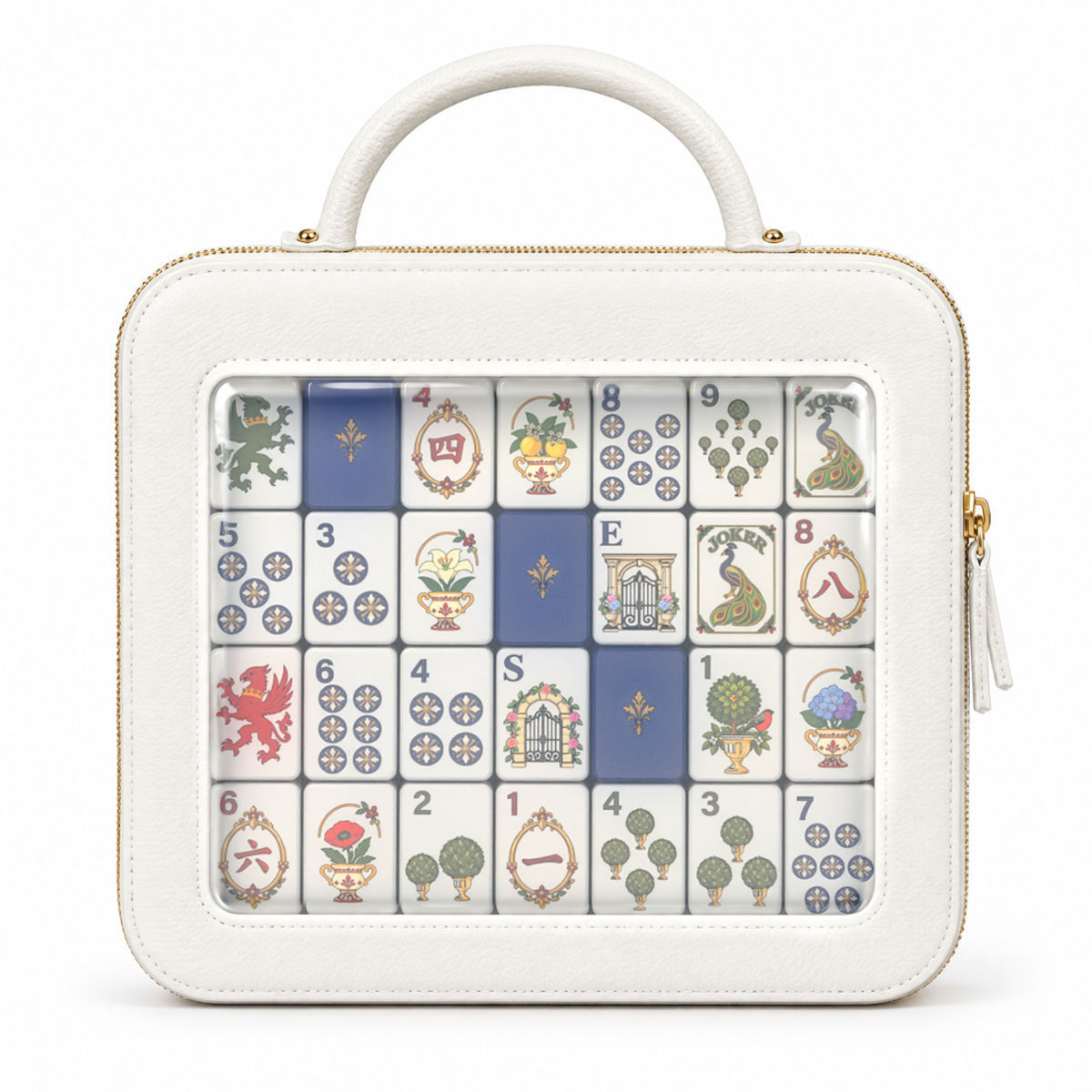
Louisville players host mahjong parties year-round at home, community centers, libraries, and private clubs. A standard four-player American mahjong game takes 30–60 minutes per round, runs best with 152 tiles in good condition, a mat with tile racks, and a current National Mah Jongg League card. Most hosts serve snacks, run 3–5 rounds per night, and rotate seating after each game. The main mistakes: using worn or mismatched tiles, skipping the Charleston (the tile-passing ritual), not printing the card for all players, and inviting only experienced players when beginners create the most fun. Check your tiles are all readable before guests arrive, set a clear start time, and keep a scoring sheet visible. Mahstead's best-selling sets come as 160-tile acrylic designs that ship assembled, so you unbox and play the same day.
Want to start a mahjong game night in Louisville? Begin here—these five hosting angles cover logistics, player mix, teaching, equipment, and the rhythm that makes people ask when the next party is.
Where in Louisville can you actually host mahjong parties?
Most Louisville hosts play at home, but the city also offers community rooms at libraries (free or low-cost), synagogues (often welcoming non-members), country clubs, community centers, and church basements. Post on local meetup boards or Facebook groups to find existing game circles that occasionally invite newcomers. Some players organize informal standing games at coffee shops or breweries with flat tables—less ideal for tile control, but social and low-pressure. The advantage of a home game: you control the table height, lighting, and pace, and guests feel invited rather than joining a structured club scene.

How many players do you actually need, and what's the player mix that works best?
American mahjong is designed for exactly four players. You can run games with two or three using modified rules, but the standard four-seat format with North, East, South, and West is where the game's strategy and deal rotation make sense. For a first party, invite one or two experienced players (to model behavior and answer fast questions), one absolute beginner, and one intermediate player. This mix prevents dominance by one skill level and lets everyone learn without shame. If you get six or eight people, run two parallel games or rotate players every 2–3 rounds. Avoid inviting all beginners (no one knows the card) or all advanced players (newcomers feel lost and quit).
What's the step-by-step hosting checklist for before guests arrive?
Before the day of the party:
Print or obtain a current-year National Mah Jongg League card (available free from the league website or in many beginner guides).
Buy or borrow a four-person mahjong set with a rack system and a mat—these keep tile walls organized and prevent tiles sliding around.
Test all tiles for readability; discard any faded or chipped ones.
Confirm your table is stable and at a height where seated players can reach the center comfortably (28–30 inches is standard).
One hour before guests arrive:
Set the table with mats, racks on all four sides, and the card face-up in the center.
Place dice, a pen, and scoring paper in the middle.
Wash and dry all tiles; arrange them face-down in a long wall (the draw pile).
Have water, coffee, or snacks nearby, but not directly on the playing surface.
When players arrive:
Assign seating (or let players choose for the first round, then rotate).
Explain the Charleston (tile-passing warm-up) once, then do it together once before the first round starts—no exceptions.
Show each player where their rack holds tiles and what the card means.
Commit to the first round being "teaching round": play slowly, pause to explain calls, and score generously without keeping tight records.
What equipment mistakes do first-time hosts make, and how do you avoid them?
The biggest blunders we see:
Mistake 1: Using old or mixed-tile sets. If your Bam tiles don't all look identical or some Dots are faded, tile calls go wrong mid-game and kill the vibe. Solution: buy a new set from our best-selling collection and keep it intact. Acrylic tiles last decades if you don't drop them.
Mistake 2: No mat or undersized mat. Four people fumbling tiles on a bare table create chaos and slow the game to a crawl. Every player needs their own rack section. Solution: pair your set with a mat matched to your table size.
Mistake 3: Racks with weak pushers or no pushers at all. When tiles slide or topple, new players lose focus and old players get frustrated. Pushers keep your wall neat so you can see the tile you're drawing. Solution: invest in racks with smooth, reliable pushers if you're hosting regularly.
Mistake 4: No printed card or only one card. When three players are asking questions and one card sits in front of the winner, everyone waits. Print a card for every player or use a large laminated version everyone sees simultaneously.
Mistake 5: Starting a game with no teaching. Even if one player has played before, the other three need to know what a pung is, how jokers work, and why the card matters. Spend 10 minutes on this—it saves 30 minutes of confusion.
Hosting Element | Why It Matters | What to Check |
Tiles (acrylic, clear symbols) | Readability = speed and confidence | All 152 tiles present, colors sharp, no cracks |
Mat (one per set) | Keeps everyone's wall visible and secure | Fits your table, has marked sections for all four players |
Racks + pushers | Walls stay neat, draws are fast and fair | Pushers slide smoothly, racks sit level |
Printed card (one per player) | No one wastes time asking or squinting | Current year, large font, laminated or in a sleeve |
Flat, stable table | No tiles slide during builds or draws | 28–30 inches high, no wobble, enough surface area |
Timer or phone stopwatch | Games don't drift; you fit more rounds in | Set to 60 min per round; rings when time's up |

How do you teach a beginner so they actually want to come back?
The first game is not about winning; it's about understanding. Here's what works:
Explain the card once, out loud. Show how the card is divided into sections (Pung section, Kong section, etc.), and point out a hand or two. Don't overwhelm—just establish that the card is the bible, not a mystery.
Play the first round with all tiles face-up or all visible. This removes the luck and lets players see why they draw certain tiles and how others complete hands. Yes, it sounds weird—it's genius for teaching.
Stop play after each major action (Charleston done, first discard made, first pung formed, first hand declared). Ask the player: "Why did you discard that?" or "How did you know to call?" This builds reasoning, not rote memorization.
Score loosely the first game. Don't penalize missed calls or suboptimal plays. Let them win and feel the satisfaction.
Give them a beginner guide or a link after the game. Reinforce: "The more you play, the faster the card reading gets."
If a player says "I'll never remember all the hands," say: "Neither did any of us—we all learned by playing the same 5–7 hands over and over. By your third game, you'll recognize them."
🀄 Shop best-selling mahjong sets →
How do you pace an evening so people leave wanting more, not burned out?
Run 3–5 rounds per night, each taking 45–75 minutes (depending on speed and chatter). Rotate seating after each round so no one sits in the same position twice. Between rounds, pause 5–10 minutes for snacks, bathroom, and scoring talk. Announce upfront: "We'll play three rounds tonight, 7 to 9:30 p.m." This sets expectations and prevents the dreaded 11 p.m. fade where everyone's tired and cranky.
After round two, ask: "Want to keep going or call it?" Let the table decide. If one person is struggling, don't stack extra rounds—they'll feel blamed and skip next week. If everyone's energized, play the third round without announcing it's the last. End on a high note: someone wins big, everyone laughs, and you say "Same time next week?" before anyone has to ask.
🎁 See our most-loved mahjong sets & accessories →
What tiles, mat, and accessories should a Louisville host actually own?
If you're hosting monthly, get a 160-tile acrylic set from Mahstead's best-selling line—it arrives complete with racks and ships fully assembled. Pair it with a full-size mat; most Louisville tables are standard dining height (28–30 inches) and 42–48 inches across, so a mid-sized mat fits perfectly. Add a bag or case if you transport your set between locations.
If you want to personalize your game, Mahstead offers sets engraved with titles or jokes—perfect for a standing game or a gift to a co-host. If hosting is seasonal (winter gatherings, holiday parties), Christmas-themed sets add festive flair without changing gameplay.
✨ Find your Mahstead set — free US shipping → | https://mahstead.com/en-us/collection/best-selling
What to check before you buy or borrow a set:
All 152 tiles are present and readable (no fading, especially the 1 Bam bird, the suit symbols on Craks, and the dragons).
Racks sit level and don't wobble; pushers glide without sticking.
The mat is intact (no rips, no stains that hide tile colors).
You have the current-year card printed or accessible.
Your table surface is stable and at least 36 inches across (preferably 42–48 inches for four comfortable racks).
If you inherit an old set, test it before party day. Worn tiles cause disputes and slow play; a new set costs less than one wasted evening.

FAQ
Can I host a mahjong party with fewer than four players?
Yes, but rules change. Two or three players use a modified rotation and different tile-call rules. Most Louisville newcomers learn the standard four-player version first, then adapt if needed.
How do I find experienced players in Louisville to join my game?
Check community center bulletin boards, library event listings, synagogue social groups, and local Facebook meetup pages. Many established games invite regulars' friends; ask around at coffee shops or senior centers.
What's the Charleston, and do I really have to do it every game?
The Charleston is a tile-passing ritual before play—each player passes three tiles to their left, then center, then right. Yes, it's mandatory in American mahjong; it randomizes tiles fairly and is part of the rule set.
How long does it take to learn mahjong well enough to host?
You can host a teaching game after one or two rounds as a player yourself. Real comfort hosting (explaining rules, preventing errors, scoring correctly) takes 4–6 games of active play.
Should I charge players money, or keep it friendly?
Many Louisville groups play for nothing; some play for stakes (nickels or quarters per point). Decide before inviting and state it upfront. Money can create tension among beginners—consider keeping your first few games stake-free.
What's the most common mistake new hosts make?
Inviting only advanced players to impress them, or only beginners and expecting them to self-teach. A mixed group of three skill levels (one expert, one intermediate, one beginner) learns fastest and has the most fun.


View More
View More
View More
