
Mahjong or Mah Jongg Spelling: Which Is Correct?
Last updated: Nov 23, 2026
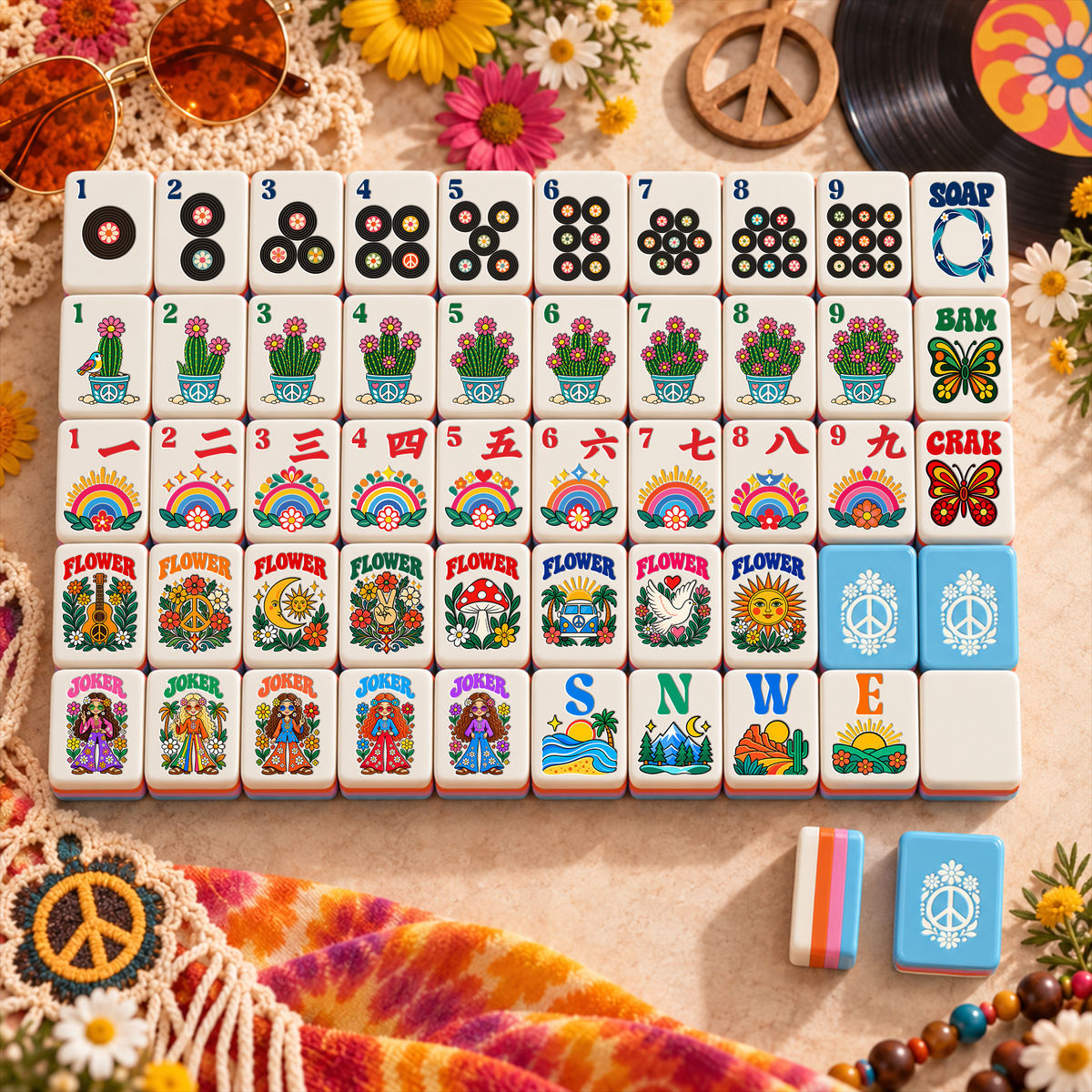
Both "mahjong" and "mah jongg" are correct. "Mahjong" (one word, no space) is the modern Pinyin romanization from Mandarin Chinese—the international standard used by most rule organizations and manufacturers worldwide. "Mah jongg" (two words, sometimes "mah-jong" hyphenated) is an older Wade-Giles transliteration that dominated English-language play from the 1920s onward and remains the official spelling in American mahjong, used by the National Mah Jongg League since its founding. American players—especially in the U.S.—typically use "mah jongg" on score cards, league materials, and casual reference. Chinese, Hong Kong, and Riichi players use "mahjong." Neither is wrong; context and community custom determine which you'll encounter. When buying an American mahjong set or hosting a game, "mah jongg" appears on official documents and product labels, though many retailers now use both interchangeably.
Why Does "Mah Jongg" Dominate American Play?
The National Mah Jongg League, founded in 1937, standardized American mahjong rules and chose "mah jongg" as its official spelling—a Wade-Giles romanization that felt natural to English speakers at the time. Every annual card they issue, every league tournament scorecard, and every rulebook printed since uses "mah jongg." When you sit down for your weekly game with your best-selling mahjong sets, the hands printed on your card reference "mah jongg," making that spelling the living standard for American play. Many U.S. retailers, clubs, and players simply follow what the League established nearly 90 years ago.

What Changed: From Wade-Giles to Pinyin?
Wade-Giles romanization was the dominant system for English-Chinese transliteration until the 1950s. "Mah jongg," "Peking," and "Tao Te Ching" are Wade-Giles forms. Pinyin, adopted as China's official romanization in 1958 and recognized internationally, simplified many spellings: "mahjong" replaced "mah jongg," "Beijing" replaced "Peking." Most modern games, academic works, and international organizations now use Pinyin. The result: "mahjong" is correct globally, but American mahjong traditionalists and the League itself maintain "mah jongg." You'll see both on product pages, tournament announcements, and rulebooks—often used interchangeably by modern writers.
🀄 Shop best-selling mahjong sets →
How to Know Which Spelling to Use
Your choice depends on context and audience. If you're entering a U.S. National Mah Jongg League-affiliated tournament or following American-specific rules, use "mah jongg"—it matches the card, league documents, and official materials. If you're learning Chinese mahjong, Hong Kong mahjong, or Riichi (Japanese) mahjong, use "mahjong"—those communities use Pinyin and international standards. For casual hosting or writing to a global audience, "mahjong" is clearer and avoids confusion. On product packaging, both appear; Mahstead's engraved American mahjong sets may feature either spelling depending on the design, but all follow American League rules regardless of label.
The Regional Breakdown: Where Each Spelling Lives
Region/Game Type | Standard Spelling | Why | Rule Source |
American (U.S./Canada) | Mah jongg | National Mah Jongg League official since 1937 | League card, tournaments |
Chinese (Mainland) | Mahjong | Pinyin romanization, official since 1958 | Mainland Chinese standards |
Hong Kong/Cantonese | Mahjong | Pinyin used in modern contexts, tradition uses variants | Regional rules documents |
Riichi (Japanese) | Mahjong | International Riichi standard, Pinyin-based | World Riichi Association |
Taiwanese | Mahjong or 麻將 | Pinyin or traditional Chinese characters | Taiwanese rule variants |
Casual/Online | Either | Both accepted; context determines clarity | No single authority |
American players hosting weekly games will see "mah jongg" on their mahjong for beginners guides and official score materials. International players, especially those learning the game online or through media, typically encounter "mahjong" first.

Spelling on Products, Packaging, and Play Materials
When you open a Mahstead best-selling mahjong sets, the tiles themselves carry no text—tiles show Bams, Craks, Dots, winds, dragons, and flowers. The box, instruction sheet, and any included mat or rack may label the game "mahjong" or "mah jongg" depending on the design line. Engraved sets—like our collection with titles—let you choose how your set is personalized, and many players request "Mah Jongg" to match League tradition. Your official National Mah Jongg League card always prints "Mah Jongg" in the header, making it the reference point for rule-based play. When you order a new set, check the product description to see which spelling appears on the packaging—both are equally valid, but consistency with your league or playgroup matters for atmosphere and tradition.
🎁 See our most-loved mahjong sets & accessories →
Common Spelling Mix-Ups: What Not to Confuse
Never confuse spelling variation with rule variation. A set labeled "mahjong" plays by the same 152-tile, four-player American rules as one labeled "mah jongg"—spelling doesn't change the game. However, Chinese mahjong, Hong Kong mahjong, and Riichi mahjong are genuinely different games with different tile counts, hand structures, and scoring. If you're new to American mahjong as a beginner, verify you're learning American rules, not confusing them with other variants. The spelling tells you about English transliteration history, not the ruleset itself. Another mistake: assuming "mah jongg" is "old" and "mahjong" is "new"—both are current. The League uses "mah jongg" officially; international communities use "mahjong." Choose based on your game context, not recency.
What to Check Before You Buy
Verify the ruleset, not the spelling. Confirm you're buying an American mahjong set (152 tiles, eight jokers) by checking tile count and suit names (Bams, Craks, Dots), not by reading the product label spelling.
Match your playgroup's convention. If you host weekly games with League players, a set with "Mah Jongg" engraving reinforces tradition; if you're learning multiple variants, either spelling works.
Check included materials. Sets often come with mats, racks, or instruction cards. Confirm the card or mat reflects American League rules (current year's hand patterns).
Inspect tile quality and size. Spelling doesn't affect gameplay; tile thickness, engraving clarity, and suit legibility do.
Confirm the spare tiles. Our 160-tile sets include 152 playing tiles plus spares; verify this meets your replacement needs.
✨ Find your Mahstead set — free US shipping →

FAQ
Is "mah jongg" the only correct spelling for American mahjong?
No. "Mah jongg" is the National Mah Jongg League's official spelling and the standard in American play, but "mahjong" is also correct internationally and increasingly used in U.S. casual contexts. Both describe the same game in America.
Why do some sets say "mahjong" and others say "mah jongg"?
Different romanization traditions and modern style choices. Older Wade-Giles transliteration produced "mah jongg"; modern Pinyin produces "mahjong." Manufacturers often use both interchangeably on packaging, though League materials always use "mah jongg."
Does spelling affect which American mahjong rules I follow?
No. Spelling is purely transliteration. American mahjong rules—152 tiles, eight jokers, four players, current-year card hands—apply regardless of whether the set or card says "mahjong" or "mah jongg." Verify the ruleset and tile count, not the spelling.
Should I correct someone who uses the "wrong" spelling?
Not necessary. Both are correct in different contexts. "Mah jongg" is the League standard and traditional American norm; "mahjong" is the modern international standard. Most English speakers understand both refer to the same game.
How do I know if I'm buying an American set vs. a Chinese or Riichi set?
Check tile count (American = 152), suit names (Bams, Craks, Dots), and included materials. The National Mah Jongg League card or a League-compliant rulebook confirms American rules. Spelling alone doesn't indicate variant—verify the ruleset documentation.
Can I use "mahjong" and "mah jongg" interchangeably when talking about American games?
Yes, in casual conversation. For official contexts—League tournaments, scorecards, formal materials—use "mah jongg" to match League standards. Both are understood by American players.


View More
View More
View More
