
Mahjong Mat vs. Table Cover: Which Should You Buy?
Last updated: Nov 23, 2026
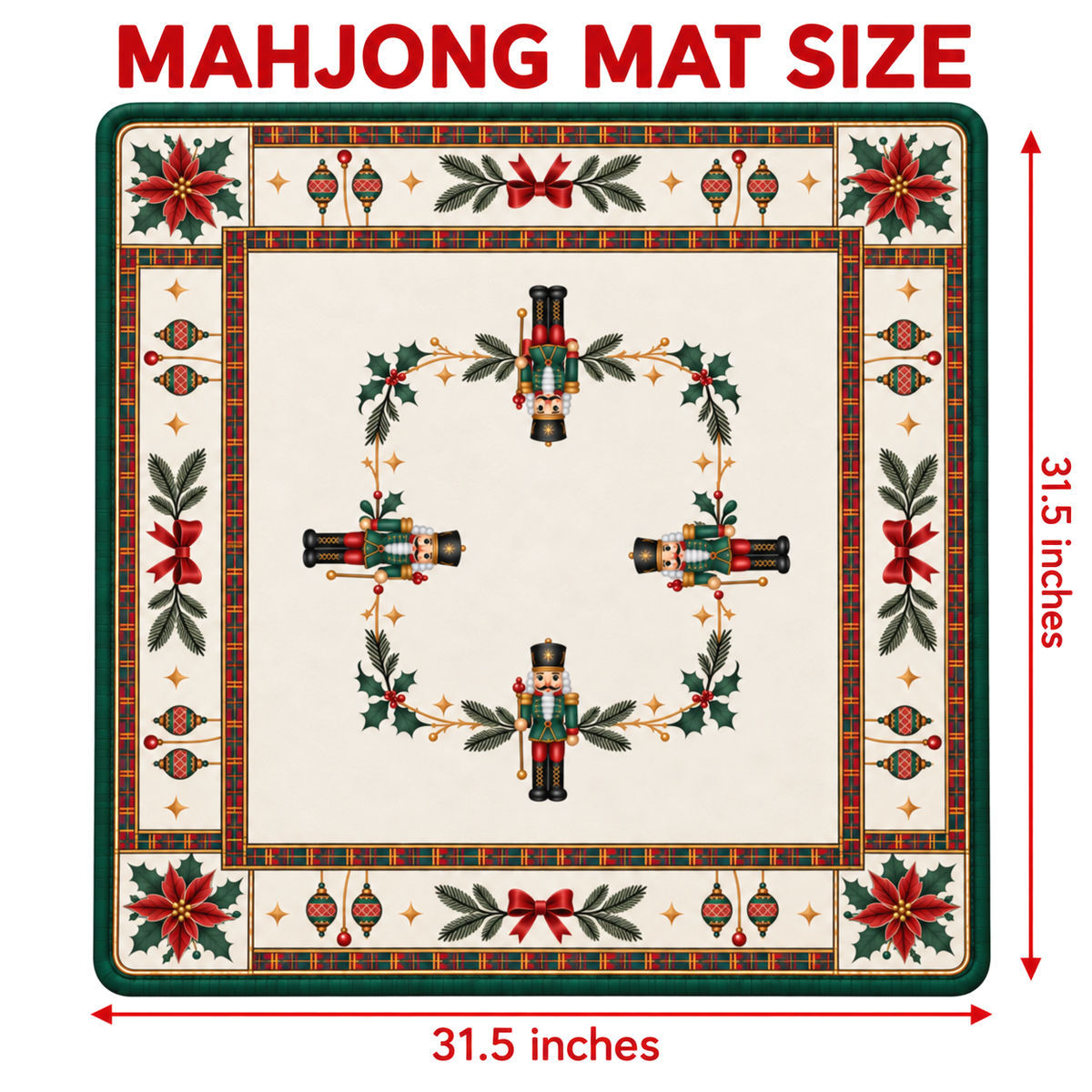
A mahjong mat is a dedicated playing surface—usually 36–40 inches square, felted or sueded, with printed tile guides or a neutral field—that sits on top of any table and stays put during play. A table cover is fabric you drape over a table to protect it and sometimes mark zones. Mats grip tiles better, keep them from sliding during the Charleston, stay centered without pinning, and pack flat for travel; they're the choice when you host regularly or move between venues. Table covers are cheaper, reversible, often decorative, and suit players with a permanent home table who want protection without a dedicated play layer. Setup time for a mat is 30 seconds; a cover needs smoothing and corner anchoring. At Mahstead, our mat collection ranges from printed guides to solid colors, all cut to lie flat and pack small. Neither is mandatory—many players use a bare table—but a mat eliminates the friction and tile-scatter that frustrate new groups.
A mahjong mat and a table cover serve different purposes. We break down when to choose each, what to expect in real play, and how to avoid the most common setup mistakes.
What is the actual difference between a mat and a cover?
A mat is a fixed-size, single-layer fabric sheet—typically 36, 37, or 40 inches square—designed to sit flat on a table for the duration of your game. It has a backing (usually rubber or felt) that grips the table underneath, keeping it centered even during fast tile passing in the Charleston. The playing surface is felted or sueded, so tiles don't skid; printed mats often include a grid showing tile placement or hand zones.
A table cover or tablecloth is fabric you drape over the table legs, usually rectangular and oversized to hang on all sides. It protects your table from spills and wear but floats on the surface; corners must be tucked or pinned so they don't bunch under racks or catch during play. Covers are reversible, washable, and often come in decorative prints or solid colors. The key difference: a mat stays where you put it; a cover needs management.
Which surface is better for tile grip and control?
Tile grip is where the mat wins in real play. Our felted mats provide enough friction that tiles don't migrate during the Charleston—the four-round tile-passing ritual that kicks off every hand. When you pass stacks across the table at speed, a bare table or loose cover causes tiles to slide sideways or tumble. A mat's sueded or felted texture holds them, reducing frustration and misdeals.
Table covers come in varying weights; thinner ones are slippery. Heavier, textured covers perform better but still can't match a mat's anchored stability because they shift under the table. If your group plays fast and passes tiles aggressively, a mat prevents scattered tiles from becoming a game-stopping argument. For casual, slow-paced games, a cover works fine. Verdict: mats dominate if speed or smooth play matters to your table.
How much space do you actually need, and what size should you buy?
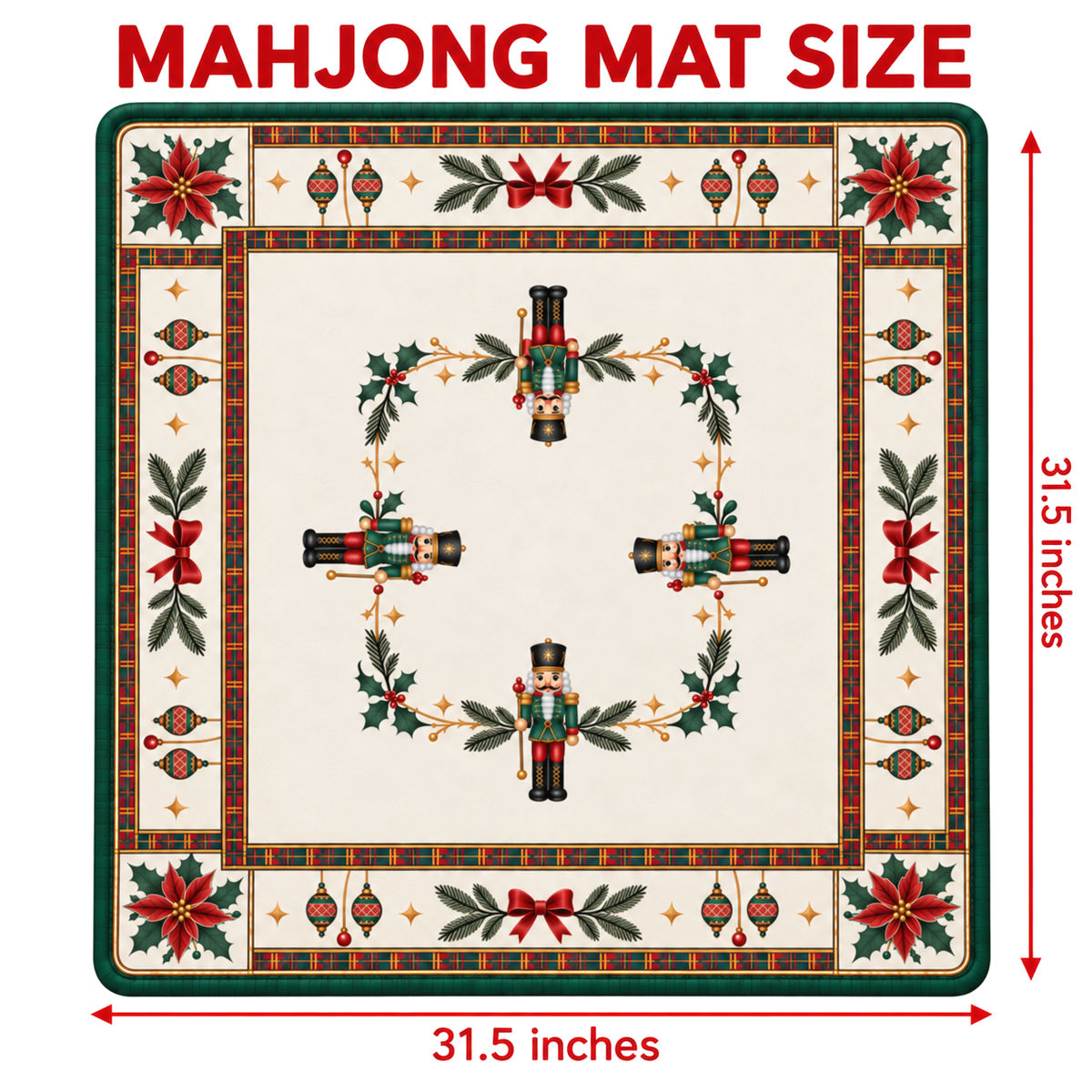
Standard American mahjong play requires four racks, one per player, arranged around the table edges, plus central space for the wall (tiles not yet drawn). A 36-inch square mat works for small dining tables (36–48 inches) and fits snugly with minimal overhang. A 37–40 inch mat suits larger tables and gives breathing room for your discards and won tiles.
Table covers come in standard tablecloth sizes: 52×70 inches (rectangular, seats 4–6), 60×90 inches (larger), or round options. Oversizing a cover gives you overhang for protection but also more fabric to tuck or pin, increasing setup friction.
What to check before you buy: Measure your table surface (not including legs) and add 2–3 inches to your ideal mat size for comfort. If your table is asymmetrical or wobbly, a mat with a rubber backing compensates better than a cover. For travel between venues, a mat packs into a flat bag; a cover requires folding and storage space. Choose mat size based on your table width; choose cover size based on how much overhang you want.
🎁 See our most-loved mahjong sets & accessories →
How do setup time and portability compare?
A mat takes 30 seconds to deploy: unroll it, smooth it flat, and play. It packs into a small drawstring or flat bag, fitting in a car seat or a mahjong case. If you travel to a different venue weekly or move between two homes, a mat is frictionless.
A table cover takes 3–5 minutes if you're precise—smooth it, tuck all four corners or clip them, adjust the sides so they hang evenly, and make sure the fabric doesn't bunch under your racks. If you leave it loose, tiles can catch the hem. Packing a cover requires folding it carefully to avoid wrinkles, and it occupies more space than a rolled mat.
Many players skip setup altogether and play bare-table; others keep a cover on their home table permanently, then add a mat when hosting larger or more frequent games. For portability and quick setup, mats win decisively. For permanent home play, a cover-only approach saves money and storage.
What's the cost and durability picture?
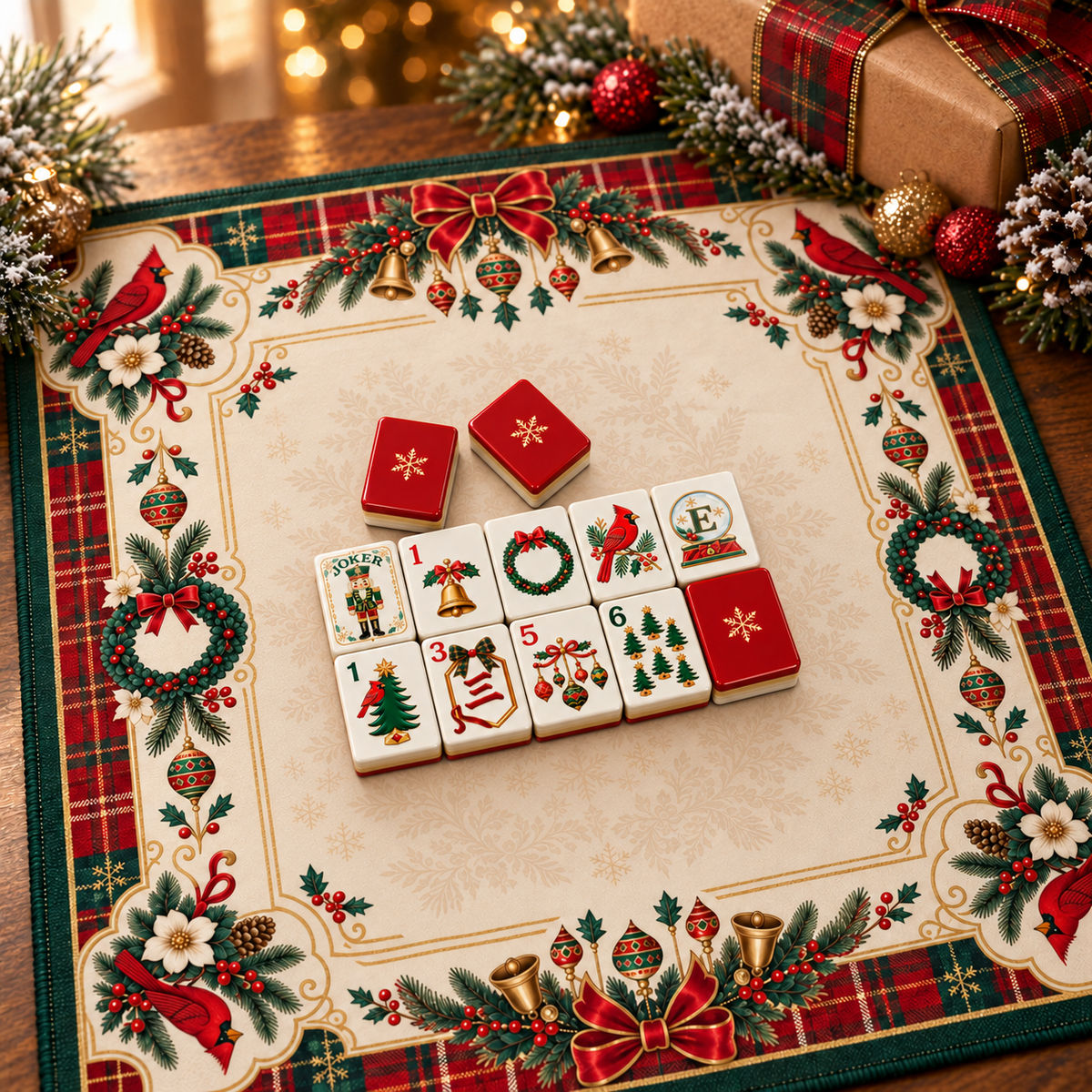
From our mahjong mats collection, mats are mid-range to premium: sueded or felted surfaces, printed or solid, designed to last many seasons with normal care. They resist wear because tiles don't drag on the surface—they slide smoothly. A well-made mat stays flat and maintains grip for years of weekly games.
Table covers are typically lower-cost (often sold as sets of multiple cloths) and wear faster because they experience friction from table edges, corners, and tucking. They stain and fade more visibly than mats, though washing extends life. If a mat gets spilled on, spot-clean it and it's ready; a cover may need full washing and drying time before the next game.
Durability comparison: A mat costs more upfront but spreads its cost over more plays. A cover costs less but requires earlier replacement. For a group hosting weekly games, a mat pays for itself in peace of mind and reduced setup stress.
Who should buy a mat, and who should buy a cover?
Scenario | Best choice | Why |
Weekly host, multiple tables | Mat | Consistent play, quick setup, portable |
Permanent home table, casual play | Cover | Protects table, no dedicated layer needed |
Tournament or league play | Mat | Standard; required by many venues |
Outdoor or high-traffic setting | Cover | Easy to replace, washable, less theft risk |
Travel between venues | Mat | Packs small, no corner management |
Beginner group, learning | Mat | Fewer variables; tiles don't scatter |
One-table household player | Either | Preference; cover adds home décor |
Our pick for most players: a Mahstead mat from our core collection if you host or travel; a table cover if you have a permanent table and want simplicity.
What to check before you buy
Measure your table surface (not legs)—width and length—and verify the mat fits with 1–2 inches of overhang.
Check the backing material. Rubber grips better than bare fabric; felt or suede backing is ideal.
Decide on printed vs. blank. Printed mats show hand zones and tile placement; blank mats are flexible and less visually busy.
Test whether your table is level. A wobbly table needs a mat's grip; a solid, flat table can use either.
Count your expected use. If weekly or more, a mat saves time and frustration; if monthly or less, a cover is economical.
Confirm storage space. Mats roll or fold flat; covers need closet room.
🀄 Shop best-selling mahjong sets →
If you're setting up for the first time, a mat eliminates one decision: it sits, it works, tiles stay put. A cover is the choice for players who already have a routine and want low-cost table protection. Either way, the real game is the tiles and the people—but the right surface removes friction so you can focus on that. Explore Mahstead's mahjong mats and find the fit for your table.
✨ Find your Mahstead set — free US shipping →

FAQ
Can I use a regular tablecloth as a mahjong playing surface?
Yes, if it's tightly secured and textured. Thin or slippery cloths cause tiles to slide during the Charleston and tile passing, which slows play and frustrates players. A dedicated mat or a heavy, textured cover performs much better.
Do I need a mat if I play on a bare table?
No. Many casual groups play bare-table for years. But tiles scatter and slide more, the Charleston takes longer, and your table gets marked. A mat costs less than replacing a damaged table and saves 10+ minutes per game in aggregate.
What size mat should I buy for a round table?
Round tables present a challenge because square mats don't fit them well. For round tables, a standard 36–40 inch mat covers the center play zone; players sit around the edges with their racks on the table rim. Measure the diameter and choose the mat size closest to it minus 4–6 inches. Some players use a cover instead for round tables.
Can I put a mat on top of a table cover?
Yes. Some players drape a cover for table protection, then place a mat on top for play. This adds setup time but is common in high-traffic venues. Confirm the mat and cover don't slide relative to each other by using non-slip corners or rubber grips on the mat's backing.
How often do I need to replace a mahjong mat?
With normal use (weekly games, kept clean and dry), a quality mat lasts 3–5 years or more before the surface wears or backing loosens. Spills, direct sunlight, and humid storage shorten lifespan. A cover typically needs replacing every 1–2 years with heavy use due to staining and edge wear.
Do printed mats help me memorize the National Mah Jongg League card?
No. Printed mats usually show general hand zones or tile counts, not the current year's card. Use the card itself or a card holder to learn hands. A mat is purely functional—it's the tiles and your study that build memory.


View More
View More
View More
