
Mahjong Lighting and Seating: Setup Tips for Every Game
Last updated: Nov 23, 2026
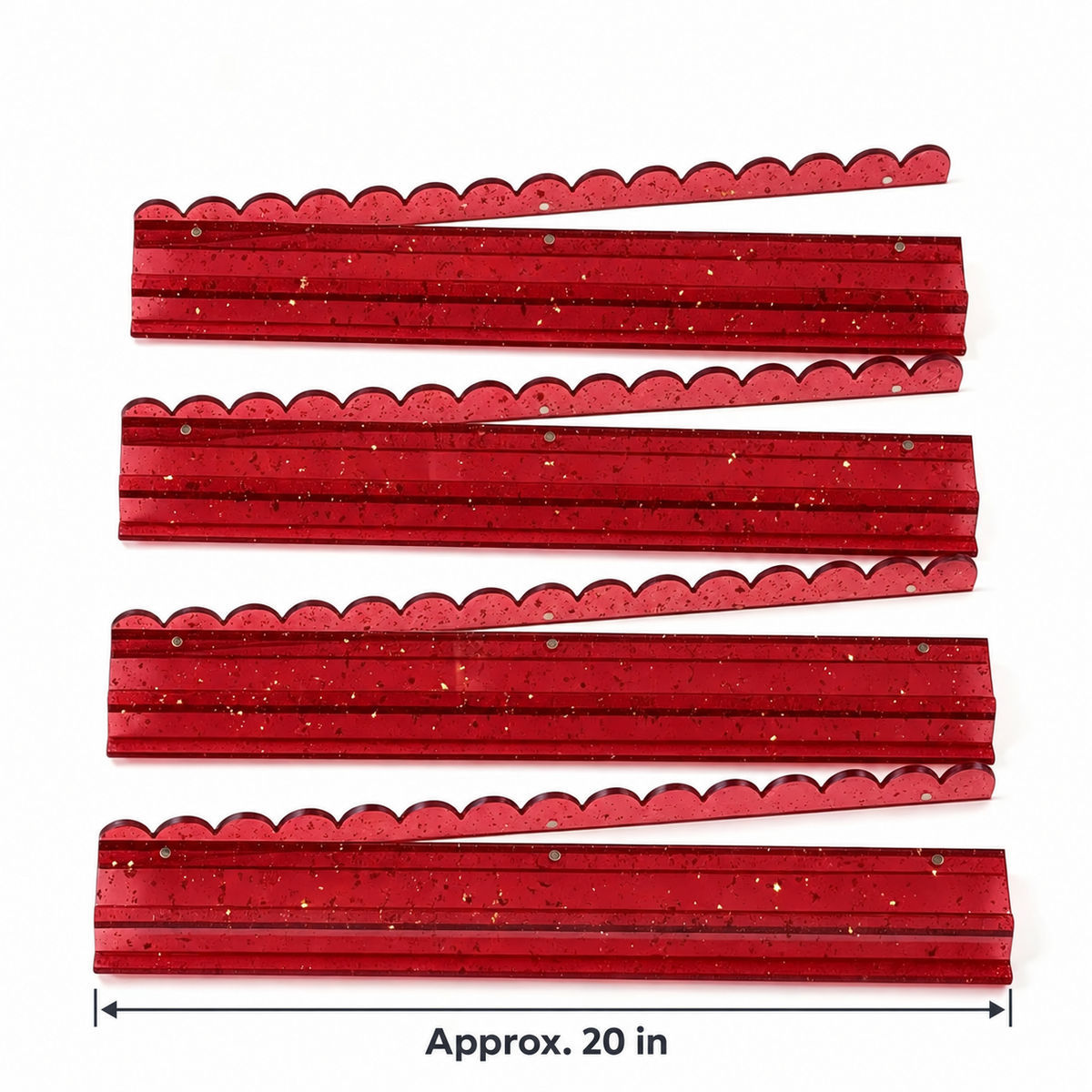
Set up your mahjong table with a light source—ideally a ceiling fixture or clip lamp—positioned 18–24 inches above the playing surface, aimed slightly to the side to avoid glare off the tiles. Seat all four players at least 15–18 inches from the edge of the table; each player needs about 24 inches of elbow room along their edge. The North player traditionally sits opposite South; East sits to South's left. Use a dedicated mahjong mat to define the playing zone, improve tile grip, and protect your table surface—Mahstead's acrylic sets are designed to sit securely on any mat without sliding. Avoid backlighting, windows with direct sun, and fluorescent flicker; if you can read small print comfortably at arm's length, your tile contrast is good. Test your setup during a Charleston (the pre-game tile exchange) to spot glare or sightline problems before play starts.
Good lighting and smart seating are the difference between a comfortable, fast game and one where players squint, complain about hand visibility, and take twice as long. We'll walk through exactly how to set your table.
How much light do you actually need for mahjong?
You need enough light to read tile faces and suits from your rack clearly, without squinting or tilting tiles toward your eye. Most players find 500–750 lux (measured at the table surface) comfortable; that's roughly the brightness of a well-lit office or kitchen. A single 60-watt equivalent LED bulb 24 inches above the table usually meets this. The key is consistency—avoid shadows, mixed overhead and side light, or flickering fluorescent tubes that strain your eyes over a two-hour game. Test your setup by placing a tile face-down on the mat, then reading it from your rack position without moving closer; if you hesitate or tilt your head, add light or reposition the source. Never rely on table lamps that shine from player height; light should come from above or slightly behind the player looking at the tiles.

Where should each player sit around the table?
American mahjong assigns seats by wind: North (across from you), East (to your left), South (you), West (to your right). In practice, seat the strongest player first (often South), then assign the other three to balance skill or follow house tradition. Each player needs a dedicated edge: ideally 24–30 inches of linear space to lay down their rack, draw tiles from the wall, and discard without bumping into neighbors. Sit at least 15–18 inches back from the table edge so you can comfortably hold your tile rack and see all 13 tiles at once. If your table is small (under 36 inches square), rotate positions every few hands or play standing up—sitting too close forces players to crane their necks or hold tiles at odd angles, slowing play and inviting misreads. The dealer sits South and begins the hand; players take turns going clockwise.
What's the ideal table size and height?
A square table 36–42 inches on each side is the American standard; it fits four players with room for each to lay down a rack and room in the center for the wall (where tiles are drawn). Height should be 28–30 inches—the same as a dining table—so players' elbows rest at 90 degrees when their arms are on the surface. If your table is too high, players lean backward and lose sight of their tiles; if too low, they hunch forward and get arm strain. If you're playing on a multi-purpose table, a dedicated mahjong mat creates a defined playing zone and prevents tile sliding, which is crucial on any surface that isn't dead-flat or slightly textured. A mat also cushions the tiles, reducing noise (appreciated by neighbors or housemates) and protecting the underlying table. Measure your space first; if you have a small table, consider a 34-inch square mat that fits snugly and lets players sit a bit closer without crowding.
How do you avoid glare and shadows during play?
Glare—light reflecting off the tile faces or the mat surface—is the single biggest cause of slow play and misreads. Position your light source to the side and slightly back of each player, never directly overhead or in front. If you're using a ceiling fixture, supplement it with a clip lamp on one side of the table, angled at 45 degrees downward. Avoid windows with direct afternoon sun; if your game room has bright windows, close curtains or blinds during play. Never sit with a bright light or window behind you (backlighting), because it forces other players to stare into your silhouette and guess at your tiles. If you're playing in a basement or windowless room, a single overhead fixture often works best; test it by asking a player to sit and read tiles without moving. If they move tiles closer to their eyes or tilt the rack, reposition the light. Shadows from your own head, arms, or the wall can also block visibility—adjust the fixture height or angle until all four players see the center and discard pile equally.
What equipment should you have within arm's reach?
Keep the National Mah Jongg League card visible to all players—tape it to the table edge or prop it on a small stand so no one has to ask what hands are legal. Have a dedicated discard area in the center, ideally marked by a mat or tile tray, so discards don't scatter and everyone sees which tiles are used. A pair of dice (usually two six-sided dice, included in any complete set) lives at the dealer's position until a new hand is dealt. Some players use a wind indicator (a tile or marker showing whose turn it is and which wind position they hold) to prevent confusion in longer games. All four players should have their tile racks positioned at equal distance from the center wall; if one player's rack is off to the side, they have a sightline advantage and slower access to draws. A mahjong mat with a felt or suede surface prevents tiles from sliding when players pull them from the wall or reach for discards. Keep notepads and pens at the table for score-keeping; even if you're playing just for fun, writing down hand counts prevents disputes and lets players track their wins at a glance.
Setup Checklist
Task | What to Check | Why It Matters |
Light position | 18–24 inches above table, angled side/back | Eliminates glare and shadow on tile faces |
Light brightness | Can you read a tile face without squinting? | Prevents eye strain over 2+ hours |
Seat spacing | 24–30 inches per player along table edge | Gives room for racks, prevents bumping |
Player distance | 15–18 inches back from table edge | Allows full view of 13 tiles in rack |
Mat placement | Covers center area, secured at corners | Keeps tiles from sliding, defines play zone |
Discard area | Clear space in center, visible to all four | Prevents confusion over which tiles are used |
Wind positions | All players agree: N/E/S/W before dealing | Avoids claims of misdealing or scoring disputes |
Glare test | Ask each player to read tiles without moving closer | If they move or tilt tiles, adjust light or angle |
🀄 Shop best-selling mahjong sets →
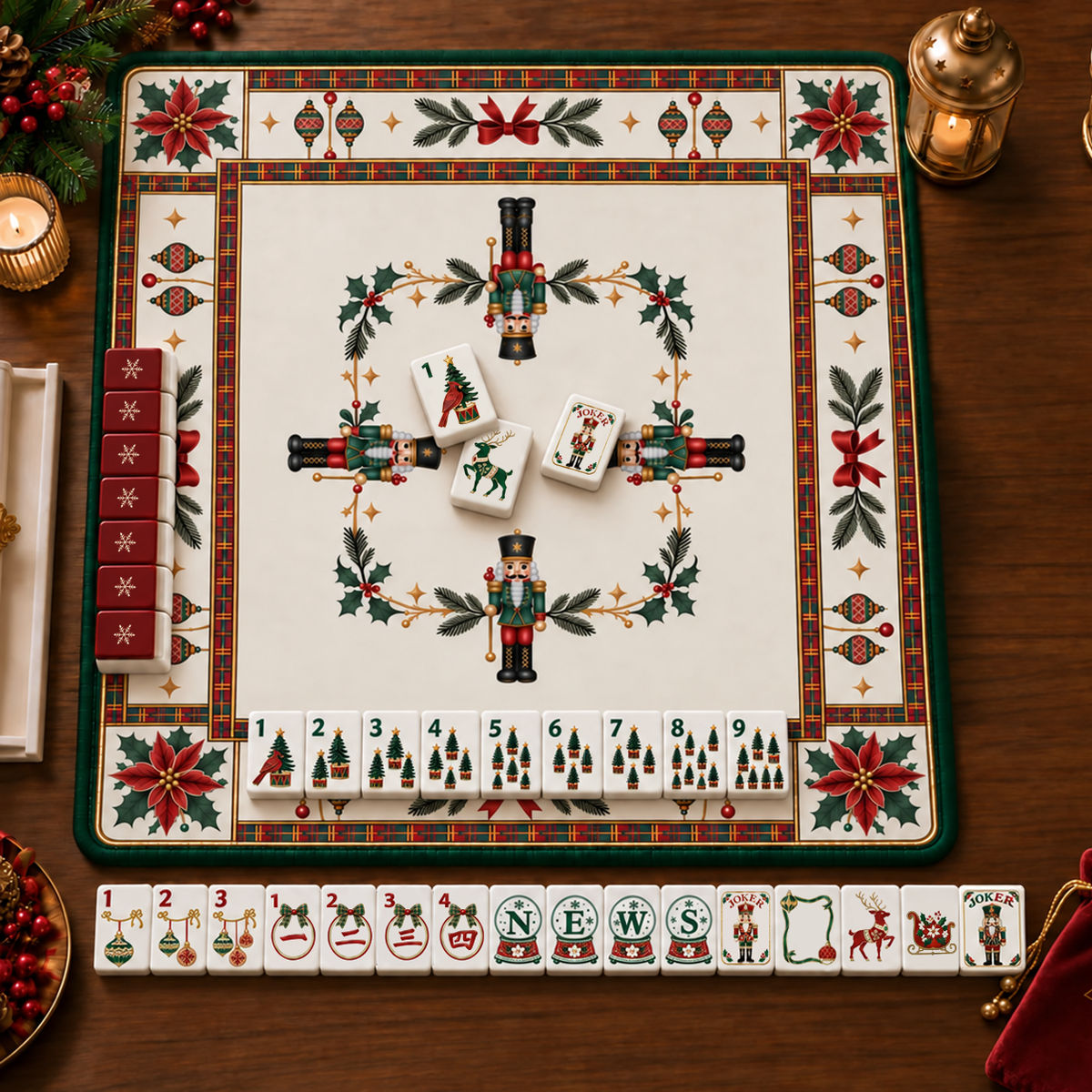
Why does a mahjong mat matter more than people think?
Many players treat the mat as optional window dressing, but it's one of the fastest ways to improve game speed and comfort. A mat with a felt or suede surface grips the tiles so they don't slide when you draw from the wall or your neighbors bump the table. It also defines the playing area clearly, which helps players judge distances and tile positions at a glance—especially important when calling a discard or spotting a kong. The mat also protects your underlying table (wood, glass, or laminate), reducing maintenance and wear. If you're playing on a glass table or a polished wood dining table, tiles can feel slippery or bounce awkwardly when drawn; a mat eliminates both problems. It also dampens sound—acrylic tiles clacking on hard surfaces can be loud and annoying to housemates or people in adjacent rooms. Most mahjong mats are machine-washable, so stains or spills are easy to clean. If you host regular games, a mat is as essential as a set of tiles; if you're just learning, it's the one upgrade that pays off within your first few games.
How should you arrange the tile wall and discard pile?
In American mahjong, the wall (the 152 tiles arranged in a line, face-down) is typically laid in the center of the table, running horizontally or vertically depending on dealer position and table shape. The dealer (South) traditionally builds the wall directly in front of them, or all four players collectively build a wall in the center, then the dealer draws first. Place the discard pile immediately to the left of the wall (from the dealer's perspective), or in a small dedicated area so discards don't pile into the wall and block draws. Discards should be visible to all players—arrange them in a grid (three-by-three or four-by-four for quick visual scanning) rather than a jumbled heap. If a player has to hunt for a discard they think was played, the game slows down and disputes can arise. Some groups use a flat tile tray or a mat marker to keep discards in one zone. Position the National Mah Jongg League card so all four players can see it without leaning or asking questions; this is especially helpful during early hands when newer players are still learning the card layout. If your table is very small, use a card stand or tape the card to the edge closest to a frequently-referenced area like the center or a player's rack position.
🎁 See our most-loved mahjong sets & accessories →
What's the best way to set up for players with vision issues?
If one or more players wears glasses, needs high contrast, or has reduced vision, adjust your entire setup for that person—it benefits everyone. Increase overhead light by 25–50%; add a clip lamp or track light if ceiling fixtures alone seem dim. Position the light so it evenly illuminates the tiles and discard area, with no shadows. Choose a mat with a high-contrast color (dark mat, light tiles, or light mat, dark tiles) so tile details pop. If your set has pale or faint suit markings, consider upgrading to one with deeper engraving or printing; engraved American mahjong sets have high contrast and remain readable after years of play. Ensure the card is printed in large type (at least 12-point font) or photo-enlarge a copy and laminate it. Seat the player with vision needs where they have the clearest sightline to the wall and discards—often South or a position with light coming from behind them (not in their eyes). Reduce glare by using a matte (non-glossy) mat rather than a shiny or reflective surface. Ask the player what distance feels most comfortable, then measure that distance and arrange their seat accordingly. These changes make the game safer and faster for everyone, not just the player with vision concerns.
What should you check before your first game night?
Before inviting players over, run through this quick checklist to avoid common mishaps:
Light test: Sit in each seat for 30 seconds and read the League card and a few tiles without squinting or moving closer. If you hesitate, adjust.
Glare check: Look for reflections on the table or mat from windows, fixtures, or lamps. Close any light sources that create bright spots.
Mat placement: Ensure it lies flat with no wrinkles or gaps at the edges—tiles will snag on bumps and slow draws.
Seat comfort: Sit for 10 minutes at the table and rest your arms on the surface. Are your elbows at 90 degrees? Is your back supported? If not, raise the chair or table.
Tile grip: Pick up a few tiles and flip them over on the mat. Do they slide or stay put? If they slide, the mat surface may be too slick or the table too tilted.
Card visibility: Place the League card where at least two players can read it without moving. Is the type size comfortable?
Discard space: Lay out 10–15 tiles in the center and confirm they don't overlap or interfere with the wall.
Noise level: Play a few tiles and listen. If the clacking is loud or harsh, a mat or softer surface will help.
Run through one practice hand with all four players present. Ask each player for honest feedback: "Is the light enough? Do you see the tiles clearly? Any glare in your eyes? Can you reach the center comfortably?" Adjust based on their answers. This 10-minute test saves arguments, slow play, and frustration later.
✨ Find your Mahstead set — free US shipping →
FAQ
Can I use a regular dining table for mahjong, or do I need a special one?
Yes, any square or rectangular table 36–42 inches on a side and 28–30 inches tall works fine. Lay a dedicated mahjong mat on top to grip tiles and protect the surface. The mat is the real equipment; the table is just the base.
What's the cheapest way to get better lighting without buying a new lamp?
Reposition your existing ceiling fixture or move a floor lamp to the side of the table, angled downward. If that doesn't work, add an inexpensive clip lamp (around $15–30) to a shelving unit or chair nearby. Test the angle and distance before your game.
How many people can comfortably play on a small table?
American mahjong is a four-player game only. If your table is under 36 inches square, players will be cramped; consider a larger surface or hosting two simultaneous games at separate tables instead.
Do tiles need to match my mat color?
No. What matters is contrast: if your tiles and mat are very close in color, tile faces become harder to read. A light mat with standard-colored tiles (cream or ivory with clear suit markings) is the safest bet.
Should I use jokers while teaching a beginner?
Not at first. Let the beginner play a full hand without jokers so they learn to read the League card and spot legal patterns. Once they've won 2–3 hands, reintroduce jokers and explain when they substitute and when they can't be used (never as a single tile or pair).
Can I play mahjong standing up instead of sitting?
Yes, though it's tiring over multiple hands. Use a tall table (36–42 inches high) and ensure light is positioned above or to the side. Standing works well for short teaching sessions or casual games, but seated play is faster and more comfortable for a full night.


View More
View More
View More
