
Mahjong in Korea: History, Rules & Where It Fits Today
Last updated: Nov 23, 2026
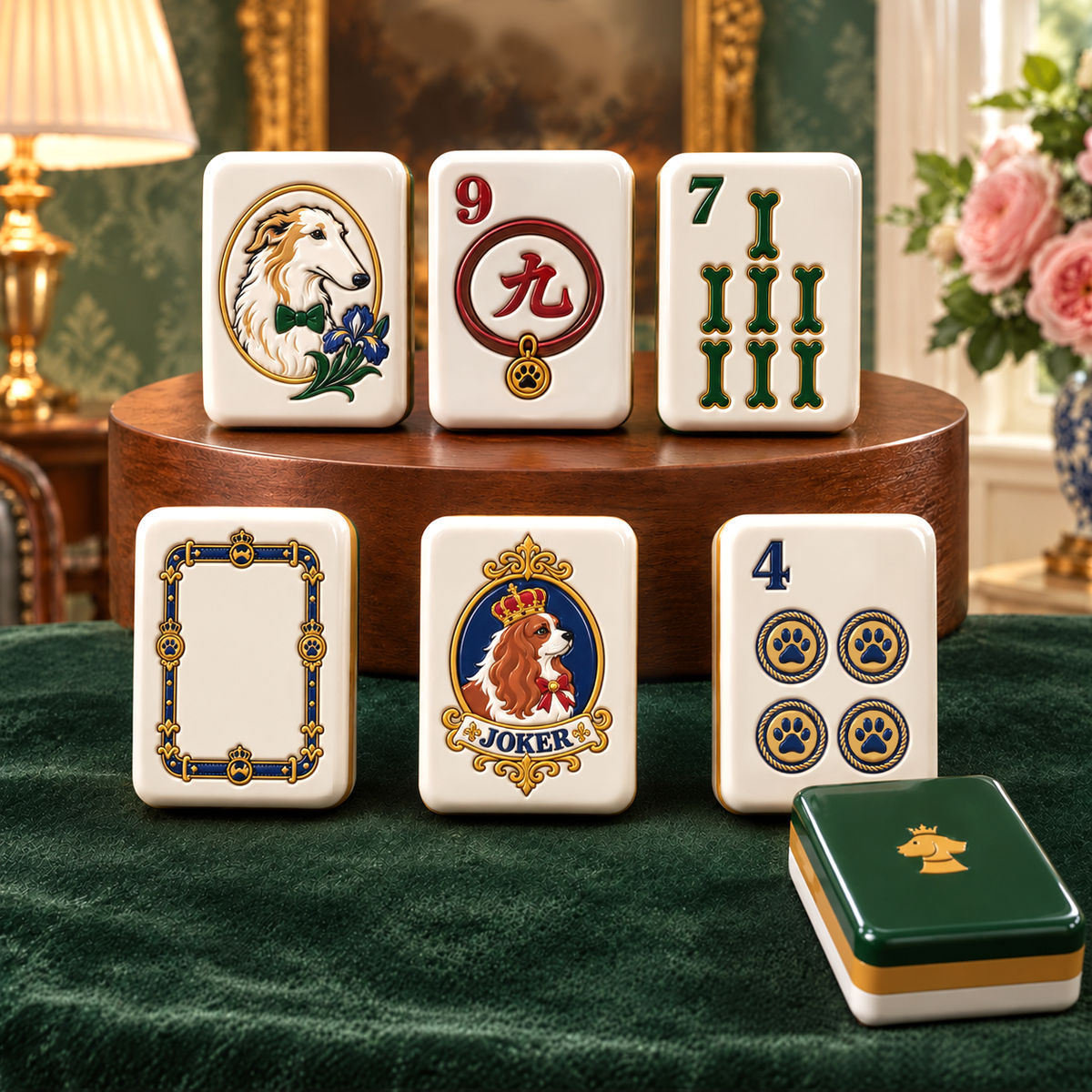
Mahjong entered Korea in the 1910s–1920s during Japanese occupation, brought by traders and travelers from China and Japan. Korean mahjong uses 136 tiles (fewer than American mahjong's 152) and plays with chows (sequences), pungs, and kongs—mechanics absent in American mahjong. The game became a fixture in Korean teahouses, homes, and gambling parlors by mid-century. Unlike American mahjong, which relies on a published hand card and exact tile matching, Korean mahjong emphasizes discarding strategy and hand concealment; all players hold and draw freely, and winning hands vary by region. It remains popular today in Korea and among Korean diaspora communities, though competitive play has declined. For those curious about how different cultures adapted mahjong, exploring our best-selling mahjong sets shows the diversity of tile design across variants.
When did mahjong actually arrive in Korea?
Mahjong reached Korea between 1910 and 1925, most likely through Japanese channels during the Japanese colonial period (1910–1945) and via Chinese immigrant communities in major ports. The game spread rapidly among the urban middle and upper classes—merchants, intellectuals, and leisure-focused households embraced it as both entertainment and social ritual. By the 1930s, mahjong parlors and teahouses featured dedicated tables, and the game had filtered into working-class neighborhoods as well. The game's arrival coincided with Korea's modernization and urbanization, making it a symbol of cosmopolitan leisure at a time of rapid social change.
How many tiles does Korean mahjong use, and how does that change play?
Korean mahjong uses 136 tiles, compared to American mahjong's 152. The reduction comes from fewer winds and dragons: Korean sets include only 16 winds (4 each of North, East, West, South) and 12 dragons (4 each: Red, Green, White)—the same as American—but omit the 8 flower tiles entirely. This smaller tile pool makes hand probabilities shift and reduces the types of melds available, forcing players to rely more heavily on discarding strategy and reading opponents' intentions. The compact deck also means fewer identical tiles in circulation, raising the stakes of tile prediction and memory during play.

What's the biggest rule difference between Korean and American mahjong?
Korean mahjong permits chows (sequences of three consecutive numbers in one suit)—a core mechanic American mahjong explicitly forbids. In Korean play, all players hold and draw tiles freely from the wall; no tiles are exposed on the table unless claimed and melded. Winning hands are region-specific and not printed on a single national card, so players must memorize local hand patterns or consult regional references. American mahjong, by contrast, uses only pungs, kongs, quints, and sextets (no sequences), requires a published hand card valid for the current year, and allows exposure of claimed melds. These structural differences mean that a hand winning in Seoul would not be recognized in Dallas—they are fundamentally different games, not mere variations.
Why did Korean mahjong become a betting game while American mahjong didn't?
Cultural attitudes toward gambling and leisure shaped this divergence. In early-to-mid 20th century Korea, mahjong parlors operated explicitly as betting venues; money games were normalized and often tied to working-class social structures and informal credit networks. American mahjong emerged in the 1920s–1930s among Jewish and Chinese immigrant communities in the United States, where it was framed as a family and women's social game; competitive play emphasized skill and hand recognition over monetary stakes, and the game's rulebook and printed hand card created a standardized, "legitimate" framework. Korean mahjong retained its association with money play and remained less standardized, making it harder to commercialize as a ruleset and easier to suppress during periods of social reform. This historical difference explains why American mahjong today is played by millions in living rooms and clubs worldwide, while Korean mahjong remains culturally specific and less internationally codified.

Is Korean mahjong still played today, and where?
Yes, Korean mahjong persists in Korea and among Korean diaspora communities, though casual and competitive play has declined since the 1980s. In South Korea, the game survives in family gatherings, retirement communities, and a shrinking number of traditional teahouses, where older players (especially women) maintain weekly games. Younger Koreans know of mahjong but rarely learn or play it. Korean diaspora in the United States, Canada, and other countries have preserved knowledge of the game, and some community centers and cultural associations in cities with large Korean populations occasionally host games. However, no international governing body or annual ruleset update (like the American Mahjong League card) exists for Korean mahjong, so learning the game typically requires a patient family member or a rare printed regional guide. The game's cultural significance remains high in Korean memory, but active participation is now generational rather than universal.
Aspect | Korean Mahjong | American Mahjong | Why It Matters |
Tile Count | 136 | 152 | Fewer tiles = different hand probabilities |
Sequences (Chows) | Allowed | Forbidden | Korean game is more flexible; American stricter |
Hand Card | Region-specific, memorized | National yearly card, printed | American players follow one ruleset; Korean varies by area |
Tile Exposure | Hidden except when melded | Hidden; exposed melds stay visible | Different strategic information |
Betting | Traditional & common | Modern social, rarely money | Cultural origin shapes play style |
Popularity Today | Declining in Korea; niche overseas | Millions globally; growing | American variant is more accessible & standardized |
When starting to explore how different cultures play mahjong, many people first wonder about the equipment itself—tile design, set durability, and how many jokers they'll need. Our collection focuses on American mahjong sets with 160 tiles (152 playing tiles plus spares), but understanding Korean and other regional variants helps you appreciate why American mahjong equipment is specifically engineered for sequences-free, joker-dependent play.
What role did mahjong play in Korean women's social life?
Mahjong in Korea became a primarily female social space, especially among middle- and upper-class women. Daytime mahjong gatherings (called "mahjong gatherings" or informally "tile clicking sessions") served as a form of independence, intellectual engagement, and peer bonding in a society where women's public mobility was otherwise restricted. These gatherings were hosted in homes, teahouses, and specialized parlors, and they often involved small money stakes or symbolic wagers—part of the social glue rather than the primary motive. For many Korean women from the 1930s onward, mahjong was a rare space where skill, memory, strategy, and social authority could be exercised freely and valued by peers. This gendered history is notable because American mahjong also became associated with women's leisure and skill-building in the mid-20th century, but through different social structures (club memberships, printed rules, and a more formalized competitive framework). Both cultures used mahjong as a vehicle for female autonomy and mental engagement, even if the games themselves were structurally different.
🀄 Shop best-selling mahjong sets →
What to check before you buy mahjong equipment for learning variants
If you're curious about Korean or other regional mahjong traditions and want to own a set, remember: American mahjong sets sold in the US (including ours) are optimized for American rules—152 tiles, jokers, no sequences. A Korean mahjong set would have 136 tiles and different dragon/wind composition. If you're learning American mahjong from scratch, buy an American set; if you're researching or want to eventually explore Korean play with family who knows it, ask them to source a set from Korea or a specialty import retailer, as American retailers do not stock Korean-specific tiles. For American mahjong, our acrylic 160-tile sets arrive ready to play and are designed to last through thousands of hands. Always verify tile count and suit labeling before purchase—a 136-tile Korean set will not work for American game nights.
🎁 See our most-loved mahjong sets & accessories →

FAQ
Can you play Korean mahjong with an American mahjong set?
No. American sets have 152 tiles with jokers and no chow capability; Korean sets have 136 tiles and different wind/dragon counts. The games' tile mechanics are incompatible. Using the wrong set makes it impossible to form legal hands in either variant.
Is Korean mahjong harder than American mahjong?
Not inherently. Korean mahjong requires memorizing regional hand patterns instead of consulting a printed card, and permits sequences, which adds flexibility but also complexity. American mahjong's reliance on a fixed yearly hand card and prohibition of sequences makes it more standardized but equally strategic. Difficulty depends on what you've learned first.
Where can I find someone who teaches Korean mahjong in the United States?
Korean community centers, cultural associations, and senior centers in cities with larger Korean populations sometimes host classes or casual games. Ask at local Korean restaurants, beauty salons, or churches; word-of-mouth within the community is often more reliable than online searches. Alternatively, ask family members or Korean-speaking friends if they know players.
Why doesn't American mahjong use chows like Korean mahjong does?
American mahjong was designed in the 1920s–1930s as a simplified, standardized variant emphasizing pattern recognition and luck (through jokers and a fixed hand card). Chows add complexity and require different strategy. The choice to exclude them made American mahjong easier to teach and standardize, and it became the defining feature of the American game.
Can Korean players and American mahjong players play together using one ruleset?
No. The tiles, hand patterns, and core mechanics are too different. A Korean player would need to learn American mahjong separately, or vice versa. Some multilingual players do know both, but they must agree on which game to play before starting—you cannot blend the two.
Is there a competitive Korean mahjong league like the American Mah Jongg League?
No. Korean mahjong has no centralized international governing body, annual ruleset publication, or formal league structure. Play remains regional, informal, and passed down through families and communities. This decentralization is one reason American mahjong has grown globally while Korean mahjong remains culturally specific. --- ✨ Find your Mahstead set — free US shipping →


View More
View More
View More
