
Mahjong clubs in Sacramento: where to play & how to start
Last updated: Nov 23, 2026
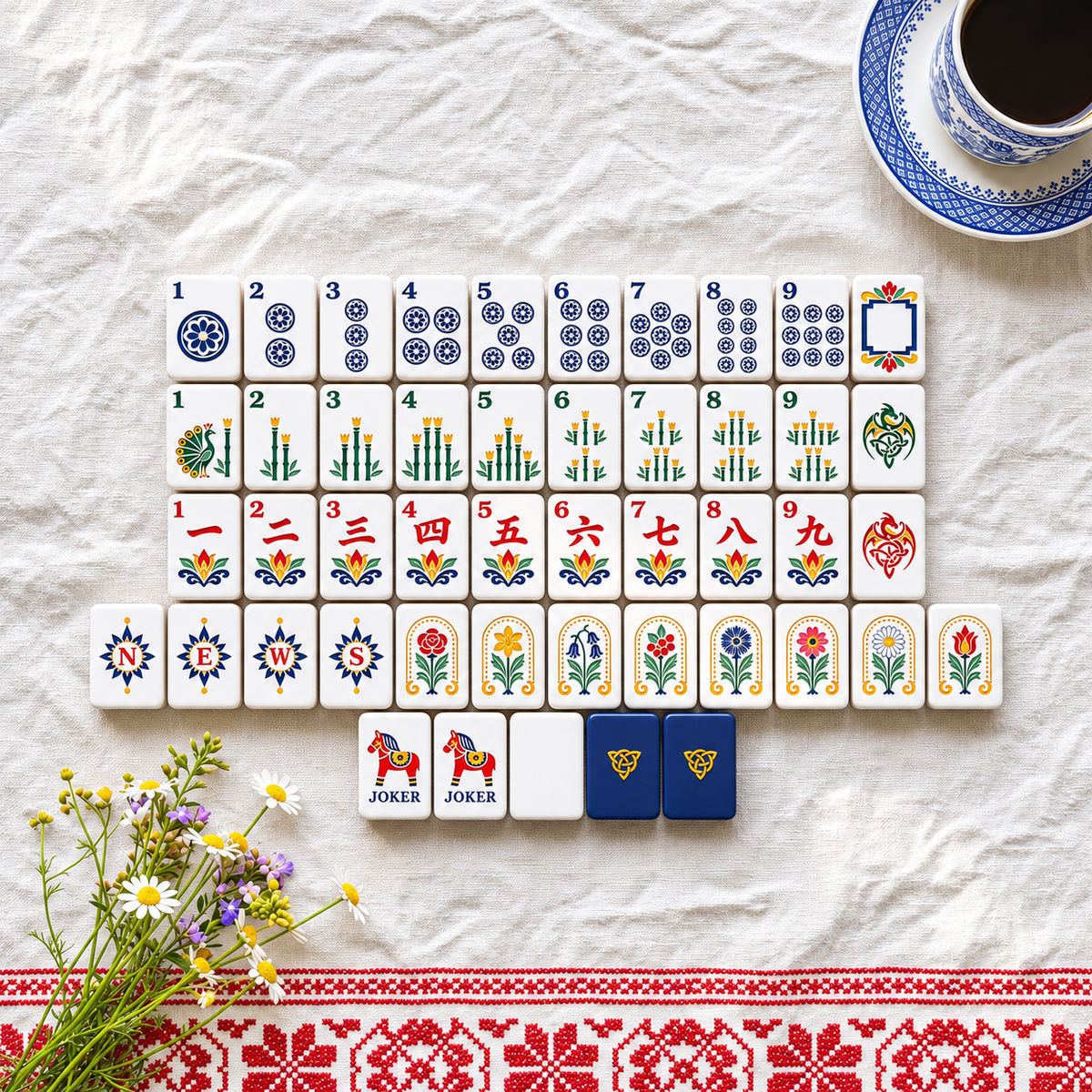
Sacramento's mahjong scene centers on community centers (especially the south Sacramento and midtown branches), public libraries, and informal neighborhood groups. Most welcome drop-in players or casual members; check the Sacramento Public Library events calendar and community center activity guides online for current schedules—many clubs meet weekly on weekday afternoons or weekend mornings. The game requires four players, a standard 160-tile American mahjong set, a mat, and familiarity with the current year's National Mah Jongg League card. Expect 2–3 hour sessions; no entry fee is typical for library-hosted groups, while some private clubs charge modest monthly dues. Before joining, confirm the variant (American mahjong dominates in Sacramento) and ask whether players help beginners—most do. Our best-selling mahjong sets ship free across the US and suit any beginner.
Where do Sacramento players actually gather?
Sacramento mahjong clubs aren't advertised in one central registry, but they're real and findable. Start with Sacramento Public Library's online events calendar and your local community center activity brochure—south Sacramento, midtown, and east Sacramento branches often host afternoon groups. Some groups meet in private homes or through neighborhood associations; ask at your public library for referrals. Check Meetup.com's Sacramento events (search "mahjong" or "mah jongg") and local Facebook community groups focused on games or hobbies. Churches, synagogues, and country clubs also host games. Expect a quick email or phone call to confirm you can join; most Sacramento groups welcome new players.

What's the actual time commitment?
A typical mahjong session runs 2 to 3 hours. Sacramento's day groups (usually 10 a.m.–1 p.m. or 1 p.m.–4 p.m. on Tuesday or Thursday afternoons) suit retirees and flexible-schedule players; evening groups gather 7 p.m.–10 p.m. one or two nights weekly. Some groups play rotation (each player sits out a round) to keep everyone engaged; others stick to the classic four-player format. If you're new, arrive early, watch one hand, and ask questions—no one expects instant mastery. Most groups take a 15-minute snack break midway through.
What equipment do you actually need to bring?
You need almost nothing. Sacramento clubs provide the tiles, mat, and racks; bring a pen to score, a notepad optional, and snacks to share if you like. If you're hosting a home game or joining a group that rotates hosting, you'll want to own a 160-tile American mahjong set, a mat (to protect surfaces and keep tiles organized), and racks with pushers for easier gameplay. A travel bag or case makes transport simple if you're hauling a set to weekly games. Sacramento's climate is dry; protect acrylic tiles from temperature swings by storing your set indoors.
🀄 Shop best-selling mahjong sets →
How do you know which variant the group plays?
Ask before you show up. Sacramento players predominantly play American mahjong (also called Western mahjong), the only variant used by the National Mah Jongg League. You'll recognize it by the card with numbered hands, the eight jokers in play, and the absence of sequences (chows)—only pungs (three identical tiles), kongs (four), and longer multiples are exposed. A few players in Sacramento dabble in Chinese, Riichi, or Hong Kong mahjong, but they'll say so upfront. If you're new to American mahjong, our mahjong for beginners guide covers the essentials, and the how to play American mahjong post walks through a full hand step-by-step.

What mistakes do newcomers make in Sacramento groups?
New players most often miscalculate points or misread the card—these are fixable and expected. Avoid assuming you know a hand without checking the current year's card; hands change every spring. Never add jokers beyond the eight in play (a common confusion). Don't hold back questions; Sacramento players are patient. If you accidentally meld incorrectly, speak up immediately so the table can reset that hand cleanly. Prepare to hear rapid vocabulary (pung, kong, quint, crack, bam, dot, soap, bird, wind) and ask for a quick translation rather than guessing.
Beginner Mistake | What Actually Happens | How to Prevent It |
Using 9+ jokers in a hand | The hand is illegal; table resets | Check: exactly 8 jokers in a standard 160-tile set |
Confusing a pair with a pung | You can't meld a pair; it blocks your hand | Pair = 2 tiles for the win only; pung = 3 exposed/1 in hand |
Assuming sequences are allowed | American mahjong has no sequences | Review the card; only exposed multiples (3+) count |
Not checking the current card | Your hand might not exist this year | Request the 2026 National Mah Jongg League card at your club |
🎁 See our most-loved mahjong sets & accessories →
Should you host your own Sacramento game?
Absolutely. Many Sacramento players rotate hosting duty monthly. You'll need a clean, large table (48 inches or wider is ideal), good lighting, and a mahjong mat to protect the surface and keep tiles from sliding. A 160-tile American mahjong set costs less than a few restaurant dinners; acrylic sets are durable, easy to clean, and last decades. Racks with pushers aren't mandatory but make play smoother and faster—especially if your guests have hand arthritis or fatigue. Provide water, snacks (pretzels, cheese, fruit), and the current year's National Mah Jongg League card. Hosting cements friendships and gives you control over schedule, difficulty level, and atmosphere.
What to check before you buy equipment
If you're investing in a set for home play:
Tile quality: Acrylic tiles should feel smooth, not brittle. Check that corners aren't sharp and engravings are deep enough to read in low light.
Joker count: Confirm the set contains exactly eight jokers for American mahjong play (plus spares). A 160-tile set is standard for American mahjong.
Mat size: Measure your table before ordering. A mat that's too small crowds the game; too large wastes space. Our mat selection guide helps you pick the right dimensions.
Racks: Ensure they fit the tile thickness and have pushers that move smoothly, not stiffly.
Storage: A travel bag or case protects your set and keeps tiles from scattering if you transport it between Sacramento locations.
Customization: Engraved sets with player names or a fun phrase add personality to your game and make great gifts for fellow Sacramento players.
Joining a Sacramento group: the real next step
Call or email the Sacramento Public Library reference desk, check their website for game events, and ask for mahjong club contact info. Many librarians can connect you to an active group lead. Alternatively, search "mahjong" on local Facebook groups or post: "New to mahjong, looking for a Thursday afternoon game in Sacramento"—you'll hear back. Wear comfortable clothes, bring your current year's card or ask the host to print one, and arrive 15 minutes early your first time. Expect a friendly welcome; Sacramento mahjong players love bringing new folks into the fold.
✨ Find your Mahstead set — free US shipping →

FAQ
Do I need to be experienced to join a Sacramento mahjong club?
No. Most clubs welcome absolute beginners and teach as you play. Ask the club leader in advance; they'll pair you with a patient veteran player or slow the game for your first few hands. Expect a gentle learning curve.
What's the cost to join a Sacramento mahjong club?
Library-hosted groups are free; some private clubs charge $5–$20 monthly or per session. Most group games involve small stakes or no money at all—ask upfront so there are no surprises.
How quickly can I learn American mahjong?
You can grasp the basics in 30 minutes and play a legal hand within 2–3 sessions. Mastery (reading hands fast, calculating points) takes weeks of steady play. Every hand teaches you something new.
What if I live outside downtown Sacramento—can I still find a game?
Yes. Check community centers in Elk Grove, Citrus Heights, Carmichael, and Rancho Cordova online; they often host daytime groups. Some carpool to central games. Ask your local library for satellite groups in your area.
Should I buy a mahjong set before joining a club?
No. Wait a month or two, play in the club, and see if you love it. If you do, invest in a quality set so you can host home games or play more flexibly. Our best-selling sets are beginner-friendly and ship free across the US.
Can I learn American mahjong online before visiting a Sacramento club?
Yes. Watch short YouTube tutorials on tile recognition and hand structure, read our how to play guide, and study the current year's National Mah Jongg League card. That 30-minute prep work makes your first club session much less intimidating.


View More
View More
View More
