
Mahjong Case for Travel: What to Choose
Last updated: Nov 23, 2026
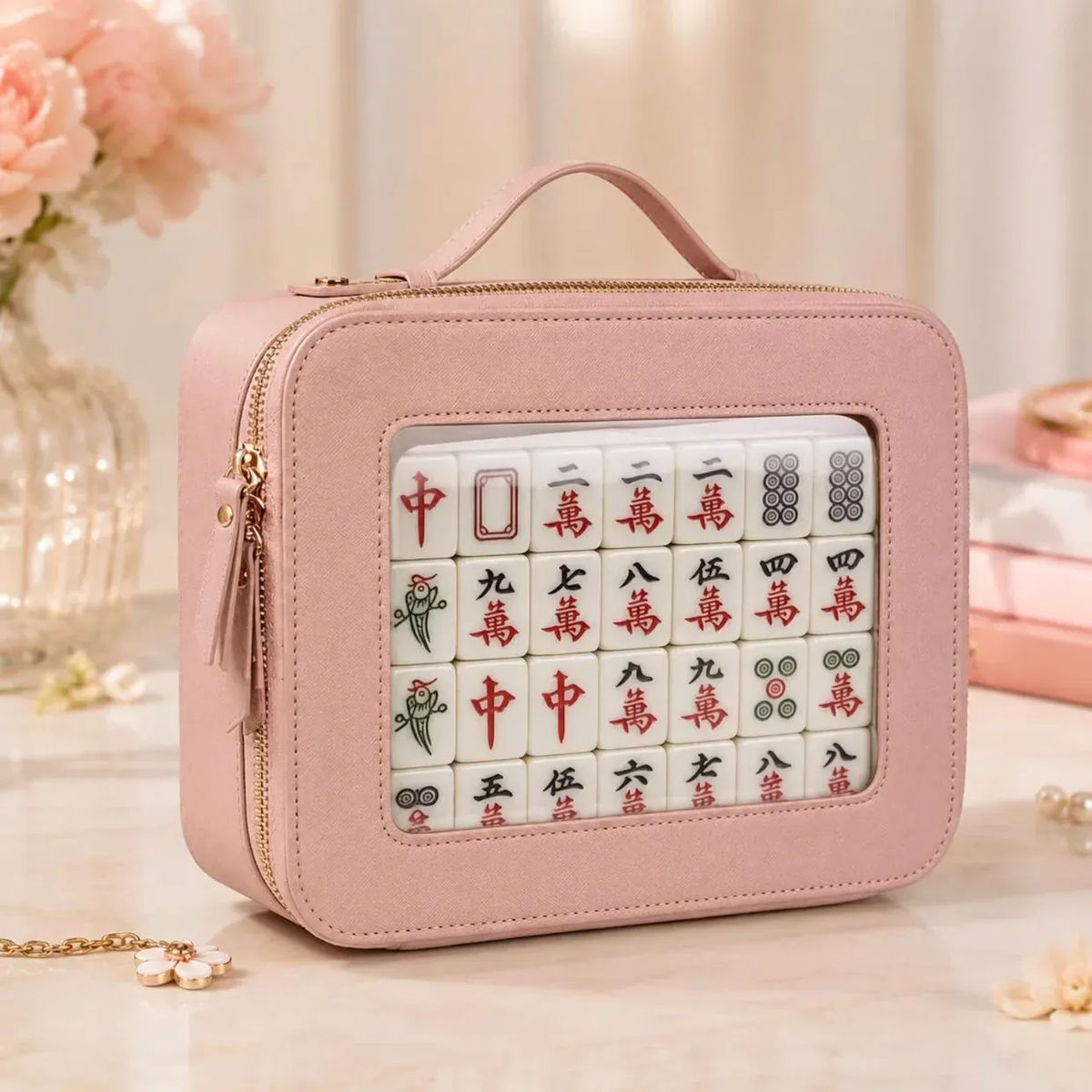
A mahjong travel case protects your 160-tile set, racks, mat, and score sheet during car trips, flights, and casual visits to friends' homes. Options range from padded shoulder bags that hold a set and accessories to hard-shell cases designed for frequent flyers. Cases sold through Mahstead's travel-bag collection include reinforced interiors, adjustable dividers, and carry handles. Most soft bags fit under airline seats or in overhead bins; hard cases count as checked luggage. Cost varies by interior compartments and material thickness. We recommend measuring your set and racks before ordering—tile stacks expand if jokers are stored loose. Most cases arrive within 7–10 business days with free US shipping.
Why does case type matter for different trips?
Soft cases work best for local weekly games and car travel—they're lightweight and fit in car trunks easily. Hard cases suit airport travel and long-distance moves because rigid walls prevent tile crushing if luggage is stacked or bumped. Weekend getaways often need just a soft bag with room for one set and rack; month-long trips or teaching rotations require hard cases with room for multiple sets or backup tiles. Choose soft if you drive; choose hard if you fly frequently or store the case in shared spaces like closets where it might get pressed.
🀄 Shop travel bags and cases →

What should fit inside your travel case?
A standard American mahjong set—160 tiles with spare jokers—fits in a 12" × 9" interior compartment if tiles are stacked upright in their tile tray. Add one pair of racks with pushers (they take 4"–5" of depth), a folded mahjong mat, two sets of dice, and the current National Mah Jongg League card. Most travel bags have separate zippered pockets for dice and cards. Hard cases often include a removable divider tray, letting you stack a set below and keep accessories above without pressure on tiles. If you're traveling with two sets (common for hosts or teachers), a large hard case with dual compartments works; a soft bag won't protect two sets safely. Measure your tile tray's height—many modern trays are 3"–4" tall—before choosing.
Soft bag vs. hard case: which wins for airplane travel?
Feature | Soft Bag | Hard Case | Pick When |
Carry-on fit | Yes (fits under seat) | No (checked only) | You fly often, want set at hand |
Durability | Good (padded walls) | Excellent (rigid shell) | You're checked baggage is rough |
Weight | Lighter | Heavier | You walk to gates or gates change |
Stacking resistance | Moderate (compressed) | Very high (crush-proof) | Luggage piles up during layovers |
Cost basis | Lower ($X–$Y range) | Higher ($Y–$Z range) | Budget is primary concern |
Accessories room | 1–2 sets max | 2–3 sets easily | You teach or host big groups |
For a single set on a weekend flight, a soft case fits overhead compartments and avoids checked-baggage damage entirely. For a full teaching rotation or frequent tournament travel, a hard case justifies the extra weight because it prevents tile warping and keeps the set playable after being dropped or sat on. Pack heavier items (dice, mat, card) on the bottom of either style; tiles go on top to avoid compression.

How do you pack tiles so they don't shift or crack?
Wrap the tile tray in a soft cloth—an old kitchen towel or microfiber cloth keeps tiles from rattling inside their tray. Secure racks upright using elastic straps or velcro ties so they don't knock against the case wall. Place the mat (rolled or folded, never crumpled) along one side. Store the card in a slim plastic sleeve so it doesn't get bent. If you're using a soft bag with no internal dividers, pack loose items—dice, card, extras—in a separate zipped pouch inside the main compartment so they don't jab into the tile tray. Hard cases with removable trays let you nest accessories around the tile tray without pressure. Leave at least 1 inch of padding between the tray and case wall. Never store tiles lying flat; always stack them upright. Check the case is fully zipped or latched before moving it—open zippers cause tiles to spill during transit.
✨ Find your Mahstead set — free US shipping →
What features protect tiles in rough luggage handling?
Reinforced stitching at corners and seams prevents tearing when TSA or baggage handlers grab the case. Padded walls absorb impact during baggage-carousel tumbles. Carry handles rated for weight prevent the bag from tearing open mid-flight. Internal dividers or a removable tile tray keep tiles from sliding around. Zippers that close smoothly and lock firmly reduce the risk of accidental opening. Hard cases offer a lid that latches or locks, protecting contents even if the case is upended. Look for cases made from nylon or vinyl with foam or EVA padding—these materials resist punctures better than thin canvas. Check that the tile tray itself is reinforced (thick plastic or wood) rather than flimsy cardboard, because a cracked tray ruins a trip. If you host or teach, consider cases with handles on two sides, letting you carry a set in each hand without twisting your wrist.
What to check before you buy
Interior dimensions: Measure your tile tray height, rack width, and mat rolled length. Confirm case interior is at least 1–2 inches larger in each dimension to allow padding and prevent crushing.
Carry-on compliance: If you fly carry-on, weigh the empty case and check airline size limits (typically 22" × 14" × 9" for major US carriers). Soft cases under 5 lbs full are safest.
Zip and latch quality: Unzip/open and close smoothly several times before shipping. Stiff zippers jam during travel; loose latches pop open in transit.
Compartment access: You'll open the case at friends' homes and game venues—confirm pockets for dice and card are easy to reach without unpacking the tile tray.
Material thickness: Padded walls should feel squishy (¼–½ inch foam minimum). Thin cases offer little protection and tear easily.
Return or exchange policy: Ask Mahstead directly if sizing doesn't match your gear after arrival.
🎁 See our most-loved mahjong sets & accessories →
We recommend pairing your travel case with quality best-selling mahjong sets that use durable acrylic tiles—they're lighter and more crush-resistant than ceramic. If you're a frequent traveler or teacher, invest in a hard case and one larger set with engraved titles that shows off your game without taking extra luggage space. For casual monthly games, a soft bag and standard set work perfectly.

FAQ
Can I fit two mahjong sets in one travel case?
Yes, if the case has dual compartments or is extra-large (hard cases often do). A standard soft bag safely holds one set maximum; two sets compress tiles and risk cracking during travel.
Do I need to remove the tile tray from the case before playing?
No. Leave the tray in the case, open the lid or zipper, and take tiles from the tray as usual. The case protects everything when not in use and doubles as a play tray if your host has no table.
Will a mahjong case fit in an airline overhead bin?
Soft cases usually do; hard cases rarely do. Measure the case dimensions and compare them to your airline's overhead bin limits before booking. Most soft cases are under 22 × 14 × 9 inches and fit safely.
What's the difference between a mahjong case and a general game-storage bag?
Mahjong cases have internal dividers or tile trays sized for 160-tile sets and racks. General storage bags lack padding and tile-specific compartments, risking tile damage on travel. Specialized cases are worth the investment.
Can I store a mahjong case in a car trunk year-round?
Soft cases are fine; hard cases may warp in extreme heat or cold over months. If you leave it in the trunk, keep it in shade and avoid prolonged exposure to direct sunlight or freezing temperatures.
How do I clean a mahjong case after travel?
Wipe the exterior with a damp cloth and let it air-dry. For interior pockets, vacuum gently or use a dry brush to remove tile dust. Never submerge fabric cases or hard cases in water.


View More
View More
View More
