
Mahjong Case Dimensions: What Size You Actually Need
Last updated: Nov 23, 2026
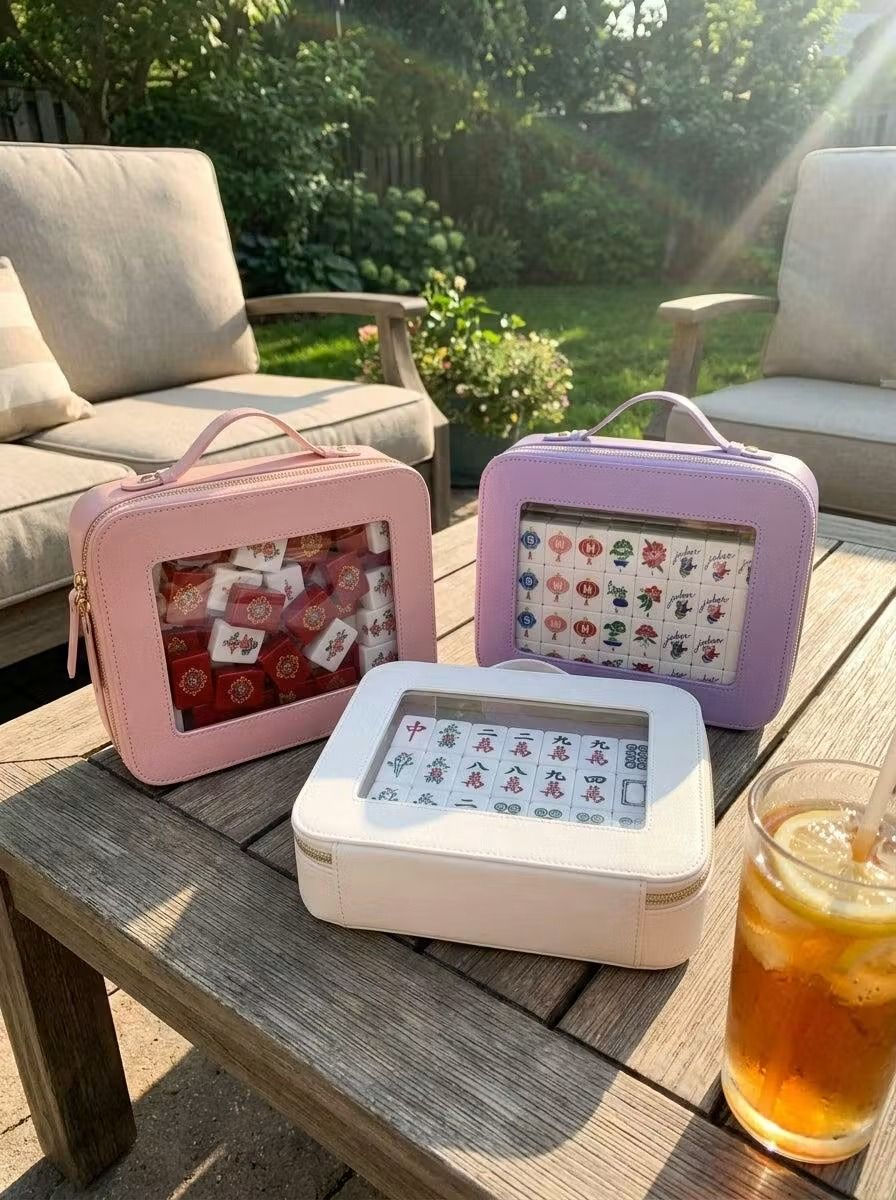
American mahjong cases range from 24–28 inches long × 12–14 inches wide × 4–6 inches deep for compact models holding a 160-tile set alone, up to 32–38 inches × 16–18 inches × 6–8 inches for full rigs with mat, racks, and pushers. A standard mat (typically 27–28 inches square when folded) determines whether you need a medium or large case. Most players choose medium cases (around 28–32 inches long) to fit a set, one mat, and dice. We recommend measuring your mat folded and your set box width first; then add 2–3 inches for comfort. Mahstead travel bags and cases include detailed interior measurements so you match your exact gear before ordering.
A mahjong case is one of the few purchases where guessing the size costs real money. Get it wrong, and either your mat compresses awkwardly or you're hauling a suitcase for a small set. The good news: once you measure three things, the right size becomes obvious.
What fits inside a small case (under 26 inches)?
Small cases hold a 160-tile mahjong set and dice—nothing else. They measure roughly 24–26 inches long × 12 inches wide × 3–4 inches deep. These work if you travel with only your tiles and jokers live in someone else's mat or you host at a table that already has one. Most of us, though, need to carry our own mat, so small cases feel limited fast. If you play solo sets (one per person), a small case lets you fit two sets side by side; otherwise, you're better off one size up.
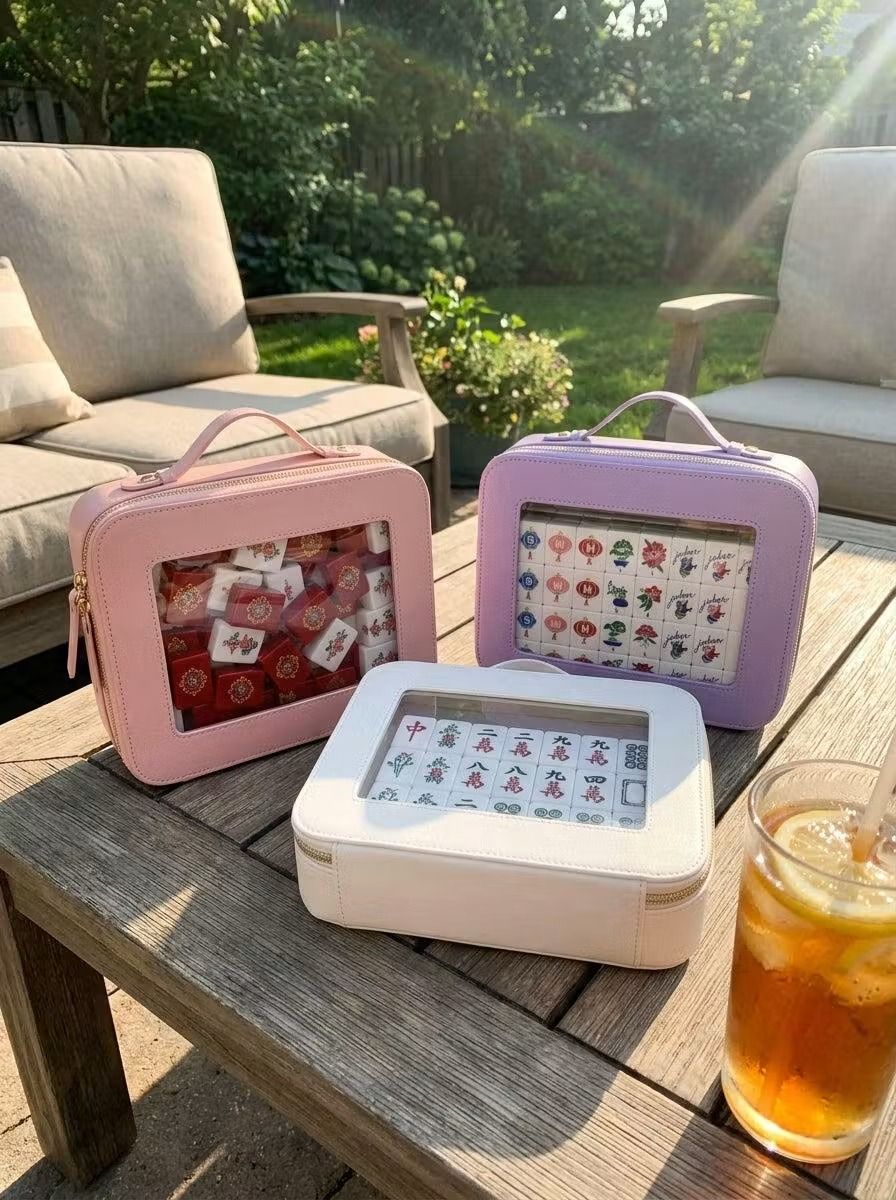
Why medium cases (27–32 inches) are the workhorse?
This is where 80% of our weekly players live. A medium case fits a 160-tile set, a folded mat (usually 27–28 inches square, which collapses to about 28–30 inches long), and dice. Interior depth ranges 5–6 inches, so tiles and mat don't crush each other. If you also own racks with pushers, you can squeeze them in if they disassemble or if the case has a net pocket. Medium cases weigh 8–12 pounds loaded—heavy enough to feel substantial, light enough to carry one-handed. We've found that 28–30 inches long is the sweet spot: not cramped, not wasteful.
When do you need a large case (33+ inches)?
Large cases are for players who carry a complete setup: set, mat, four racks with pushers, dice, and tiles. They run 33–38 inches long × 16–18 inches wide × 6–8 inches deep. If your racks don't disassemble, or if you want everything loose (not stacked), go large. Large cases also suit players who carry two or three sets for different players, or who add a mahjong mat overlay for extra grip. The tradeoff: these cases don't fit easily in a car seat or under an airplane bin. Use one only if you're hosting or if you play multiple games a day at different venues.
Case Size | Typical Length | Best For | Fits Set + Mat? | Weight (loaded) |
Small | 24–26" | Set only, or single backup | No | 5–7 lbs |
Medium | 27–32" | Set + mat + dice | Yes, snug | 8–12 lbs |
Large | 33–38" | Set + mat + racks + extras | Yes, roomy | 14–18 lbs |
The table above shows why medium is the American mahjong standard. Nine weeks out of ten, a medium case is all you need.

How to measure before you buy?
Step one: measure your folded mat. Lay it flat, fold it in half once (the way you'd carry it), and measure the length and width. Most American mats fold to roughly 27–30 inches long × 14–15 inches wide. Step two: measure your set box or bag. A typical 160-tile set in its shipping box is about 10–12 inches long × 6 inches wide. Step three: stack them mentally (mat at the bottom, set on top). Add 2 inches for air and shifting. That total is your minimum case length. Step four: add the height. A folded mat is 1–2 inches thick; a set box is 2–3 inches. So depth needed is roughly 4–5 inches. If you have racks with pushers, each rack is about 1 inch thick; four racks add 4 inches if stacked. That's why full setups need large cases. Note these measurements on a note in your phone before you shop—it takes 90 seconds and prevents returns.
What common mistakes kill a case purchase?
Mistake 1: measuring your mat unfolded. Your mat opens to 27–28 inches square; that's not how it travels. Always fold first, then measure. Mistake 2: forgetting the mat gets thicker when rolled. A rolled mat (not folded) occupies 27–28 inches long × 3–4 inches diameter. Some cases claim "28 inches" but mean flat; rolled mats don't fit. Mistake 3: ignoring interior pockets. A case may list 32 inches long but have only 28 inches of usable flat space if a net pocket eats 4 inches. Check the product description for "usable interior" or "flat compartment" dimensions. Mistake 4: buying soft cases without rigid sides if you carry racks. Racks bend soft cases; you need rigid plastic or wood frame. Mistake 5: guessing on depth. Cases listed as "4 inches deep" work for a set alone; add a mat and you'll be forcing it closed. Aim for 5–6 inches minimum if you carry both.
We recommend browsing Mahstead's travel bag and case collection with your measurements in hand. Each listing includes interior width, length, and depth so you can confirm fit before checkout.
✨ Find your Mahstead set — free US shipping →
What to check before you buy
Interior dimensions, not exterior. Exterior size is always larger; shops sometimes list only that.
Material. Plastic hard cases protect racks; soft cases suit mat-and-set travel.
Handles. A case loaded with mat and set is 10–12 pounds; make sure the handle is padded and reinforced.
Closing mechanism. Zippers fail under weight; latches and snaps last longer. If the case is vinyl or canvas, check that seams are stitched, not glued.
Dividers or pockets. A case with a mesh pocket for dice saves rummaging. Dividers keep your mat from rolling around.
We've hosted weekly games for years, and the players who stay happy are the ones who bought the right size the first time. Spend five minutes measuring. It saves five years of frustration.
🀄 Shop travel bags and cases →

FAQ
Can a medium case fit racks with pushers?
It depends on size. If your racks disassemble into flat pieces (2–3 inches per rack), you can squeeze them into a medium case with 6-inch depth. If they don't disassemble, a large case is safer. Check your rack depth first.
What's the difference between a case and a bag?
Cases have rigid frames or hard shells; bags are soft, collapsible fabric. Cases protect racks and tiles better; bags are lighter and fit in car seats more easily. We recommend a case if you carry racks, a bag if you carry set and mat only.
Do I need a case or can I just use a suitcase?
A regular suitcase works in a pinch, but tiles shift and crack inside. Mahjong cases have compartments and padding designed for tile shapes. If you travel monthly or more, a dedicated case saves replacement costs.
How much does a mahjong case weigh empty?
Hard cases weigh 3–5 pounds; soft bags weigh 1–2 pounds. Add 8–10 pounds for a loaded set and mat. If you're flying, that matters; check airline bag weight limits.
Can I fit two 160-tile sets in a medium case?
Only if both are in flat shipping boxes. Two sets side by side in a medium case (about 12 inches wide) is tight; they'll press together. A large case is safer; one set per medium case is the standard.
Are Mahstead cases waterproof?
Most Mahstead cases use vinyl or coated canvas, which resists water splash but aren't fully waterproof. For heavy rain, use a plastic bag inside. For long-term storage, keep cases in a dry space.


View More
View More
View More
